Civil Lawsuit Defense For The Future
Description
Get your form ready online
Our built-in tools help you complete, sign, share, and store your documents in one place.
Make edits, fill in missing information, and update formatting in US Legal Forms—just like you would in MS Word.
Download a copy, print it, send it by email, or mail it via USPS—whatever works best for your next step.
Sign and collect signatures with our SignNow integration. Send to multiple recipients, set reminders, and more. Go Premium to unlock E-Sign.
If this form requires notarization, complete it online through a secure video call—no need to meet a notary in person or wait for an appointment.
We protect your documents and personal data by following strict security and privacy standards.

Make edits, fill in missing information, and update formatting in US Legal Forms—just like you would in MS Word.

Download a copy, print it, send it by email, or mail it via USPS—whatever works best for your next step.

Sign and collect signatures with our SignNow integration. Send to multiple recipients, set reminders, and more. Go Premium to unlock E-Sign.

If this form requires notarization, complete it online through a secure video call—no need to meet a notary in person or wait for an appointment.

We protect your documents and personal data by following strict security and privacy standards.
Looking for another form?


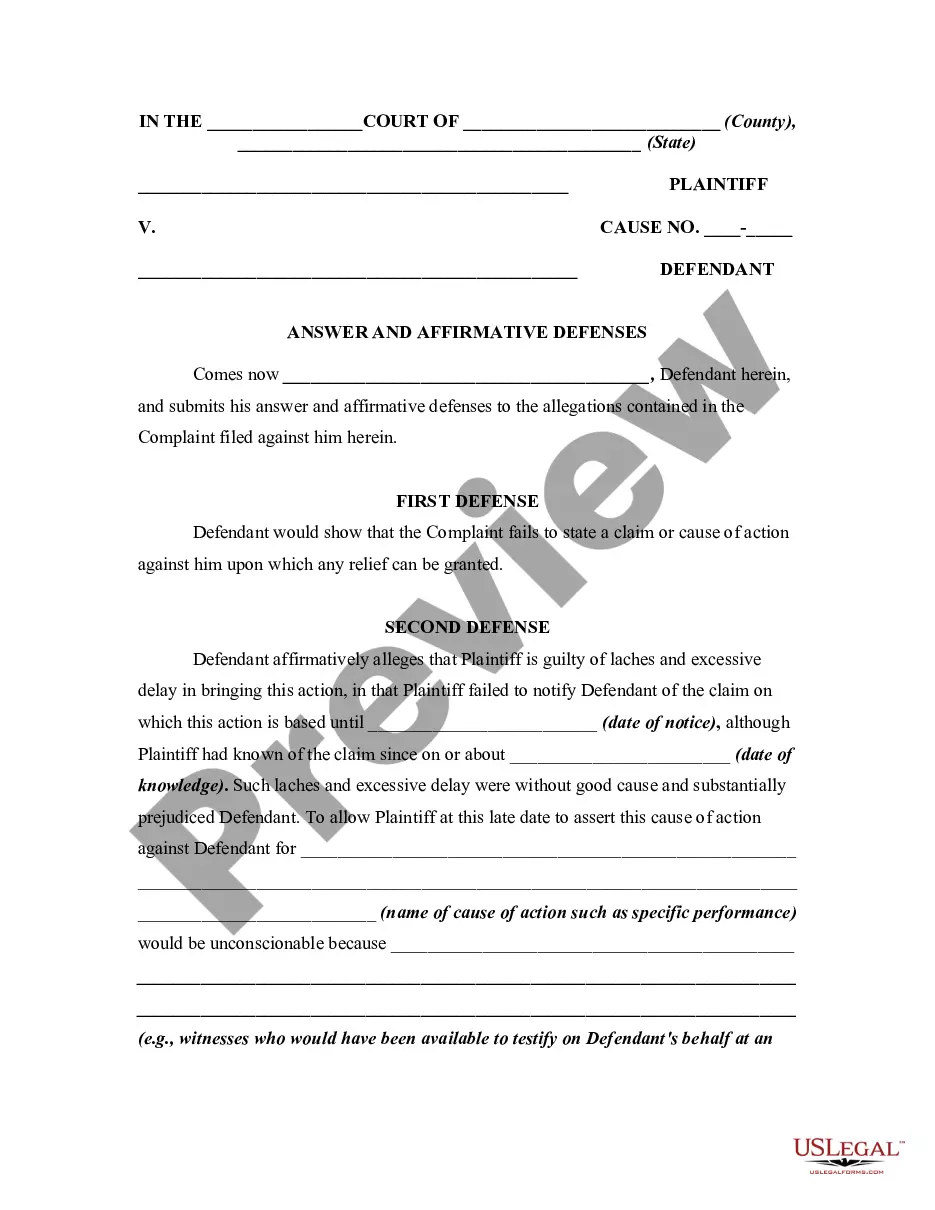
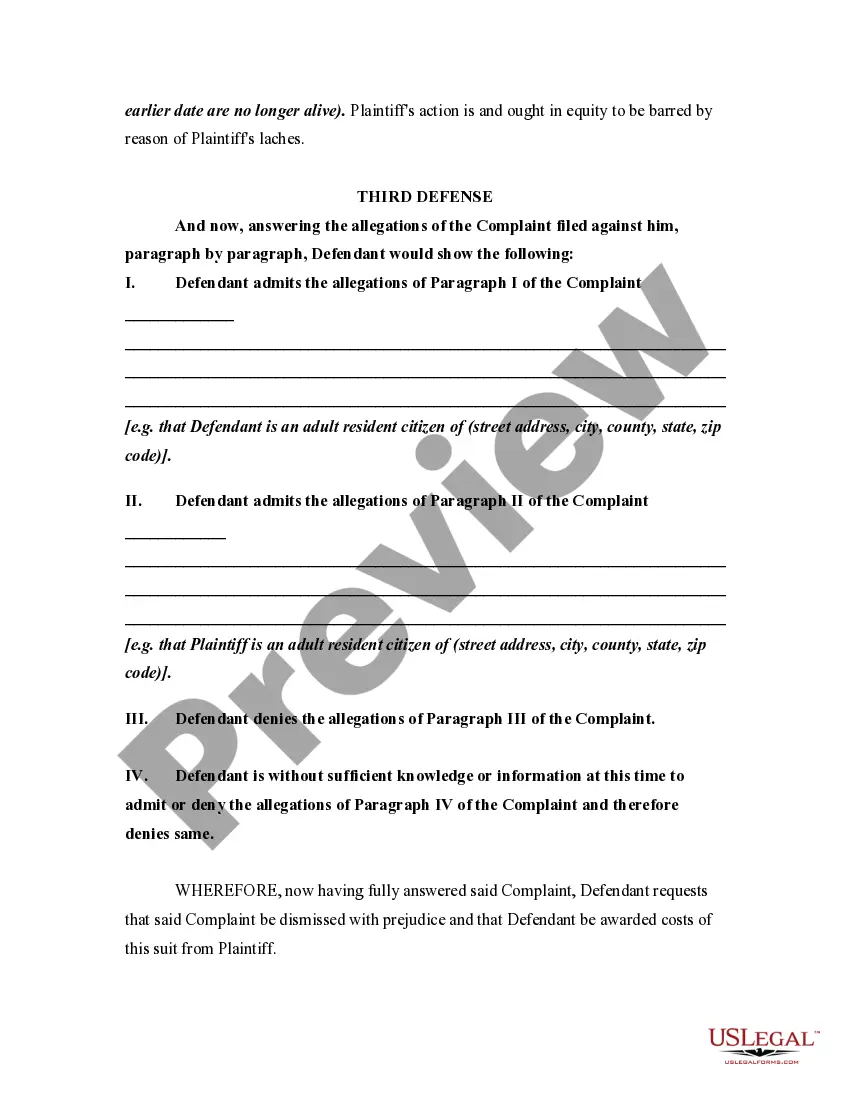
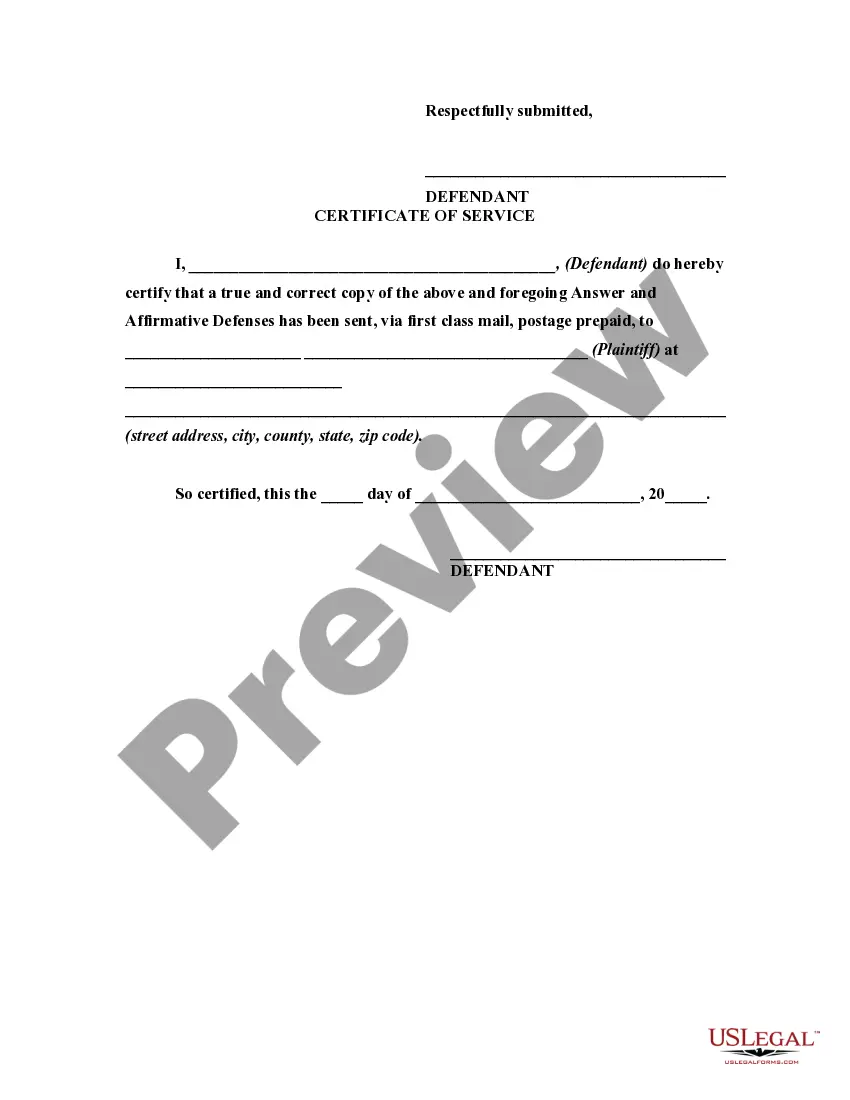
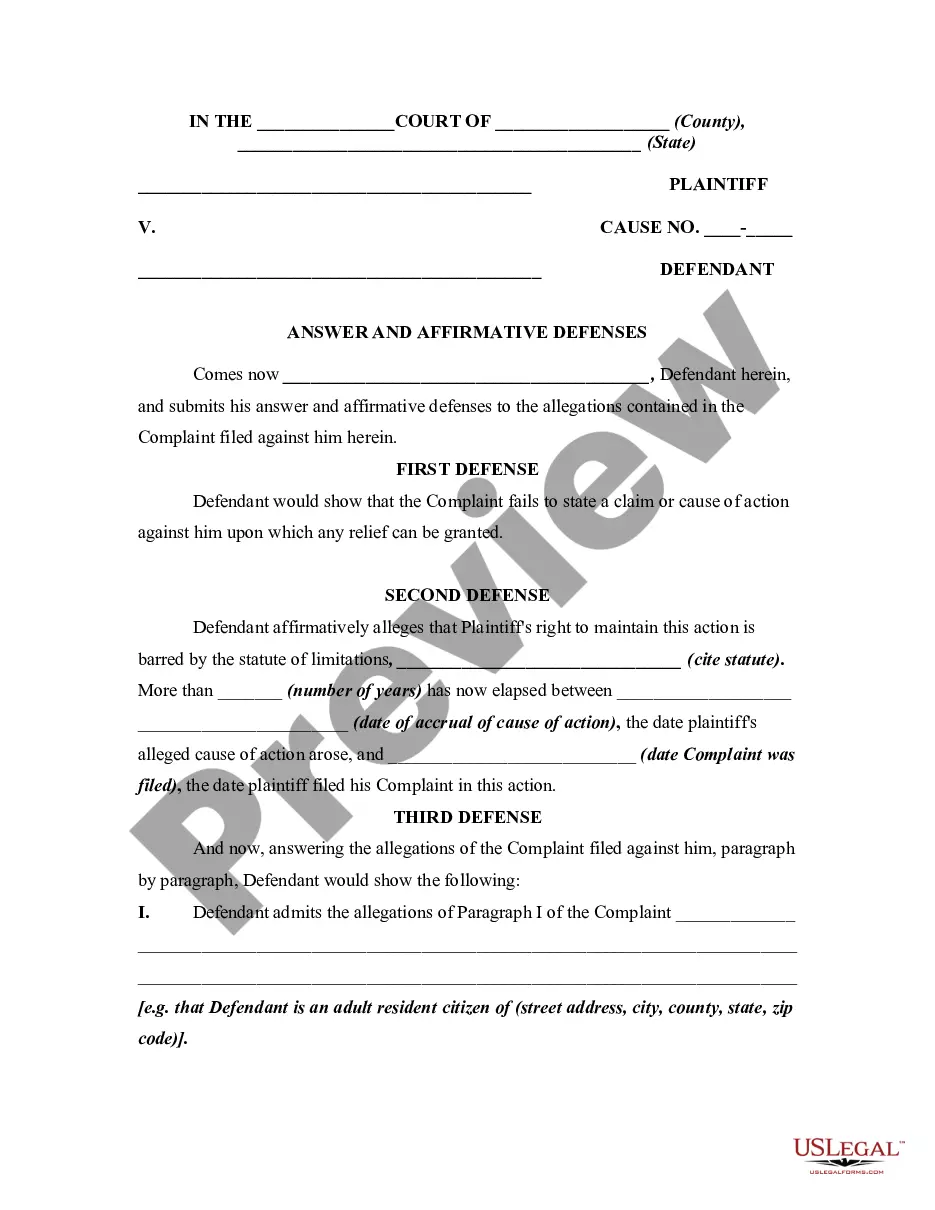
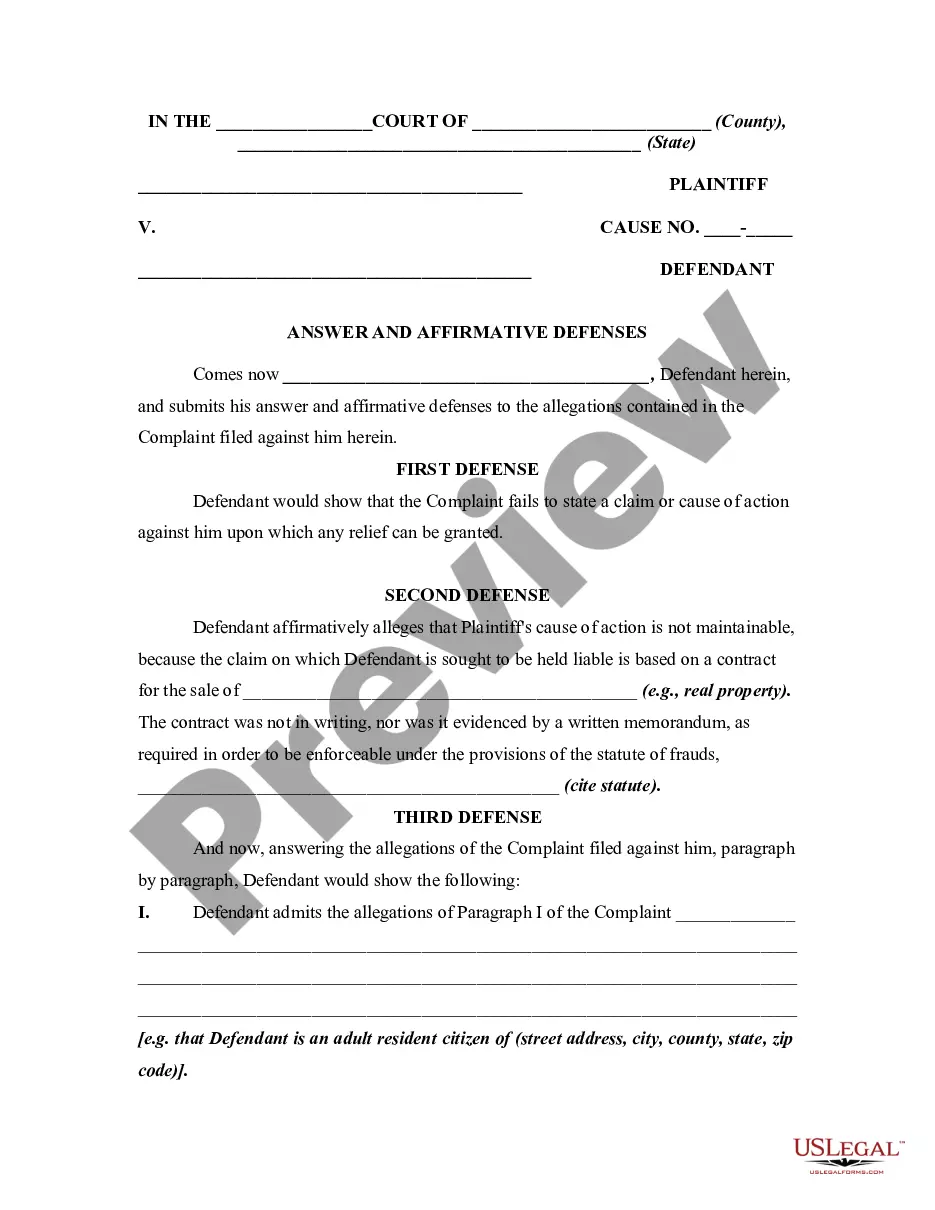
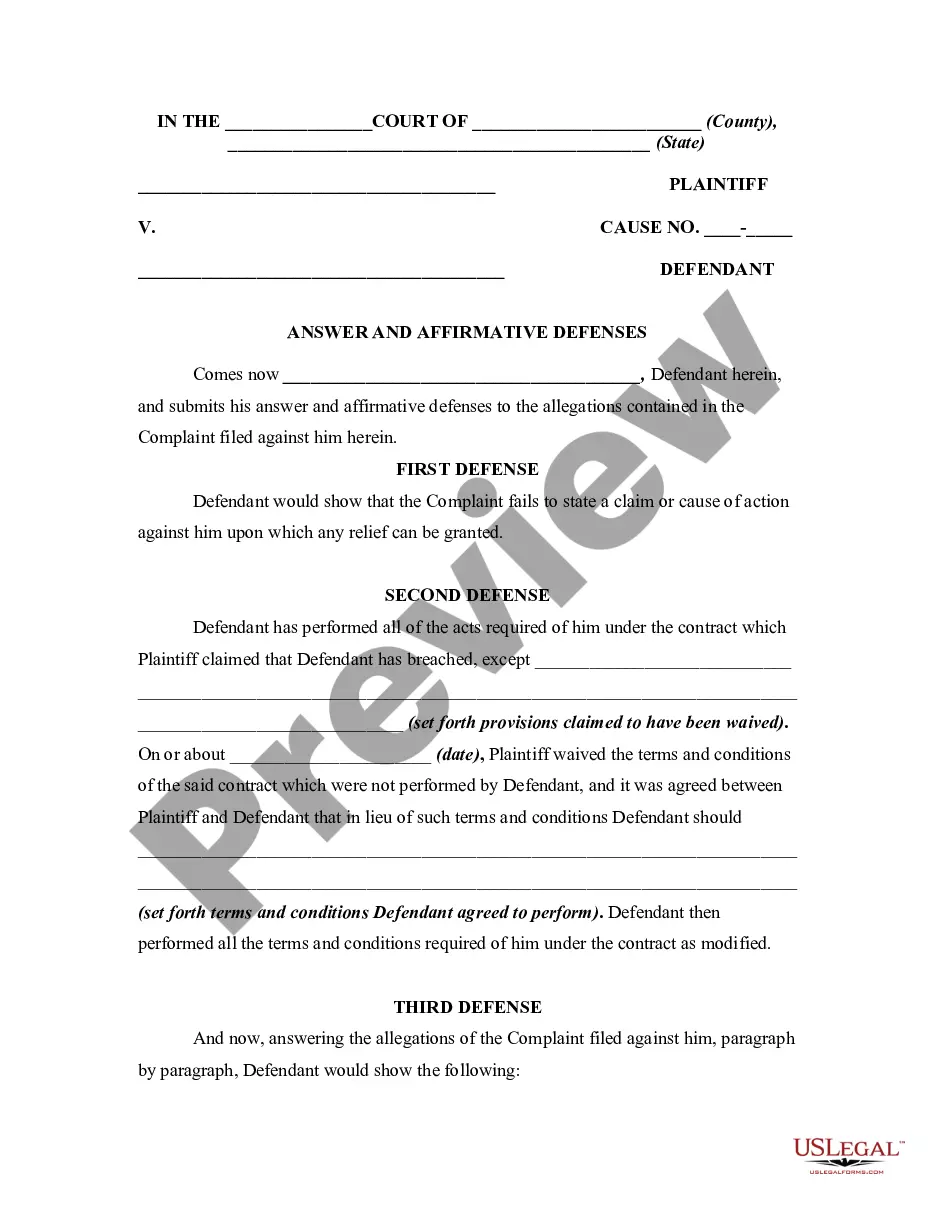
How to fill out Answer By Defendant In A Civil Lawsuit Alleging The Affirmative Defense Of The Cause Of Action Being Barred By Laches?
- Log in to your US Legal Forms account if you are a returning user. Ensure your subscription is active; if it has expired, renew it as necessary.
- For first-time users, start by exploring the Preview mode and detailed descriptions of templates to find the document that best suits your local jurisdiction.
- If the initial search yields no satisfying results, utilize the Search tab to look for alternative templates that meet your criteria.
- Once you have selected the appropriate document, click the Buy Now button and choose a subscription plan that suits your needs.
- Complete your purchase by providing payment details through credit card or PayPal to gain access to the comprehensive library.
- After your transaction, download the form to your device and find it later in the My Forms section of your account.
By utilizing US Legal Forms, you can rest assured that your legal documents are not only accessible but also tailored to meet your specific requirements. With a vast collection of over 85,000 fillable forms and expert assistance, your civil lawsuit defense for the future is secure.
Start today and take a significant step towards your legal empowerment. Explore US Legal Forms now!
Form popularity
FAQ
When your case is in litigation, it means that you are engaged in a legal process to resolve a dispute. This process can involve filing documents in court, gathering evidence, and possibly going to trial. Being informed about civil lawsuit defense for the future is vital in managing this complex journey.
Civil litigation is a legal process where individuals or organizations seek resolution for non-criminal disputes. This may involve issues like contracts, property, and civil rights. Familiarity with civil lawsuit defense for the future ensures you are ready if you find yourself in a civil litigation scenario.
In a civil action lawsuit, the burden of proof typically lies with the plaintiff, meaning they must provide sufficient evidence to support their claims. The standard of proof is often 'preponderance of the evidence,' requiring the plaintiff to demonstrate that their claim is more likely true than not. Understanding this concept helps in navigating civil lawsuit defense for the future.
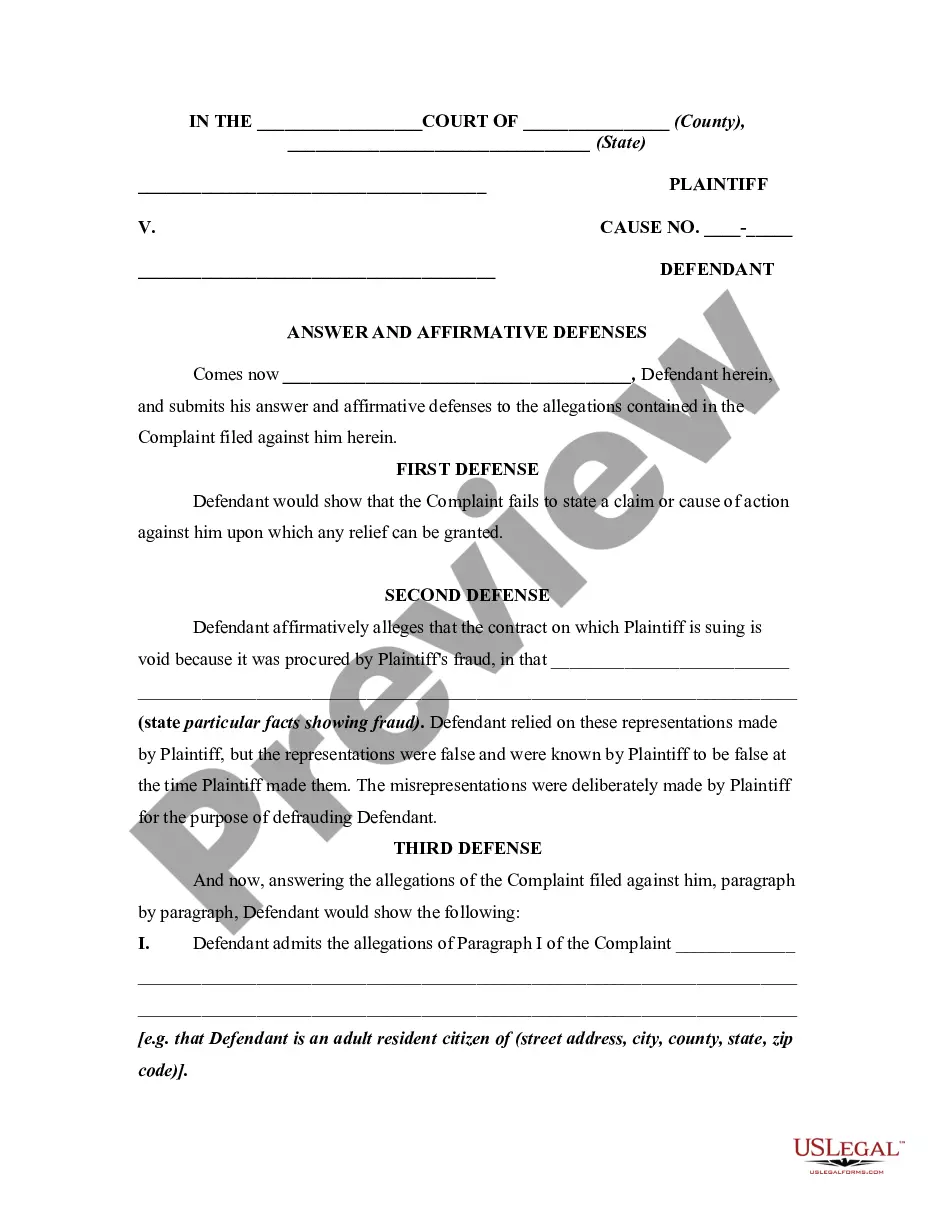
Five common affirmative defenses include self-defense, consent, necessity, statute of limitations, and assumption of risk. These defenses, when properly articulated, can significantly alter the course of a civil case. Knowing these can enhance your approach to civil lawsuit defense for the future.
The duration of a civil defense case can vary significantly, often ranging from a few months to several years. Factors such as case complexity, court schedules, and both parties’ willingness to negotiate play a role in the timeline. For a more efficient resolution, understanding civil lawsuit defense for the future is essential.
Civil rights litigation involves legal actions aimed at protecting individual rights guaranteed by law. It addresses issues such as discrimination, freedom of speech, and protection against wrongful acts by the government. Engaging in effective civil lawsuit defense for the future is crucial for safeguarding these rights.
Civil litigation defense refers to the strategies and legal arguments used to protect a party accused in a civil lawsuit. This area focuses on ensuring your rights are upheld in legal disputes. By understanding civil lawsuit defense for the future, individuals and businesses can better prepare to face claims against them.
While the defense does not bear the burden of proof like the plaintiff, they must provide evidence that supports their position. This may involve disproving elements of the plaintiff’s case or introducing alternative explanations. Preparing with resources like UsLegalForms can streamline your civil lawsuit defense for the future.
The amount of evidence required to win a civil case varies depending on the specifics of the case. Generally, sufficient evidence must demonstrate that the claims are more likely true than false. A thorough understanding of how much evidence is needed is crucial for your civil lawsuit defense for the future.
In a civil case, the defense does not necessarily have to prove anything to win. Instead, they can focus on creating reasonable doubt regarding the plaintiff's claims. This strategy is essential for developing an effective civil lawsuit defense for the future.