Lawsuit Answer Interrogatories For Divorce
Description
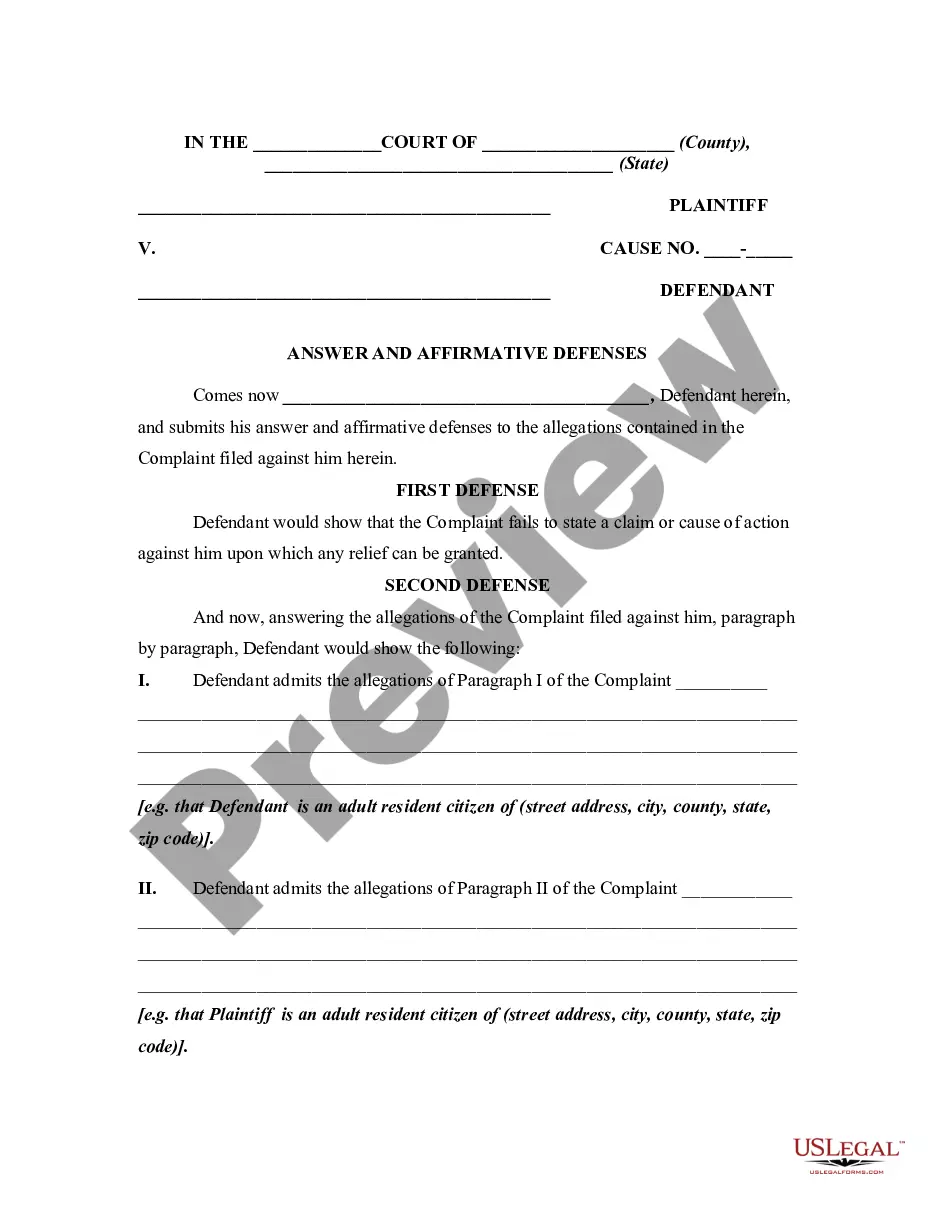
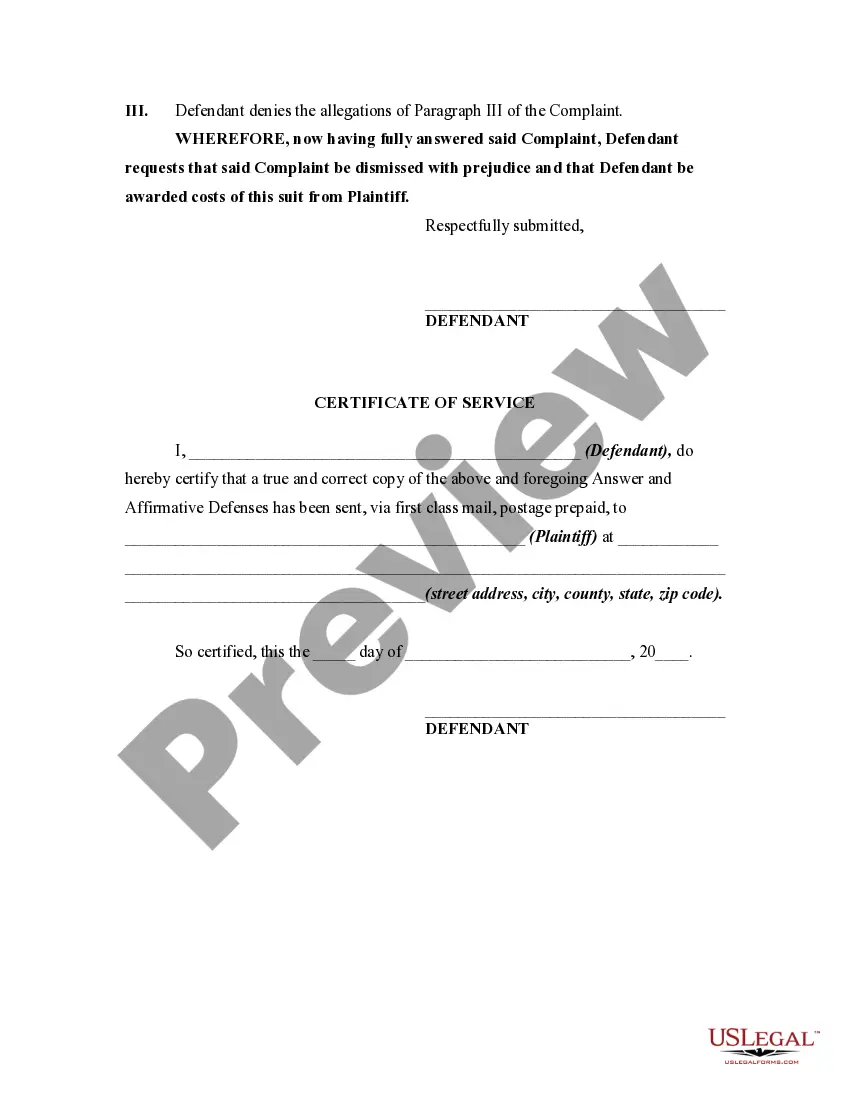
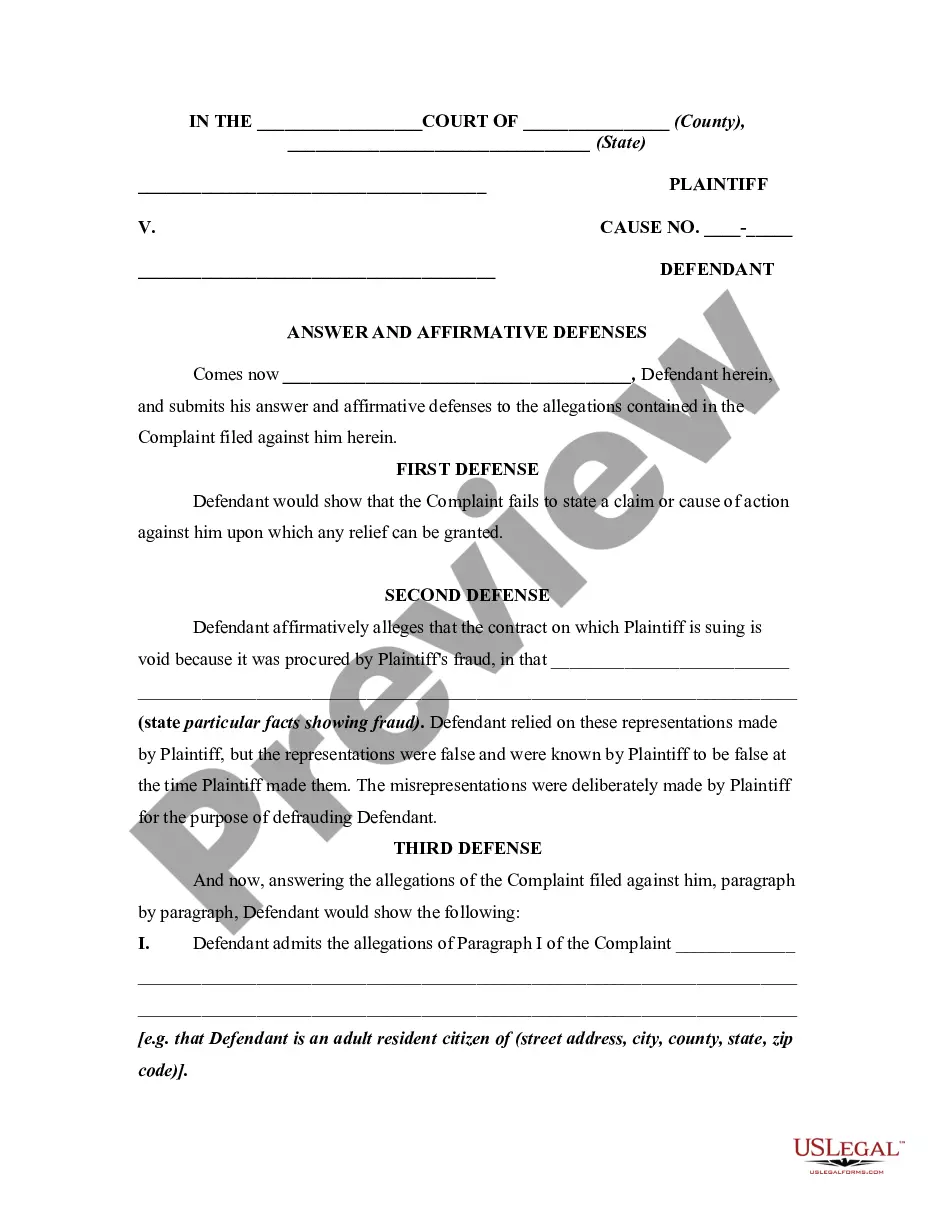
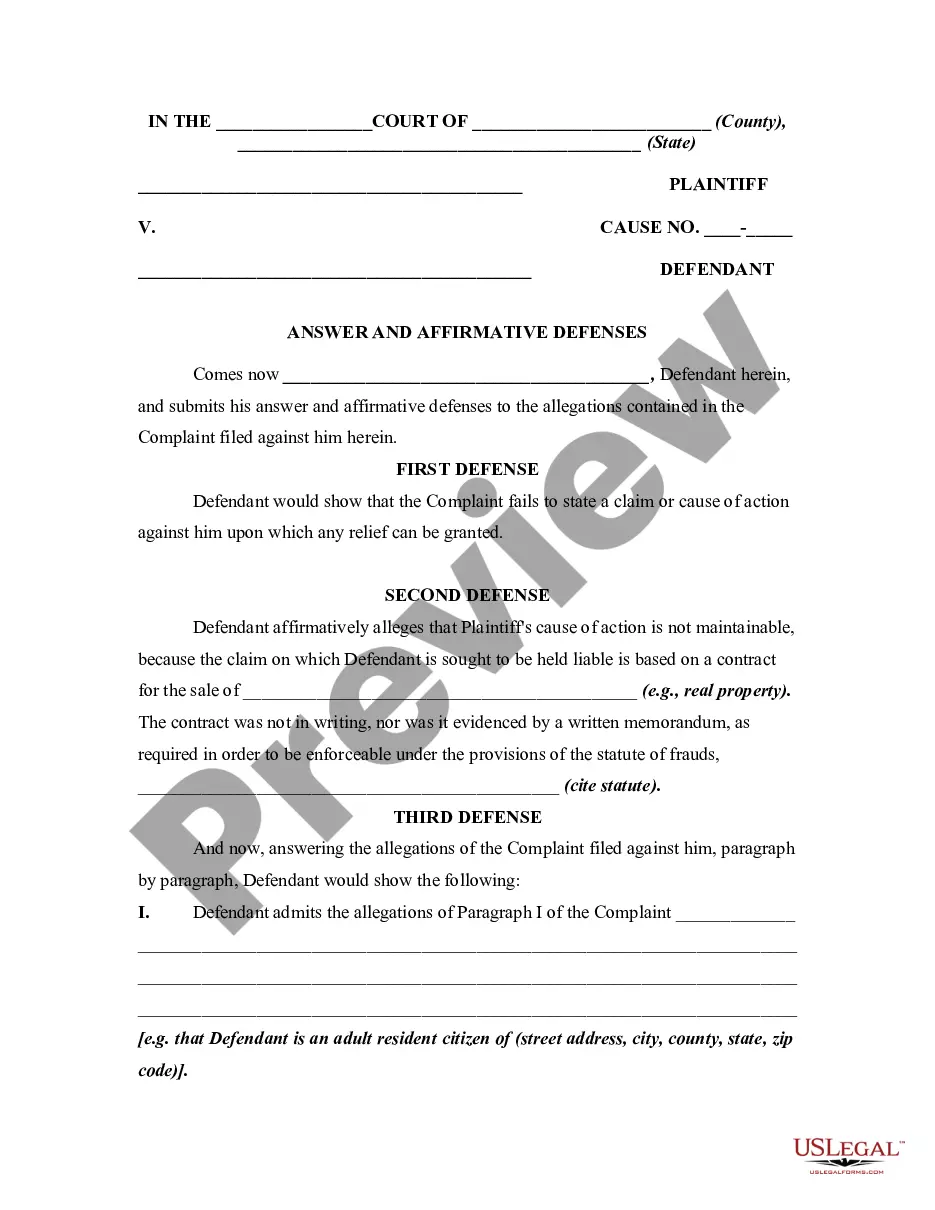
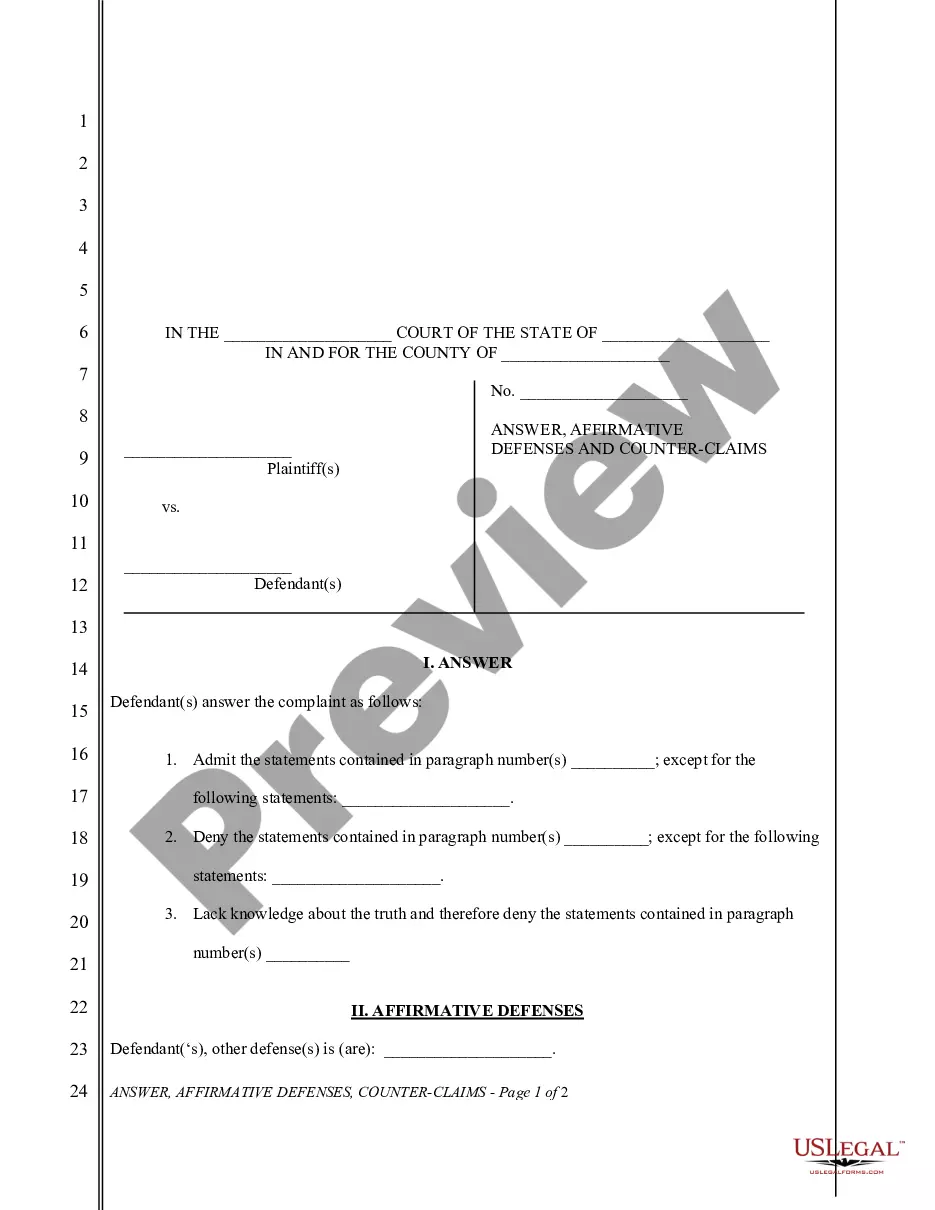
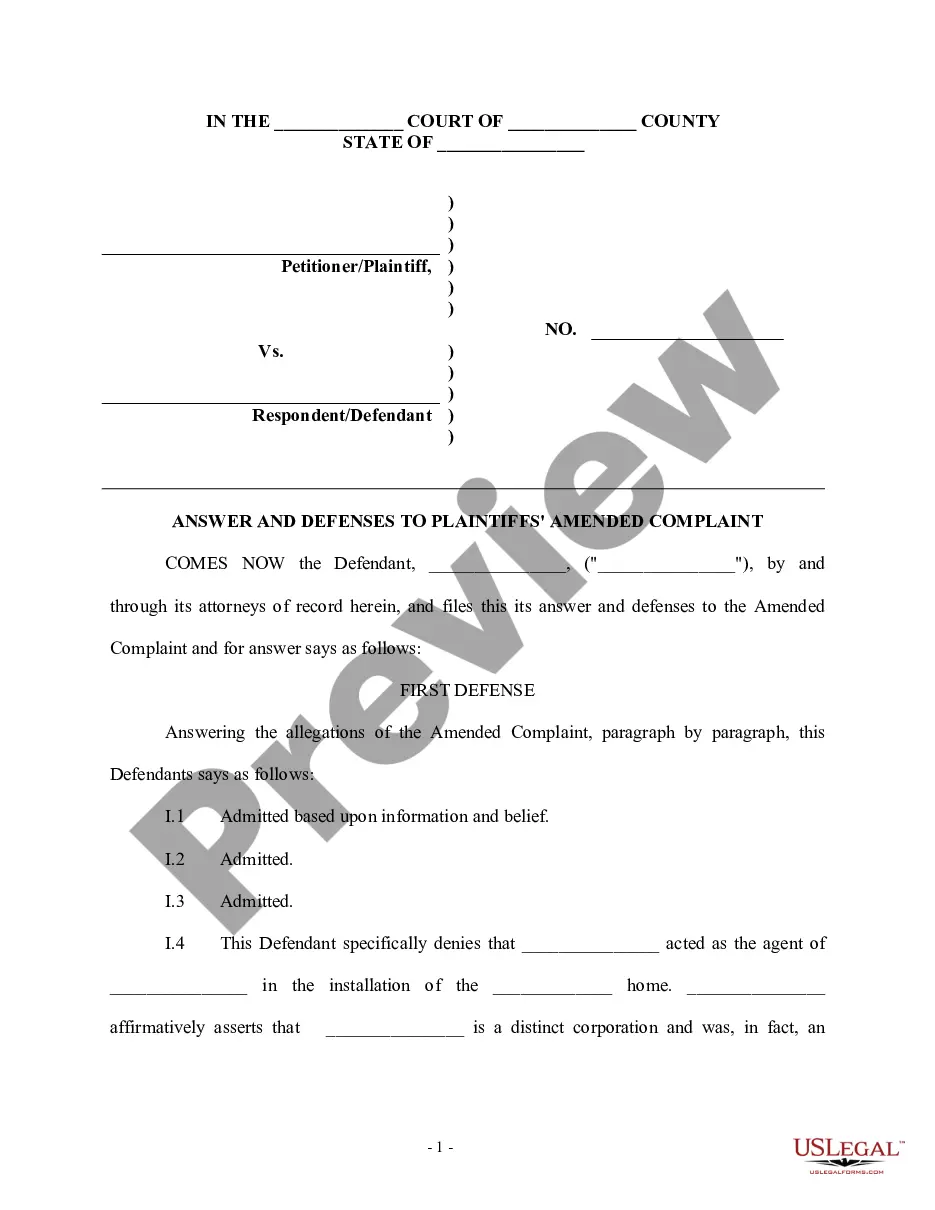




How to fill out General Form Of An Answer By Defendant In A Civil Lawsuit?
Regardless of whether it is for corporate reasons or personal issues, everyone must confront legal matters at some point in their lives.
Completing legal documents demands meticulous attention, starting with choosing the correct form template. For instance, if you select an incorrect version of a Lawsuit Answer Interrogatories For Divorce, it will be rejected upon submission.
With a comprehensive US Legal Forms catalog available, you will never have to waste time searching for the correct sample online. Utilize the library’s straightforward navigation to discover the appropriate form for any circumstance.
- Acquire the sample you require by using the search bar or browsing the catalog.
- Review the form’s details to confirm it aligns with your circumstances, state, and county.
- Click on the form’s preview to view it.
- If it is the wrong document, return to the search feature to locate the Lawsuit Answer Interrogatories For Divorce sample you need.
- Download the file when it satisfies your needs.
- If you possess a US Legal Forms account, simply click Log in to access previously saved documents in My documents.
- If you do not have an account yet, you can obtain the form by clicking Buy now.
- Select the suitable pricing option.
- Complete the profile registration form.
- Choose your payment method: utilize a credit card or PayPal account.
- Select the file format you prefer and download the Lawsuit Answer Interrogatories For Divorce.
- Once saved, you can fill out the form using editing software or print it and complete it manually.
Form popularity
FAQ
Interrogatories are often preferable to depositions for identi- fying such things as witnesses, documents, the dates and sub- stance of transactions and conversations,3 since a deponent may easily forget or overlook relevant information when an- swering such questions.
You can use interrogatories to find out facts about a case but they cannot be used for questions that draw a legal conclusion.
You have 30 days to respond to Form Interrogatories. If you were served by mail, you typically have 35 days from the date of mailing to respond. In eviction (unlawful detainer) cases the time is much shorter. In eviction cases you have 5 days to respond, or typically 10 days from the date of mailing if served by mail.
Your answers to the interrogatories should usually be short, clear, and direct and should answer only the question that is being asked. This is not the time to set out your entire case or defense to the other side. Take the time to make sure your answers are correct and truthful.
Read each question (interrogatory) very carefully. Answer only the question that is asked, and avoid the temptation to over-explain your answer. If the question contains several parts, you may break your answer into parts as well. It is also possible that you might object to the question.