Lawsuit Answer Form With Motion
Description
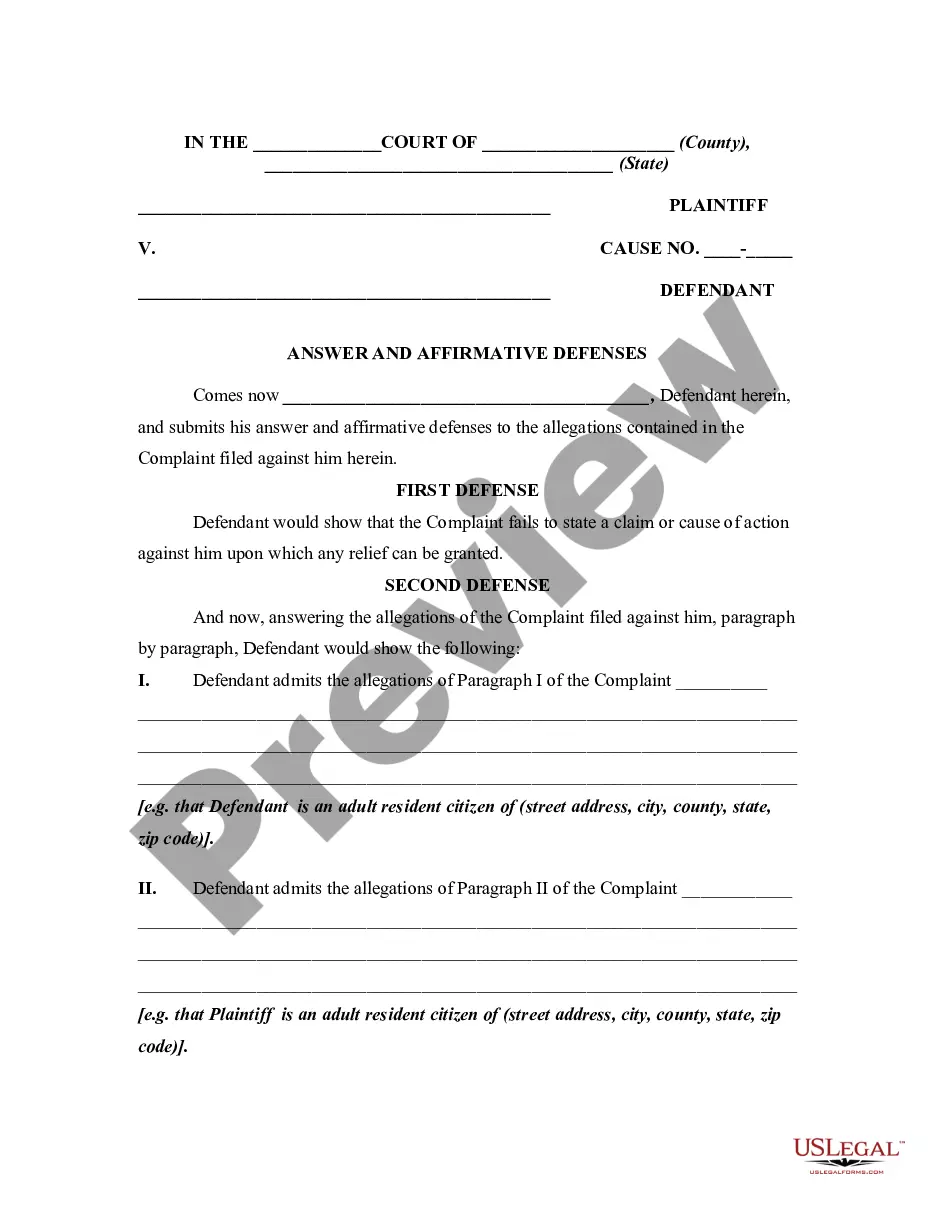
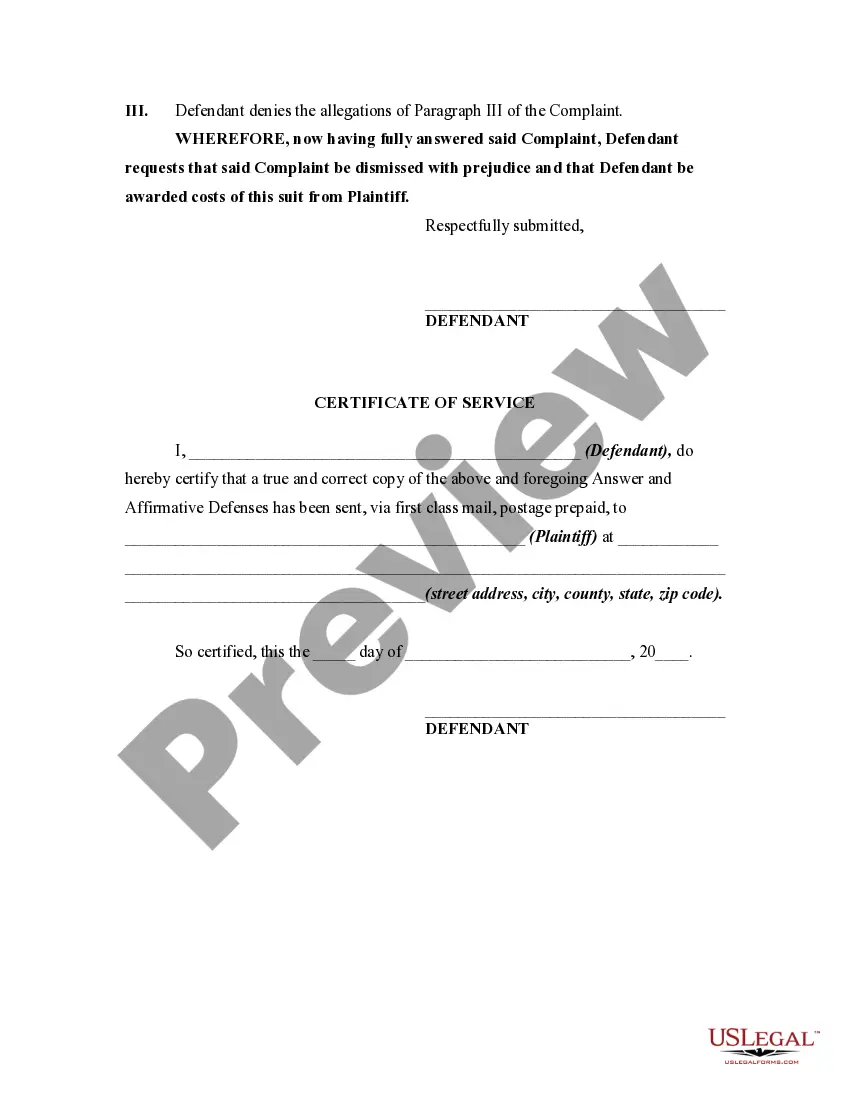
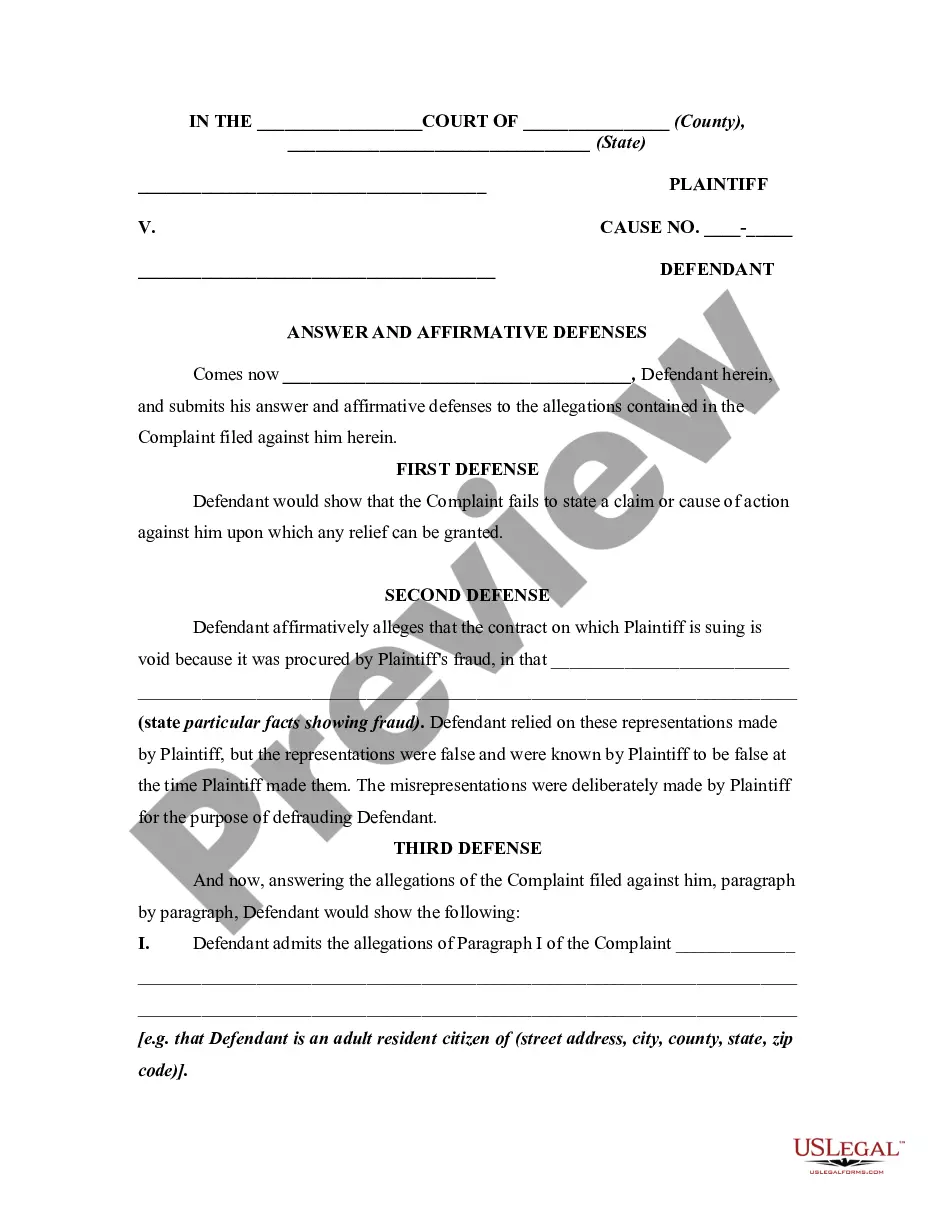
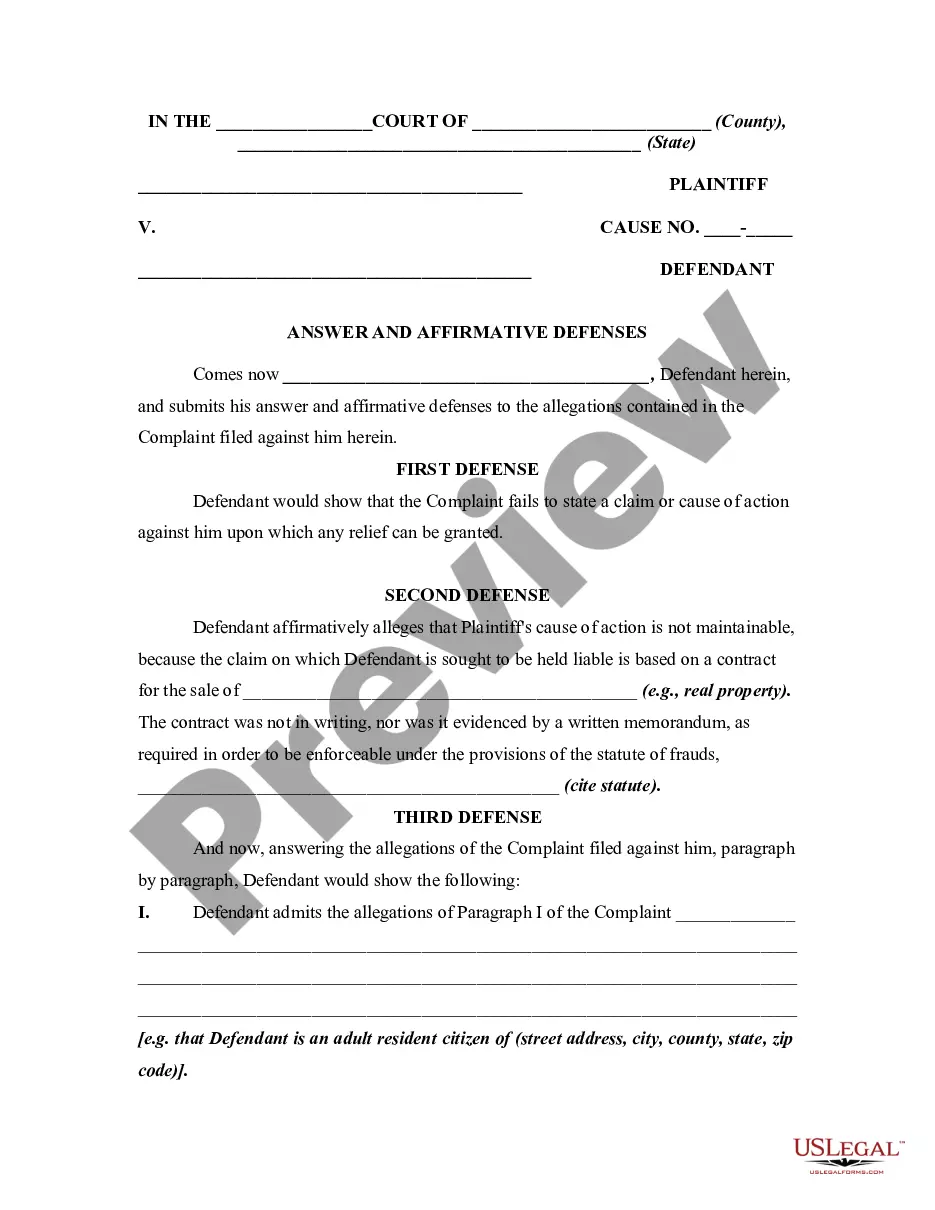
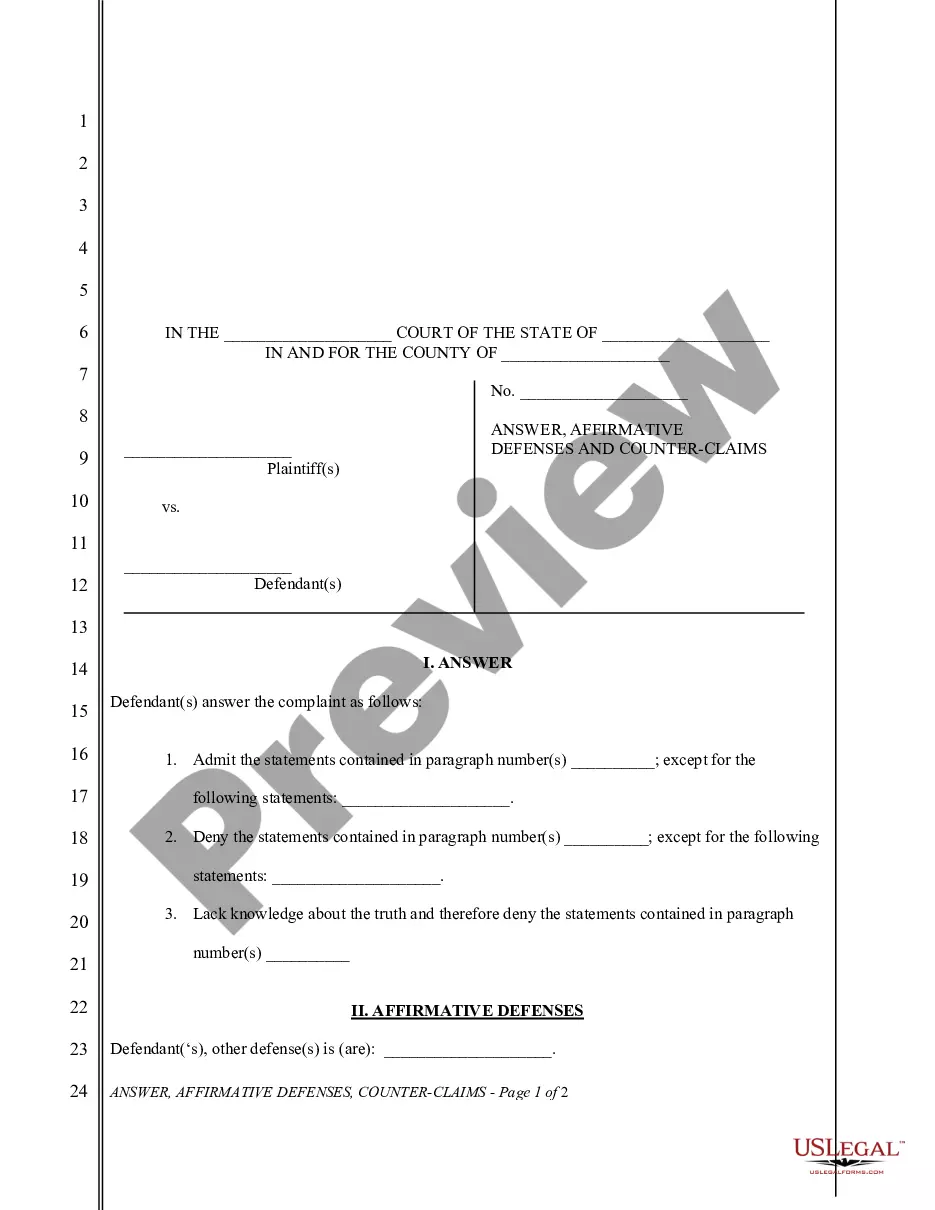
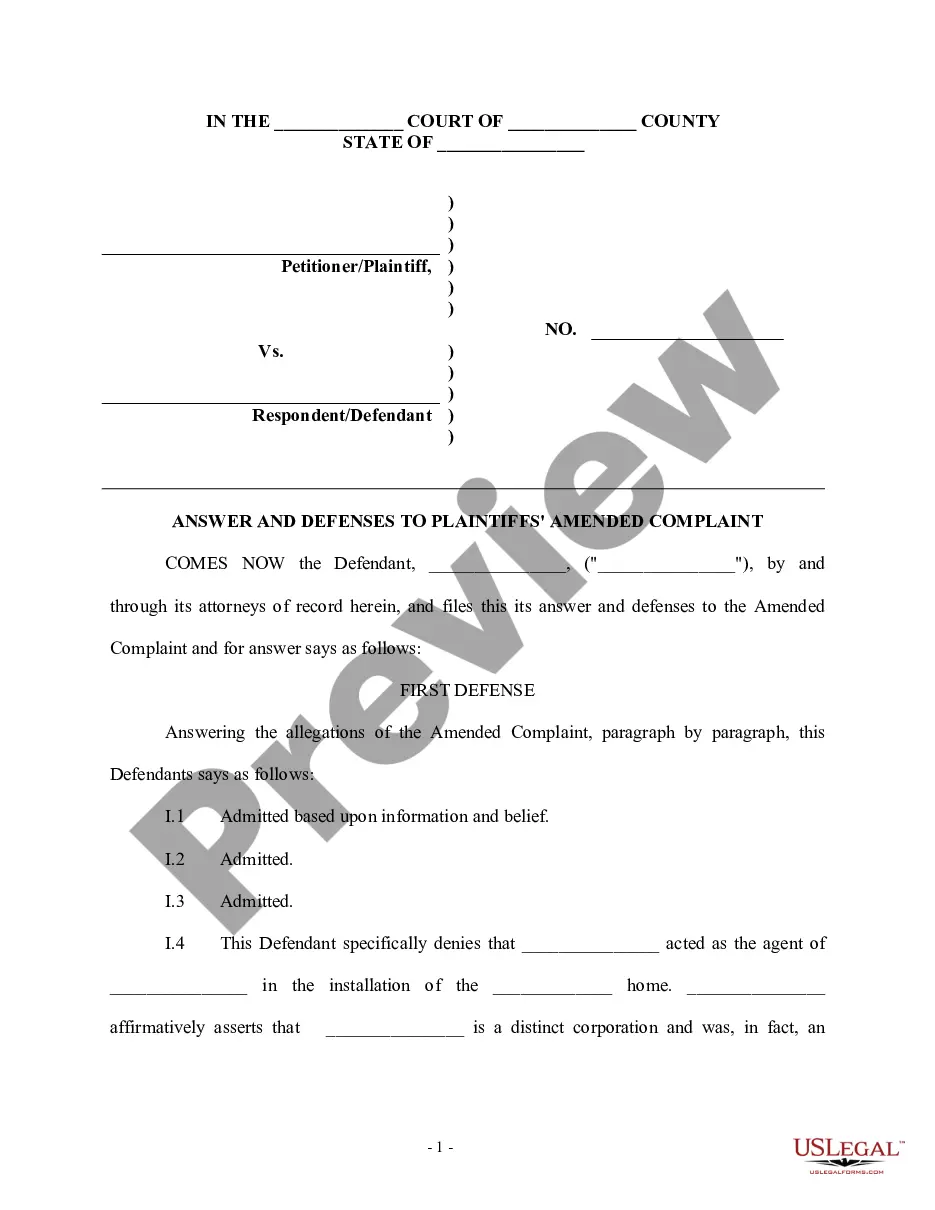



How to fill out General Form Of An Answer By Defendant In A Civil Lawsuit?
Regardless of whether for corporate reasons or personal affairs, everyone must confront legal matters at some stage in their existence.
Filling out legal documents necessitates meticulous attention, beginning with selecting the suitable form template. For instance, if you choose an incorrect version of the Lawsuit Answer Form With Motion, it will be rejected upon submission. Hence, it is vital to find a reliable source of legal documents such as US Legal Forms.
With an extensive US Legal Forms catalog available, you do not need to waste time searching for the right template across the internet. Utilize the library's straightforward navigation to find the correct form for any circumstance.
- Acquire the template you require via the search bar or catalog navigation.
- Review the form's details to ensure it aligns with your situation, state, and area.
- Click on the form's preview to inspect it.
- If it is the wrong form, return to the search function to find the Lawsuit Answer Form With Motion example you need.
- Obtain the file when it satisfies your criteria.
- If you possess a US Legal Forms account, simply click Log in to access previously stored templates in My documents.
- If you do not have an account yet, you can acquire the form by clicking Buy now.
- Choose the appropriate pricing option.
- Complete the account registration form.
- Select your payment method: use a credit card or PayPal account.
- Choose the file format you desire and download the Lawsuit Answer Form With Motion.
- Once it is saved, you can fill out the form using editing software or print it and complete it manually.
Form popularity
FAQ
Filing an answer After receiving the summons, the defendant should respond to the plaintiff's claims. The response is called the answer. The answer is a legal document that is filed with the clerk of the court. In it, the defendant admits or denies the allegations made in the complaint.
(b) Return or opposition; reply (3) Unless the court orders otherwise, the petitioner may serve and file a reply within 15 days after the return or opposition is filed.
Any opposition to the motion must be served and filed within five days of service of the moving papers and may be no longer than 15 pages. Any reply brief must be served and filed within two court days of service of the opposition papers and may be no longer than 5 pages.
Go to the courthouse address listed at the top of the Complaint you were served with. At the courthouse, file the forms by giving the original and the 2 copies of the Answer and Proof of Service to the clerk. The clerk will stamp the forms. The court will keep the original and return the copies to you.
A Response will address the Motion and provide the party's position on the points raised in the Motion. This can include a rebuttal to issues of fact or law raised in the Motion. A Reply will address the points raised in the Response and provide the party's position on the points raised in the Response.