Adverse Possession Form With Land Title
Description
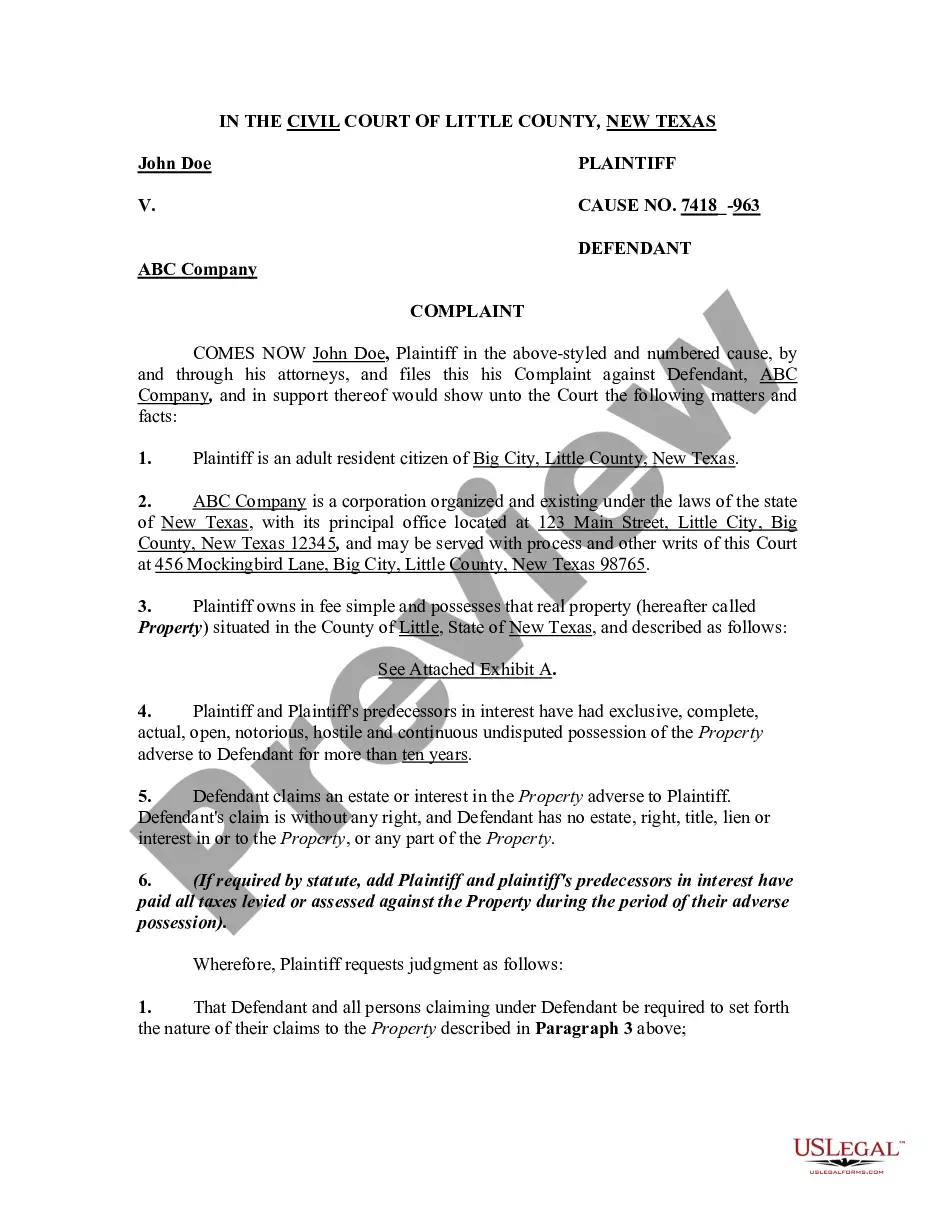
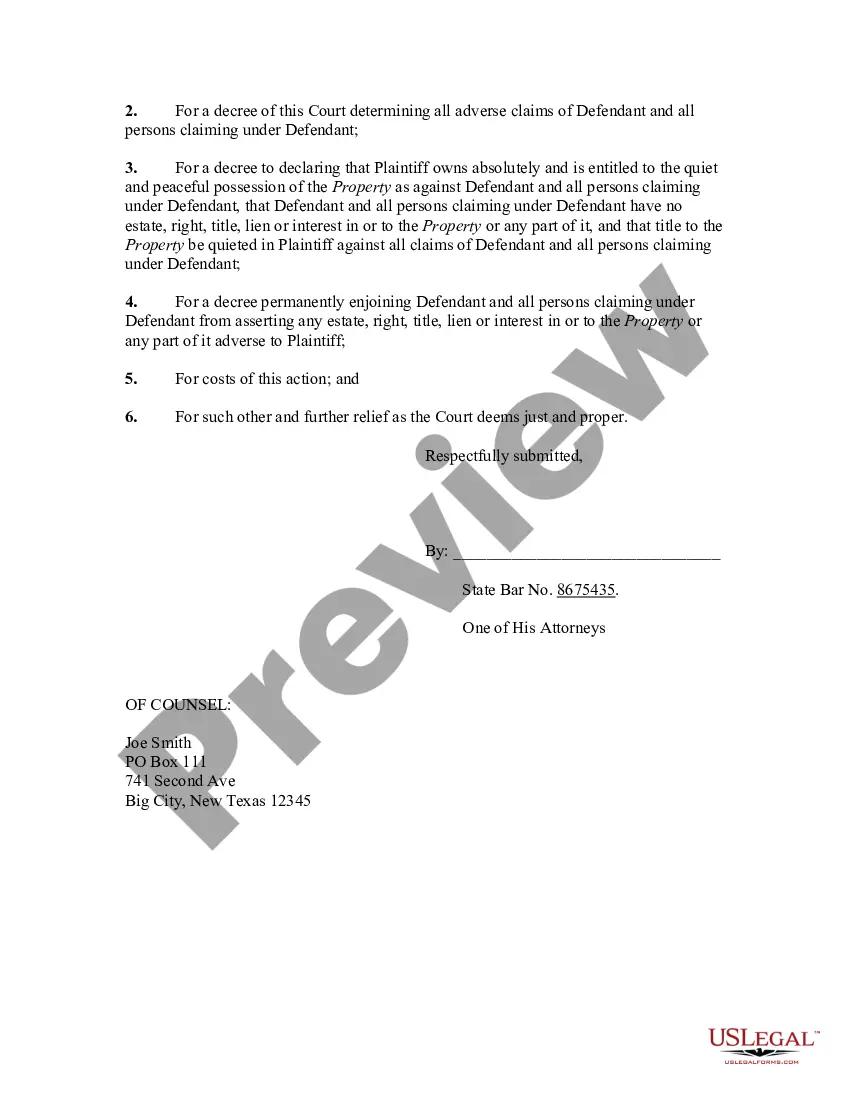
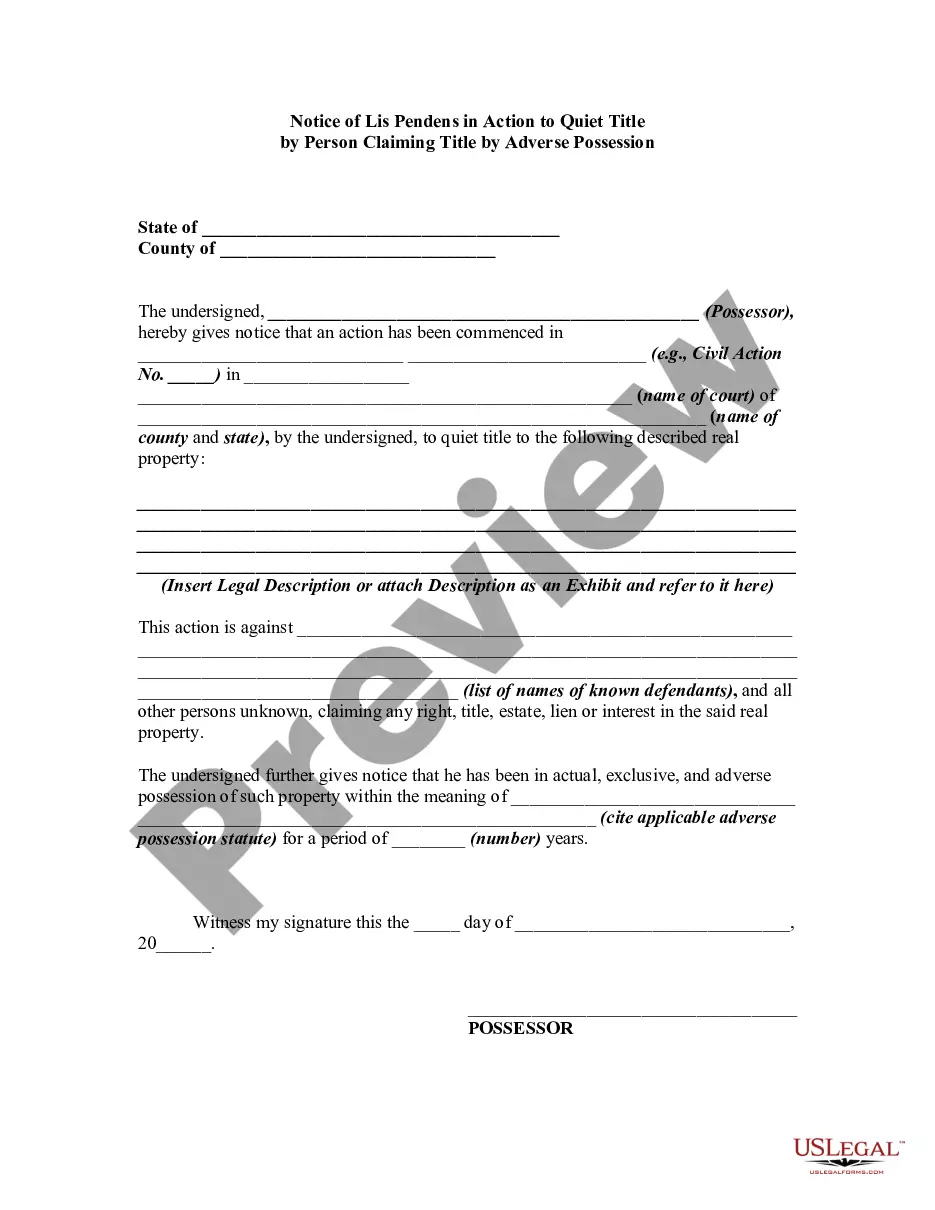
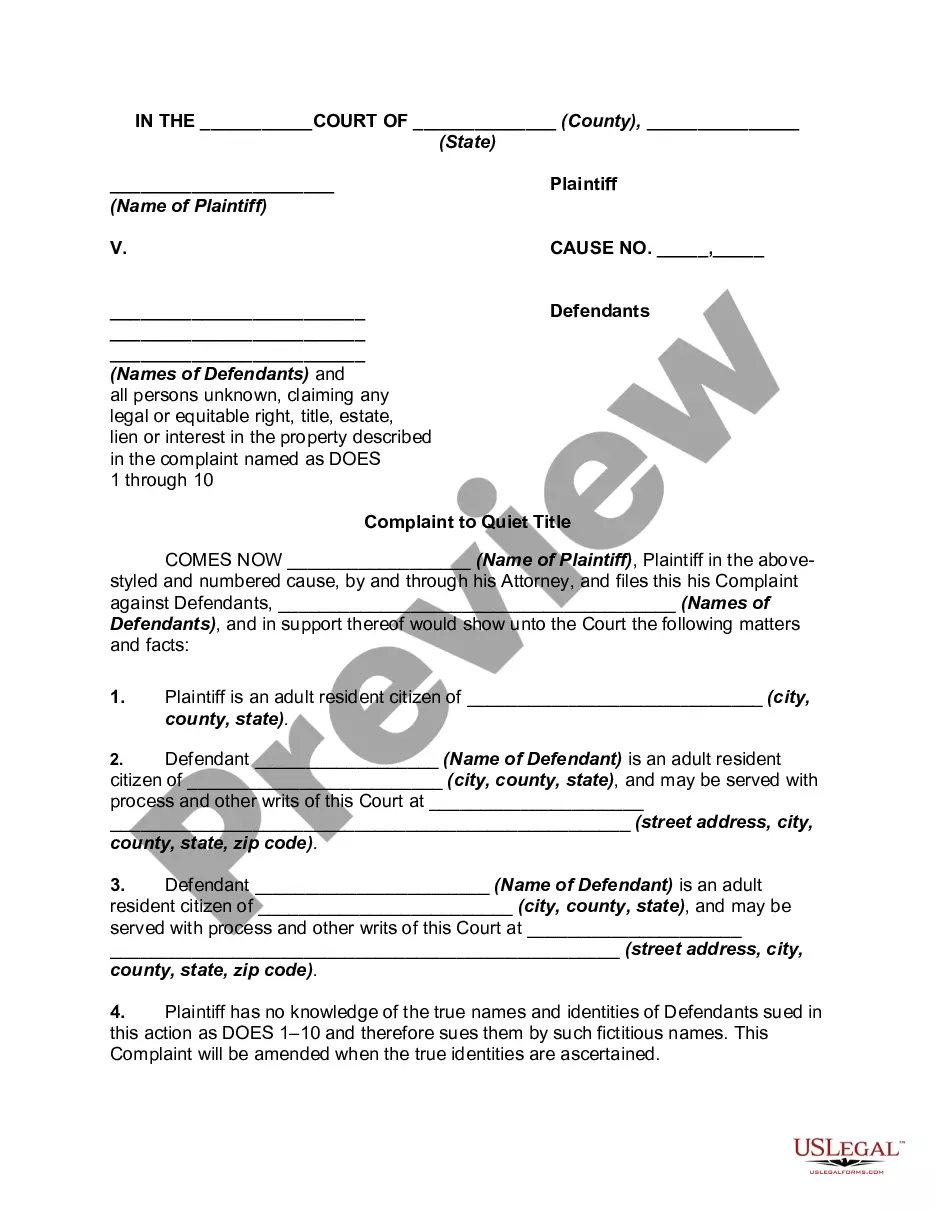




How to fill out Complaint To Quiet Title By Person Claiming Adverse Possession - Squatters Rights?
- Log into your US Legal Forms account if you are a returning user to access the form directly.
- Verify your subscription status to ensure you're eligible for downloads. If necessary, renew your plan.
- Preview the selected form and review its description to confirm it meets your local jurisdiction requirements.
- Utilize the Search function to find an appropriate alternative if the current form does not fit your needs.
- Select the 'Buy Now' option and choose the subscription plan that suits you best; registration is required for new users.
- Complete your purchase by entering your payment details, using either a credit card or PayPal.
- Download the completed form to your device for easy access and future reference in your profile's 'My Forms' section.
In conclusion, US Legal Forms makes it easy for you to navigate the complexities of legal documentation. By following these steps, you can quickly and efficiently obtain the necessary forms to safeguard your property rights.
Experience the benefits for yourself; visit US Legal Forms today and empower your legal journey!
Form popularity
FAQ
To prove adverse possession in Massachusetts, you must substantiate your claim by demonstrating that your possession has been open, notorious, and exclusive for a required period. Evidence may include witness statements, photographs, and other documentation showing your long-term occupancy. Utilizing an adverse possession form with land title can help you compile necessary information and streamline the process of proving your claim.
In Massachusetts, the law requires that you must occupy the property for a minimum of 20 years to claim ownership through adverse possession. This period reflects the significance of continuous and uninterrupted possession while demonstrating a claim of right. By using the adverse possession form with land title, you can formally establish your ownership claim once the time requirement is satisfied.
In Massachusetts, to claim adverse possession, you must meet several key requirements, including continuous possession, open use, and a claim of right. Your possession must be exclusive and hostile to the interests of the true owner. It's essential to submit the appropriate adverse possession form with land title to support your claim and ensure it complies with state laws.
The declaration of adverse possession form is a legal document that enables a person to claim ownership of property that they have occupied for a certain period. It serves as a formal acknowledgment of the occupant’s intention to possess the property and to establish their claim. By completing this adverse possession form with land title, you can begin the process of securing legal rights to the property in question.
In North Carolina, to establish a claim for adverse possession, you need to occupy the property for at least 20 years continuously and openly. Your possession must be exclusive, meaning you act as if you are the owner and exclude others. Additionally, the use of the property must be actual and visible, so it is clear to others that you are treating the land as your own. To finalize your claim, you will also need to prepare an adverse possession form with land title to provide legal evidence of your ownership.
To file an adverse possession claim in Florida, gather the necessary documentation, including proof of your possession and the adverse possession form with land title. You will need to present your claim to the county's property appraiser or recorder's office. It's advisable to consult legal resources or professionals if you are unsure about the process, as it ensures your claim is structured correctly and stands firm.
The requirements for adverse possession in Florida consist of continuous and uninterrupted use of the property for at least seven years, among others. You must also use the property in a manner that is visible and known to the actual owner. Filing the correct adverse possession form with land title is crucial for ensuring your claim is recognized by local authorities.
In Florida, the five requirements for adverse possession include continuous possession, open and notorious use, exclusive possession, hostile possession, and statutory duration of seven years. Each of these elements must be clearly demonstrated to validate your claim. When prepared, submitting your adverse possession form with land title is necessary to claim ownership legally.
To record an adverse possession, you must first file a claim with the appropriate local government office, often the county recorder or assessor's office. This process typically involves submitting the required adverse possession form with land title that details your claim. It's essential to include all necessary documentation that proves your continuous and open use of the property.
An example of an adverse possession claim occurs when an individual occupies a piece of land without the permission of the owner for a certain period, fulfilling specific legal conditions. For instance, if someone builds a fence and maintains a garden on a vacant lot that they do not own, they may have grounds for an adverse possession claim. To formalize this process, you will need an adverse possession form with land title, which allows you to assert your claim legally.