Adverse Possession Examples In India
Description
Get your form ready online
Our built-in tools help you complete, sign, share, and store your documents in one place.
Make edits, fill in missing information, and update formatting in US Legal Forms—just like you would in MS Word.
Download a copy, print it, send it by email, or mail it via USPS—whatever works best for your next step.
Sign and collect signatures with our SignNow integration. Send to multiple recipients, set reminders, and more. Go Premium to unlock E-Sign.
If this form requires notarization, complete it online through a secure video call—no need to meet a notary in person or wait for an appointment.
We protect your documents and personal data by following strict security and privacy standards.
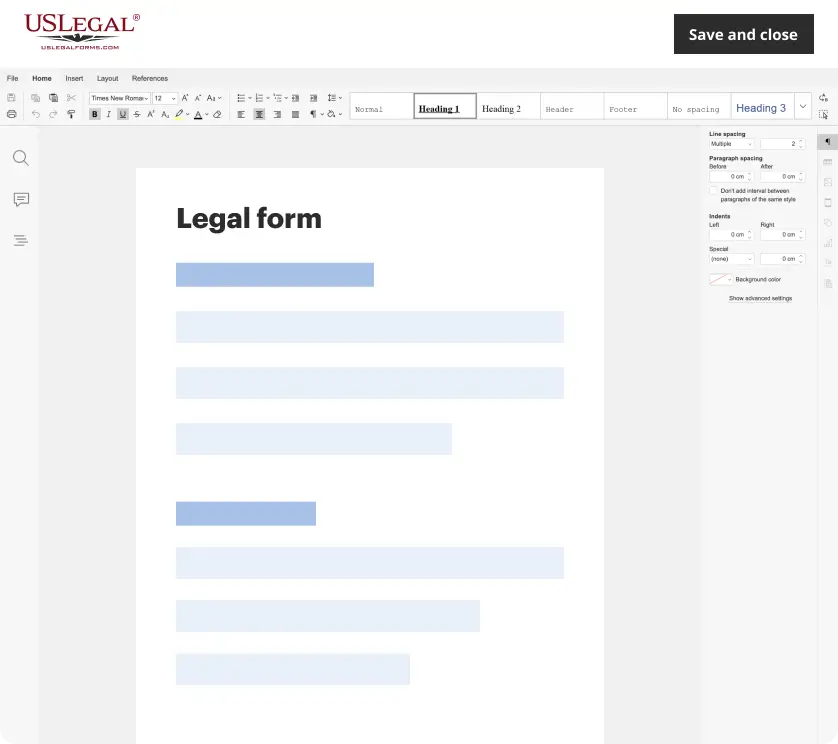
Make edits, fill in missing information, and update formatting in US Legal Forms—just like you would in MS Word.
Download a copy, print it, send it by email, or mail it via USPS—whatever works best for your next step.
Sign and collect signatures with our SignNow integration. Send to multiple recipients, set reminders, and more. Go Premium to unlock E-Sign.
If this form requires notarization, complete it online through a secure video call—no need to meet a notary in person or wait for an appointment.
We protect your documents and personal data by following strict security and privacy standards.
Looking for another form?

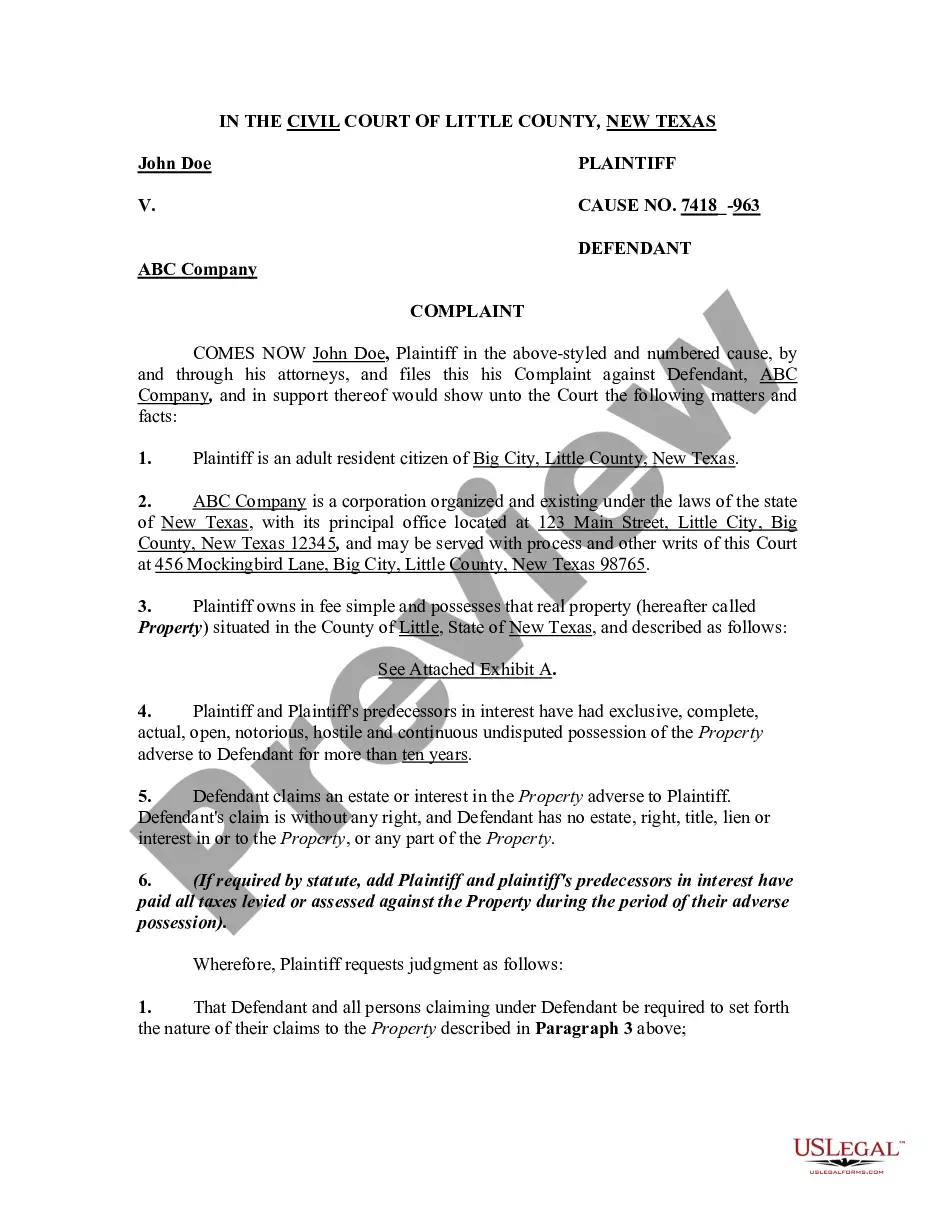
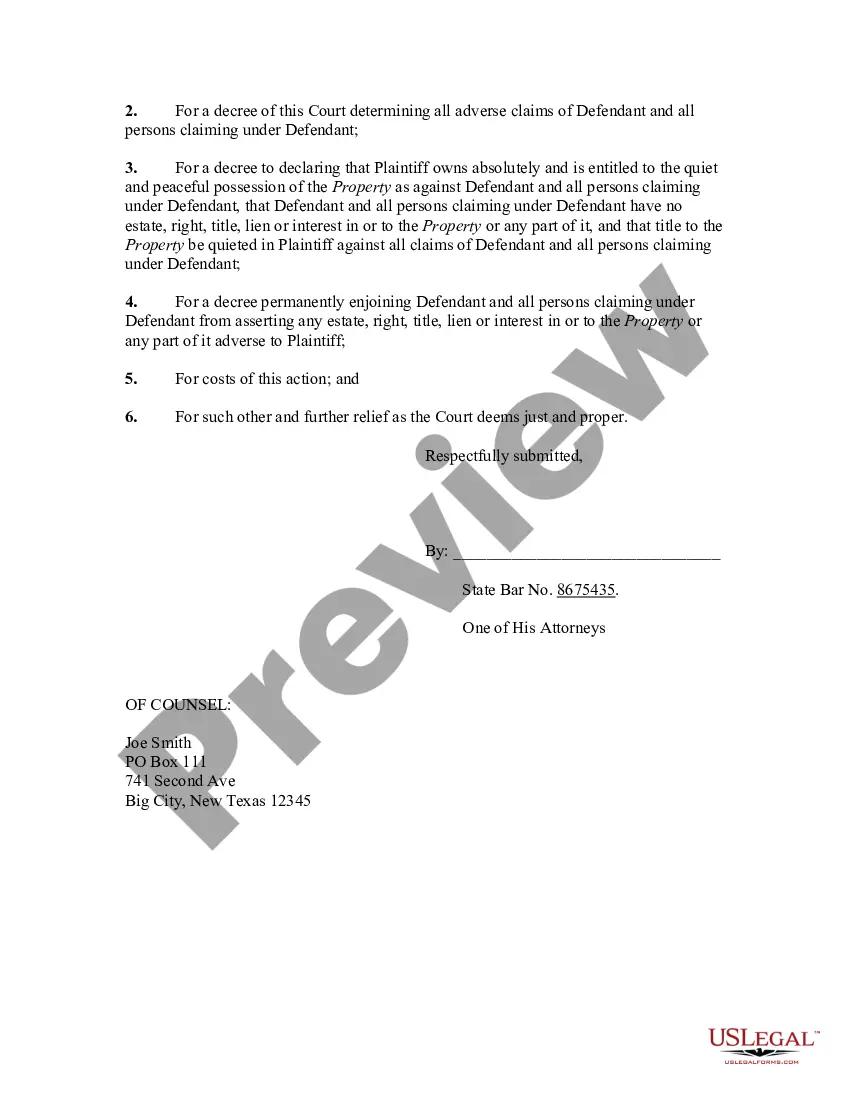
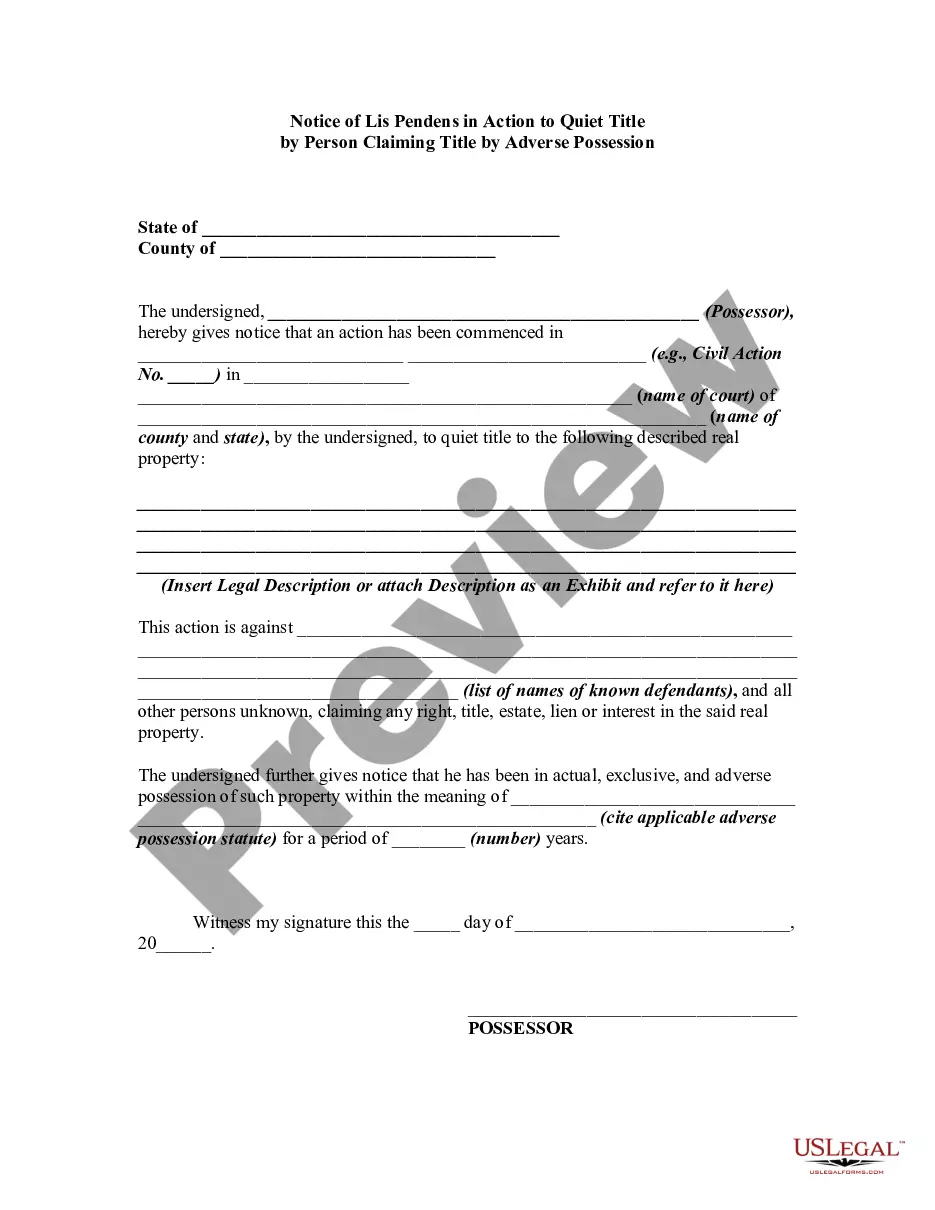
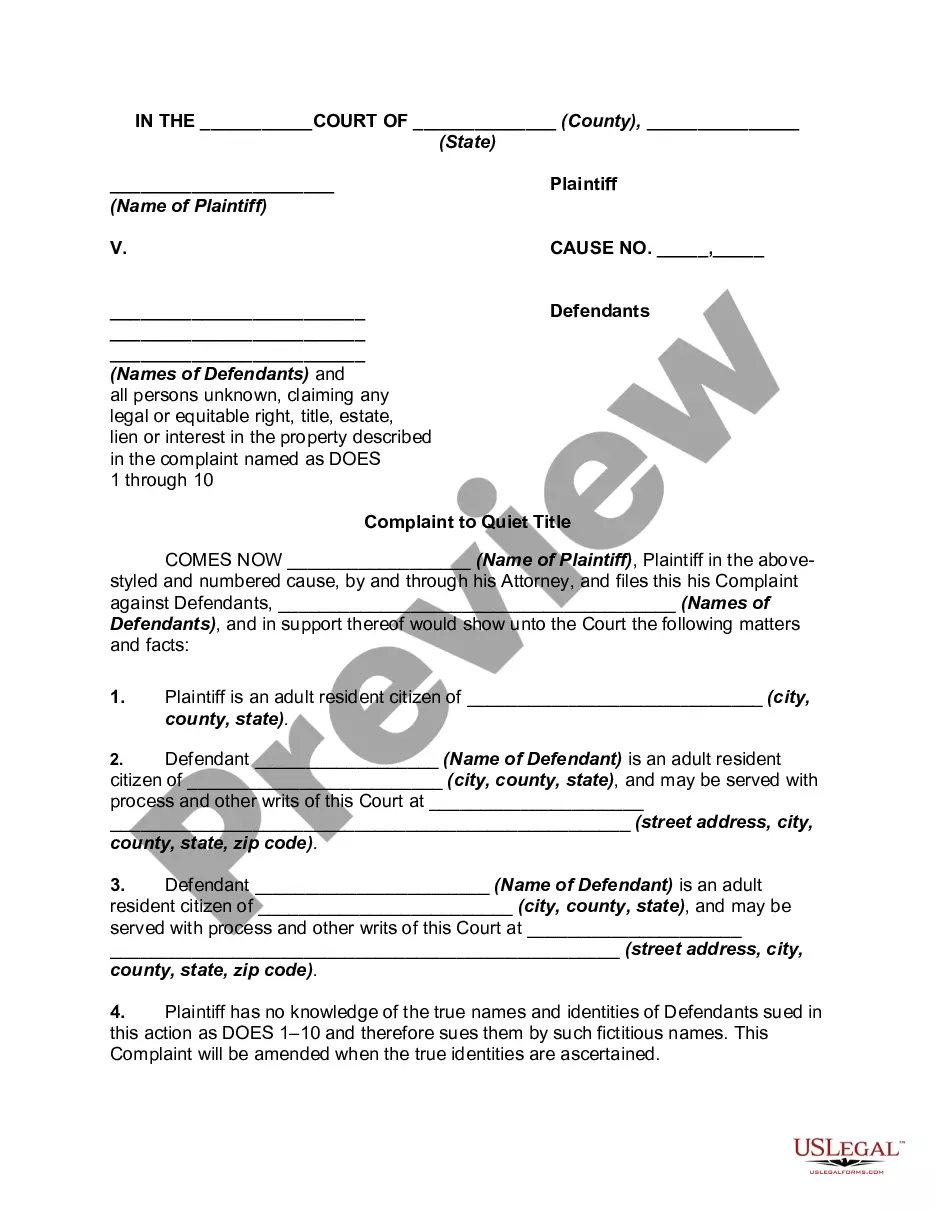
How to fill out Complaint To Quiet Title By Person Claiming Adverse Possession - Squatters Rights?
It’s clear that you cannot become a legal authority instantly, nor can you learn how to swiftly compile Adverse Possession Examples In India without a specialized foundation.
Assembling legal documents is a lengthy endeavor that necessitates specific training and expertise. So why not entrust the creation of the Adverse Possession Examples In India to the professionals.
With US Legal Forms, one of the most comprehensive legal document repositories, you can access everything from court documents to templates for in-office communication.
If you need any additional template, restart your search.
Establish a free account and select a subscription plan to purchase the template. Click Buy now. Once the payment is processed, you can obtain the Adverse Possession Examples In India, fill it out, print it, and send it to the designated recipients or organizations.
- We understand how critical compliance and adherence to federal and local regulations are.
- That’s why, on our platform, all templates are region-specific and current.
- Here’s how you can initiate your journey on our website and acquire the document you need in just minutes.
- Locate the document you require using the search bar at the top of the webpage.
- Preview it (if this option is available) and read the accompanying description to determine if Adverse Possession Examples In India is what you seek.
Form popularity
FAQ
Ownership is transferred to the possessor after 12 years of continuous possession, provided that the true owner did not take any action to reclaim the property. Ownership is obtained by the first person who claims and uses the land, regardless of the duration of possession.
Possession given to family member is often considered passively permissive and natural even if no formal agreement is signed on paper or any witness to verbal agreement exists. Therefore, the burden of proving that the possession was actively adverse shall be on the claimant.
Adverse possession is a legal concept that enables a person to claim ownership of a property by possessing it continuously and without interruption for a specified period of time. In India, the law governing adverse possession is governed by the Limitation Act, 1963.
Therefore, a person who claims adverse possession should show : (a) on what date he came into possession, (b) what was the nature of his possession (c) whether the factum of possession was known to the other party, (d) how long his possession has continued, and (e) his possession was open and undisturbed.
Ing to the Indian legal system, if a property owner fails to make a claim towards their property for 12 years, and the same tenant continues to occupy the property for 12 years, the ownership rights to the property is transferred to the tenant.