Summary Judgment Vs Trial
Description
Get your form ready online
Our built-in tools help you complete, sign, share, and store your documents in one place.
Make edits, fill in missing information, and update formatting in US Legal Forms—just like you would in MS Word.
Download a copy, print it, send it by email, or mail it via USPS—whatever works best for your next step.
Sign and collect signatures with our SignNow integration. Send to multiple recipients, set reminders, and more. Go Premium to unlock E-Sign.
If this form requires notarization, complete it online through a secure video call—no need to meet a notary in person or wait for an appointment.
We protect your documents and personal data by following strict security and privacy standards.

Make edits, fill in missing information, and update formatting in US Legal Forms—just like you would in MS Word.

Download a copy, print it, send it by email, or mail it via USPS—whatever works best for your next step.

Sign and collect signatures with our SignNow integration. Send to multiple recipients, set reminders, and more. Go Premium to unlock E-Sign.

If this form requires notarization, complete it online through a secure video call—no need to meet a notary in person or wait for an appointment.

We protect your documents and personal data by following strict security and privacy standards.
Looking for another form?
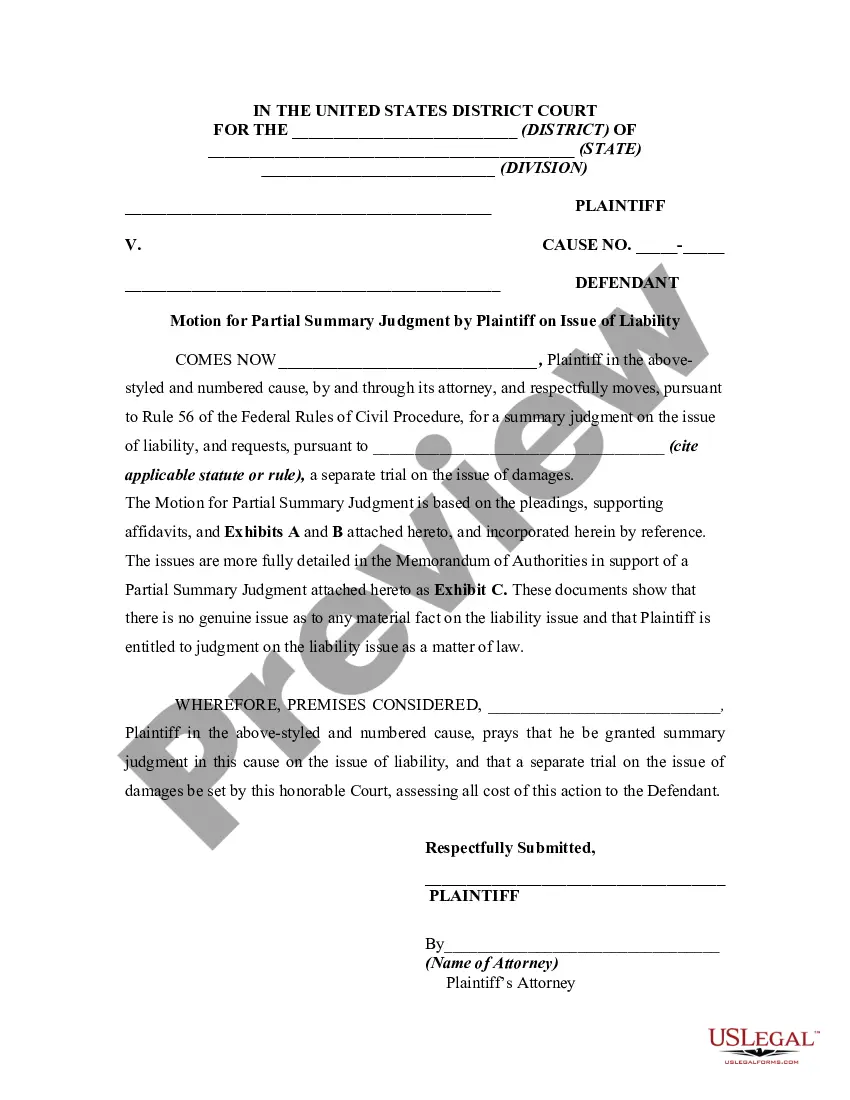
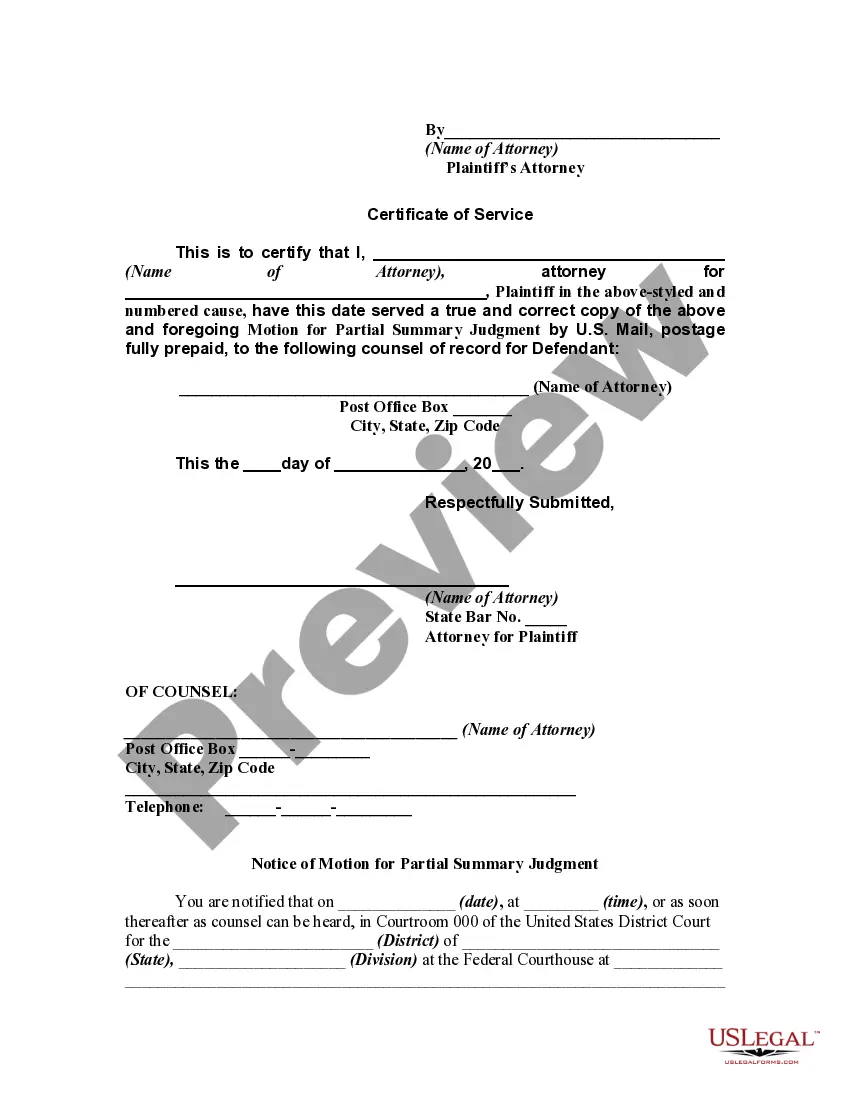
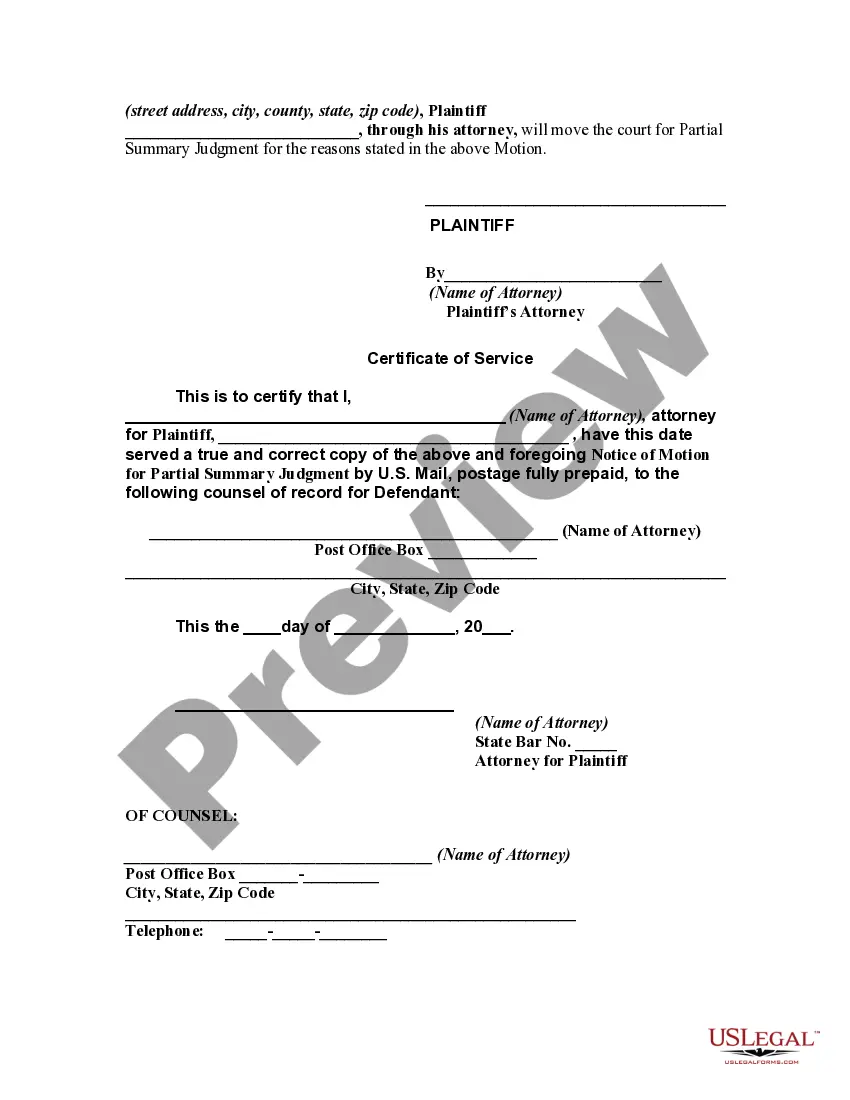
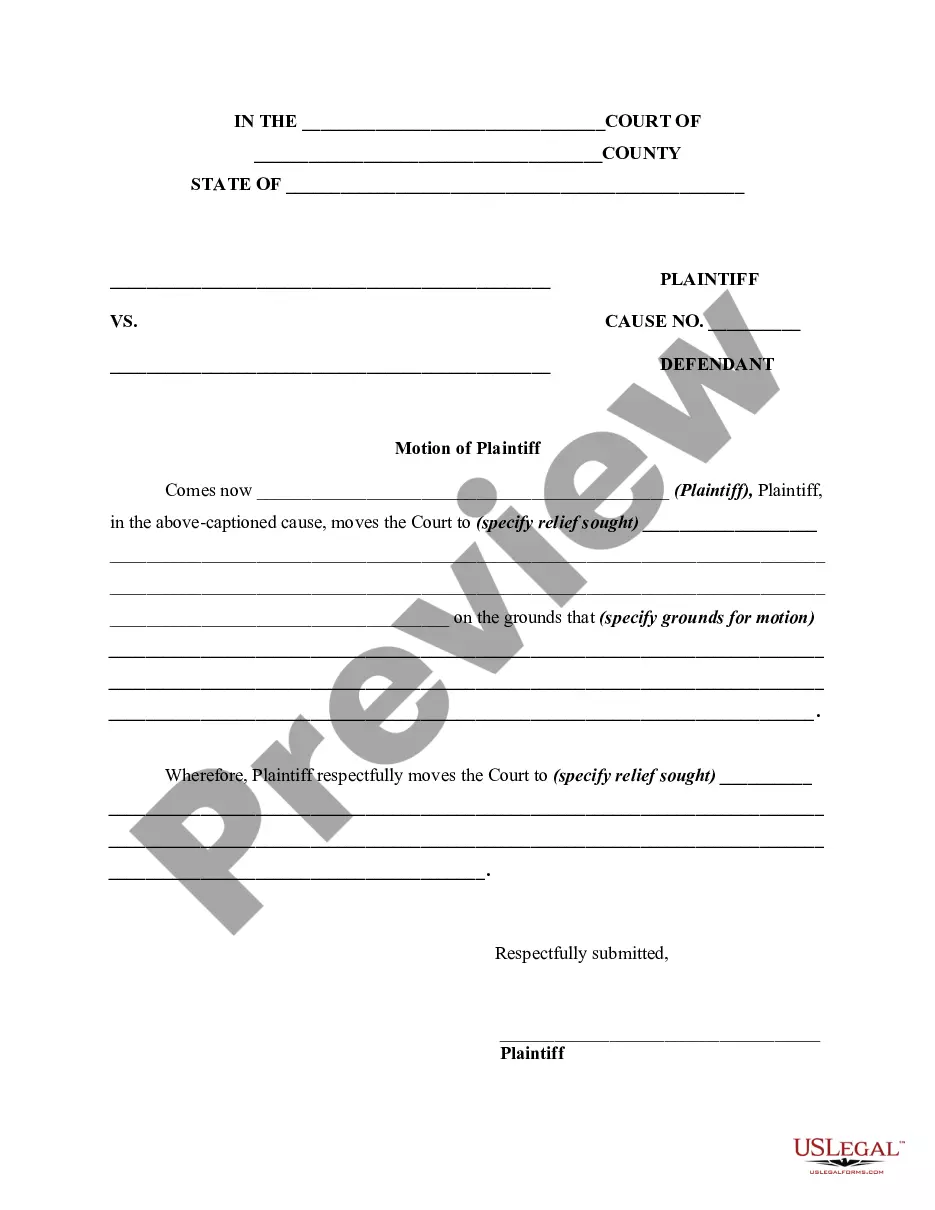
How to fill out General Form Of Partial Motion For Summary Judgment By Plaintiff On Issue Of Liability With Notice Of Motion And With Request For Separate Trial On Issue Of Damages?
Managing legal documents can be daunting, even for seasoned experts. When you are looking for a Summary Judgment Vs Trial and lack the time to thoroughly search for the correct and current version, the experience can be stressful. A robust online form repository could be a transformative solution for anyone aiming to handle these scenarios effectively.
US Legal Forms is a leading provider of online legal templates, boasting over 85,000 state-specific legal documents readily available to you at any time.
Utilize a valuable resource library of articles, guides, and manuals relevant to your situation and needs.
Conserve time and effort searching for the documents you require, and use US Legal Forms’ advanced search and Preview tool to locate Summary Judgment Vs Trial and obtain it.
Ensure the sample is authorized in your state or county. Click Buy Now when you are prepared. Choose a monthly subscription plan. Locate the format you need, and Download, complete, eSign, print, and send your document. Take advantage of the US Legal Forms online library, supported by 25 years of experience and trustworthiness. Streamline your daily document management into a straightforward and user-friendly process today.
- If you have a subscription, Log In to your US Legal Forms account, search for the form, and obtain it.
- Visit the My documents tab to see the documents you have previously downloaded and manage your folders as needed.
- If this is your first experience with US Legal Forms, create a free account and gain unlimited access to all the benefits of the library.
- Here are the steps to follow after accessing the form you need.
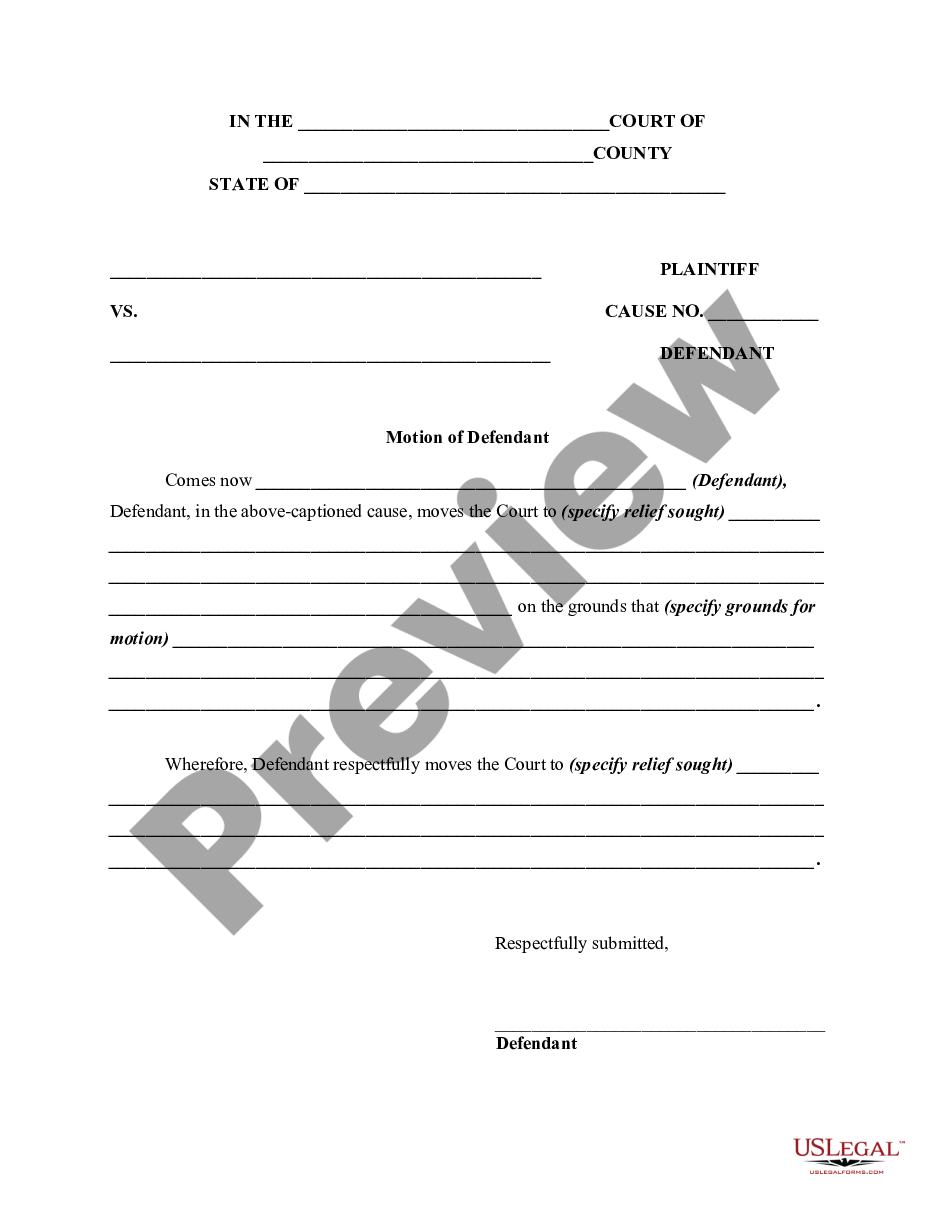
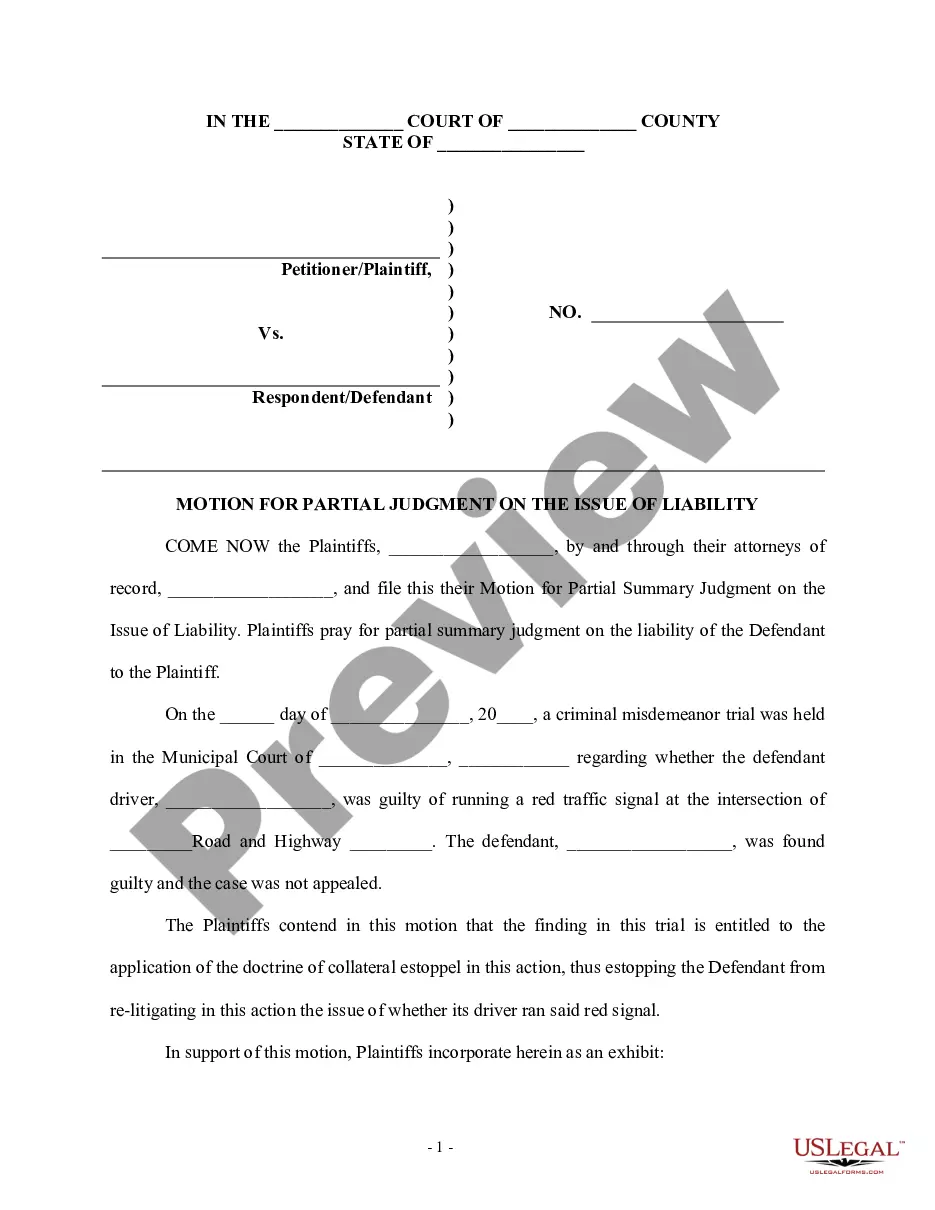
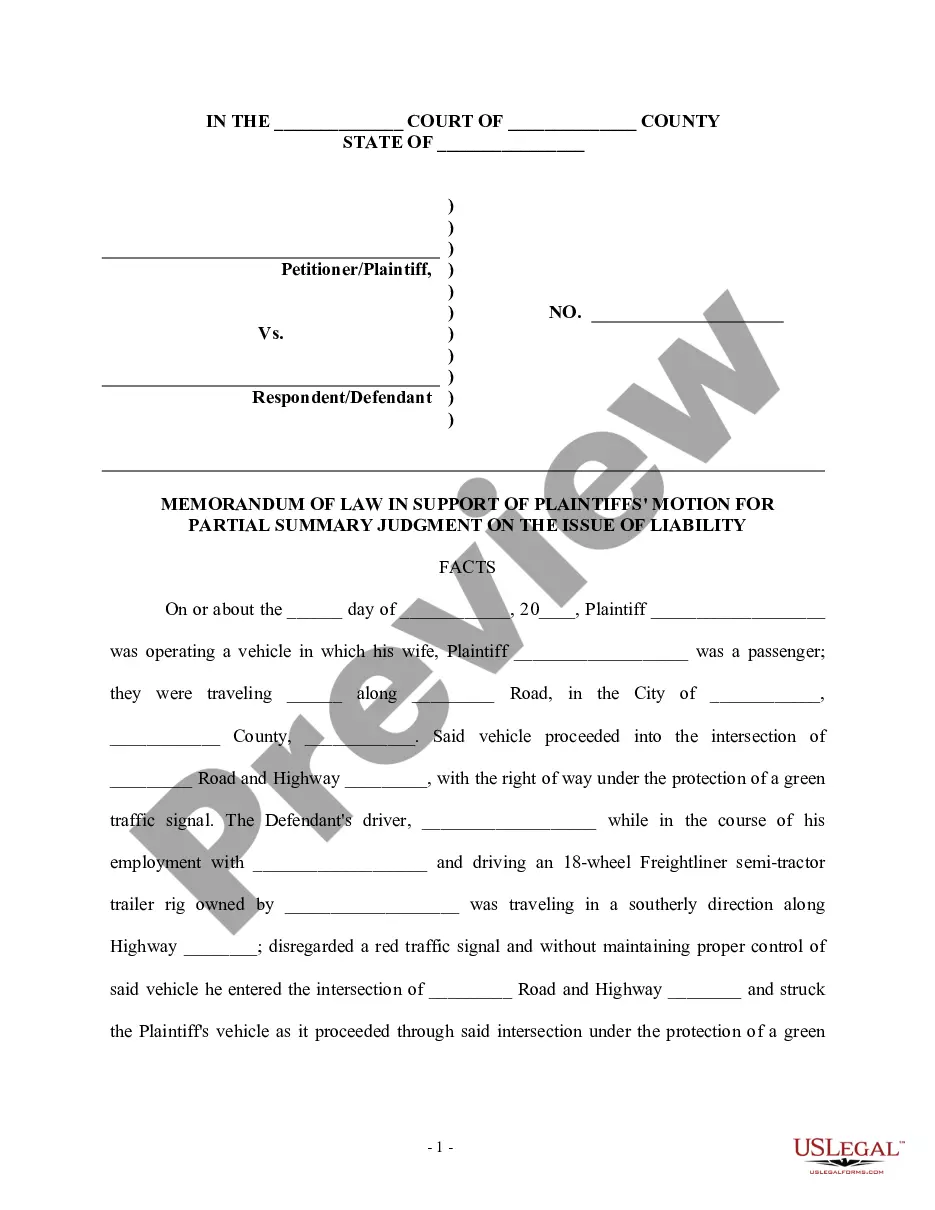
- Confirm it is the correct form by previewing it and reading its description.
- Access state- or county-specific legal and business documents.
- US Legal Forms caters to all your needs, from personal to corporate paperwork, all in one place.
- Leverage advanced tools to complete and manage your Summary Judgment Vs Trial.
Form popularity
FAQ
Civil rights cases concluded in U.S. district courts, by disposition, 1990?2006. From a tactical perspective, there are two basic types of summary-judgment motions. One requires a full evidentiary presentation, and the other requires only a more limited, targeted one.
There are several different types of post-judgment motions, but the most common are motions for new trial, motions to vacate, and motions to set-aside. Motions for new trial, motions to vacate, and motions to set-aside are the three most common post-judgment motions.
Summary judgment is a pre-trial motion and often takes place after discovery is complete.
Generally, summary judgment motions are submitted after all relevant discovery has been completed, but well in advance of trial. In New York, a party may move for summary judgment any time ?after issue has been joined,? meaning after service of a responsive pleading.
The plaintiff starts a court case by filing a "complaint" (a document that outlines the plaintiff's facts and legal theories and makes a request for relief). In the complaint, the plaintiff might: Ask the court for "damages," meaning money to pay the plaintiff for any harm suffered.