Premises Eviction For Unauthorized Occupation
Description

Get your form ready online
Our built-in tools help you complete, sign, share, and store your documents in one place.
Make edits, fill in missing information, and update formatting in US Legal Forms—just like you would in MS Word.
Download a copy, print it, send it by email, or mail it via USPS—whatever works best for your next step.
Sign and collect signatures with our SignNow integration. Send to multiple recipients, set reminders, and more. Go Premium to unlock E-Sign.
If this form requires notarization, complete it online through a secure video call—no need to meet a notary in person or wait for an appointment.
We protect your documents and personal data by following strict security and privacy standards.

Make edits, fill in missing information, and update formatting in US Legal Forms—just like you would in MS Word.

Download a copy, print it, send it by email, or mail it via USPS—whatever works best for your next step.

Sign and collect signatures with our SignNow integration. Send to multiple recipients, set reminders, and more. Go Premium to unlock E-Sign.

If this form requires notarization, complete it online through a secure video call—no need to meet a notary in person or wait for an appointment.

We protect your documents and personal data by following strict security and privacy standards.
Looking for another form?
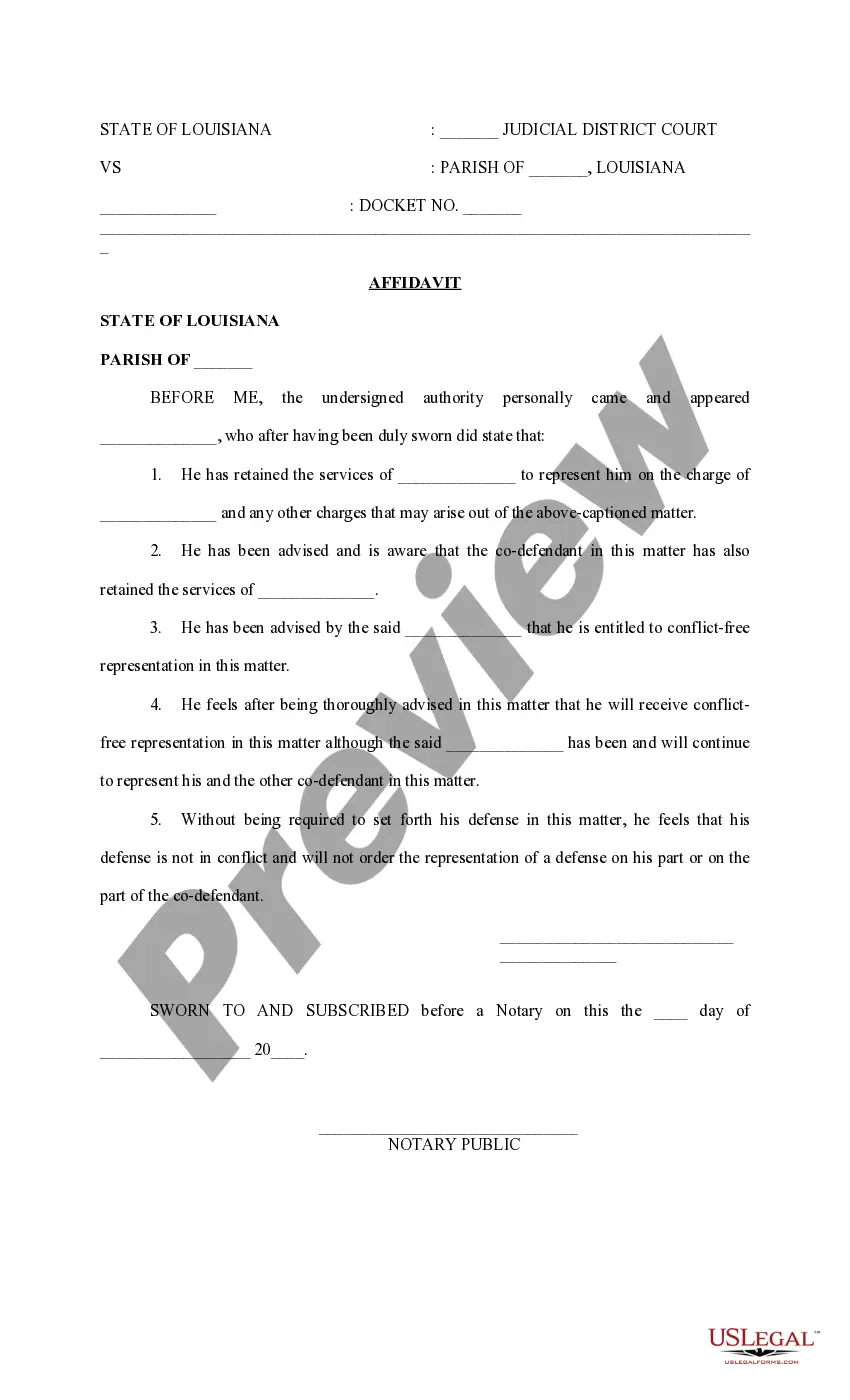


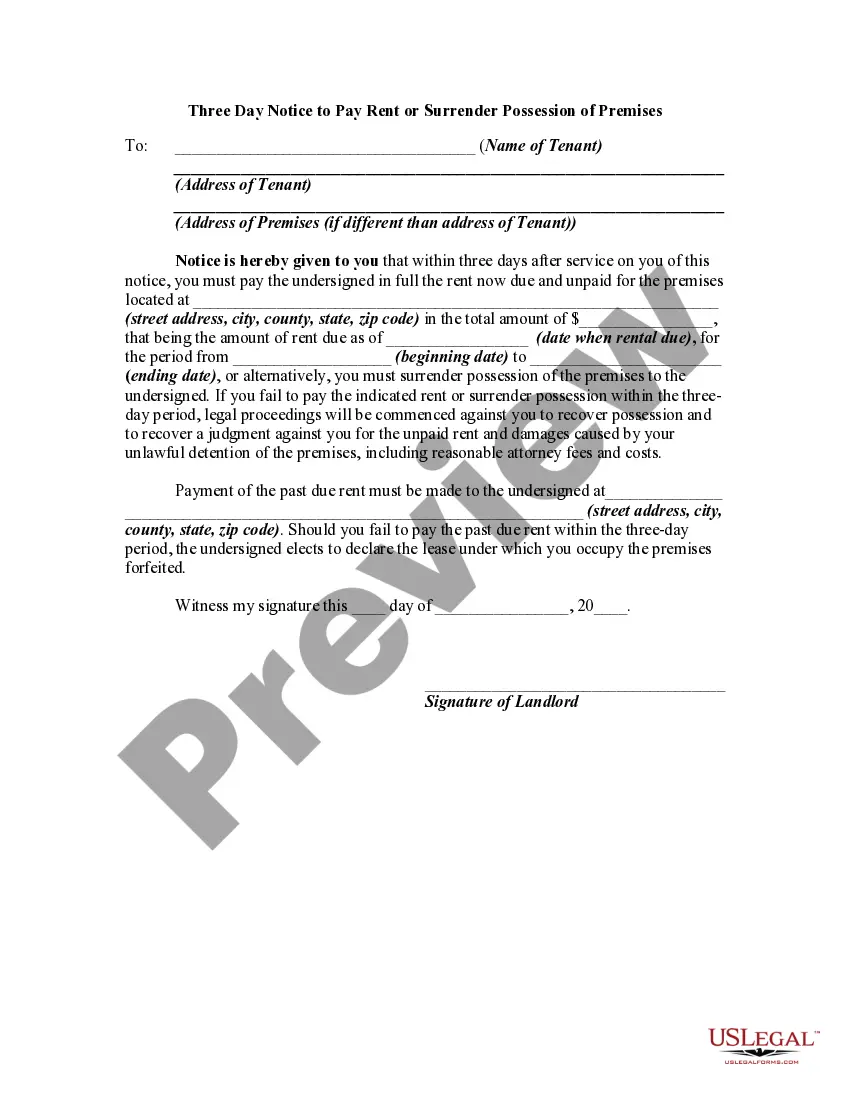
How to fill out Three Day Notice To Pay Rent Or Surrender Possession Of Premises - Vacate - Past Due Rent - Eviction?
The Premises Eviction For Unauthorized Occupation displayed on this page is a reusable legal template created by expert attorneys in compliance with federal and local statutes and regulations.
For over 25 years, US Legal Forms has supplied individuals, companies, and legal practitioners with over 85,000 verified, state-specific documents for any business and personal circumstance. It’s the quickest, simplest, and most dependable method to acquire the paperwork you require, as the service ensures the highest level of data security and anti-malware safeguards.
Subscribe to US Legal Forms to have authorized legal templates for all of life's situations readily available.
- Search for the document you require and review it.
- Browse the sample you looked for and preview it or examine the form description to confirm it meets your requirements. If it does not, utilize the search bar to find the appropriate one. Click Buy Now when you have located the template you need.
- Register and Log In.
- Choose a payment plan that fits your needs and set up an account. Use PayPal or a credit card to make a quick payment. If you already possess an account, Log In and review your subscription to proceed.
- Obtain the editable template.
- Select the format you desire for your Premises Eviction For Unauthorized Occupation (PDF, Word, RTF) and save the document to your device.
- Complete and sign the documents.
- Print the template to fill it out manually. Alternatively, use an online multi-purpose PDF editor to efficiently and accurately fill out and sign your form digitally.
- Redownload your documents as needed.
- Reopen the My documents tab in your profile to redownload any previously saved documents.
Form popularity
FAQ
In Washington state, the eviction process begins with serving a notice that specifies the reason for eviction, such as unauthorized occupation. You must follow proper legal protocols, including filing an eviction lawsuit if necessary. Understanding these regulations is key to effectively managing premises eviction for unauthorized occupation in Washington.
If someone is living in your house without permission, your first step is to communicate with them to resolve the issue. If informal attempts fail, consider serving an eviction notice. Following this, you may need to employ legal channels to facilitate premises eviction for unauthorized occupation, ensuring your rights are upheld.
An unlawful occupant is someone residing in a property without the owner's permission or legal authority. This situation often overlaps with unauthorized occupants. To address this challenge, you may need to initiate premises eviction for unauthorized occupation to regain control of your property.
To remove unauthorized occupants, you must follow the legal eviction process in your state. This typically involves delivering a formal eviction notice to the occupant, filing a lawsuit if they do not leave, and possibly obtaining a court order. Properly executing these steps is essential for a successful premises eviction for unauthorized occupation.
Unauthorized occupancy occurs when someone lives in a property without the legal right to do so, typically lacking a lease or contract. It can create various legal complications for property owners. Understanding this term is crucial when considering premises eviction for unauthorized occupation.
Proving unauthorized occupants involves collecting various forms of evidence that confirm they are living in your property without consent. You should keep records of communications you had with the occupants, such as texts or emails, and obtain any relevant documents like visitor logs. This information can significantly aid in your premises eviction for unauthorized occupation.
To prove an unauthorized occupant, you can gather evidence that demonstrates the person's lack of permission to reside in your property. This may include lease agreements, photographs, or witness statements. Additionally, documentation showing prior notifications of eviction can support your case for premises eviction for unauthorized occupation.
In Mississippi, the process for premises eviction for unauthorized occupation begins with a proper eviction notice. Landlords must provide a written notice to tenants, typically giving them at least three days to vacate the property. If the tenant does not comply, the landlord can file an eviction lawsuit in court. It's crucial to follow legal procedures meticulously to avoid complications, and using a platform like US Legal Forms can help you navigate these regulations effectively.
To remove an unauthorized occupant, begin by documenting their presence and any violations of your lease agreement. Next, issue a formal eviction notice specifying the reasons, such as their lack of permission to stay. You may also consider using resources like USLegalForms, which can provide streamlined templates and guidance for handling premises eviction for unauthorized occupation effectively.
Filling out an eviction notice template requires careful attention to detail. Start by including the full names of the tenant and landlord, the address of the property, and the specific violation leading to the notice. If applicable, outline the steps to resolve the issue and deadlines for action, particularly in cases of premises eviction for unauthorized occupation, to ensure clarity and legal compliance.