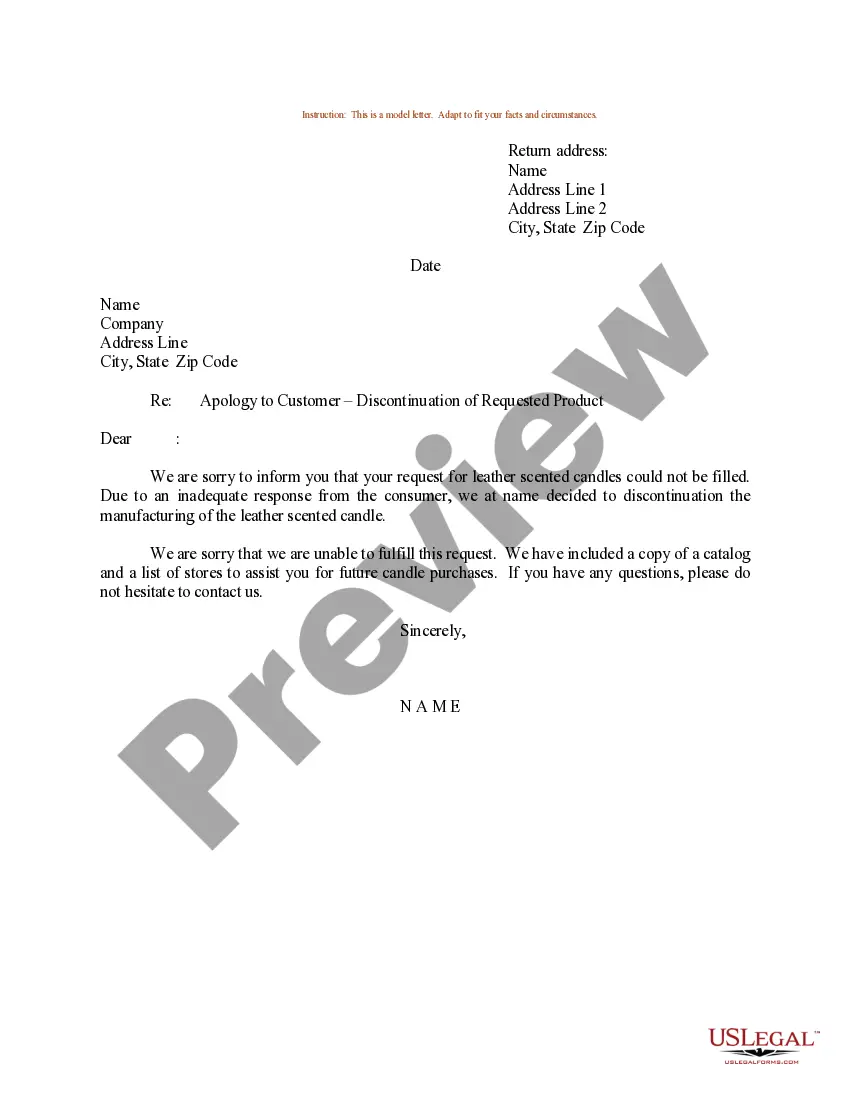
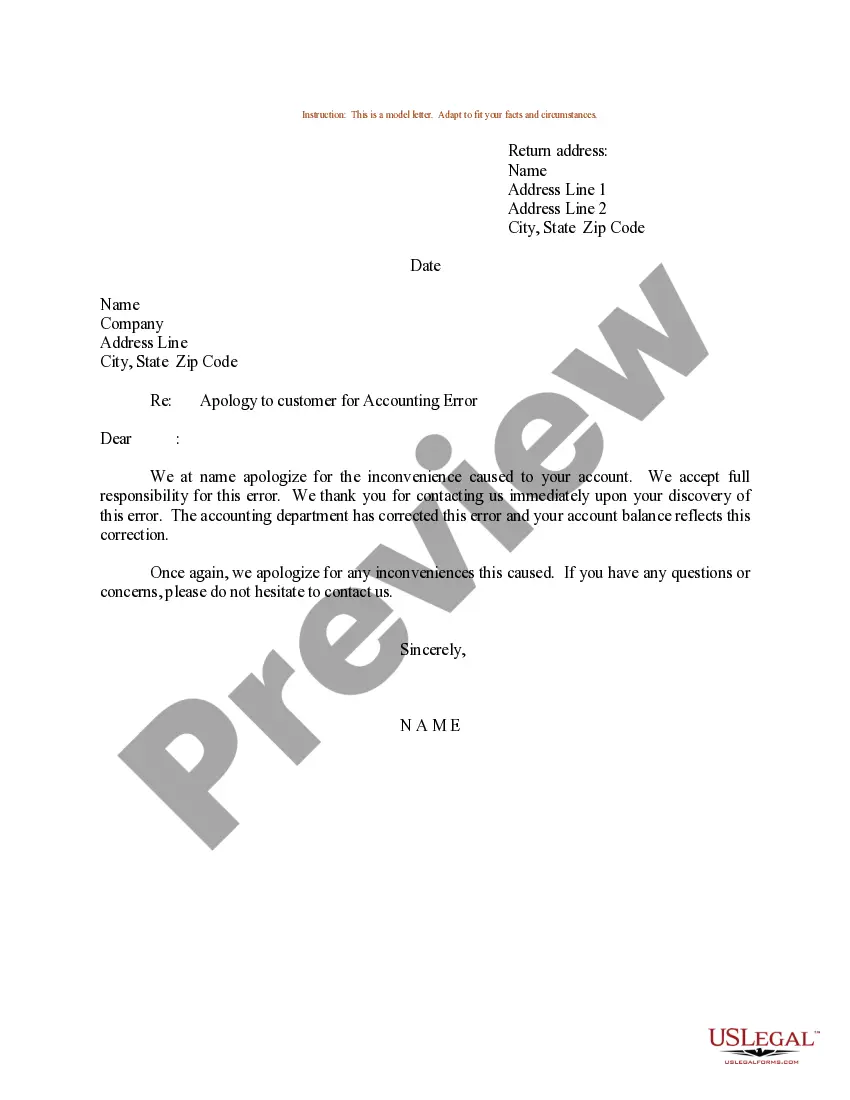
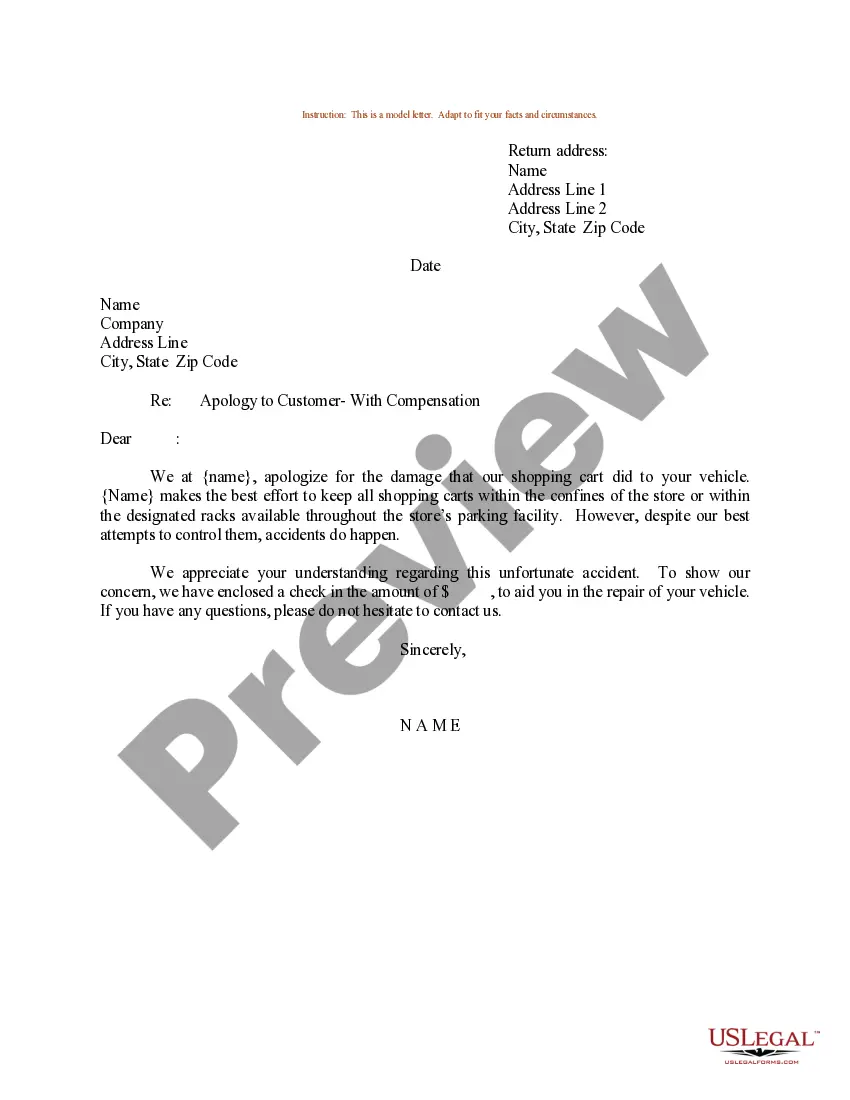
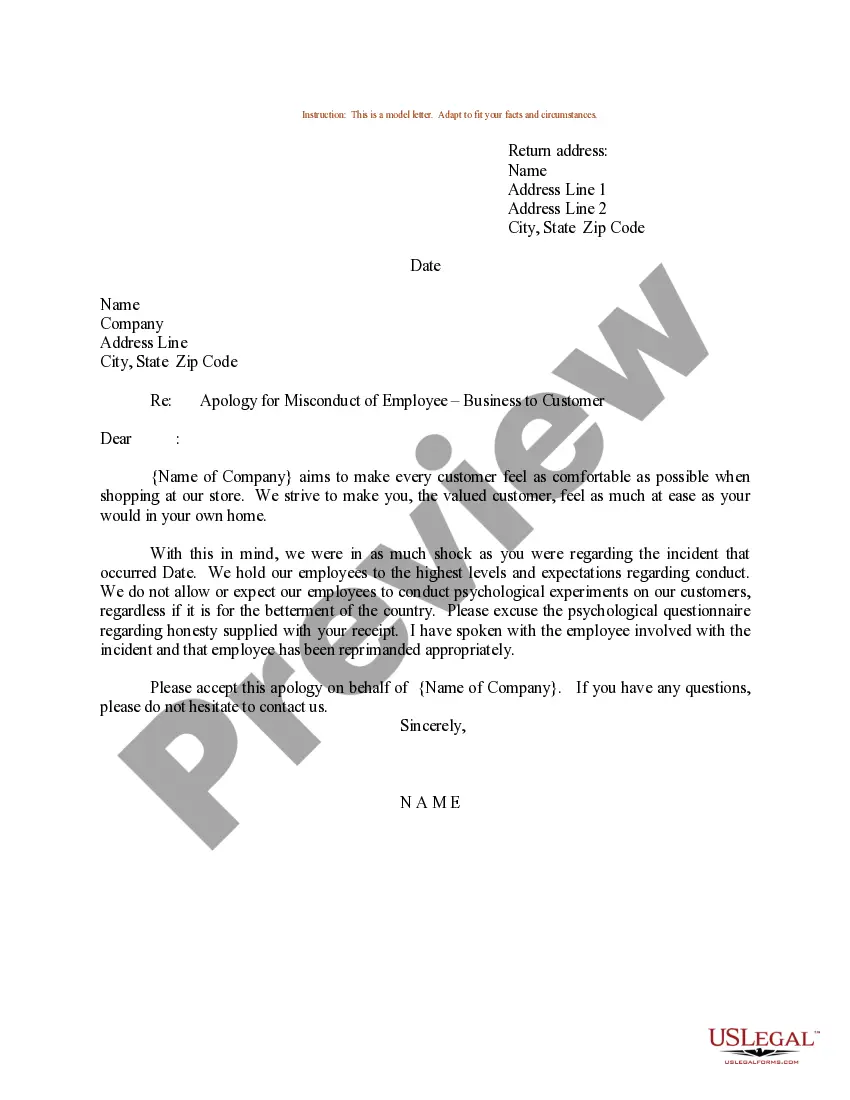
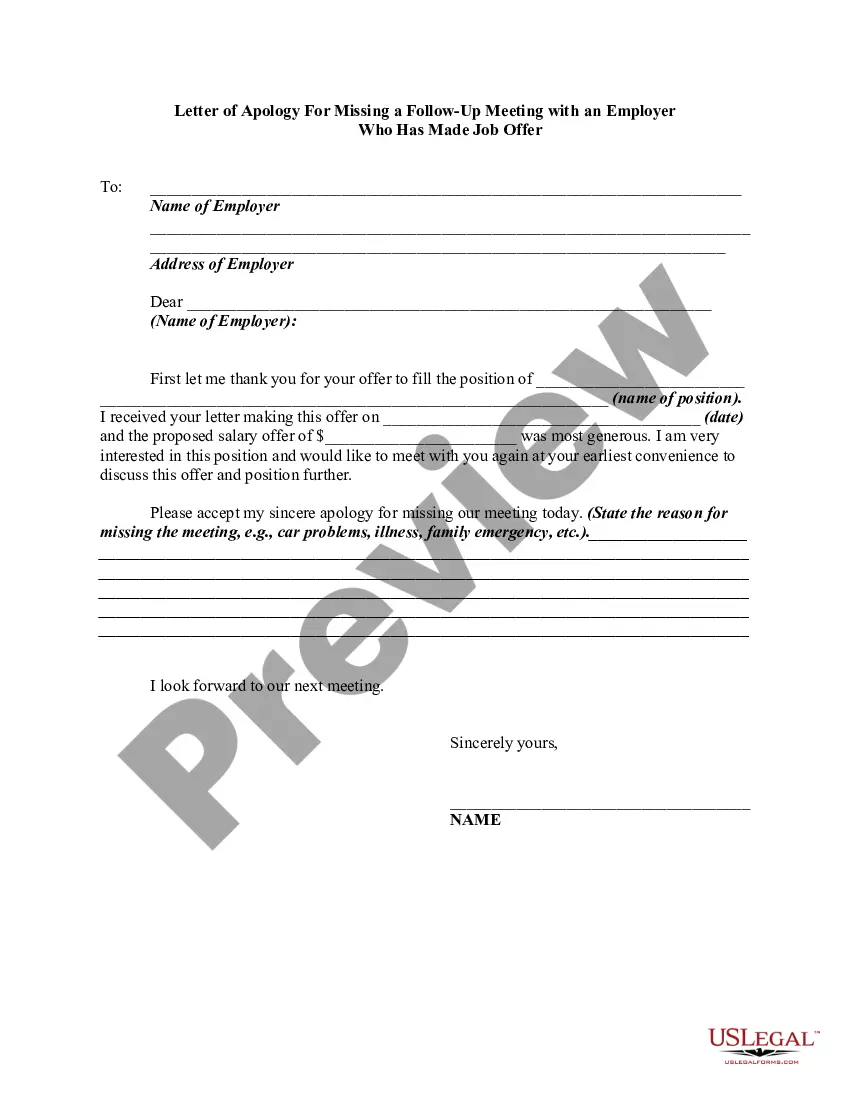
Apology Letter With
Description
Get your form ready online
Our built-in tools help you complete, sign, share, and store your documents in one place.
Make edits, fill in missing information, and update formatting in US Legal Forms—just like you would in MS Word.
Download a copy, print it, send it by email, or mail it via USPS—whatever works best for your next step.
Sign and collect signatures with our SignNow integration. Send to multiple recipients, set reminders, and more. Go Premium to unlock E-Sign.
If this form requires notarization, complete it online through a secure video call—no need to meet a notary in person or wait for an appointment.
We protect your documents and personal data by following strict security and privacy standards.

Make edits, fill in missing information, and update formatting in US Legal Forms—just like you would in MS Word.

Download a copy, print it, send it by email, or mail it via USPS—whatever works best for your next step.

Sign and collect signatures with our SignNow integration. Send to multiple recipients, set reminders, and more. Go Premium to unlock E-Sign.

If this form requires notarization, complete it online through a secure video call—no need to meet a notary in person or wait for an appointment.

We protect your documents and personal data by following strict security and privacy standards.
Looking for another form?

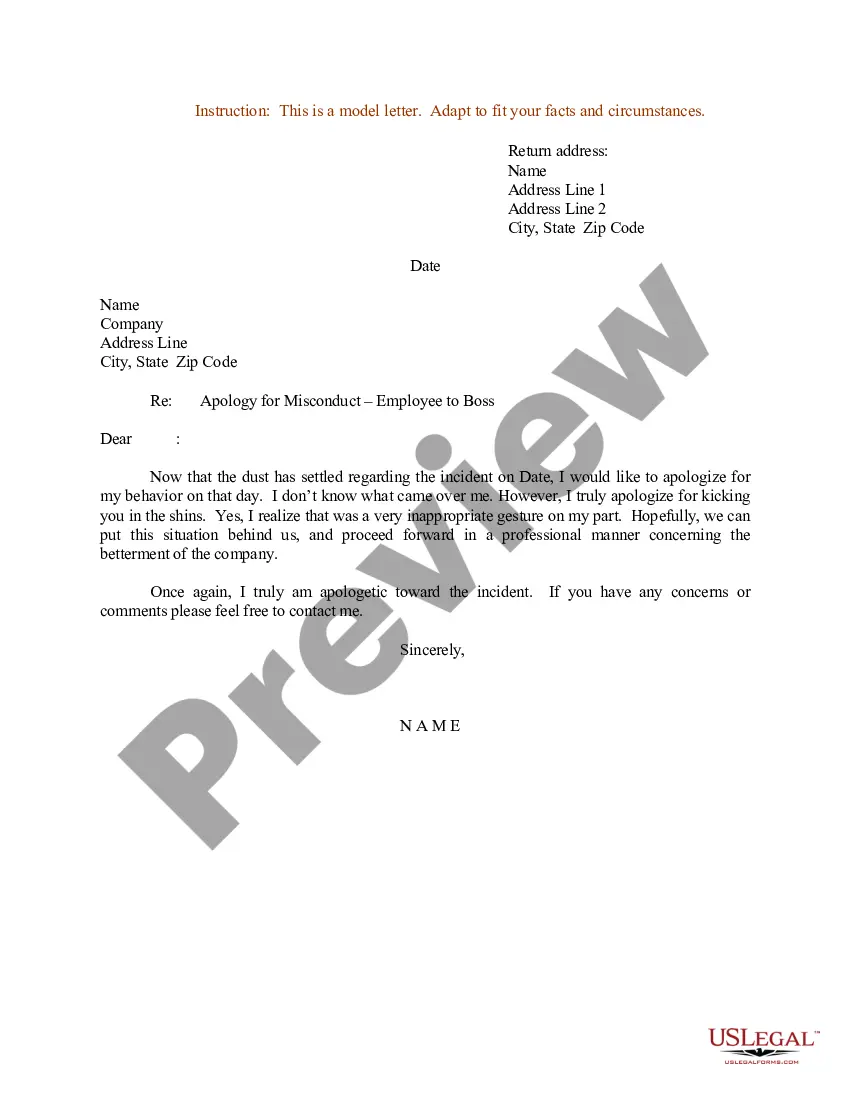
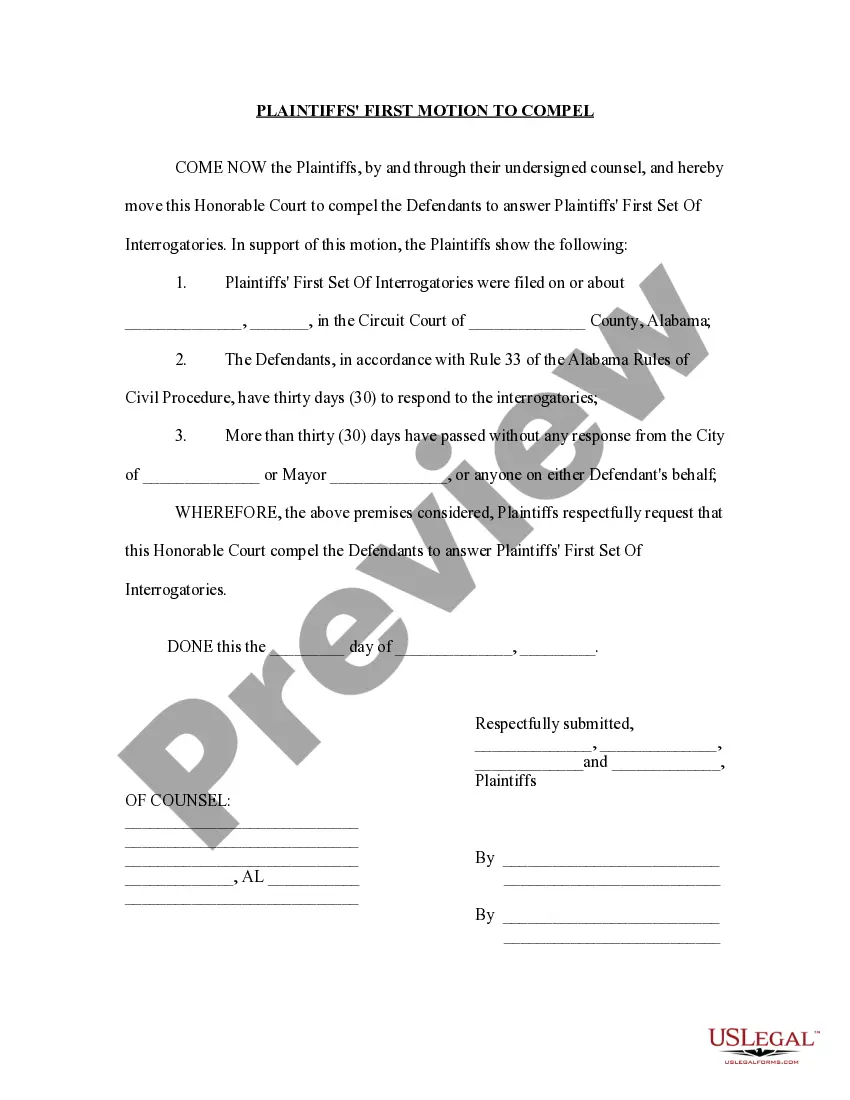

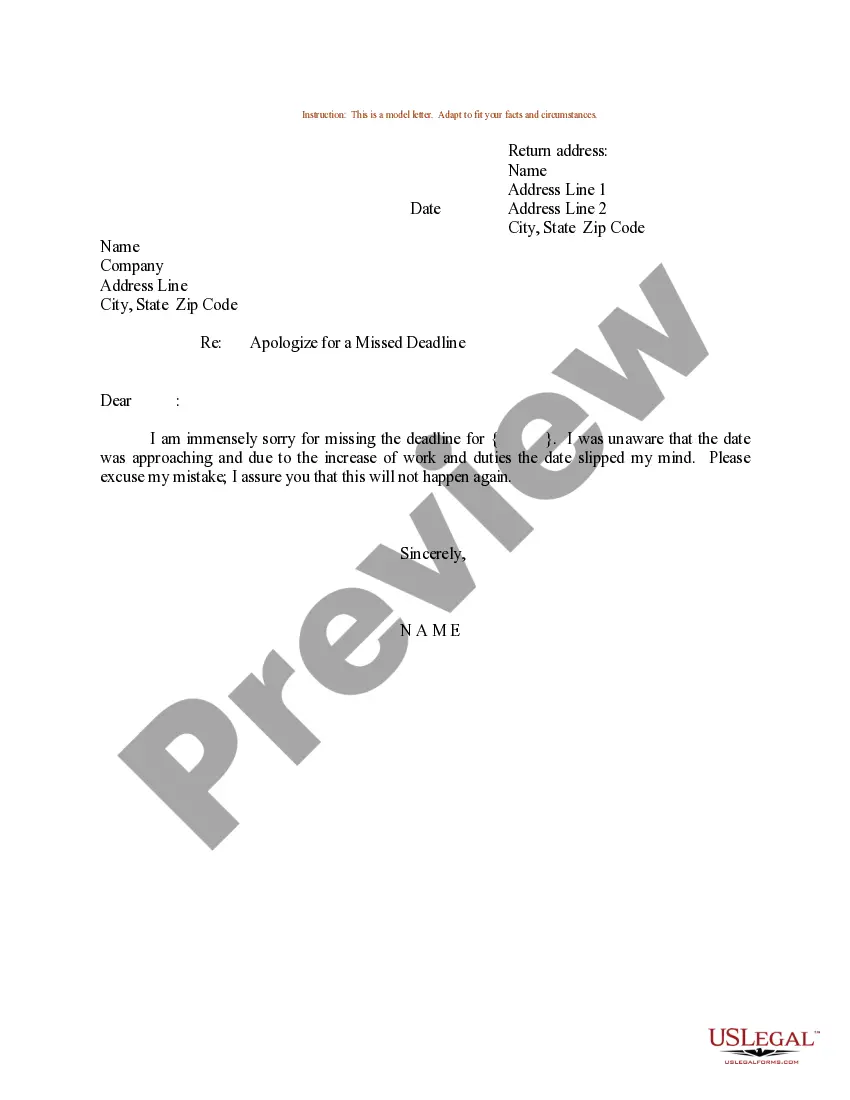
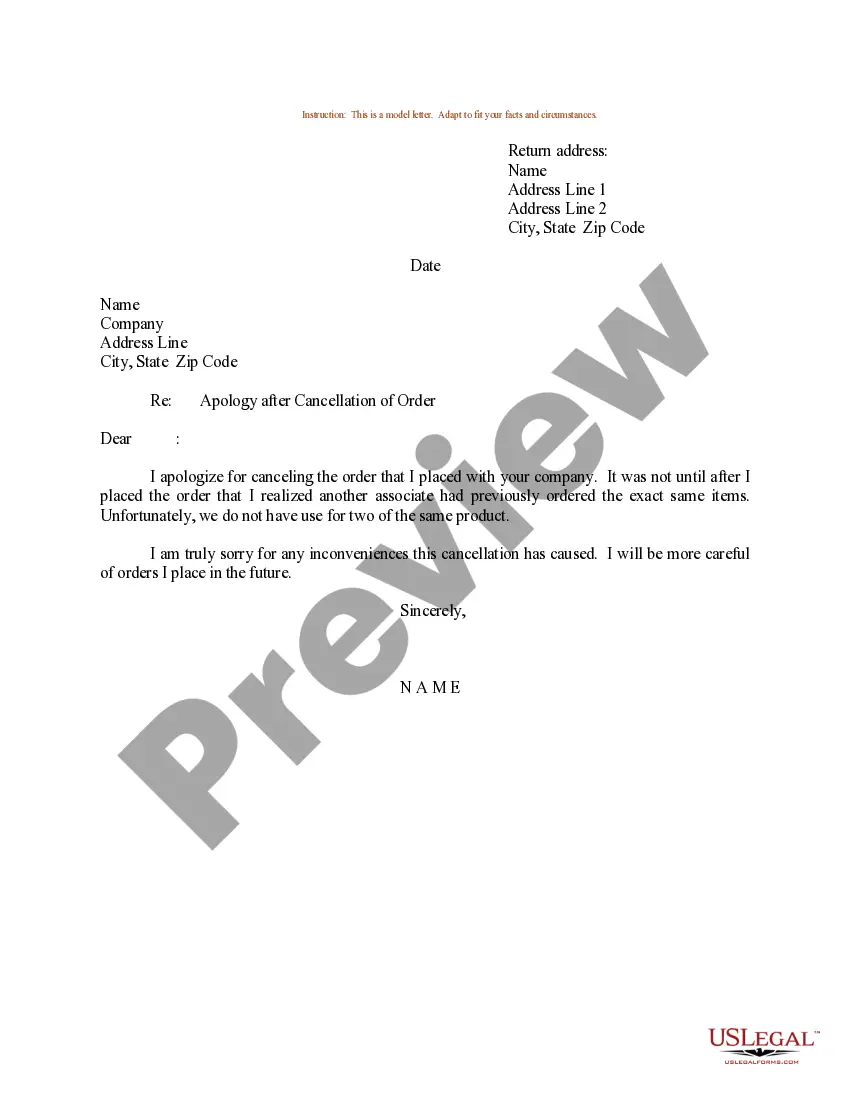
How to fill out Sample Letter For Apology To Customer?
- Log into your US Legal Forms account if you're a returning user to access and download the required form. Ensure that your subscription is current; if not, renew it.
- For first-time users, start by exploring the Preview mode and reading the form descriptions to select the appropriate template that aligns with your local requirements.
- Should you need a different template, utilize the Search feature to find the most suitable option that meets your criteria.
- After selecting the document, click on the 'Buy Now' button and choose your preferred subscription plan. You'll need to register an account for complete access to the library.
- Complete your purchase by providing your payment details, either through a credit card or PayPal.
- Once the transaction is successful, download the template to your device for easy completion. You can also access it anytime in the 'My Forms' section of your profile.
In conclusion, US Legal Forms equips users with a comprehensive library to create a legally sound apology letter with ease. By following these steps, you can produce an effective document that conveys your sentiments sincerely.
Start your journey today by visiting US Legal Forms and ensure your communications are polished and professional.
Form popularity
FAQ
Starting your apology letter effectively is crucial. Begin with a clear expression of your regret, like 'I am writing to address...' This shows the recipient you take the situation seriously. A concise yet heartfelt apology letter with genuine emotion can facilitate better understanding and resolution.
Starting an apology letter with thoughtful phrases sets the right tone. You might say, 'I want to sincerely apologize for...' or 'I deeply regret my actions regarding...' These openings show your willingness to take responsibility. Remember, a well-crafted apology letter with sincere language can help mend relationships.
An example of a perfect apology includes acknowledging the wrong, expressing heartfelt remorse, and detailing how you plan to change behavior. For instance, you could say, 'I apologize for missing your event; I realize how it affected you. I promise to manage my schedule better in the future.' This type of message, delivered through an apology letter with a thoughtful tone, demonstrates accountability and care.
To write a sincere apology example, start with a direct acknowledgment of the hurt caused, paired with genuine remorse. Avoid excuses, and instead, focus on how you can make amends. Using an apology letter with a clear intention to not only say sorry but also to take actionable steps conveys sincerity and fosters genuine reconciliation.
A good apology letter might begin with a statement like, 'I am sorry for my actions on specific date.' Follow with an explanation of how those actions impacted the recipient, and then share your sincere commitment to change. Including a specific plan for improvement in your apology letter with heartfelt intention will enhance its effectiveness.
To write a strong apology letter, focus on clarity and honesty. Begin with an acknowledgment of your mistake and convey genuine regret. Support your apology with specific examples, and invite feedback or discussion about how to address the situation. A strong apology letter with these components helps rebuild trust.
The 5 R's of apology include responsibility, remorse, restoration, resolution, and repetition. Start by taking full responsibility for your actions and express your remorse clearly. Then, offer a way to restore what was lost and ensure to resolve the situation effectively. Lastly, commit to not repeating the same mistakes in future interactions, ideally crafting this in an apology letter with those elements.
To write a proper apology letter, start with a clear statement of regret. Express your feelings about the situation and acknowledge how your actions affected the other person. Include specific details to show sincerity, and conclude with a commitment to prevent future issues. By using an apology letter with genuine intent, you foster better understanding and relationships.
When apologizing through text, be direct and sincere. Start with a clear acknowledgment of your mistake and express your feelings honestly. Avoid vague language; instead, use specific terms that show you understand the hurt you caused. Sending a thoughtful apology text with genuine intent can pave the way towards reconciliation.
A professional apology letter typically starts with a clear subject line that states the purpose. Next, state your apology explicitly and describe the situation with honesty. Acknowledge any impact your actions may have had on others, and propose solutions or steps you will take moving forward. Crafting an effective apology letter with professionalism reflects your commitment to accountability.