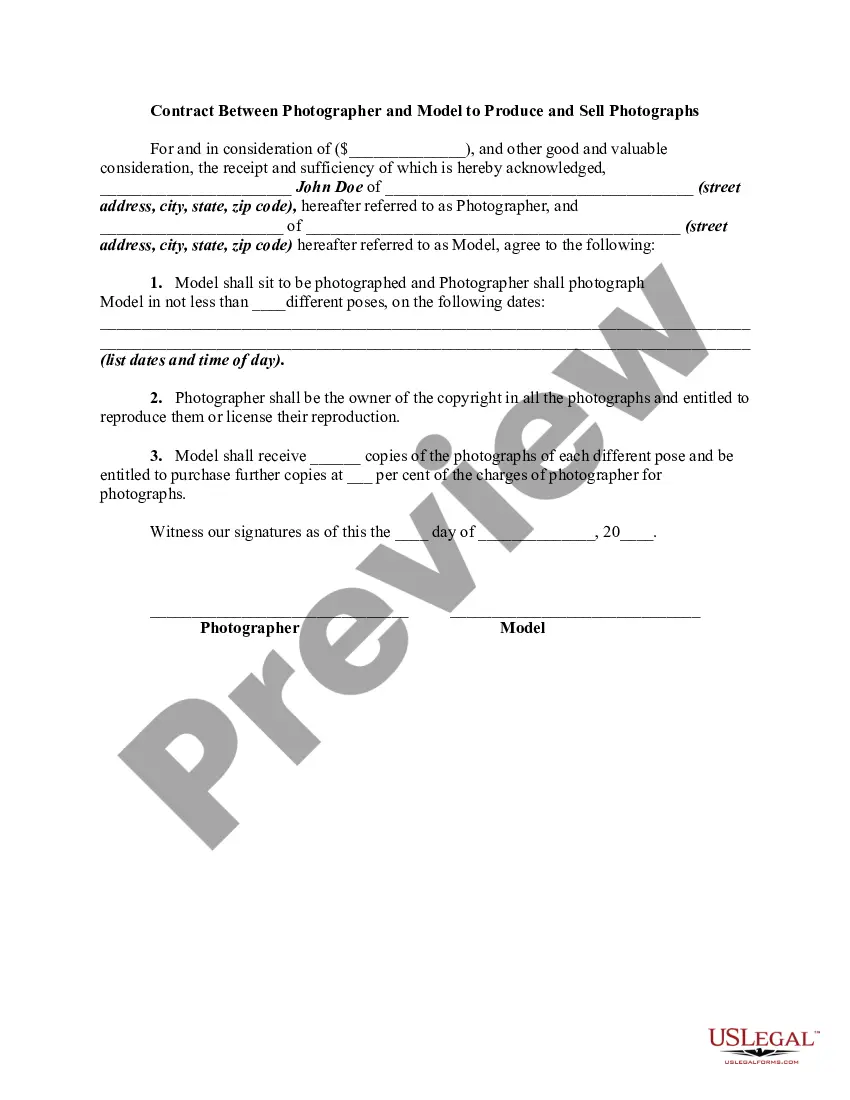
Photography Contra
Description
Get your form ready online
Our built-in tools help you complete, sign, share, and store your documents in one place.
Make edits, fill in missing information, and update formatting in US Legal Forms—just like you would in MS Word.
Download a copy, print it, send it by email, or mail it via USPS—whatever works best for your next step.
Sign and collect signatures with our SignNow integration. Send to multiple recipients, set reminders, and more. Go Premium to unlock E-Sign.
If this form requires notarization, complete it online through a secure video call—no need to meet a notary in person or wait for an appointment.
We protect your documents and personal data by following strict security and privacy standards.

Make edits, fill in missing information, and update formatting in US Legal Forms—just like you would in MS Word.

Download a copy, print it, send it by email, or mail it via USPS—whatever works best for your next step.

Sign and collect signatures with our SignNow integration. Send to multiple recipients, set reminders, and more. Go Premium to unlock E-Sign.

If this form requires notarization, complete it online through a secure video call—no need to meet a notary in person or wait for an appointment.

We protect your documents and personal data by following strict security and privacy standards.
Looking for another form?
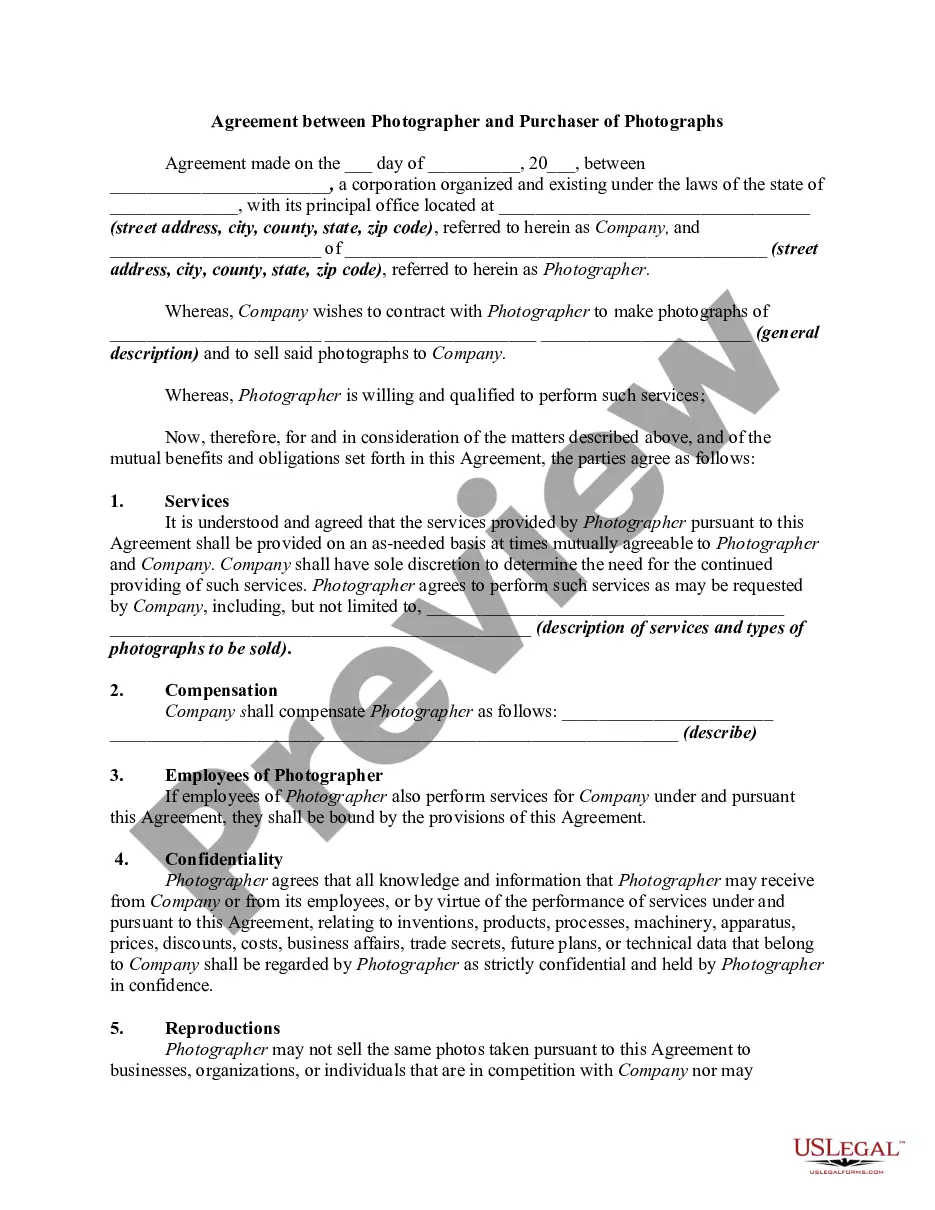
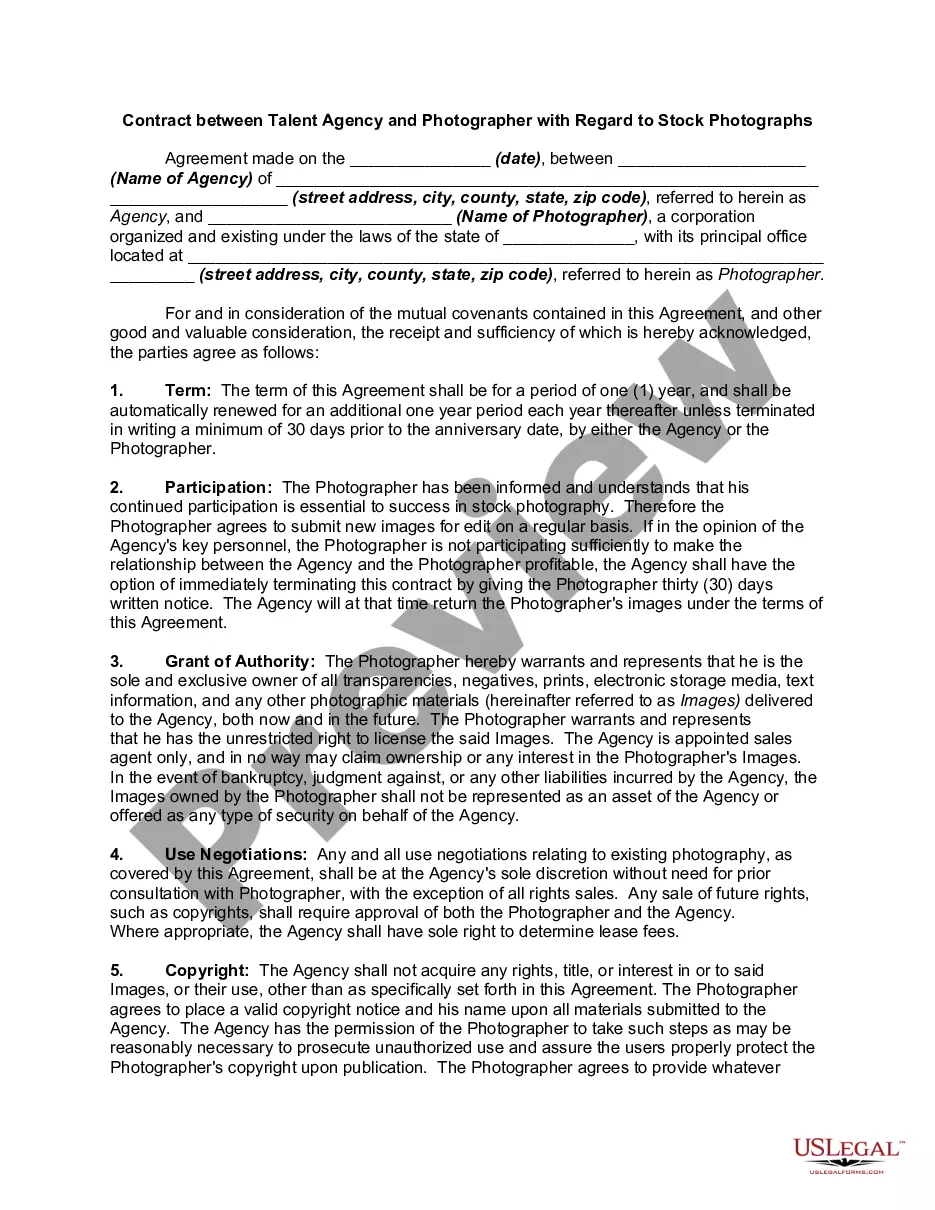
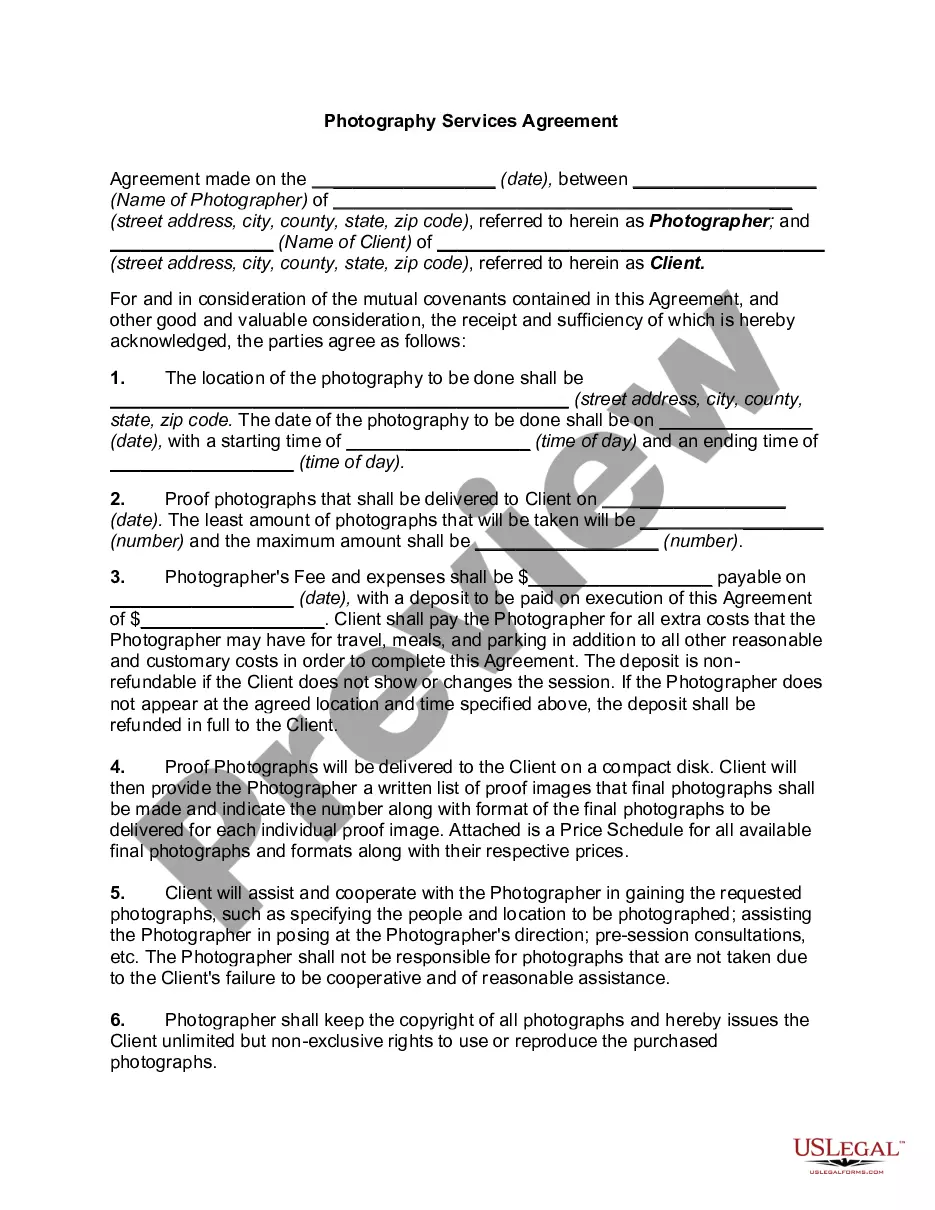
How to fill out Contract Between Photographer And Model To Produce And Sell Photographs?
- Log into your US Legal Forms account if you're a returning user and click on the Download button to access your desired form. Make sure your subscription is active, or renew it as needed.
- For first-time users, start by checking the Preview mode along with the form description. Confirm that it aligns with your needs and local jurisdiction requirements.
- If necessary, use the Search feature to find alternative templates that better suit your scenario. Proceed only when you're satisfied with your selection.
- Purchase the document by selecting the Buy Now button and choosing your preferred subscription plan. You will need to create an account to gain access to the full library.
- Finalize your purchase by entering your credit card information or using your PayPal account to complete the transaction.
- Download the completed form and save it on your device. You can also find it later in the My Forms section of your account.
Utilizing US Legal Forms simplifies the legal document process, ensuring an efficient experience for both individuals and attorneys. With access to an extensive library and expert assistance, you can confidently handle your legal needs.
Don't hesitate! Start your journey with US Legal Forms today and unlock thousands of documents tailored for your legal requirements.
Form popularity
FAQ
The 20-60-20 rule in photography is an approach to composition that emphasizes balance and emphasis. It suggests that in any given frame, 20% should feature strong elements, 60% should consist of moderate elements, and the final 20% should be background. This guideline can help photographers create more engaging and visually appealing compositions. Understanding this rule can enhance your skills and improve the quality of your work, making a substantial difference in how your photography contra is perceived.
To create a photography contract, start by defining the key terms and conditions relevant to the job. You can use templates or legal forms available online to streamline the process, such as those offered by uslegalforms. Ensure that your contract includes details on payment schedules, usage rights, and a section for dispute resolution. A solid photography contra provides clarity and protects your work.
A photography contract typically includes essential details such as the scope of work, payment terms, and the delivery timeline. Additionally, it should specify rights to the images, cancellation policies, and client responsibilities. By clearly outlining these elements, the contract protects both the photographer and the client, ensuring that expectations are met. Utilizing a well-drafted photography contra can save you from misunderstandings in the future.
Federal laws applicable to photographers include copyright laws, which protect the creators of original works. Additionally, laws regarding public and private property rights can affect how photos are taken and used. Understanding these laws is essential for both photographers and clients to ensure a fair agreement. For detailed legal guidance on photography contra, explore the information available on US Legal Forms.
To report a bad photographer, you should first try to resolve the matter with them directly. If that’s not successful, gather your evidence and seek the assistance of local consumer protection agencies or online review platforms. This process can warn others and encourage photographers to uphold their standards. You can also utilize resources from US Legal Forms to help you navigate this situation.
Filing a complaint against a photographer involves gathering evidence of the issue and documenting your experience. You can then approach the photographer directly to address the complaint. If the issue cannot be resolved, consider contacting a relevant professional organization or small claims court. US Legal Forms offers templates to help you draft your complaint effectively.
Photographers may get sued for various reasons, including breach of contract, negligence, and copyright infringement. If a photographer fails to deliver high-quality work or misuses your photos, it can lead to a lawsuit. It's important for photographers to understand their responsibilities under photography contra laws to avoid such issues. You can find valuable resources on US Legal Forms to help articulate concerns.
Yes, you can take a photographer to court if you believe they have violated your rights or not fulfilled the contracted terms. Common issues include failure to deliver photos or misusing your images without consent. Before proceeding with legal action, it's wise to first seek resolution through open communication. If necessary, consult with a legal professional familiar with photography contra.
Writing a photography contract involves clear communication of terms between you and the photographer. Start by including essential details such as services provided, payment terms, and delivery timelines. It's crucial to address copyright issues and usage rights to protect both parties. Using a template from US Legal Forms can simplify this process and ensure you don’t miss any important elements.
While photography has many benefits, it also has its drawbacks. Some cons include the potential for copyright issues, privacy concerns, and the risk of misrepresentation through editing. Understanding these challenges can help photographers navigate the landscape more effectively, ensuring they protect their work and respect the rights of others.