Consignment Agreement Template With Notary
Description

Get your form ready online
Our built-in tools help you complete, sign, share, and store your documents in one place.
Make edits, fill in missing information, and update formatting in US Legal Forms—just like you would in MS Word.
Download a copy, print it, send it by email, or mail it via USPS—whatever works best for your next step.
Sign and collect signatures with our SignNow integration. Send to multiple recipients, set reminders, and more. Go Premium to unlock E-Sign.
If this form requires notarization, complete it online through a secure video call—no need to meet a notary in person or wait for an appointment.
We protect your documents and personal data by following strict security and privacy standards.

Make edits, fill in missing information, and update formatting in US Legal Forms—just like you would in MS Word.

Download a copy, print it, send it by email, or mail it via USPS—whatever works best for your next step.

Sign and collect signatures with our SignNow integration. Send to multiple recipients, set reminders, and more. Go Premium to unlock E-Sign.

If this form requires notarization, complete it online through a secure video call—no need to meet a notary in person or wait for an appointment.

We protect your documents and personal data by following strict security and privacy standards.
Looking for another form?




How to fill out Consignment Agreement?
Utilizing legal templates that comply with federal and local laws is crucial, and the web provides a plethora of selections to choose from.
However, what is the use of spending time searching for the accurately drafted Consignment Agreement Template With Notary example online when the US Legal Forms digital library already compiles such templates in one location.
US Legal Forms is the largest virtual legal repository with over 85,000 fillable templates created by attorneys for any professional and personal situation.
Review the template using the Preview function or through the text outline to ensure it meets your requirements.
- They are simple to navigate with all documents organized by state and intended use.
- Our experts stay updated with legislative modifications, ensuring you can always trust that your form is current and compliant when acquiring a Consignment Agreement Template With Notary from our platform.
- Obtaining a Consignment Agreement Template With Notary is quick and straightforward for both existing and new users.
- If you already possess an account with an active subscription, Log In and retrieve the document sample you require in the appropriate format.
- If you are unfamiliar with our site, follow the steps outlined below.
Form popularity
FAQ
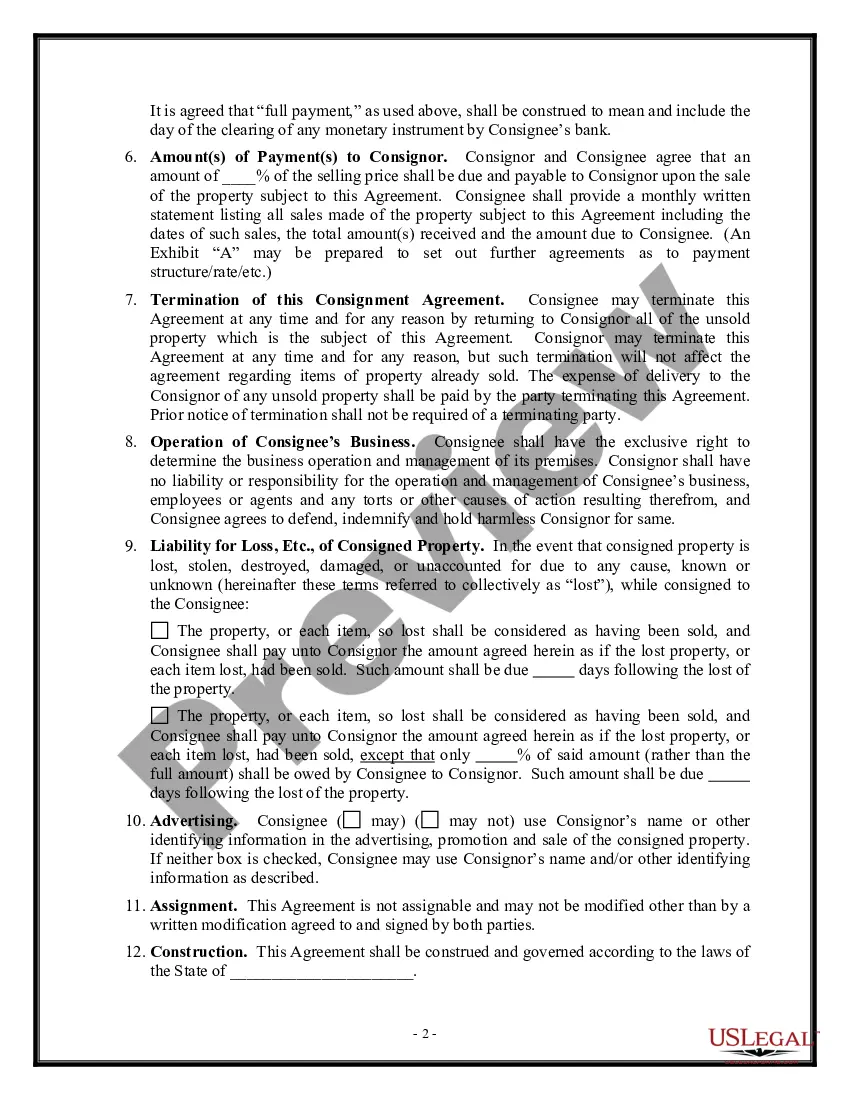
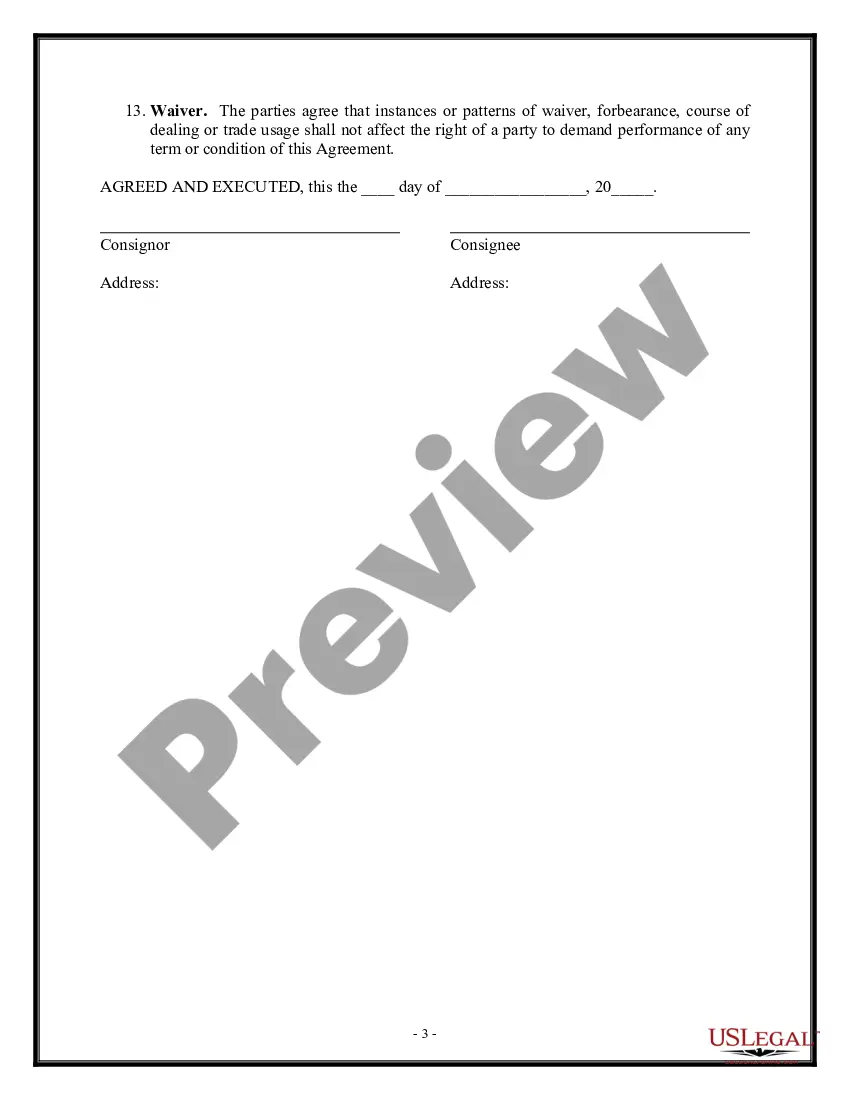
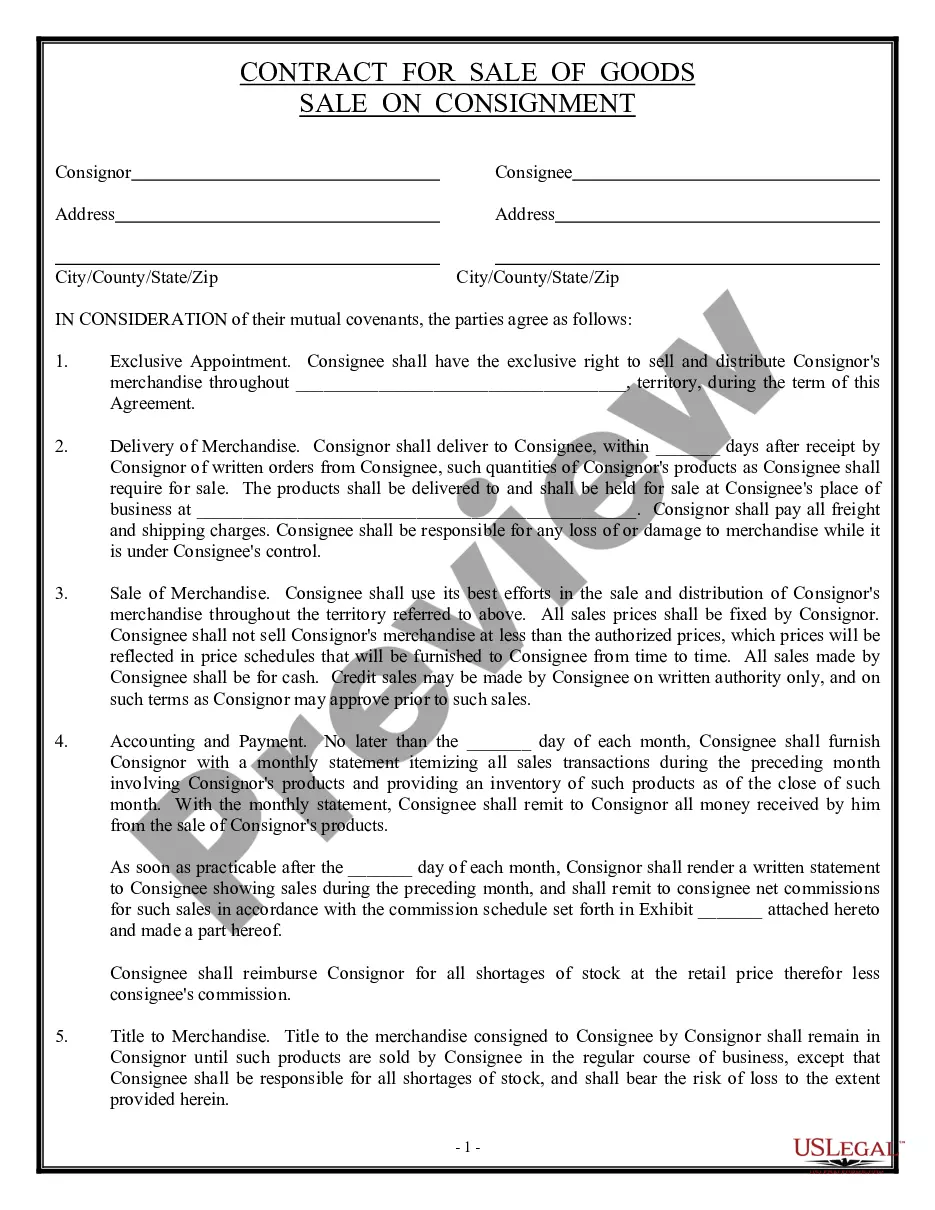
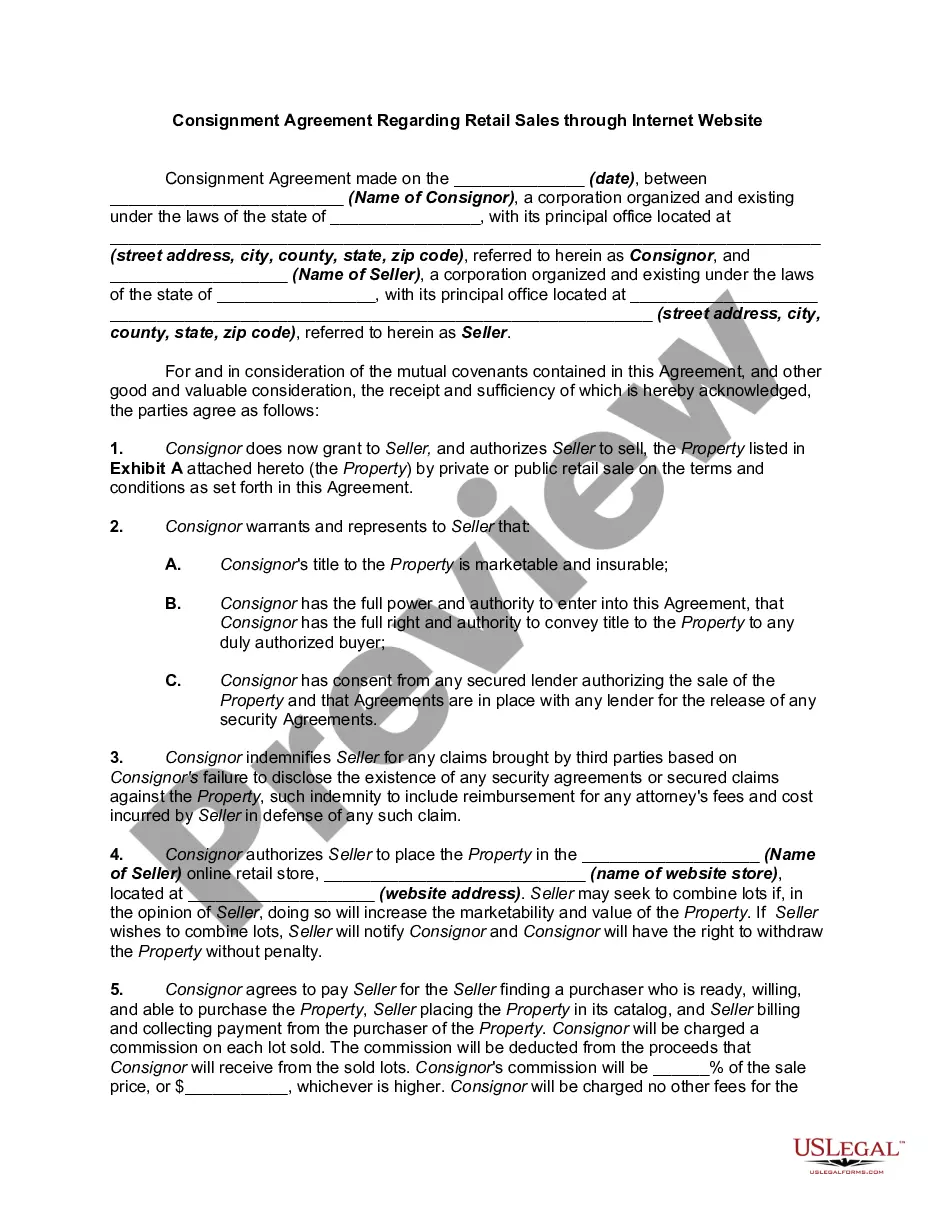
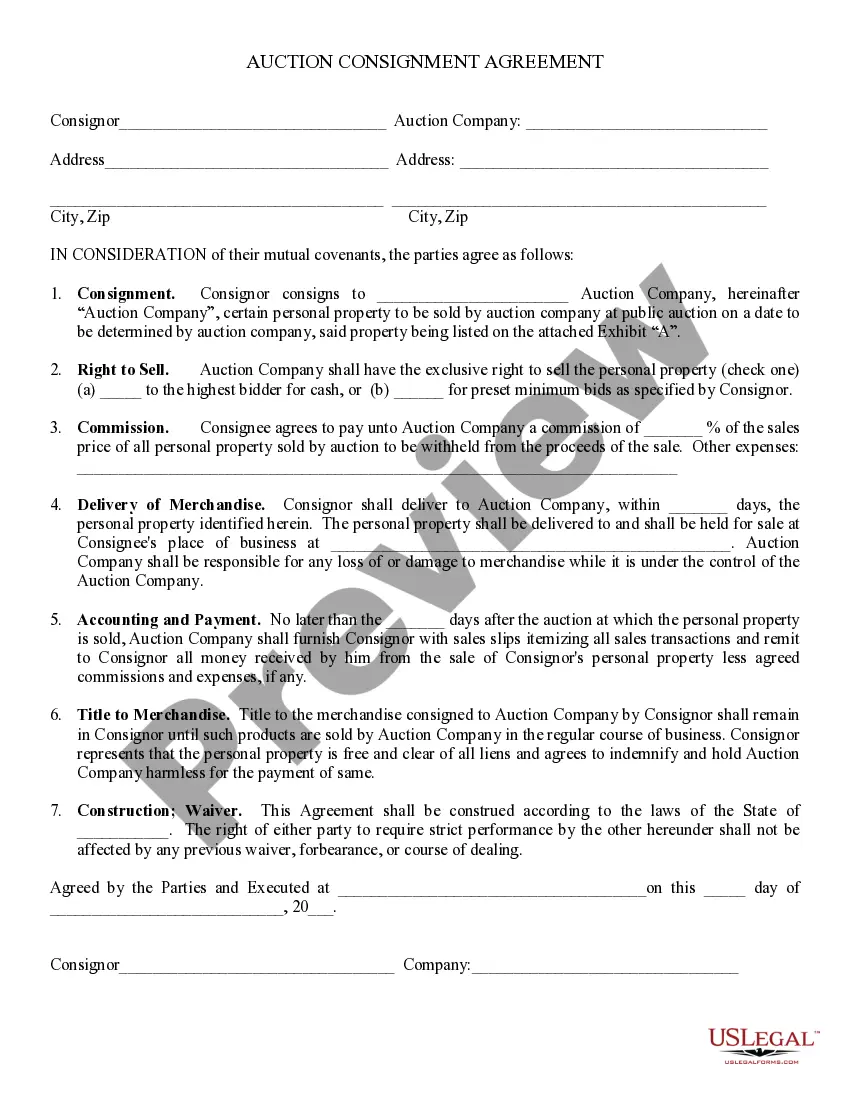
A consignment agreement outlines the terms and conditions of the arrangement, including the duration of the consignment period, the price of the goods, and the commission payable to the consignee. It also specifies the conditions for returning unsold goods and any liability or insurance provisions.
A consignment agreement is a legally binding document between a consignee and a consignor for the sale, storage, transfer, resale and use of a commodity. The consignee accepts goods from sellers to sell to potential buyers. The consignee will not receive commissions till the goods are sold.
3. Consignment agreement instructions Introduction of Parties. Identifies the parties and the date of the agreement. ... Recitals. ... Section 1: Consigned property. ... Section 2: Delivery of goods. ... Section 3: Consignment period. ... Section 4: Efforts to sell. ... Section 5: Title to products. ... Section 6: Payment; commission.
Consignment is an arrangement in which goods are left with a third party to sell. The party that sells the goods on consignment receives a portion of the profits, either as a flat rate fee or commission. Selling via a consignment arrangement can be a low-commission, low-time-investment way of selling items or services.
A consignment agreement is a legal document in which a third party sells the goods. The party that sells the goods on consignment (the Consignee) receives a portion of the profits, either as a flat rate fee or commission for selling the goods on behalf of the Consignor who owns right and title to the goods.