Caregiver Form Printable Without Download In Wake
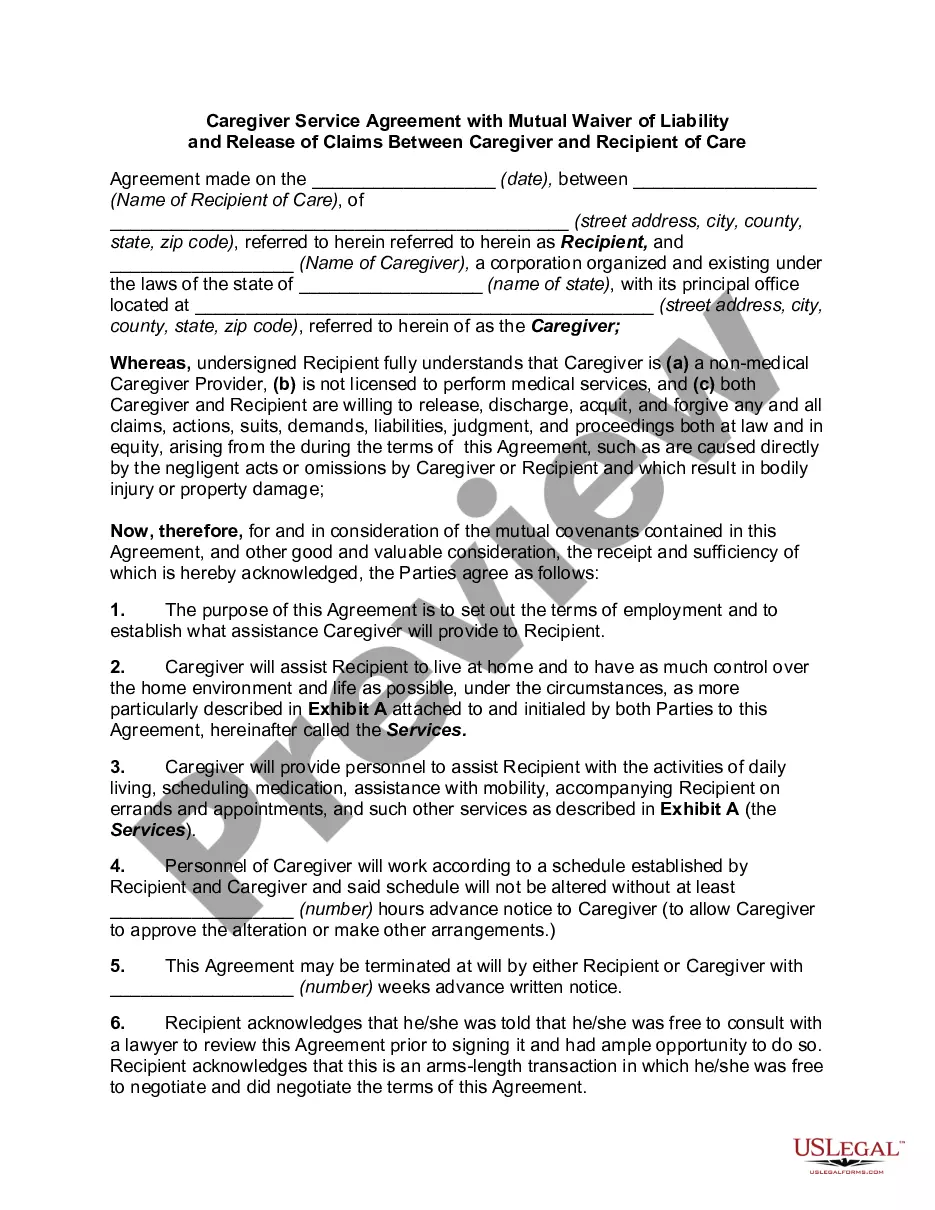
Description


Form popularity
FAQ
Health information Current prescriptions (be sure to update this regularly) Living will. Durable power of attorney for health care. Copies of any medical orders or forms you have (for example, a do-not-resuscitate order) Health insurance information with policy and phone numbers.
What are common caregiver qualifications? Having relevant work experience and skills. Completing any required training. Passing a background check and general health check. Earning basic health certifications. Meeting age requirements. Possessing a valid driver's license, insurance and a good driving record.
4 legal documents every family caregiver needs A Will. A will is one of the most important legal documents that family caregivers should have. Advance Health Care Plan. Durable Power of Attorney for Health Care. Durable Power of Attorney for Finances.
Caregiver Go-Bag Packing List A change of clothes – focus on comfort and don't forget underwear and socks. Toiletries and personal care items, including. Two-day supply of any prescription medications you normally take. At least a day's worth of travel medications like:
Present medical records, witness testimonies, and caregiving logs to the court to prove primary caregiver custody and seek guardianship or conservatorship.
The purpose of the Caregiver Assessment Tool (CAT) is to gain an understanding of the Caregiver, the Caregiver's perspective of the caregiving relationship, and the Caregiver's needs. The questions in the CAT facilitate a rapport between the Care Manager and the Caregiver.
While everyone's needs are unique, a checklist can help ensure the caregiving family member does everything necessary to ensure the safety and well-being of their loved one.
Fill in your employment history, including previous positions, dates of employment, and job responsibilities. Provide information about your education, including degrees, certifications, and relevant coursework. If applicable, include any specialized training or skills that may be relevant to the caregiver role.
What do caregivers need most? Listen attentively. Really listen to what they have to say. Don't tell horror stories. Don't be judgmental. Ask what they need. Offer the gift of your time. Give your friend space. Bring food. Offer to take your friend out—and help arrange respite care.
