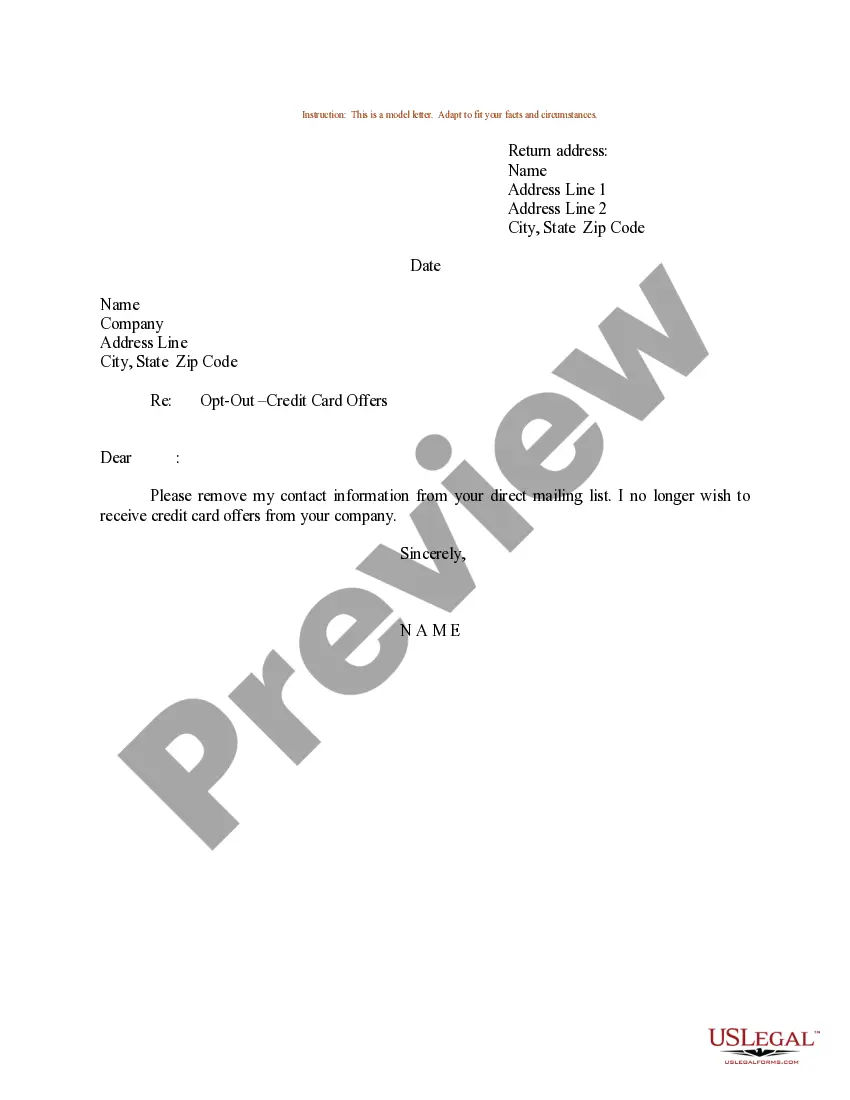
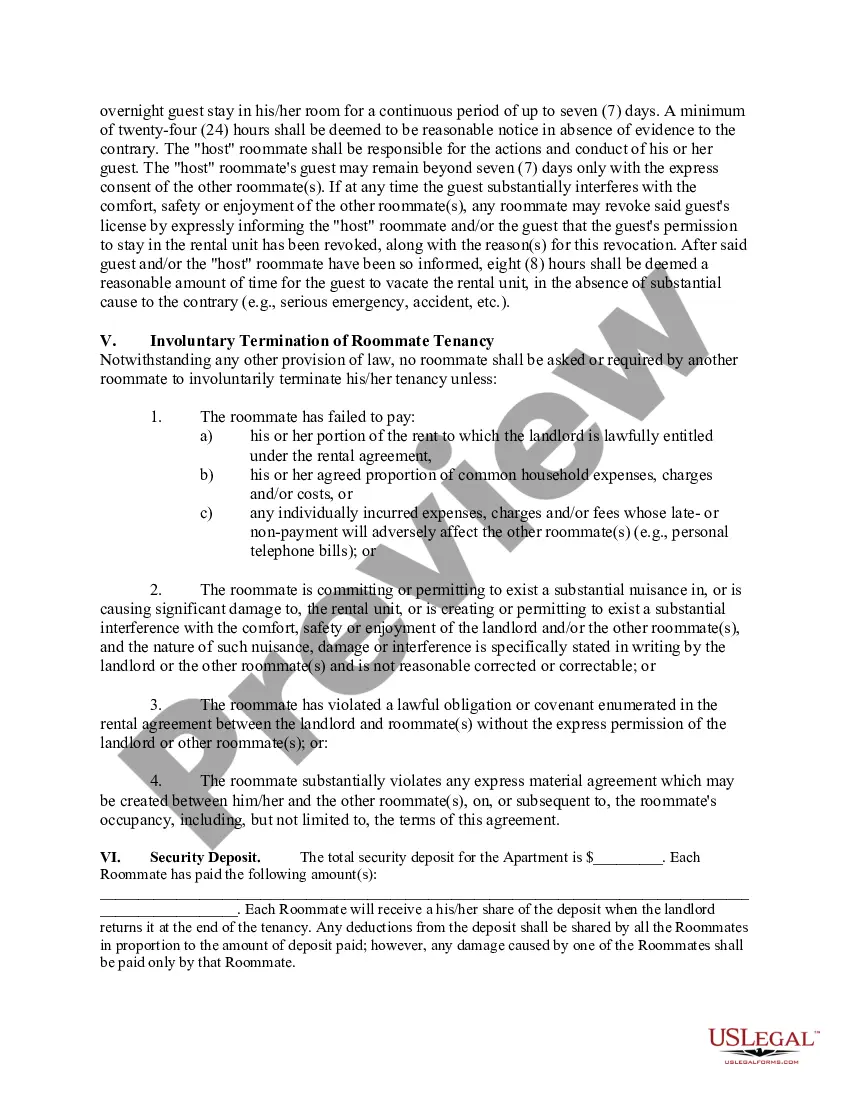
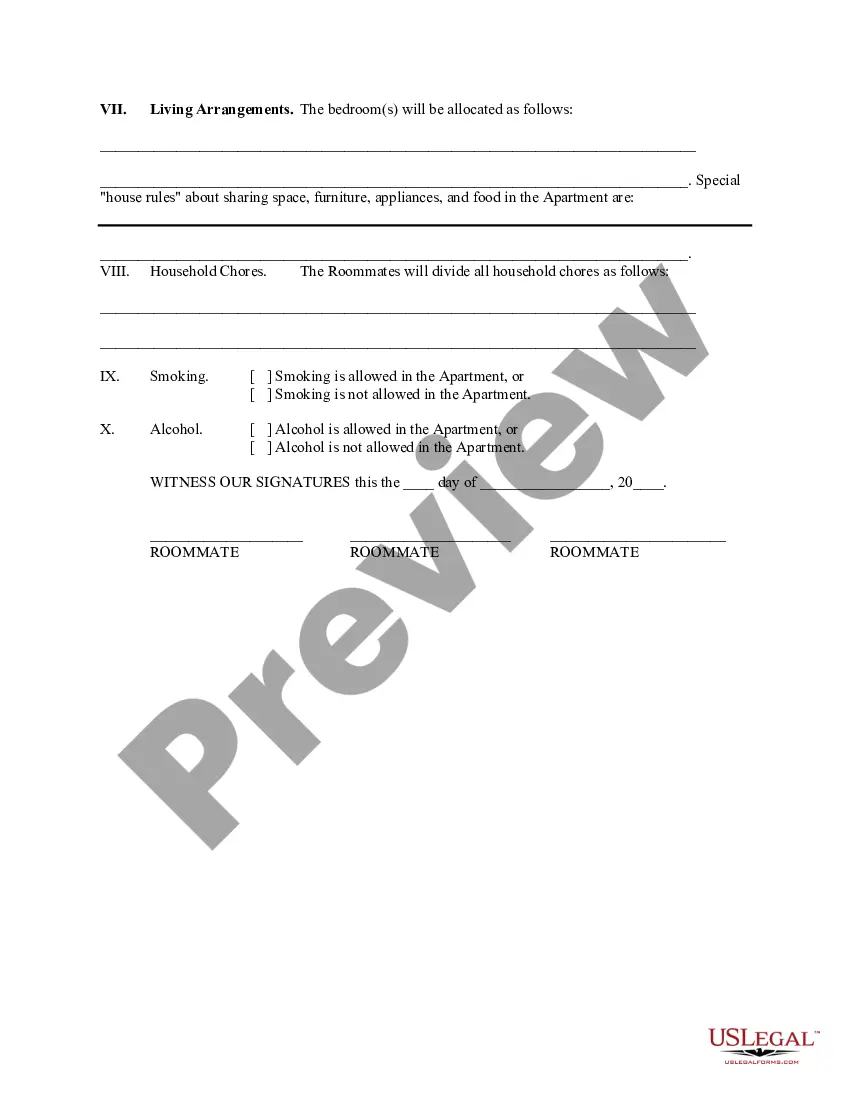
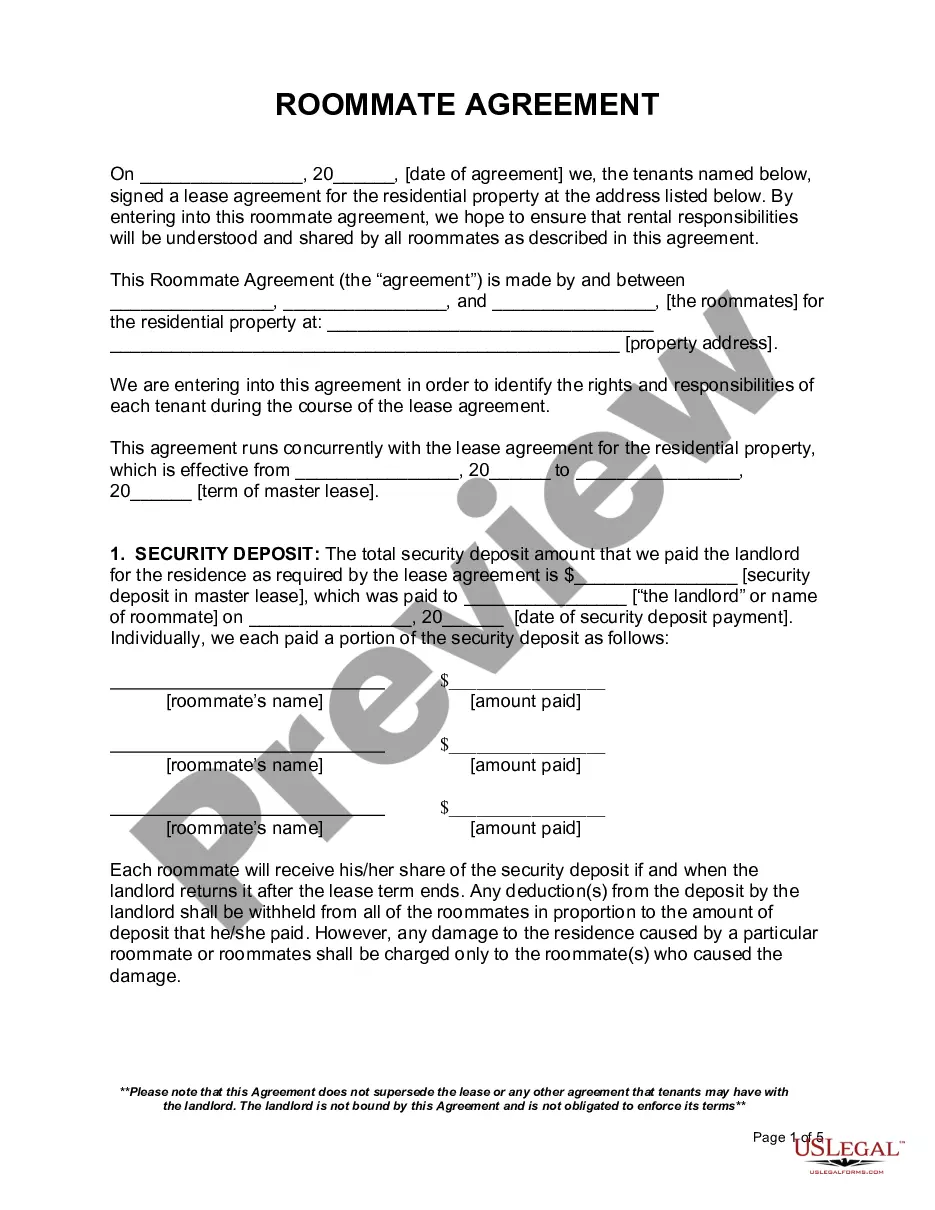
Roommate Agreement With Landlord In Orange
Description

Get your form ready online
Our built-in tools help you complete, sign, share, and store your documents in one place.
Make edits, fill in missing information, and update formatting in US Legal Forms—just like you would in MS Word.
Download a copy, print it, send it by email, or mail it via USPS—whatever works best for your next step.
Sign and collect signatures with our SignNow integration. Send to multiple recipients, set reminders, and more. Go Premium to unlock E-Sign.
If this form requires notarization, complete it online through a secure video call—no need to meet a notary in person or wait for an appointment.
We protect your documents and personal data by following strict security and privacy standards.

Make edits, fill in missing information, and update formatting in US Legal Forms—just like you would in MS Word.

Download a copy, print it, send it by email, or mail it via USPS—whatever works best for your next step.

Sign and collect signatures with our SignNow integration. Send to multiple recipients, set reminders, and more. Go Premium to unlock E-Sign.

If this form requires notarization, complete it online through a secure video call—no need to meet a notary in person or wait for an appointment.

We protect your documents and personal data by following strict security and privacy standards.
Looking for another form?


Form popularity
FAQ
Breaking a lease in California with a roommate happens. If you or a roommate moves out, you're both still responsible for paying rent as per your lease. If the person not making the payment (breaking the lease) has a co-signer, the co-signer will be contacted for the remaining rent.
Assembly Bill 1482 (The Tenant Protection Act of 2019) regulates rent increases. As of August 1, 2022 ONLY for covered properties the rent cap is 10%. Proper notice means that an increase of less than 10% requires 30 days written notice before the increase takes effect.
Understanding Roommate Laws in California Co-tenant: If your roommate signed the lease with you, they have equal rights to the property. Evicting them often requires coordination with the landlord.
The landlord can include you in an eviction (unlawful detainer) court case even if your name is not on the lease or rental agreement.
Non-urgent repairs that do not pose a health or safety risk, should be taken care of by landlord within 30 days, unless otherwise agreed upon between you and your landlord.
Agreements that are over a year should be in writing to be enforceable in court. Agreements that are a year or less can be verbal or written.
For every additional tenant (a roommate not on the original lease, for example) that moves in, the landlord can raise the rent 10%. The rent must be reduced by the same amount if that tenant moves out.
Landlords may increase the rent by 10% for each additional tenant. Landlords are required by the Cal- ifornia Civil Code to give a 30-day written notice for all rent increases.
The Rent Stabilization Ordinance (RSO) allows a landlord seeking in good faith to recover possession of a rental unit and remove units from rental housing use (also known as the Ellis Act) if the landlord plans on demolishing or permanently withdrawing the units from the rental housing market.