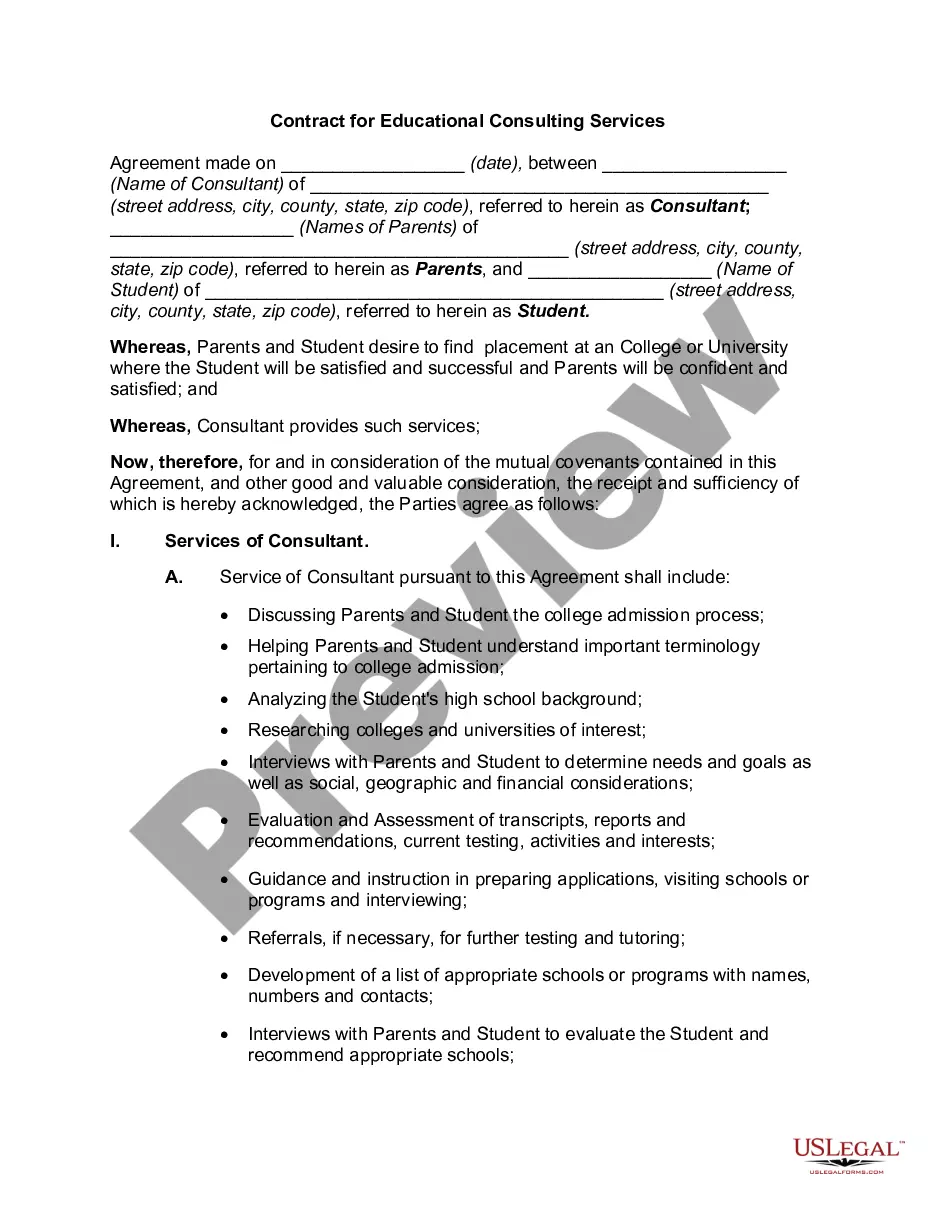
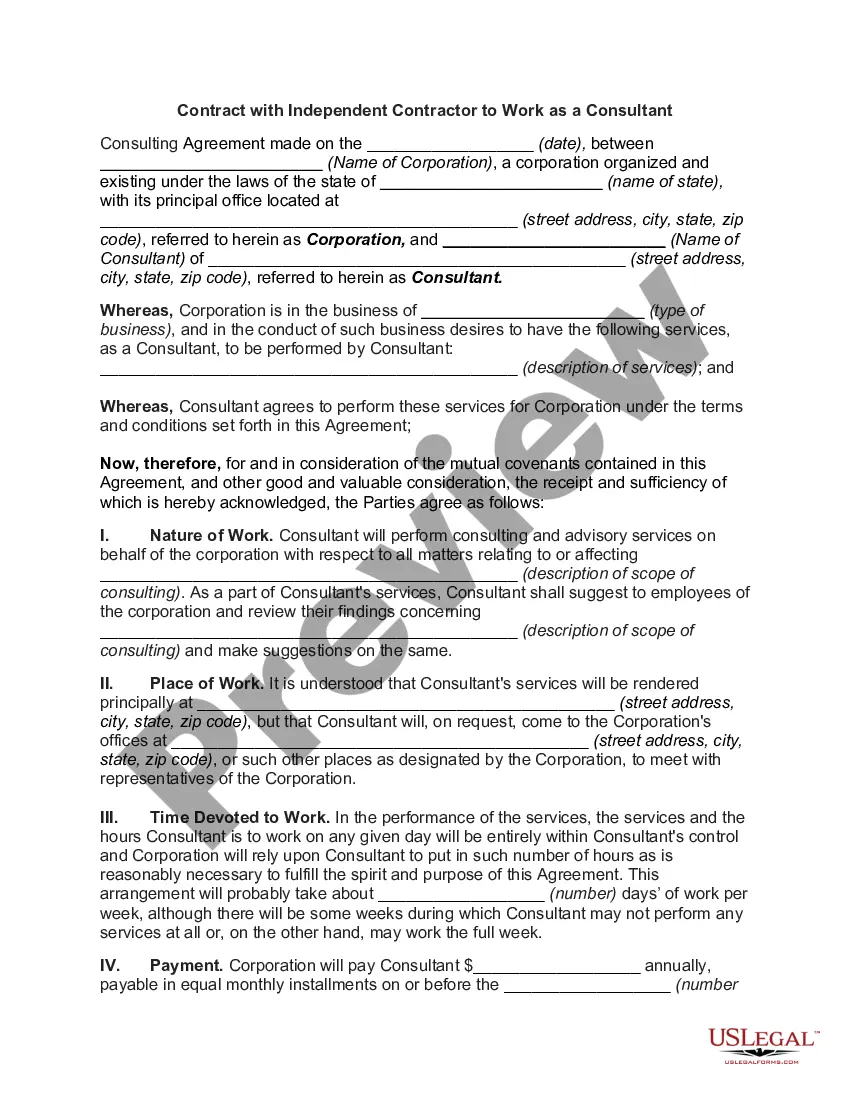
Contract Consultant Contract With Services In Franklin
Description

Get your form ready online
Our built-in tools help you complete, sign, share, and store your documents in one place.
Make edits, fill in missing information, and update formatting in US Legal Forms—just like you would in MS Word.
Download a copy, print it, send it by email, or mail it via USPS—whatever works best for your next step.
Sign and collect signatures with our SignNow integration. Send to multiple recipients, set reminders, and more. Go Premium to unlock E-Sign.
If this form requires notarization, complete it online through a secure video call—no need to meet a notary in person or wait for an appointment.
We protect your documents and personal data by following strict security and privacy standards.

Make edits, fill in missing information, and update formatting in US Legal Forms—just like you would in MS Word.

Download a copy, print it, send it by email, or mail it via USPS—whatever works best for your next step.

Sign and collect signatures with our SignNow integration. Send to multiple recipients, set reminders, and more. Go Premium to unlock E-Sign.

If this form requires notarization, complete it online through a secure video call—no need to meet a notary in person or wait for an appointment.

We protect your documents and personal data by following strict security and privacy standards.
Looking for another form?



Form popularity
FAQ
Consulting Services means the provision of expertise or strategic advice that is presented for consideration and decision-making. A Non-consulting Service Provider is an individual or a company who contracts to provide services, other than consulting services to another individual or business.
Consulting agreements spell out the exact terms of the agreement between the consultant and their client, specifying the type and quality of services the consultant will perform for the client, for how long they will perform these services, and how they will be compensated.
A consultancy agreement intended for use where a company wishes to engage a consultancy firm to provide services. This type of agreement may also be referred to as a services agreement or an independent contracting agreement.
Consulting Agreements detail the terms of specific engagements, ensuring that both parties are aligned on expectations, deliverables, and compensation. SOWs, on the other hand, provide granular detail on project tasks, timelines, and milestones, making them indispensable for project management and accountability.
A Master Services Agreement (“MSA”) is a client contract between a service or consulting business and that business's client or customer (referred to as “parties” in the agreement). The MSA should set out the terms of the work to be performed and the relationship between the parties.
Contract consultants are independent professionals who offer their expertise and skills to various clients on a project-by-project basis. They can work in different fields, such as management, IT, marketing, engineering, or education, and help clients solve problems, improve performance, or implement changes.
Following is a discussion of the more important issues to be considered in every consulting agreement. Scope of Work, Compensation. Independent Contractor. Term and Termination. Rights and Data. Conflict of Interest, Non-Solicitation. Miscellaneous Provisions.
What are the most effective ways to find contract work as a... Define your niche and value proposition. Build and optimize your online presence. Leverage your existing network and contacts. Search and apply for contract jobs online. Pitch and propose your services to potential clients. Negotiate and close the deal.
Key takeaways: The primary difference between a consultant and a contractor is that a consultant advises on an organization's needs and potential solutions, while a contractor executes tasks based on those requirements.
