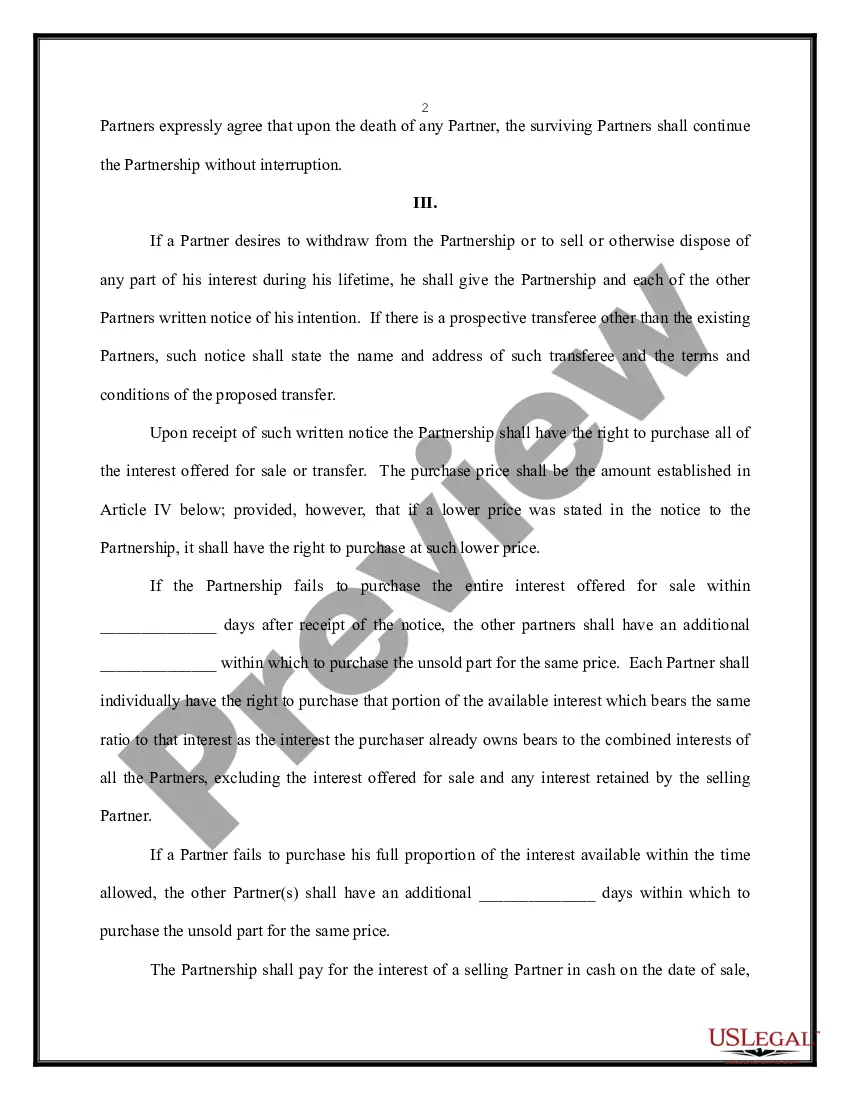
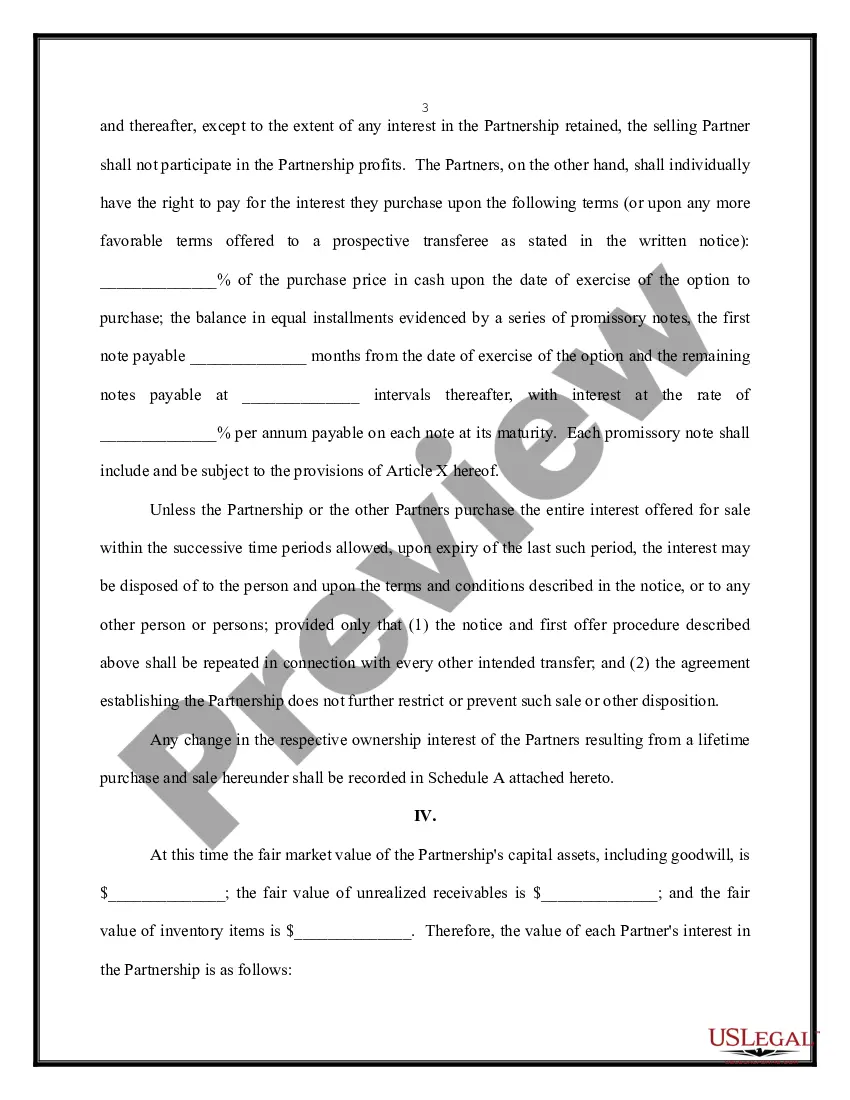
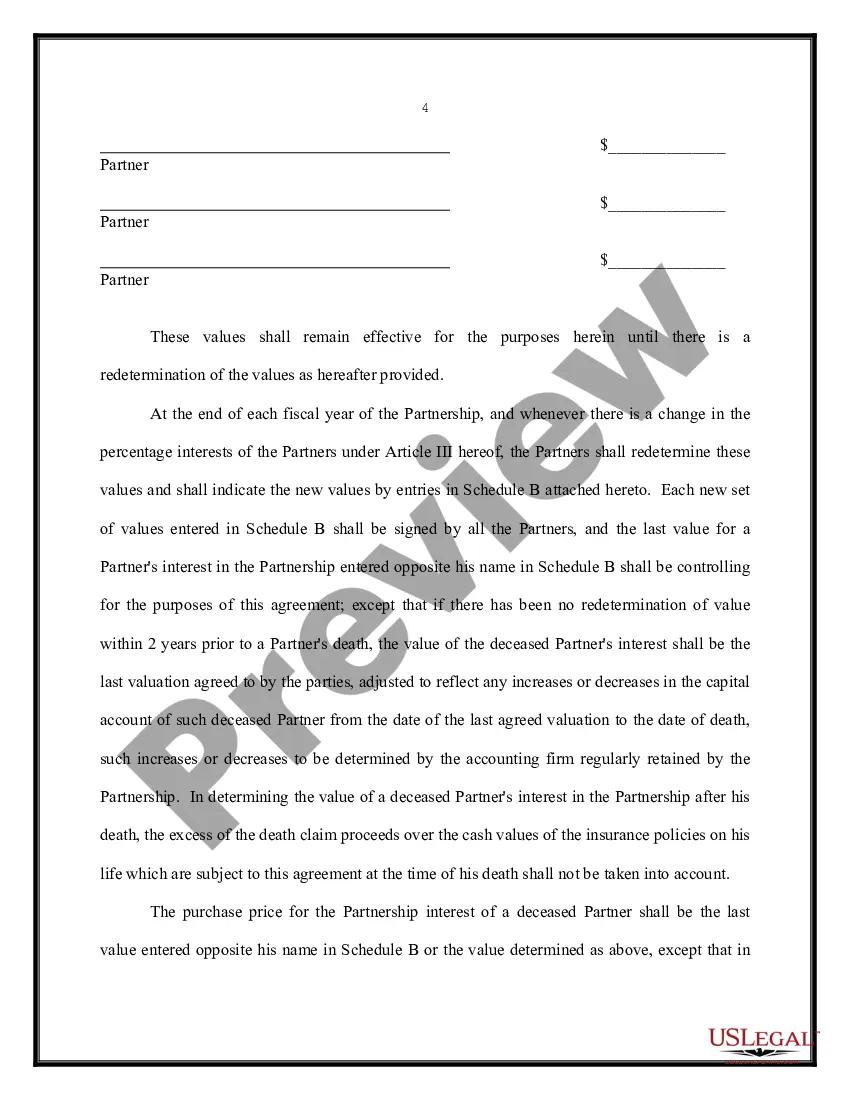
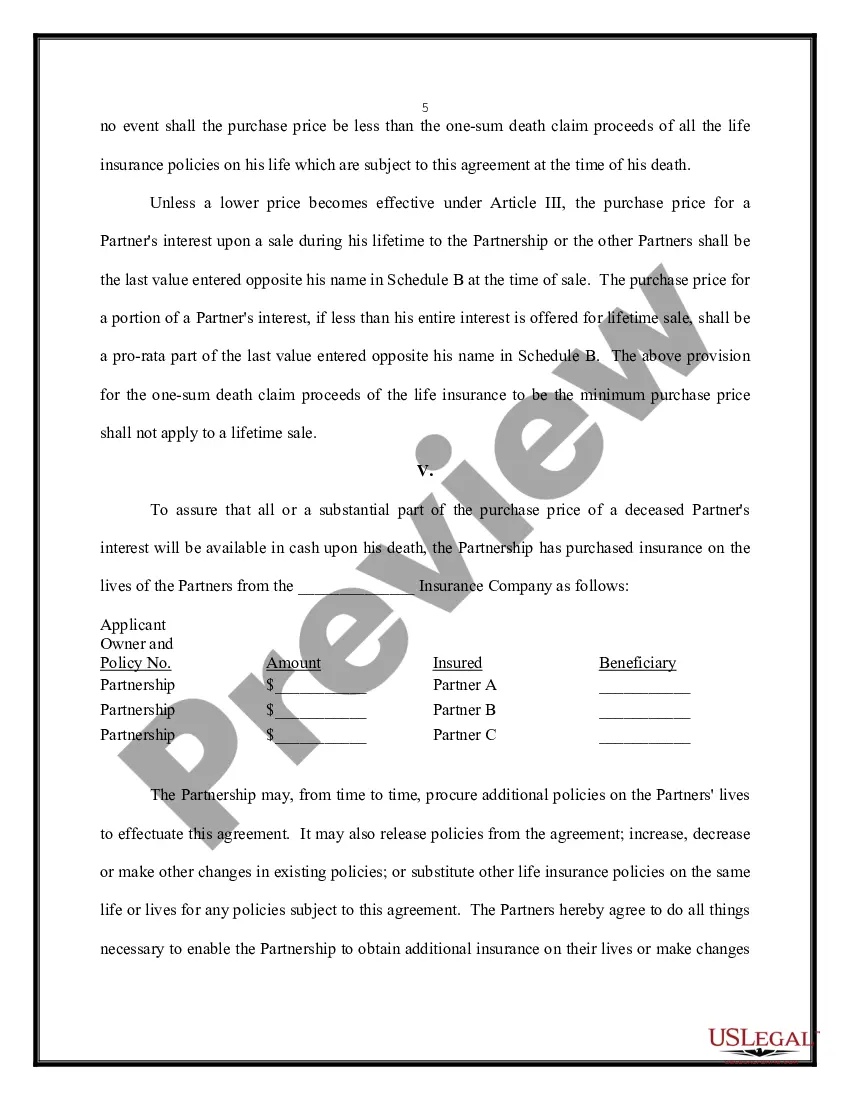
Agreement Between Partnership With Profit Sharing In Bronx
Description



Get your form ready online
Our built-in tools help you complete, sign, share, and store your documents in one place.
Make edits, fill in missing information, and update formatting in US Legal Forms—just like you would in MS Word.
Download a copy, print it, send it by email, or mail it via USPS—whatever works best for your next step.
Sign and collect signatures with our SignNow integration. Send to multiple recipients, set reminders, and more. Go Premium to unlock E-Sign.
If this form requires notarization, complete it online through a secure video call—no need to meet a notary in person or wait for an appointment.
We protect your documents and personal data by following strict security and privacy standards.

Make edits, fill in missing information, and update formatting in US Legal Forms—just like you would in MS Word.

Download a copy, print it, send it by email, or mail it via USPS—whatever works best for your next step.

Sign and collect signatures with our SignNow integration. Send to multiple recipients, set reminders, and more. Go Premium to unlock E-Sign.

If this form requires notarization, complete it online through a secure video call—no need to meet a notary in person or wait for an appointment.

We protect your documents and personal data by following strict security and privacy standards.
Looking for another form?



Form popularity
FAQ
How to create a profit-sharing plan Determine how much you want your PSP amount to be. Profit allocation formula. Write up a plan. Rules. Provide information to eligible employees. File IRS Form 5500 annually. Details your contribution plan and all participants in it. Keep records (e.g., amounts, participants, etc.)
The five most important considerations when creating a ProfitSharing Agreement Clarify expectations. Define the role. Begin with a fixed-term agreement. Calculate how much and when to share profits. Agree on what happens when the business has losses.
? Agree on a profit-sharing ratio There is no one-size-fits-all answer for what a good profit-sharing ratio is for all businesses. As a general rule, if there are two people in the partnership, it's 50/50, and if there are three people, it's a ⅓ split.
The five most important considerations when creating a ProfitSharing Agreement Clarify expectations. Define the role. Begin with a fixed-term agreement. Calculate how much and when to share profits. Agree on what happens when the business has losses.
This ratio is usually based on each partner's investment, effort, or other factors agreed upon by the partners. Divide the total profit by the sum of the ratio values to find the value of one share. Multiply the value of one share by each partner's ratio value to find their individual profit share.
How to Write a Partnership Agreement Define Partnership Structure. Outline Capital Contributions and Ownership. Detail Profit, Loss, and Distribution Arrangements. Set Decision-Making and Management Protocols. Plan for Changes and Contingencies. Include Legal Provisions and Finalize the Agreement.
This ratio is usually based on each partner's investment, effort, or other factors agreed upon by the partners. Divide the total profit by the sum of the ratio values to find the value of one share. Multiply the value of one share by each partner's ratio value to find their individual profit share.
We have 5 steps. Step 1: Decide on the issues the agreement should cover. Step 2: Identify the interests of shareholders. Step 3: Identify shareholder value. Step 4: Identify who will make decisions - shareholders or directors. Step 5: Decide how voting power of shareholders should add up.
In ance with the provisions of the partnership deed, the profits and losses made by the firm are distributed among the partners. However, sharing of profit and losses is equal among the partners, if the partnership deed is silent.
