Notary Public Certification In Virginia
Description

Get your form ready online
Our built-in tools help you complete, sign, share, and store your documents in one place.
Make edits, fill in missing information, and update formatting in US Legal Forms—just like you would in MS Word.
Download a copy, print it, send it by email, or mail it via USPS—whatever works best for your next step.
Sign and collect signatures with our SignNow integration. Send to multiple recipients, set reminders, and more. Go Premium to unlock E-Sign.
If this form requires notarization, complete it online through a secure video call—no need to meet a notary in person or wait for an appointment.
We protect your documents and personal data by following strict security and privacy standards.

Make edits, fill in missing information, and update formatting in US Legal Forms—just like you would in MS Word.

Download a copy, print it, send it by email, or mail it via USPS—whatever works best for your next step.

Sign and collect signatures with our SignNow integration. Send to multiple recipients, set reminders, and more. Go Premium to unlock E-Sign.

If this form requires notarization, complete it online through a secure video call—no need to meet a notary in person or wait for an appointment.

We protect your documents and personal data by following strict security and privacy standards.
Looking for another form?
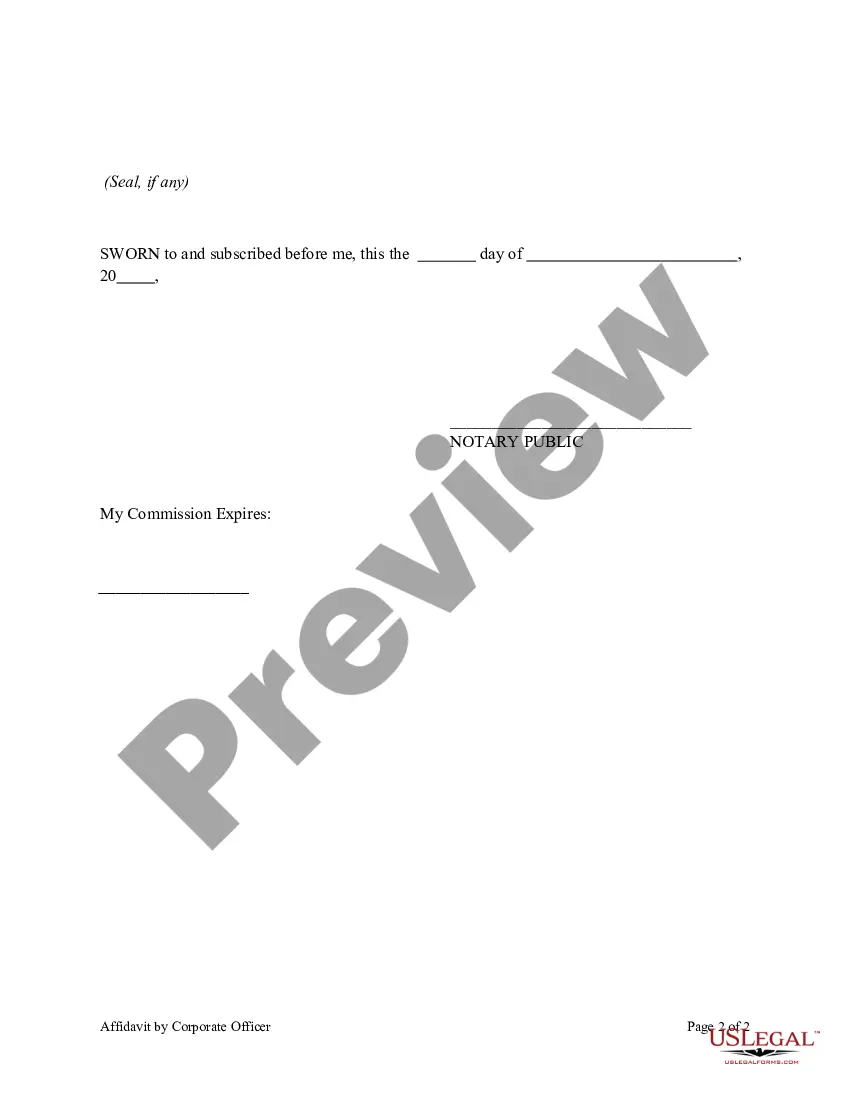
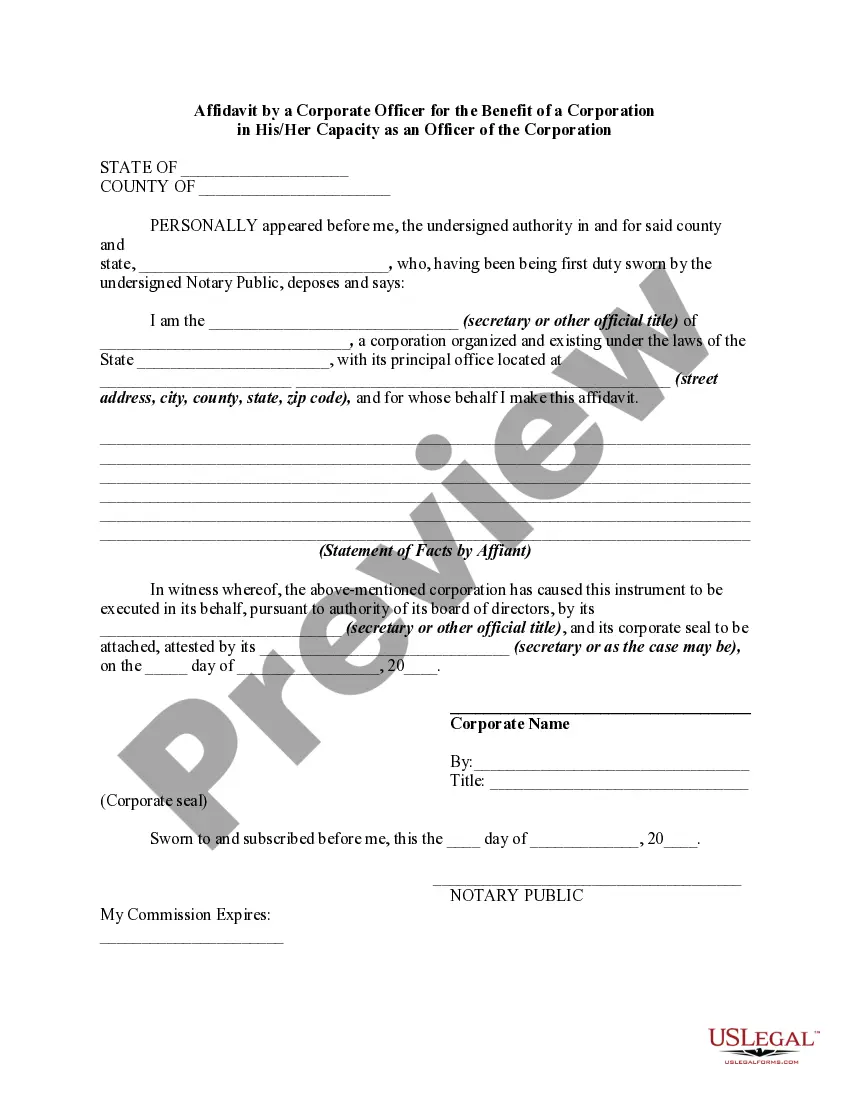
How to fill out Affidavit By Corporate Officer Before A Notary Public?
The Notary Public Certification In Virginia displayed on this page is a versatile official template crafted by experienced attorneys in compliance with national and local laws.
For over 25 years, US Legal Forms has supplied individuals, organizations, and legal professionals with more than 85,000 validated, state-specific forms for any business and personal situation. It is the quickest, most straightforward, and most trustworthy method to acquire the documents you require, as the service assures bank-level data security and anti-malware measures.
Register for US Legal Forms to have reliable legal templates available for every circumstance in life.
- Search for the document you require and examine it. Browse through the file you've searched for and preview it or review the form description to verify it meets your needs. If it doesn't, utilize the search function to find the correct one. Click Buy Now when you have located the template you seek.
- Register and Log In. Choose the subscription plan that fits you and create an account. Employ PayPal or a credit card to make a swift payment. If you already possess an account, Log In and verify your subscription to proceed.
- Acquire the editable template. Select the format you desire for your Notary Public Certification In Virginia (PDF, Word, RTF) and download the sample onto your device.
- Complete and sign the document. Print the template to fill it out manually. Alternatively, utilize an online multi-functional PDF editor to efficiently and accurately complete and sign your form with validity.
- Redownload your documents. Use the same document again whenever necessary. Access the My documents section in your profile to redownload any previously saved forms.
Form popularity
FAQ
To become an online notary in VA, start by obtaining your notary public certification in Virginia. Complete the required application and training program focused on virtual notarization. Next, you will need to select a compliant online notarization platform and register with the Virginia Secretary of the Commonwealth. Finally, ensure that you stay updated with state laws and technology changes to effectively serve your clients.
To become a virtual notary in Virginia, you first need to obtain your notary public certification in Virginia. This involves completing the application process, which includes a background check. Once certified, you must take a training course focused on online notarization. After completing the training, you will need to register with the Virginia Secretary of the Commonwealth and select a technology platform that meets state guidelines.
One of the most common mistakes by notaries is failing to verify the signer’s identity properly. This oversight can lead not only to legal issues but also to the potential invalidation of the notarized document. To avoid this mistake, familiarize yourself with the identification requirements in Virginia and consider using resources from USLegalForms to enhance your understanding and practice.
A notary journal should be a well-organized record that includes identifiable entries for each notarization performed. The journal typically features columns for the date, type of document, signer's information, and your signature as the notary. Properly maintaining this journal is vital for anyone holding a notary public certification in Virginia, as it acts as a protective measure.
To fill out a notary journal entry effectively, start by entering the date of the notarization, followed by the type of document notarized. Next, include the names and addresses of the parties involved and a description of how you verified their identity. A thorough entry enhances your professionalism and upholds your notary public certification in Virginia.
Filling out a notary journal entry requires you to record specific details of the notarial act. Include the date, type of document, names of the signers, and the nature of their identification. This level of detail not only ensures compliance but also safeguards your work as a notary public in Virginia.
You should begin the renewal process for your notary public certification in Virginia well before your current commission expires, ideally at least a couple of months in advance. This time frame allows for any potential delays in processing. It’s essential to ensure that there is no interruption in your ability to perform notarizations, as maintaining your commission is key to your professional responsibilities. Keeping ahead of the timeline will save you from last-minute stress.
Notarized documents remain valid as long as the content of the document itself does not state otherwise. Generally, once a document is notarized, it serves its purpose unless another action invalidates it or a set timeframe is outlined by the involved parties. It’s crucial to understand the specific context of your document to gauge its validity accurately. Remember, having a notary public certification in Virginia also helps maintain the integrity of these documents.
To file your notary income, you need to report your earnings on your annual tax return. As a holder of a notary public certification in Virginia, you should categorize your income under self-employment, as notaries often operate as independent contractors. Keeping detailed records of all transactions will assist in accurately reporting your earnings. If you require guidance, platforms like US Legal Forms can provide resources to simplify this process.
Several factors can disqualify you from obtaining a notary public certification in Virginia. These may include felony convictions, not being a resident of Virginia, or failing to meet specific qualifications such as age and understanding of notarial duties. It's crucial to carefully review these disqualifiers before applying for your certification. Understanding these requirements upfront can streamline your path to becoming a notary.