Notice Of Removal Template For Work In Orange
Description
Get your form ready online
Our built-in tools help you complete, sign, share, and store your documents in one place.
Make edits, fill in missing information, and update formatting in US Legal Forms—just like you would in MS Word.
Download a copy, print it, send it by email, or mail it via USPS—whatever works best for your next step.
Sign and collect signatures with our SignNow integration. Send to multiple recipients, set reminders, and more. Go Premium to unlock E-Sign.
If this form requires notarization, complete it online through a secure video call—no need to meet a notary in person or wait for an appointment.
We protect your documents and personal data by following strict security and privacy standards.

Make edits, fill in missing information, and update formatting in US Legal Forms—just like you would in MS Word.

Download a copy, print it, send it by email, or mail it via USPS—whatever works best for your next step.

Sign and collect signatures with our SignNow integration. Send to multiple recipients, set reminders, and more. Go Premium to unlock E-Sign.

If this form requires notarization, complete it online through a secure video call—no need to meet a notary in person or wait for an appointment.

We protect your documents and personal data by following strict security and privacy standards.
Looking for another form?










Form popularity
FAQ
Once your forms are complete, file them with the Clerk of Court's office in the appropriate county or online using the Florida Courts E-Filing Portal. Follow the instructions for your forms.
You may file your case with the Clerk of the Circuit Court & Comptroller's office online using the statewide E-Filing portal, or in person or by mail at any Clerk of the Circuit Court & Comptroller courthouse location.
Unlike an Eviction, a Homeowner does not have to give notice to the Family member or individual that they are trying to remove. This is because there is no Landlord/Tenant Relationship. Once you file the Unlawful Detainer, they have 5 days to respond.
An eligible consensual case that was commenced and continued in hard copy form may be converted to a NYSCEF case by filing a Stipulation and Consent to E–Filing (found on the website) with the court. Any such conversion should be done promptly after commencement.
1996) ("It is clear beyond peradventure of a doubt that the right of removal is vested exclusively in defendants. A plaintiff simply may not remove an action from a state court pursuant to 28 U.S.C. §§ 1441(a) and 1446(a)"); Adams v. Adminastar Defense Services, Inc., 901 F.
An Order to Show Cause must be supported by an Affidavit. An Affidavit is a sworn statement made before the clerk or notary public which explains to the court why your request should be granted.
1996) ("It is clear beyond peradventure of a doubt that the right of removal is vested exclusively in defendants. A plaintiff simply may not remove an action from a state court pursuant to 28 U.S.C. §§ 1441(a) and 1446(a)"); Adams v. Adminastar Defense Services, Inc., 901 F.
A notice of voluntary dismissal which a plaintiff may use to dismiss an action before the defendant has answered or moved for summary judgment. This Standard Document has integrated drafting notes with important explanations and drafting tips.
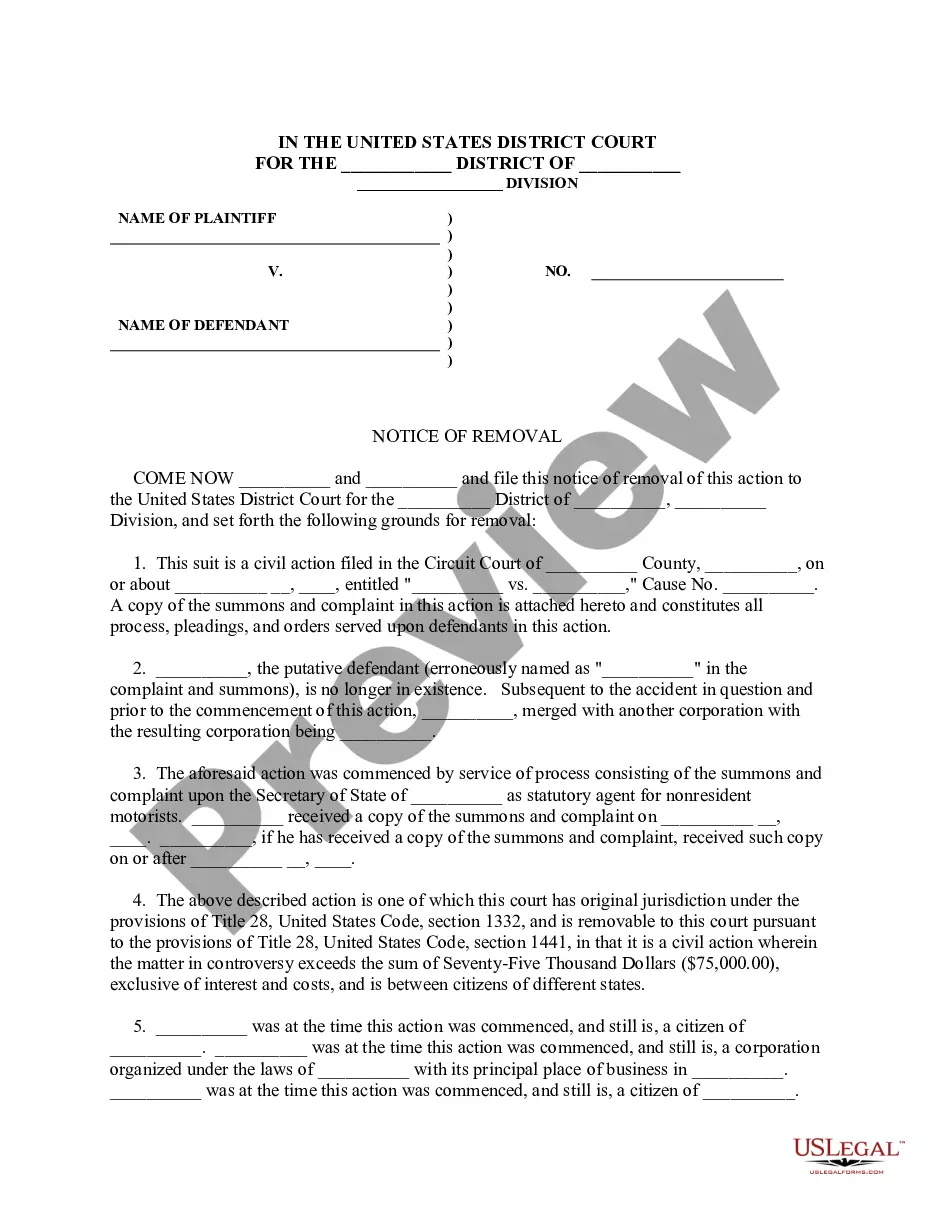
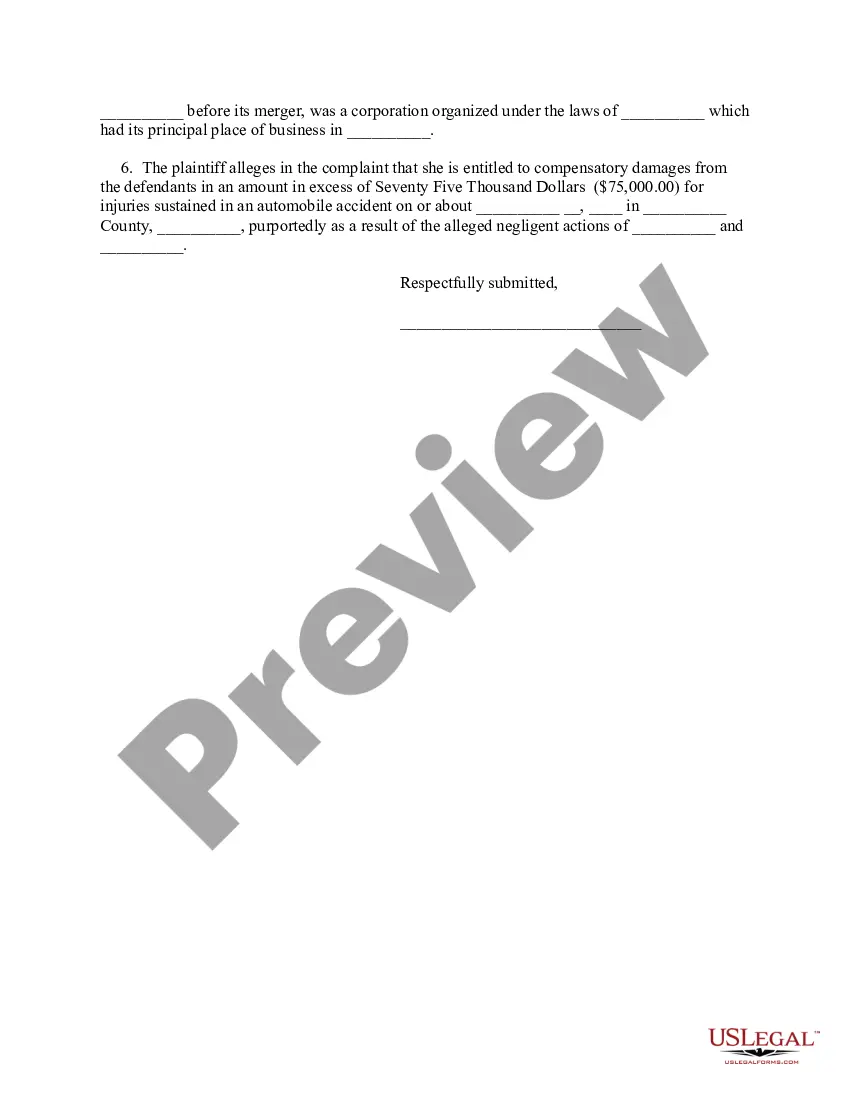
A notice of removal is a legal document filed by a defendant to move a case from a state court to a federal court. The notice must be filed in the federal district court where the case is pending and must include a brief statement explaining the reasons for the removal.
A defendant or defendants desiring to remove any civil action from a State court shall file in the district court of the United States for the district and division within which such action is pending a notice of removal signed pursuant to Rule 11 of the Federal Rules of Civil Procedure and containing a short and plain ...