Work State Law For Employees In North Carolina
Description
















Get your form ready online
Our built-in tools help you complete, sign, share, and store your documents in one place.
Make edits, fill in missing information, and update formatting in US Legal Forms—just like you would in MS Word.
Download a copy, print it, send it by email, or mail it via USPS—whatever works best for your next step.
Sign and collect signatures with our SignNow integration. Send to multiple recipients, set reminders, and more. Go Premium to unlock E-Sign.
If this form requires notarization, complete it online through a secure video call—no need to meet a notary in person or wait for an appointment.
We protect your documents and personal data by following strict security and privacy standards.

Make edits, fill in missing information, and update formatting in US Legal Forms—just like you would in MS Word.

Download a copy, print it, send it by email, or mail it via USPS—whatever works best for your next step.

Sign and collect signatures with our SignNow integration. Send to multiple recipients, set reminders, and more. Go Premium to unlock E-Sign.

If this form requires notarization, complete it online through a secure video call—no need to meet a notary in person or wait for an appointment.

We protect your documents and personal data by following strict security and privacy standards.
Looking for another form?


Form popularity
FAQ
A California employer is prohibited from requiring employees to work "off the clock" without compensation. Off-the-clock work may include pre-shift duties, post-shift work, administrative duties, clocking out an employee while they are working, and performing work during a meal or rest break.
This North Carolina act prohibits discrimination or taking of retaliatory action (discharge, suspension, demotion, retaliatory relocation of an employee, or other adverse employment action taken against an employee in the terms, conditions, privileges, and benefits of employment) against an employee who in good faith ...
No person shall be required by an employer to become or remain a member of any labor union or labor organization as a condition of employment or continuation of employment by such employer.” As such, North Carolinians have the “right to work” at any employer in the state, even if they are not a member of a union that ...
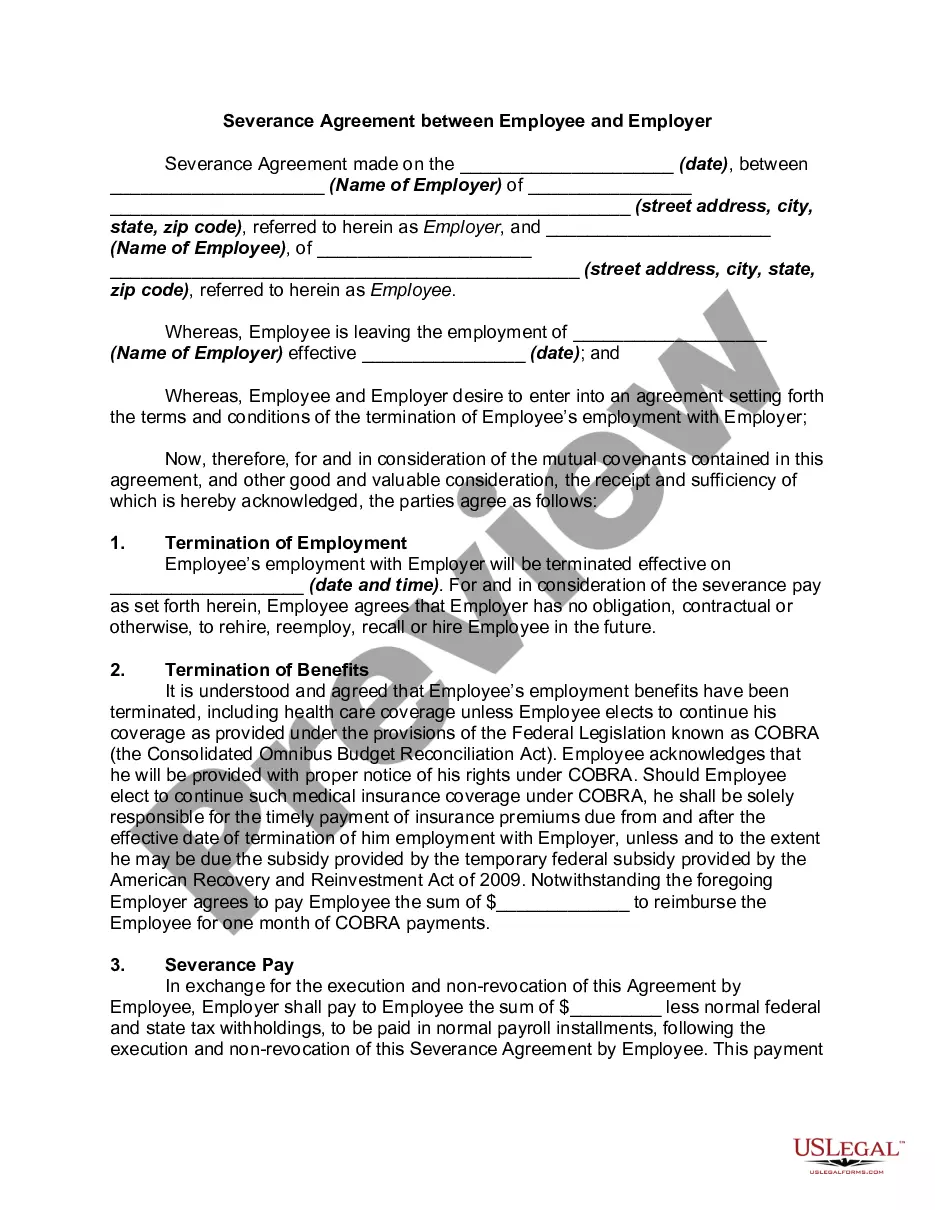
At-Will Employment North Carolina is an at-will-employment state, which means that an employer may end the employment relationship at any time and for any reason as long as it is not an otherwise unlawful reason. Kurtzman v. Applied Analytical Industries, Inc., 347 N.C. 329, 331, 493 S.E.2d 420, 423 (1997).
At-will employment solely focuses on either the termination of an employee or when an employee leaves. Right-to-work statutes make employers offer the choice of joining a union or not, but limit their ability to terminate employees if they choose to represent themselves.
NC is an employment 'at will' state which means that your employer can terminate your employment for any reason not prohibited by law. They don't have to provide notice or give you a reason.
North Carolina is an employment-at-will state. The term “employment-at-will” simply means that either the employee or the employer can end the employment relationship at any time for any reason—good, bad or no reason at all. The employer is not required to give the employee a reason.
The N.C. Department of Labor's mission is to foster a safe, healthy, fair and productive North Carolina by: Providing responsive, effective and efficient services. Providing and encouraging quality education and training. Administering consistently and fairly our regulatory mandates.
Salaried employees in North Carolina can work up to 40 hours in one standard workweek. Any hours worked beyond 40 is compensated at 1.5 times. Employers who disregard overtime compensation may face penalties for violations.
A: It is possible for you to sue your employer for emotional distress in North Carolina. Under North Carolina state law, employees are prohibited from suing their employers for negligence in the workplace. Employees are permitted, however, to sue their employers for intentional personal injury.