Using Personal Vehicle For Work Law California In Dallas
Description
















Get your form ready online
Our built-in tools help you complete, sign, share, and store your documents in one place.
Make edits, fill in missing information, and update formatting in US Legal Forms—just like you would in MS Word.
Download a copy, print it, send it by email, or mail it via USPS—whatever works best for your next step.
Sign and collect signatures with our SignNow integration. Send to multiple recipients, set reminders, and more. Go Premium to unlock E-Sign.
If this form requires notarization, complete it online through a secure video call—no need to meet a notary in person or wait for an appointment.
We protect your documents and personal data by following strict security and privacy standards.
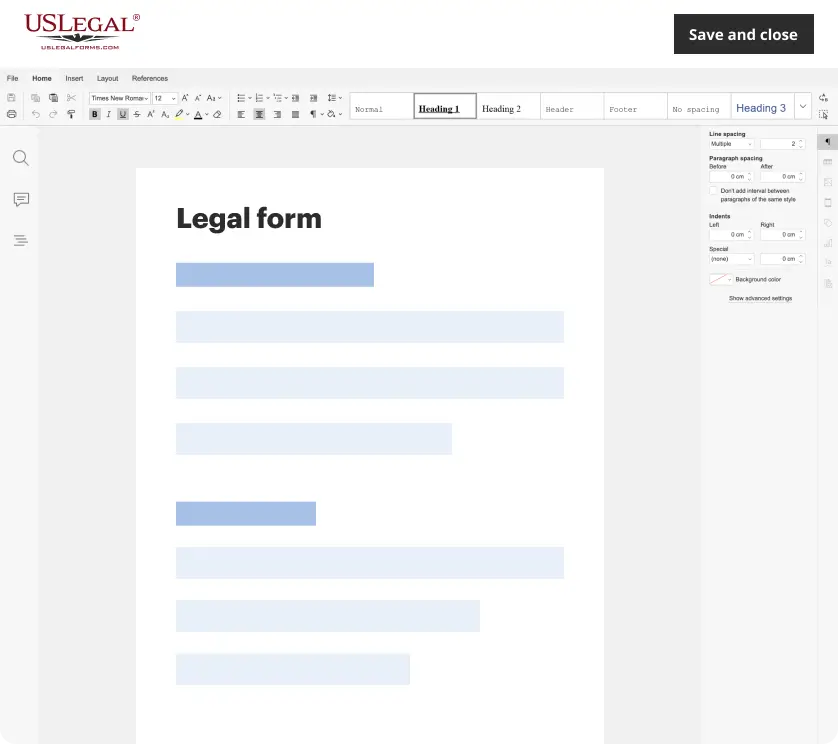
Make edits, fill in missing information, and update formatting in US Legal Forms—just like you would in MS Word.
Download a copy, print it, send it by email, or mail it via USPS—whatever works best for your next step.
Sign and collect signatures with our SignNow integration. Send to multiple recipients, set reminders, and more. Go Premium to unlock E-Sign.
If this form requires notarization, complete it online through a secure video call—no need to meet a notary in person or wait for an appointment.
We protect your documents and personal data by following strict security and privacy standards.
Looking for another form?

Form popularity
FAQ
The standard mileage rates for 2025 are: Self-employed and business: 70 cents/mile. Charities: 14 cents/mile. Medical: 21 cents/mile.
Yes, your employer can require you to use your own vehicle, but they have to reimburse you for all costs associated with travel, from tolls to mileage, to increased insurance. Since your employer is only paying mileage one-way, they may (probably are) violating Labor Code section 2802.
If your employees drive their personal vehicles for work, your business is at risk of financial liability in the case of an accident. In this article, we focus on non-owned autos (an exposure faced by nearly every company), what it is and how to reduce your risk to loss.
It depends on your employment contract. If you signed an agreement to use your personal vehicle for work-related tasks, refusing to do so could be a breach of contract. However, if your contract does not require using your personal vehicle, you might have more room to refuse.
The use of privately-owned automobiles during scheduled hours of work should be minimized and only used for purposes that cannot be accomplished by other transport means (e.g. shuttle, delivery service, rental car, etc.).
Under IRS general rules, all use of a company car is considered personal use unless the employee documents the business use of the car. Personal use of a company vehicle (PUCC) generally results in taxable wages for the employee. But sorting out the amount to tax can be confusing.
In short, yes the employer can. In California all employment is considered to be on an at will basis unless there is an agreement to the contrary about that status between the employee and employer.