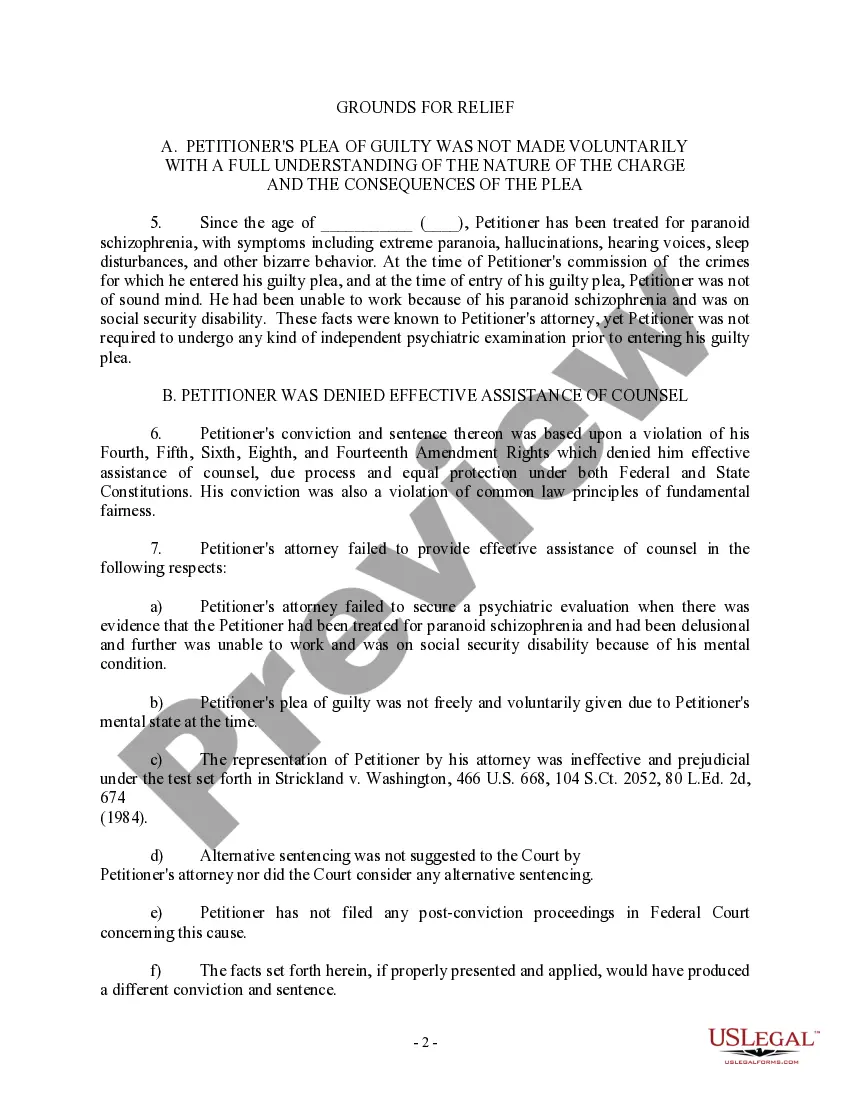
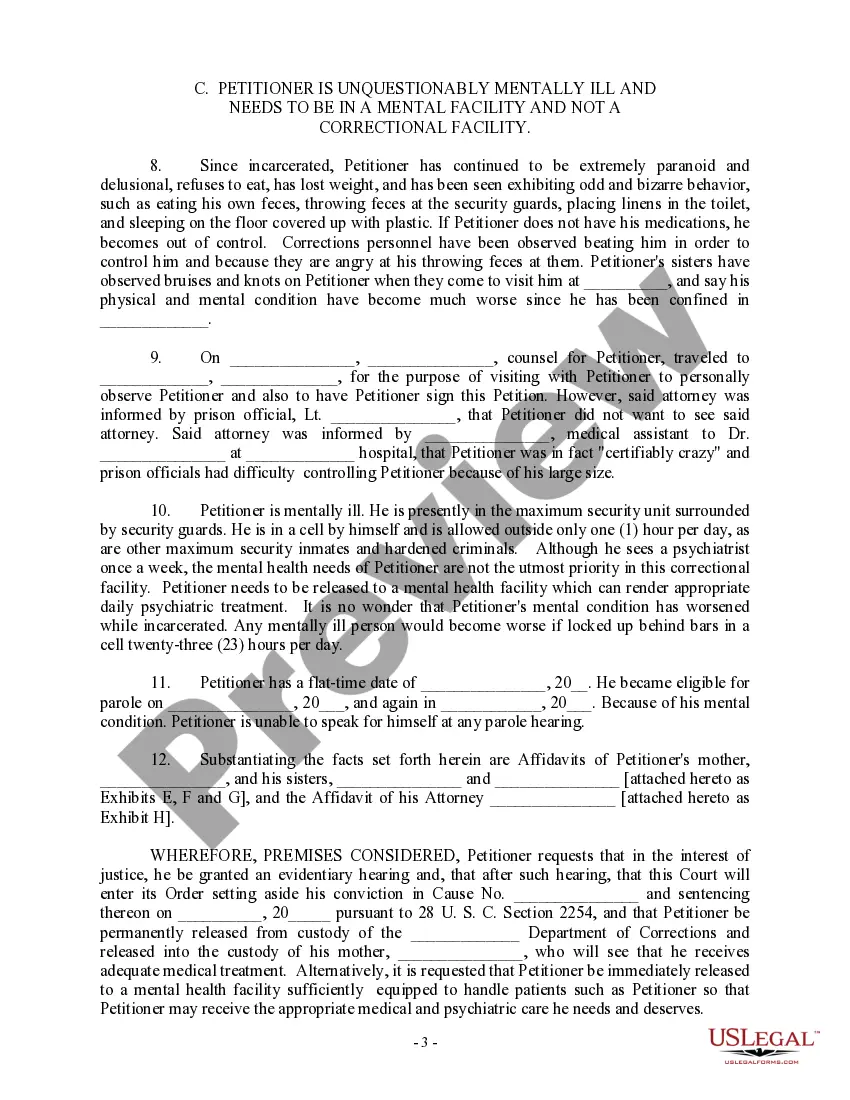
Federal Habeas Corpus Rules In Florida
Description

Get your form ready online
Our built-in tools help you complete, sign, share, and store your documents in one place.
Make edits, fill in missing information, and update formatting in US Legal Forms—just like you would in MS Word.
Download a copy, print it, send it by email, or mail it via USPS—whatever works best for your next step.
Sign and collect signatures with our SignNow integration. Send to multiple recipients, set reminders, and more. Go Premium to unlock E-Sign.
If this form requires notarization, complete it online through a secure video call—no need to meet a notary in person or wait for an appointment.
We protect your documents and personal data by following strict security and privacy standards.

Make edits, fill in missing information, and update formatting in US Legal Forms—just like you would in MS Word.

Download a copy, print it, send it by email, or mail it via USPS—whatever works best for your next step.

Sign and collect signatures with our SignNow integration. Send to multiple recipients, set reminders, and more. Go Premium to unlock E-Sign.

If this form requires notarization, complete it online through a secure video call—no need to meet a notary in person or wait for an appointment.

We protect your documents and personal data by following strict security and privacy standards.
Looking for another form?
Form popularity
FAQ
A writ of habeas corpus orders the custodian of an individual in custody to produce the individual before the court to make an inquiry concerning his or her detention, to appear for prosecution (ad prosequendum) or to appear to testify (ad testificandum).
The following are some common grounds for writ of habeas corpus petitions: Introduction of new evidence that points to your innocence. Changes in the law. Incompetency during trial. Ineffective assistance of counsel. Conviction under unconstitutional law. Prosecutorial misconduct. No jurisdiction.
—When in any criminal prosecution a writ of habeas corpus is applied for by any person charged with any criminal offense and the accused has been remanded to custody by the court to which such application is made, a supersedeas of the order made on appeal being taken to an appellate court shall not prevent the state ...
If an individual is deemed to be a danger to themselves or others, they may not refuse treatment under the Baker Act. However, they do have the right to legal representation and to challenge their detention.
There are two prerequisites for habeas review: the petitioner must be in custody when the petition is filed, and a prisoner who is held in state government custody must have exhausted all state remedies, including state appellate review.
(b) To avoid liability to undiscovered trespassers, a person or organization owning or controlling an interest in real property must refrain from intentional misconduct that proximately causes injury to the undiscovered trespasser, but has no duty to warn of dangerous conditions.
The statute of limitations in Florida on debt is five years. This means that once the five-year timeline has expired, creditors can no longer file a lawsuit against the borrower to try and recover the debt. This is only true of debts that include a written agreement, though.
Chapter 394 contains the only provisions in Florida law that allow restriction of liberties for an extended period of time with no judicial review. Until or without a court hearing, there is no due process. Florida statutes require involuntary placement hearings to be conducted within five days.
A Writ of Habeas Corpus usually addresses claims of ineffective assistance of counsel, prosecutorial misconduct, newly discovered evidence, jury misconduct, and claims of actual innocence.
An example of a habeas corpus case is when a person believes they have been wrongfully imprisoned for a crime they did not commit. They may file a writ of habeas corpus to present new evidence or information that could potentially exonerate them.
