Federal Habeas Corpus Form 2255
Description

Get your form ready online
Our built-in tools help you complete, sign, share, and store your documents in one place.
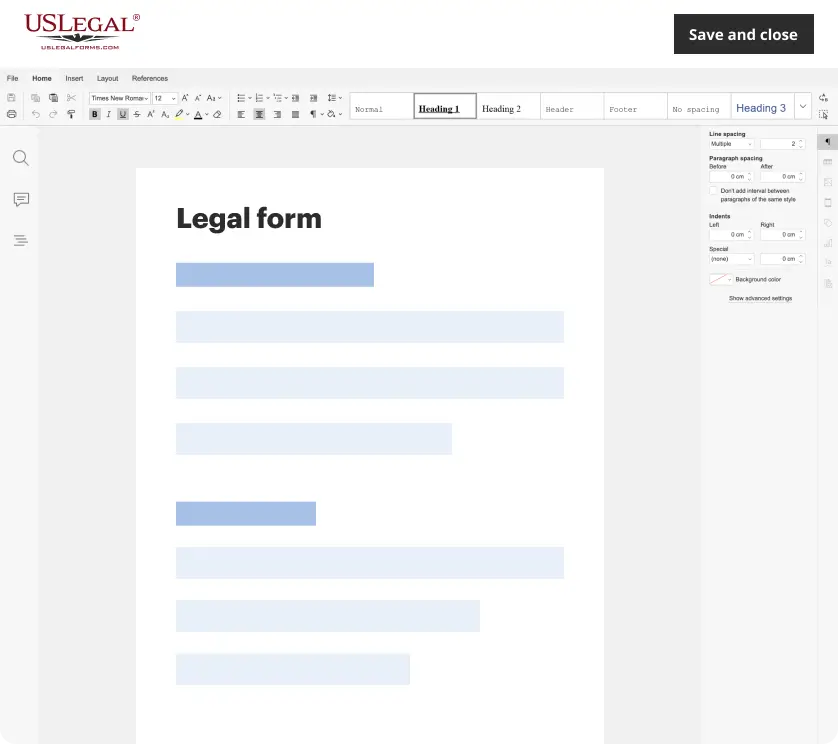
Make edits, fill in missing information, and update formatting in US Legal Forms—just like you would in MS Word.
Download a copy, print it, send it by email, or mail it via USPS—whatever works best for your next step.
Sign and collect signatures with our SignNow integration. Send to multiple recipients, set reminders, and more. Go Premium to unlock E-Sign.
If this form requires notarization, complete it online through a secure video call—no need to meet a notary in person or wait for an appointment.
We protect your documents and personal data by following strict security and privacy standards.
Make edits, fill in missing information, and update formatting in US Legal Forms—just like you would in MS Word.

Download a copy, print it, send it by email, or mail it via USPS—whatever works best for your next step.
Sign and collect signatures with our SignNow integration. Send to multiple recipients, set reminders, and more. Go Premium to unlock E-Sign.

If this form requires notarization, complete it online through a secure video call—no need to meet a notary in person or wait for an appointment.

We protect your documents and personal data by following strict security and privacy standards.
Looking for another form?



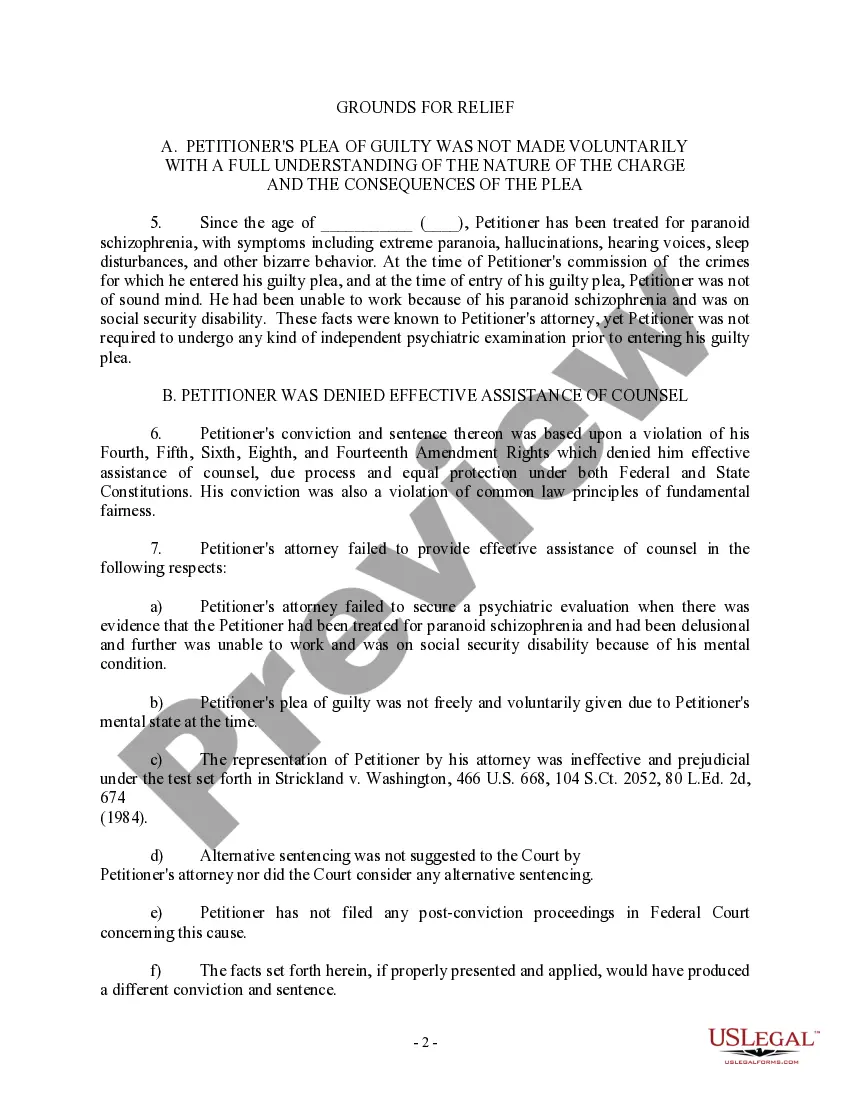
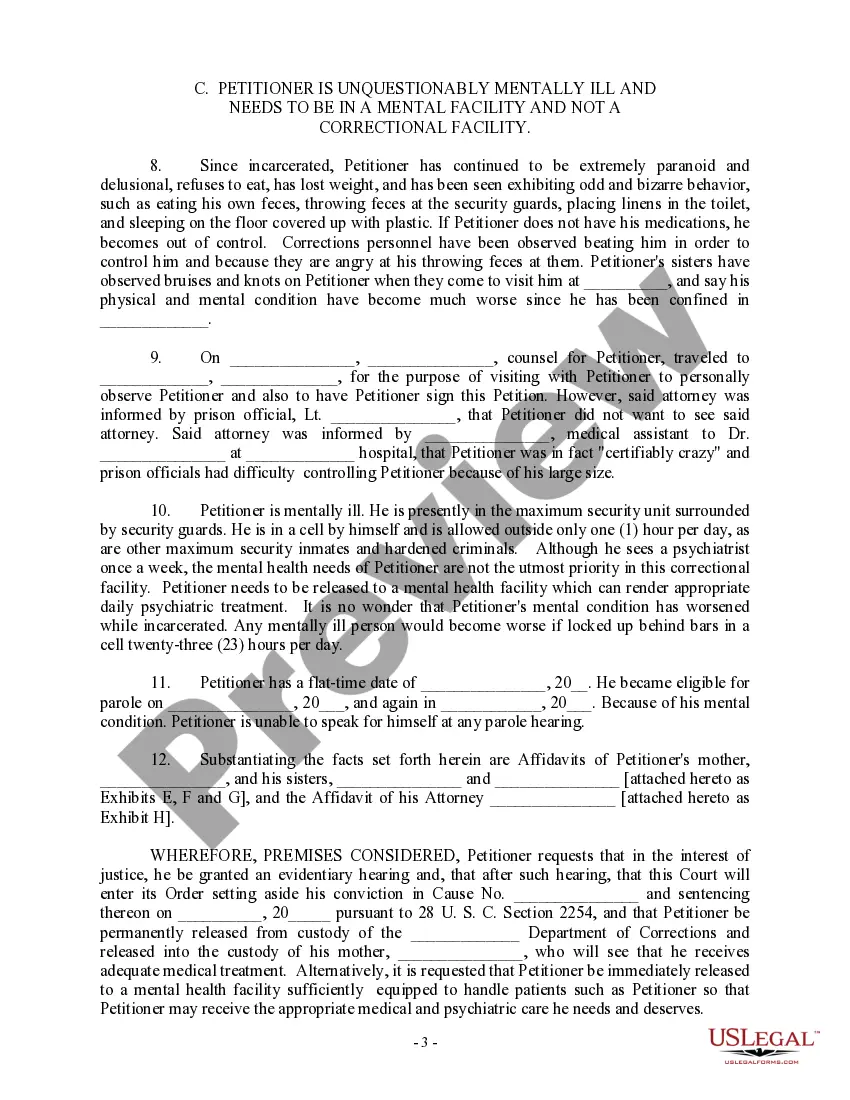
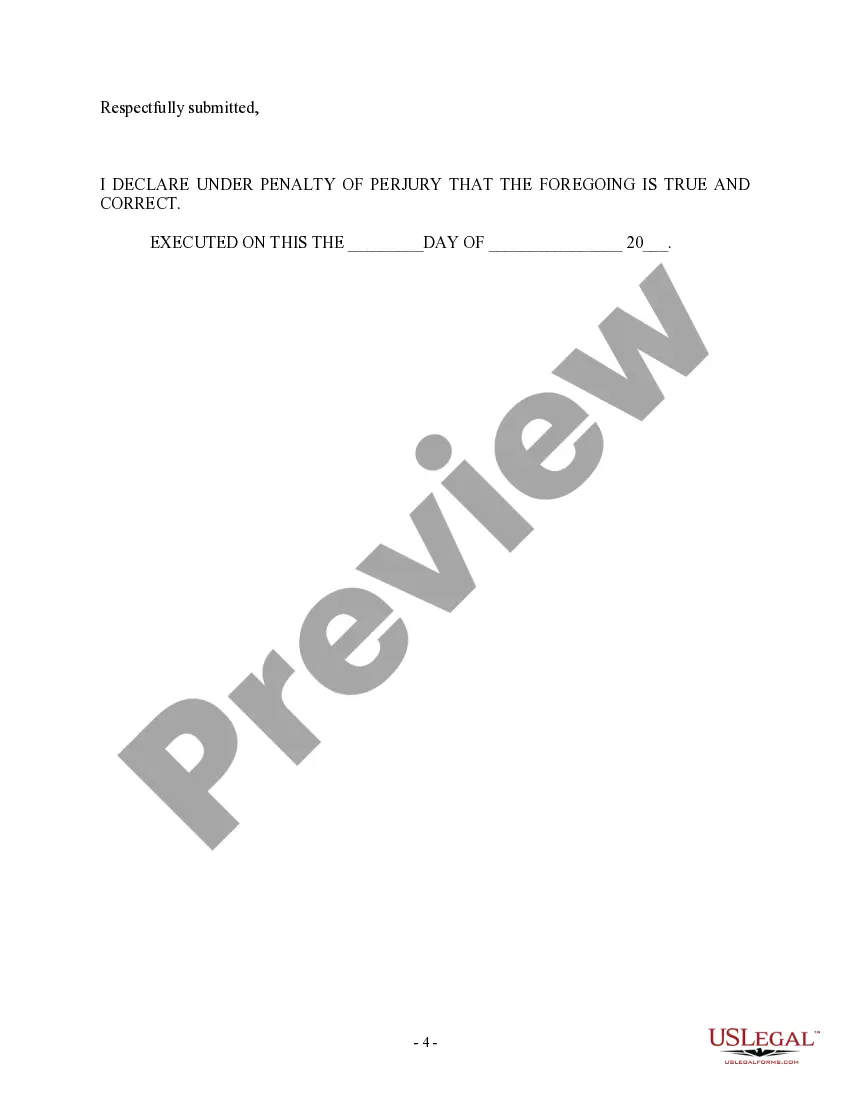
How to fill out Petition For Writ Of Habeas Corpus By A Person In State Custody?
Identifying a reliable resource for accessing the latest and pertinent legal templates is a significant part of dealing with bureaucracy.
Acquiring the appropriate legal documents requires precision and meticulousness, which is why it is crucial to source samples of Federal Habeas Corpus Form 2255 exclusively from trustworthy providers, such as US Legal Forms. An incorrect template will squander your time and delay your circumstances.
Eliminate the complications associated with your legal documentation. Explore the extensive US Legal Forms library to discover legal templates, assess their applicability to your situation, and download them instantly.
- Use the library navigation or search function to find your document.
- Review the description of the form to verify if it aligns with the requirements of your state and locality.
- Examine the form preview, if available, to confirm that the template is indeed what you need.
- Continue your search and seek the correct template if the Federal Habeas Corpus Form 2255 does not fulfill your criteria.
- If you are confident about the form's applicability, download it.
- As a registered user, click Log in to verify and access your chosen forms in My documents.
- If you do not yet have an account, click Buy now to acquire the template.
- Choose the pricing option that best fits your needs.
- Proceed with the registration to finalize your purchase.
- Complete your transaction by selecting a payment method (credit card or PayPal).
- Choose the file format for downloading the Federal Habeas Corpus Form 2255.
- Once the form is saved on your device, you can alter it using the editor or print it to complete it by hand.
Form popularity
FAQ
The motion to vacate, set aside or correct a sentence provided by 28 U.S.C. § 2255 is a modern descendant of the common law petition for a writ of habeas corpus. It is available only to people convicted in federal courts who are in custody.
For example, if an individual was convicted on the basis that their skin color matched that of the perpetrator ing to eyewitnesses, but there is no other evidence against them, then the individual can appeal for habeas corpus in order to be freed from imprisonment.
Generally, a 2255 federal habeas petition must be filed within a year after your federal conviction became final.
The habeas petition must be in writing and signed and verified either by the petitioner seeking relief or by someone acting on his or her behalf. The petition must name the custodian as the respondent and state the facts concerning the applicant's custody and include the legal basis for the request.
It found that 3.2 percent of the petitions were granted in whole or in part, and only l. 8 percent resulted in any type of release of the petitioner. Successful habeas corpus claims in most cases do not produce a prisoner's release, but rather a requirement for further judicial review.