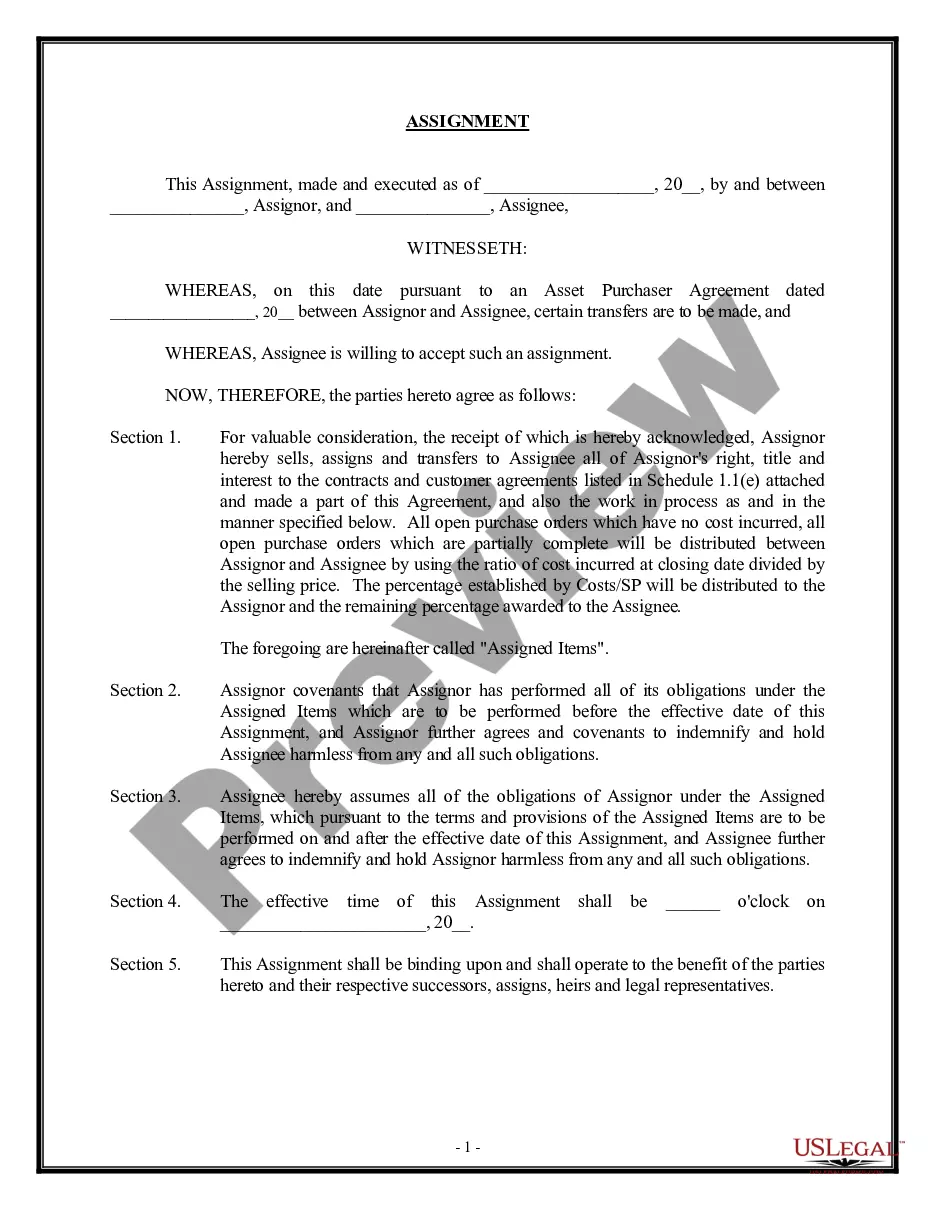
Assignment On Transaction Processing System In San Antonio
Description


Get your form ready online
Our built-in tools help you complete, sign, share, and store your documents in one place.
Make edits, fill in missing information, and update formatting in US Legal Forms—just like you would in MS Word.
Download a copy, print it, send it by email, or mail it via USPS—whatever works best for your next step.
Sign and collect signatures with our SignNow integration. Send to multiple recipients, set reminders, and more. Go Premium to unlock E-Sign.
If this form requires notarization, complete it online through a secure video call—no need to meet a notary in person or wait for an appointment.
We protect your documents and personal data by following strict security and privacy standards.

Make edits, fill in missing information, and update formatting in US Legal Forms—just like you would in MS Word.

Download a copy, print it, send it by email, or mail it via USPS—whatever works best for your next step.

Sign and collect signatures with our SignNow integration. Send to multiple recipients, set reminders, and more. Go Premium to unlock E-Sign.

If this form requires notarization, complete it online through a secure video call—no need to meet a notary in person or wait for an appointment.

We protect your documents and personal data by following strict security and privacy standards.
Looking for another form?


Form popularity
FAQ
A transaction processing system collects and stores data about. (of business) transactions and sometimes controls decisions. made as part of a transaction. The transaction is the activity. that changes stored data; examples of such an activity would.
Some examples of transaction processing systems in the company include order processing, reservations, accounts payable and receivable, payroll, and more.
There are six steps in processing a transaction. They are data entry, data validation, data pro- cessing and revalidation, storage, - output generation, and query support.
Some examples of transaction processing systems in the company include order processing, reservations, accounts payable and receivable, payroll, and more. This data will constantly vary due to the interactions and transactions that take place with the customer.
A Transaction Processing System (TPS) can be defined as a business tool consisting of computer hardware and software that hosts an application whose purpose is to carry out transactions for running or undertaking business. Practically, a TPS gathers, stores, alters, and retrieves data transactions in a business.
The throttle position sensor (TPS) is one of the most important sensors in the automotive electronic control system. It is a device used to detect the engine status.
Transaction processing systems generally go through a five-stage cycle of 1) Data entry activities 2) Transaction processing activities 3) File and database processing 4) Document and report generation 5) Inquiry processing activities.
The steps in the accounting cycle are identifying transactions, recording transactions in a journal, posting the transactions, preparing the unadjusted trial balance, analyzing the worksheet, adjusting journal entry discrepancies, preparing a financial statement, and closing the books.
Transaction processing systems generally go through a five-stage cycle of 1) Data entry activities 2) Transaction processing activities 3) File and database processing 4) Document and report generation 5) Inquiry processing activities.
Steps in Measuring External Transactions StepDescription 1. Transaction Analysis Identify economic events 2. Journalizing Record transactions in journal 3. Posting Transfer entries to ledger 4. Trial Balance Assess equality of debits and credits4 more rows
