Annual Shareholder Meeting Form In Virginia
Description
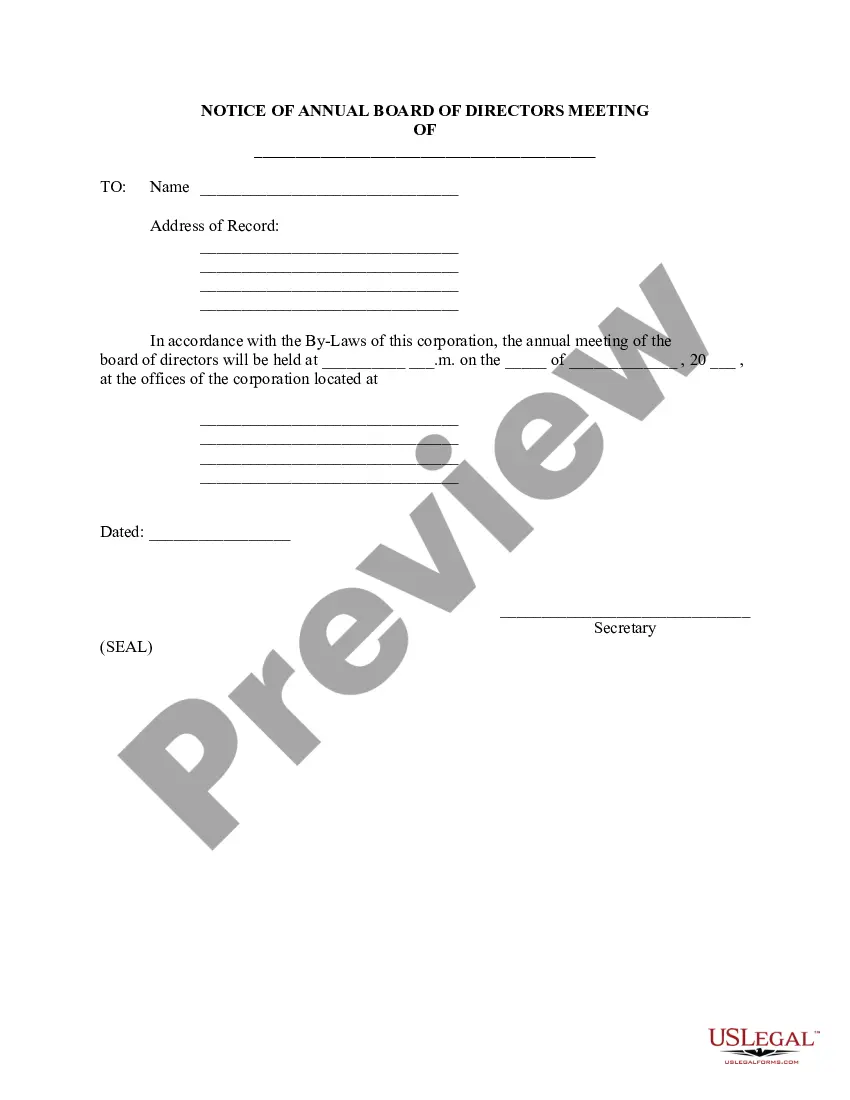


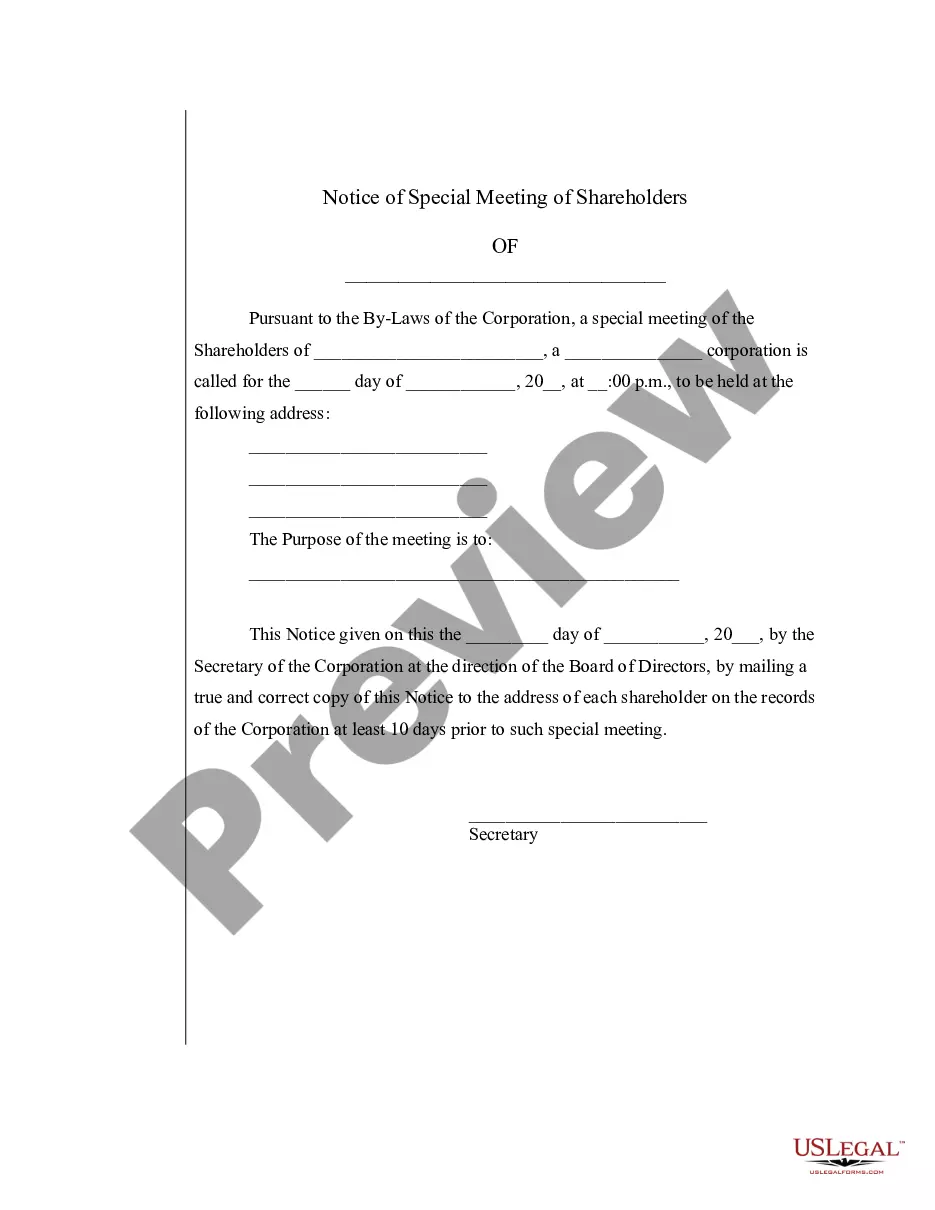
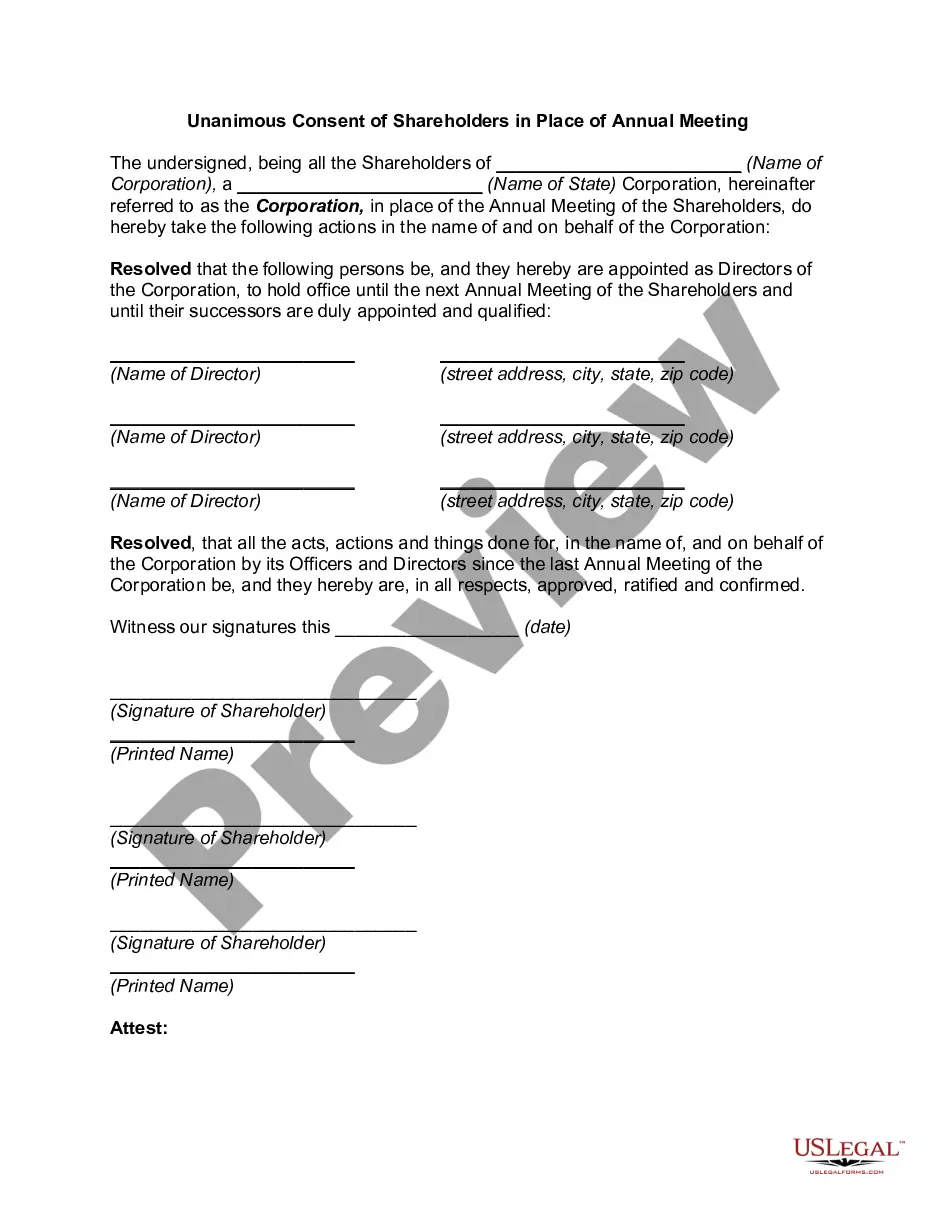
Get your form ready online
Our built-in tools help you complete, sign, share, and store your documents in one place.
Make edits, fill in missing information, and update formatting in US Legal Forms—just like you would in MS Word.
Download a copy, print it, send it by email, or mail it via USPS—whatever works best for your next step.
Sign and collect signatures with our SignNow integration. Send to multiple recipients, set reminders, and more. Go Premium to unlock E-Sign.
If this form requires notarization, complete it online through a secure video call—no need to meet a notary in person or wait for an appointment.
We protect your documents and personal data by following strict security and privacy standards.

Make edits, fill in missing information, and update formatting in US Legal Forms—just like you would in MS Word.

Download a copy, print it, send it by email, or mail it via USPS—whatever works best for your next step.

Sign and collect signatures with our SignNow integration. Send to multiple recipients, set reminders, and more. Go Premium to unlock E-Sign.

If this form requires notarization, complete it online through a secure video call—no need to meet a notary in person or wait for an appointment.

We protect your documents and personal data by following strict security and privacy standards.
Looking for another form?



Form popularity
FAQ
In California, S-corporations are required to hold at least one annual meeting of shareholders. This frequency is designed to ensure ongoing communication between the corporation and its shareholders, allowing for regular updates on the company's performance and strategic direction.
Typically, unless the minimum notice period is given, a general meeting will be void. However, a general meeting for a private company or non-traded public company may be called on short notice if a majority of the shareholders, who together hold at least 90% of voting rights in the company, agree.
A shareholders' meeting cannot commence without a quorum, typically at least 25% of voting rights present. Specific matters require the presence of attendees representing at least 25% of the voting rights for that item. Meetings cannot start or proceed unless at least three shareholders are present.
Shareholders must be given clear advance notice of the meeting's date, time, place, and agenda, typically within a state-specified timeframe. A corporation's bylaws or certificate of incorporation may allow the board, executives, or qualifying shareholders to call a special meeting.
A corporation shall notify members of the date, time, and place, if any, of each annual and special members' meeting.
In the case of a private company, two members present at the meeting shall be the quorum for the AGM. In the case of a public company, the quorum is: Five members present at the meeting if the number of members is within one thousand.
The general meeting called within six months of the end of the previous fiscal year is known as the “annual” general meeting (or “AGM”). If a general meeting is held outside that time frame, it is “extraordinary” (“EGM”) and meant to address urgent or pressing matters that couldn't be settled at the AGM.
Special meetings of the shareholders may be called for any purpose or purposes, at any time, by the Chief Executive Officer; by the Chief Financial Officer; by the Board or any two or more members thereof; or by one or more shareholders holding not less than 10% of the voting power of all shares of the corporation ...
(a) initially, no more than 18 months after the company's date of incorporation; and. (b) thereafter, once in every calendar year, but no more than 15 months after the date of the previous annual general meeting, or within an extended time allowed by the Companies Tribunal, on good cause shown.
Annual shareholder meetings require a notice period of at least 21 days. The notice period can be shortened with the expressed consent of all shareholders. The notice should include all the basic meeting details and other important pieces of documentation, such as the meeting agenda.

