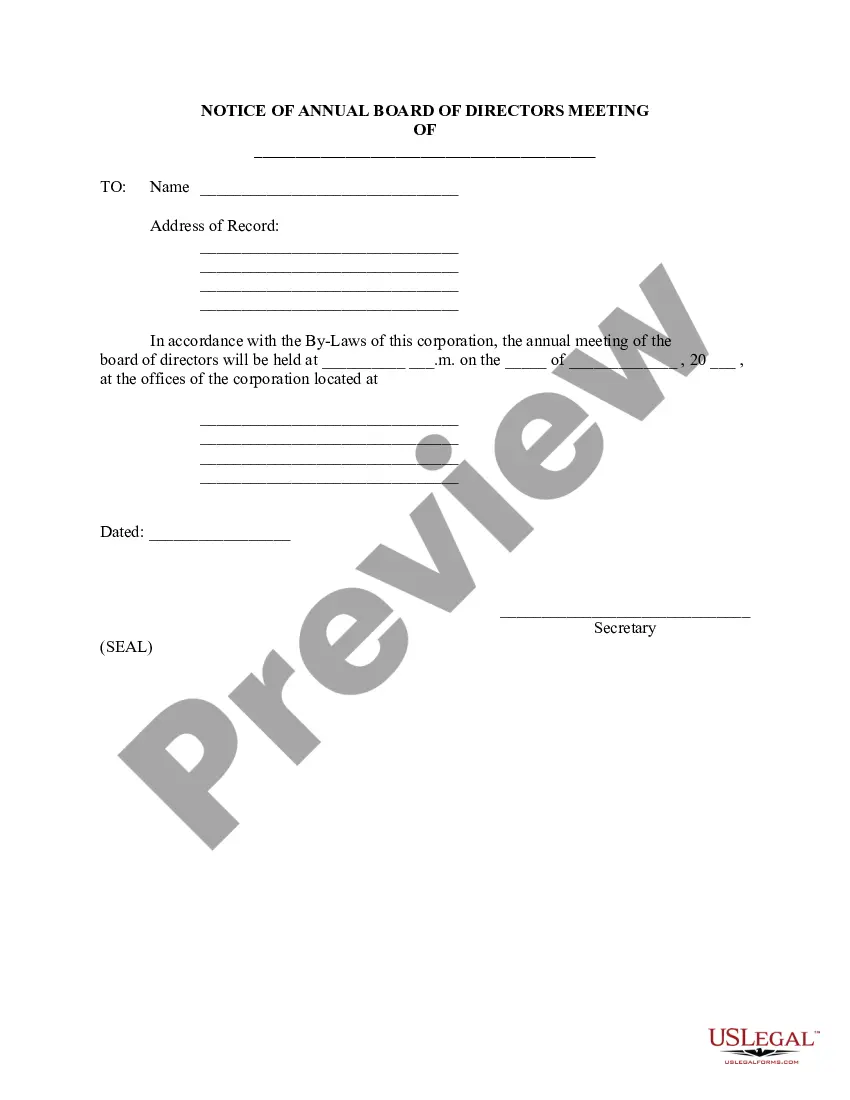
Notice For Meeting Example In Maryland
Description


Get your form ready online
Our built-in tools help you complete, sign, share, and store your documents in one place.
Make edits, fill in missing information, and update formatting in US Legal Forms—just like you would in MS Word.
Download a copy, print it, send it by email, or mail it via USPS—whatever works best for your next step.
Sign and collect signatures with our SignNow integration. Send to multiple recipients, set reminders, and more. Go Premium to unlock E-Sign.
If this form requires notarization, complete it online through a secure video call—no need to meet a notary in person or wait for an appointment.
We protect your documents and personal data by following strict security and privacy standards.
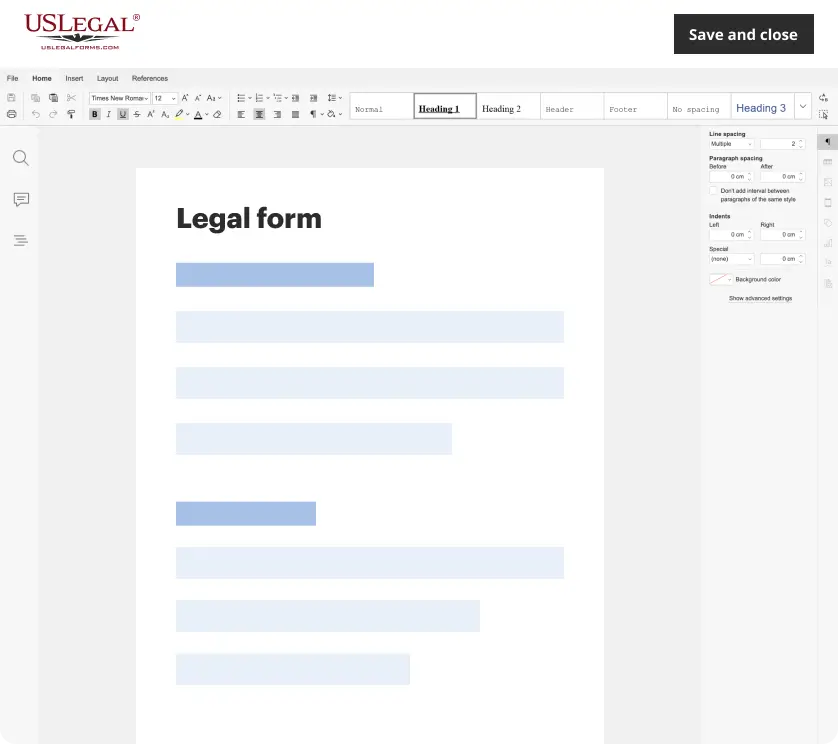
Make edits, fill in missing information, and update formatting in US Legal Forms—just like you would in MS Word.
Download a copy, print it, send it by email, or mail it via USPS—whatever works best for your next step.
Sign and collect signatures with our SignNow integration. Send to multiple recipients, set reminders, and more. Go Premium to unlock E-Sign.
If this form requires notarization, complete it online through a secure video call—no need to meet a notary in person or wait for an appointment.
We protect your documents and personal data by following strict security and privacy standards.
Looking for another form?
Form popularity
FAQ
Call the Consumer Protection Division Hotline at (410) 528-8662 Mon. -Fri. 10am - 2pm.
Individuals can file a complaint against a homeowners' association in Maryland by contacting the Consumer Protection Division of the Maryland Attorney General's Office. Complaints can also be addressed through internal dispute resolution mechanisms if provided by the HOA's governing documents.
Upon finding a violation of the Open Meeting Law, the Attorney General may impose a civil penalty upon a public body of not more than $1,000 for each intentional violation.
Maryland's Open Meetings Act is a statute that requires many State and local public bodies to hold their meetings in public, to give the public adequate notice of those meetings, and to allow the public to inspect meetings minutes. The Act permits public bodies to discuss some topics confidentially.
How to file a Complaint. Send a complaint letter by mail or e-mail to the Open Meetings Compliance Board at this address: Open Meetings Compliance Board, c/o Attorney General's Office, 200 St. Paul Place, Baltimore, MD 21202, or OpenGov@oag.state.md. You must sign your complaint and include a return address.
The District of Columbia Open Meetings Act (OMA) requires that any gathering of a quorum of a public body where members consider, conduct or advise on public business offer the opportunity for the public to observe the meeting.
When the Open Meetings Act applies, what does it require the public body to do? The Act requires the public body to give “reasonable advance notice” of its meetings, to make an agenda available in advance except in cases of emergency, to hold its meetings openly, to adopt minutes, and to retain them for 5 years.
This provision establishes that, although the Maryland Sunshine Law is the touchstone by which public bodies are to conduct their meetings, the statute is not exclusive in its application. The statute only outlines the minimum requirements for conducting open meetings. . . .
Annual shareholder meetings require a notice period of at least 21 days. The notice period can be shortened with the expressed consent of all shareholders. The notice should include all the basic meeting details and other important pieces of documentation, such as the meeting agenda.
HOA Board Meetings, Recordings, and Ground Rules Any member wanting to record the meeting must seek permission from the board. An HOA board has the authority to establish the rules of conduct for association meetings. The authority to do so is typically found in the CC&Rs or Articles of Incorporation and bylaws.

