Acceptance Without Resignation Meaning In Los Angeles
Description



Form popularity
FAQ
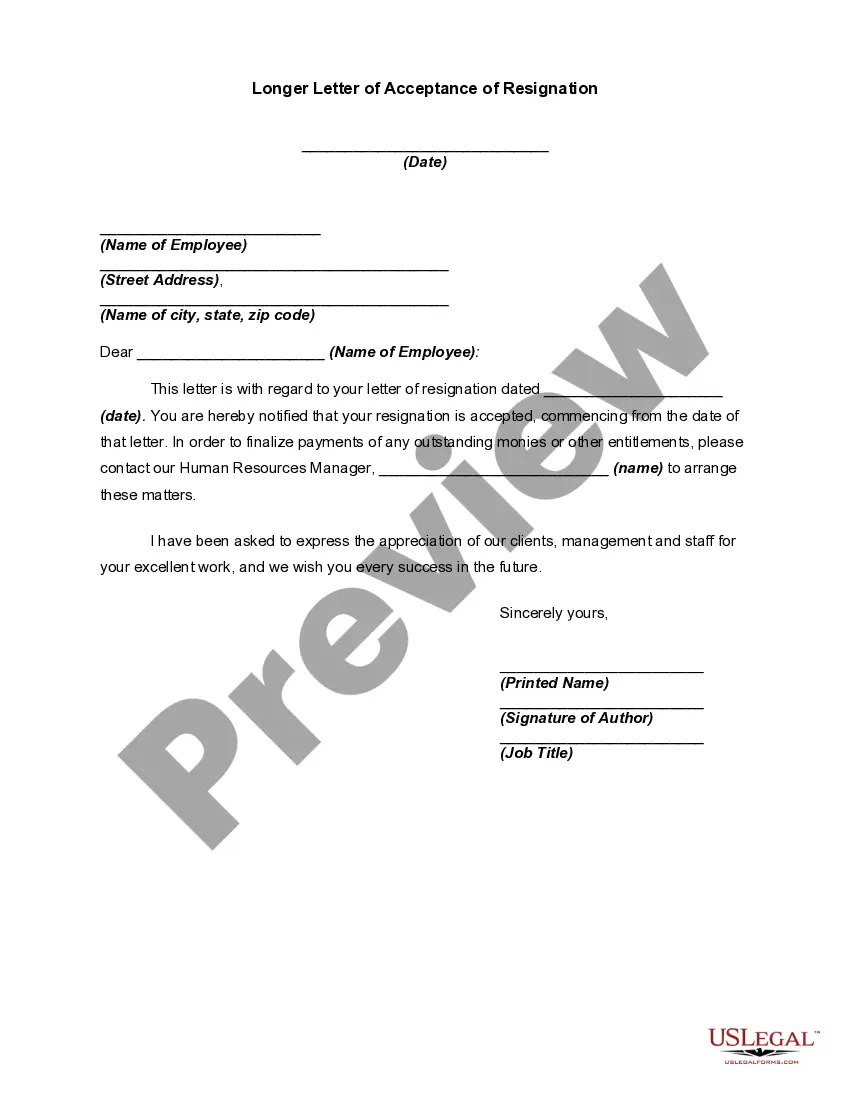
A resignation acceptance letter is a formal document sent by an employer to acknowledge an employee's resignation. It confirms that the employer has received and accepted the employee's decision to leave the company, creating a clear record of the resignation and helping to avoid any misunderstandings down the line.
In the North Zone case, the Supreme Court held that resignation would be effective on its acceptance, even if the acceptance is not communicated as long as rules or guidelines governing the resignation do not mandate such acceptance of resignation is to be communicated.
An employer doesn't have the choice to accept or reject an employee's resignation. Usually employers will acknowledge an employee's resignation and then the employee works as usual until the end of the notice period, when their employment ends.
Resignation means giving up because you've decided that there's nothing you can do about your situation. Acceptance, on the other hand, simply means accepting that the situation happened or exists. Resignation is followed by helplessness; whereas acceptance opens up choices.
You cannot reject an employee's resignation. However, a conversation might help you find out if there are problems that can be resolved. This might be enough for the employee to choose to stay. You do not have to respond formally when someone tells you they're resigning.
If you are resigned to an unpleasant situation or fact, you accept it without complaining because you realize that you cannot change it.
Mutual Agreement: If both the employer and the employee agree, a resignation may be retracted even after it has been accepted. This could happen if both parties discuss the situation and decide that continuing the employment relationship is in their best interests.
Emphasize how grateful you are for the experience you had working there. Talk about specific projects, opportunities, or support you received. If you're comfortable doing so, be transparent about your reasons for leaving. It can help your employer understand why you made the decision to leave.
Accept it immediately unless you think the offer is unfair. The company may have other candidates they like in addition to you. There is no reason to automatically delay accepting an offer of employment unless you find fault in their offer. Remember, you've gone through an entire interview and screening process.
Unless you're signing a contract of employment or are being given some kind of sign on bonus that needs to be repaid, there is nothing to stop you from accepting a job offer and then backing out.

