Agreement Arbitrate Document With Insurance Company In Houston
Description

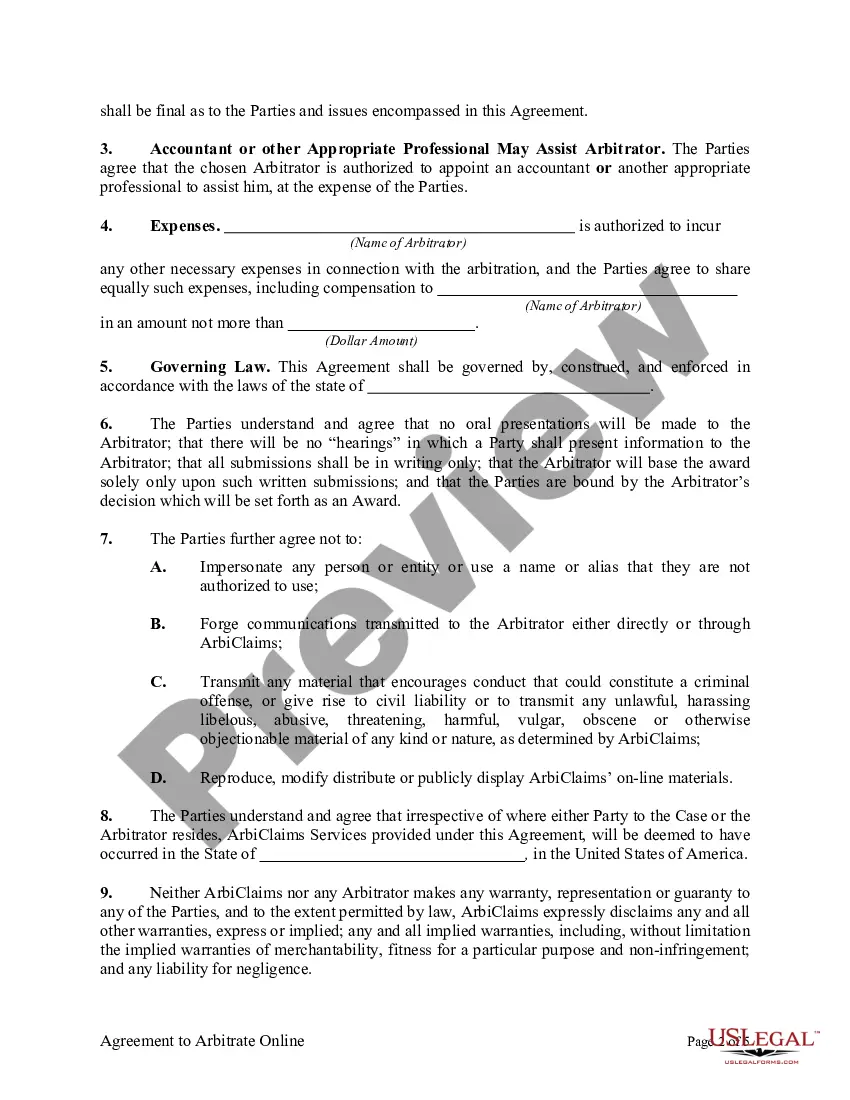
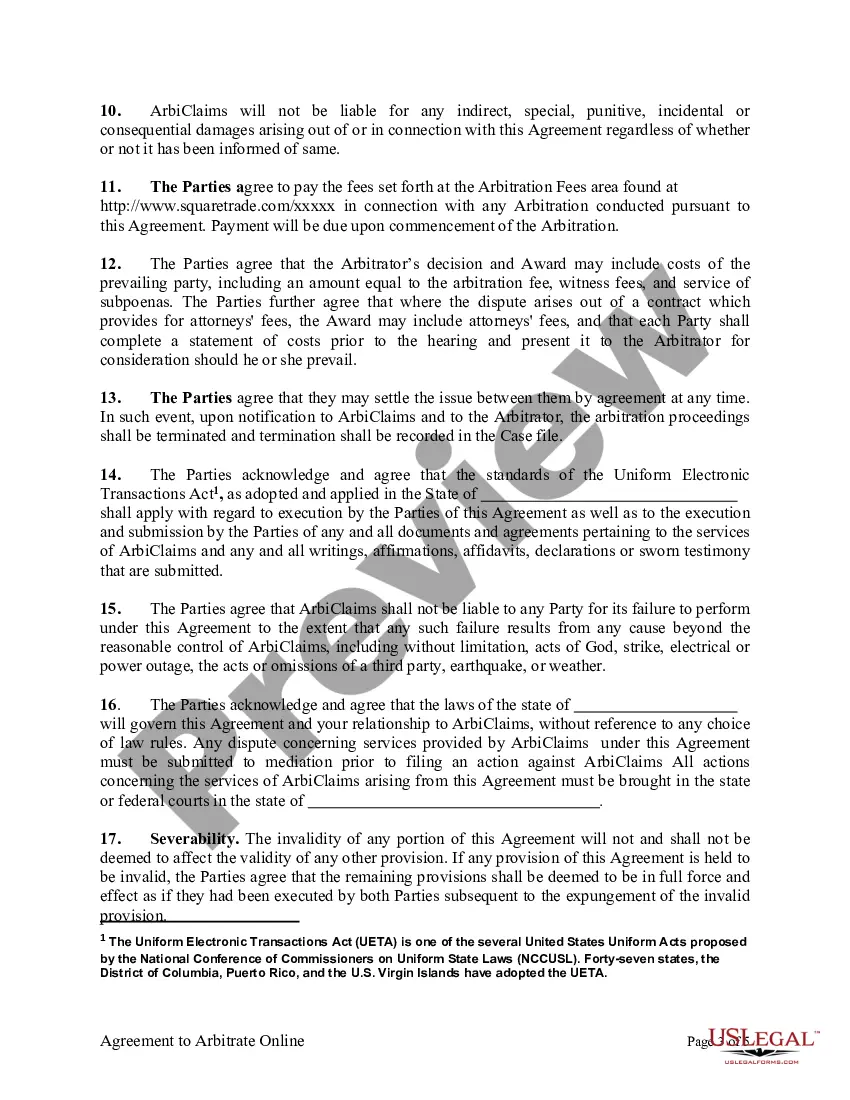




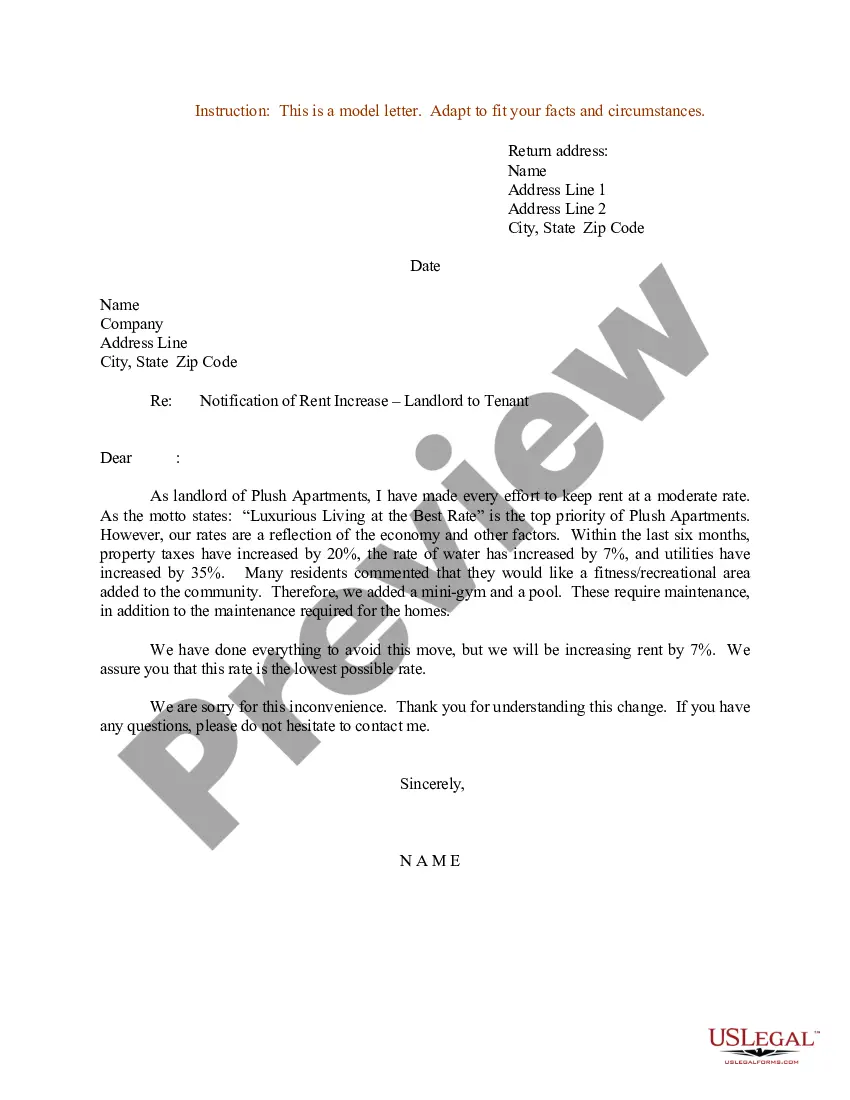
Get your form ready online
Our built-in tools help you complete, sign, share, and store your documents in one place.
Make edits, fill in missing information, and update formatting in US Legal Forms—just like you would in MS Word.
Download a copy, print it, send it by email, or mail it via USPS—whatever works best for your next step.
Sign and collect signatures with our SignNow integration. Send to multiple recipients, set reminders, and more. Go Premium to unlock E-Sign.
If this form requires notarization, complete it online through a secure video call—no need to meet a notary in person or wait for an appointment.
We protect your documents and personal data by following strict security and privacy standards.

Make edits, fill in missing information, and update formatting in US Legal Forms—just like you would in MS Word.

Download a copy, print it, send it by email, or mail it via USPS—whatever works best for your next step.

Sign and collect signatures with our SignNow integration. Send to multiple recipients, set reminders, and more. Go Premium to unlock E-Sign.

If this form requires notarization, complete it online through a secure video call—no need to meet a notary in person or wait for an appointment.

We protect your documents and personal data by following strict security and privacy standards.
Looking for another form?
Form popularity
FAQ
Arbitration might be the right choice for some cases. Limited discovery rights and costs might be useful when less is at stake. Arbitration might feel less adversarial, which could be an advantage where ongoing relationships are hoped to be preserved. Arbitration lends some confidentiality.
Notably, arbitration provisions in contracts are sometimes enforceable even when one or both parties do not sign the contract.
Validity of Arbitration Agreements Under Section 171.001 of the TAA, written agreements to arbitrate are generally valid and enforceable in Texas. This section ensures that, barring any specific legal exceptions, parties bound by a written agreement to arbitrate must settle their disputes outside of court.
If neither party appeals the decision, it will be binding, like an order by a judge. However, a party unhappy with the arbitrator's decision can request a new trial before a judge.
Under Section 171.001 of the TAA, written agreements to arbitrate are generally valid and enforceable in Texas.
The insurance companies might choose to let an arbitrator settle the case when negligence and liability are unclear and ardently contested. This could be the case if: There were no witnesses, or they can no longer be located. The evidence is less than compelling.
However, the Texas Supreme Court has ruled that an employer can simply notify at-will employees of the details of an arbitration program it is adopting, and the employees can be bound to that arbitration program by continuing their employment, even if they never sign anything.
Under California law, you cannot be fired solely for refusing to sign an arbitration agreement. The California Labor Code provides strong protections for employees, ensuring that refusal to sign an arbitration agreement cannot be used as grounds for termination.
These cases range from breach of contract or licensing agreements, business torts, and franchise to construction and infrastructure disputes in companies from start-ups to the Fortune 500 in a variety of industries.
While it is true that arbitration is generally private because the public is excluded from the arbitration hearing, it does not follow that the arbitration proceedings remain confidential.
