Agreement Arbitrate Document With Insurance Company In Contra Costa
Description





Get your form ready online
Our built-in tools help you complete, sign, share, and store your documents in one place.
Make edits, fill in missing information, and update formatting in US Legal Forms—just like you would in MS Word.
Download a copy, print it, send it by email, or mail it via USPS—whatever works best for your next step.
Sign and collect signatures with our SignNow integration. Send to multiple recipients, set reminders, and more. Go Premium to unlock E-Sign.
If this form requires notarization, complete it online through a secure video call—no need to meet a notary in person or wait for an appointment.
We protect your documents and personal data by following strict security and privacy standards.
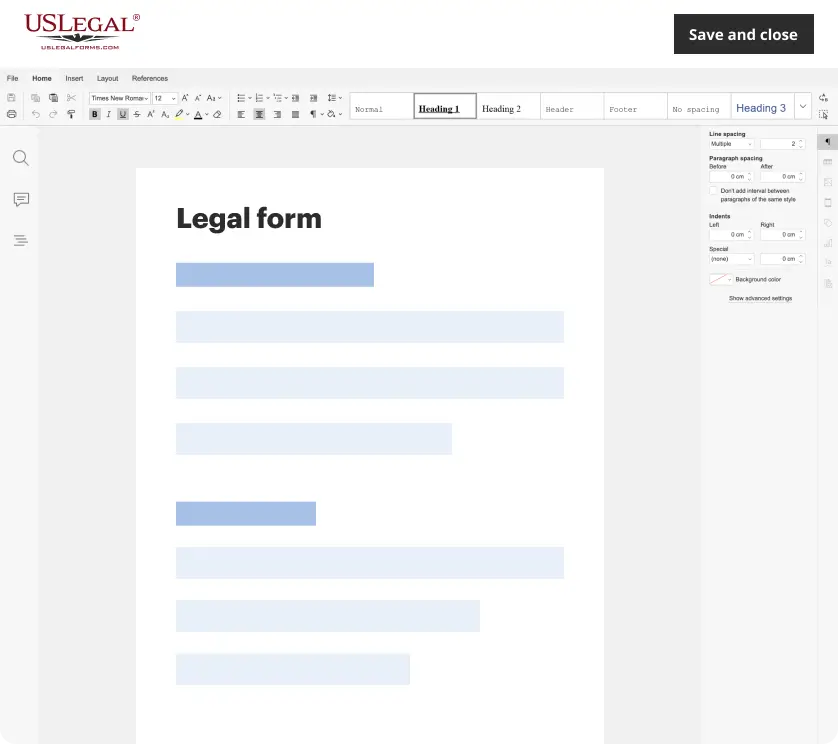
Make edits, fill in missing information, and update formatting in US Legal Forms—just like you would in MS Word.
Download a copy, print it, send it by email, or mail it via USPS—whatever works best for your next step.
Sign and collect signatures with our SignNow integration. Send to multiple recipients, set reminders, and more. Go Premium to unlock E-Sign.
If this form requires notarization, complete it online through a secure video call—no need to meet a notary in person or wait for an appointment.
We protect your documents and personal data by following strict security and privacy standards.
Looking for another form?
Form popularity
FAQ
There are some benefits to arbitration if something goes wrong for you alone because it can be easier and faster to navigate than going to court. That being said, if you would prefer to have access to class action lawsuits, then opting out might be the better option for you.
Limited Appeal Options: One of the most significant downsides of arbitration is that it offers very limited options for appeal. Once the arbitrator makes a decision, it's usually final unless there was a substantial legal oversight.
Arbitration might be the right choice for some cases. Limited discovery rights and costs might be useful when less is at stake. Arbitration might feel less adversarial, which could be an advantage where ongoing relationships are hoped to be preserved. Arbitration lends some confidentiality.
You have a difficult decision to make, although it may not matter whether you sign the “agreement” or not. If you continue to work after you are informed that a forced arbitration agreement governs your employment, you may be bound by it, even if you refuse to sign it.
The arbitrator will explain the process. Each side may present an uninterrupted opening statement setting forth its position as to the facts and the law. After opening statements, the parties present their evidence and witnesses. The arbitrator swears in the witnesses and makes rulings on the admissibility of evidence.
One of the unique modifiers that arbitrations have is that a random warframe. And weapon willMoreOne of the unique modifiers that arbitrations have is that a random warframe. And weapon will receive a 300 power strength buff and a 300 damage buff respectively.
Either Party to a contract in which there is an Arbitration clause can either himself or through an authorised agent may invoke Arbitration so as to refer the dispute to arbitration, as per provisions of the arbitration clause.
The Scope of the Clause. This section of the clause is critical; it sets the boundaries for which disputes the tribunal is authorised to determine. Choice of Rules. The Number of Arbitrators. Appointing Authority. Choice of Venue. The language of the proceedings. Finality. Exclusion of the right of appeal.
A claimant will typically start arbitration by sending a document known as a “request for arbitration” or a “notice to arbitrate” to its opponent.
