Business Meeting Format In Clark
Description



Get your form ready online
Our built-in tools help you complete, sign, share, and store your documents in one place.
Make edits, fill in missing information, and update formatting in US Legal Forms—just like you would in MS Word.
Download a copy, print it, send it by email, or mail it via USPS—whatever works best for your next step.
Sign and collect signatures with our SignNow integration. Send to multiple recipients, set reminders, and more. Go Premium to unlock E-Sign.
If this form requires notarization, complete it online through a secure video call—no need to meet a notary in person or wait for an appointment.
We protect your documents and personal data by following strict security and privacy standards.

Make edits, fill in missing information, and update formatting in US Legal Forms—just like you would in MS Word.

Download a copy, print it, send it by email, or mail it via USPS—whatever works best for your next step.

Sign and collect signatures with our SignNow integration. Send to multiple recipients, set reminders, and more. Go Premium to unlock E-Sign.

If this form requires notarization, complete it online through a secure video call—no need to meet a notary in person or wait for an appointment.

We protect your documents and personal data by following strict security and privacy standards.
Looking for another form?



Form popularity
FAQ
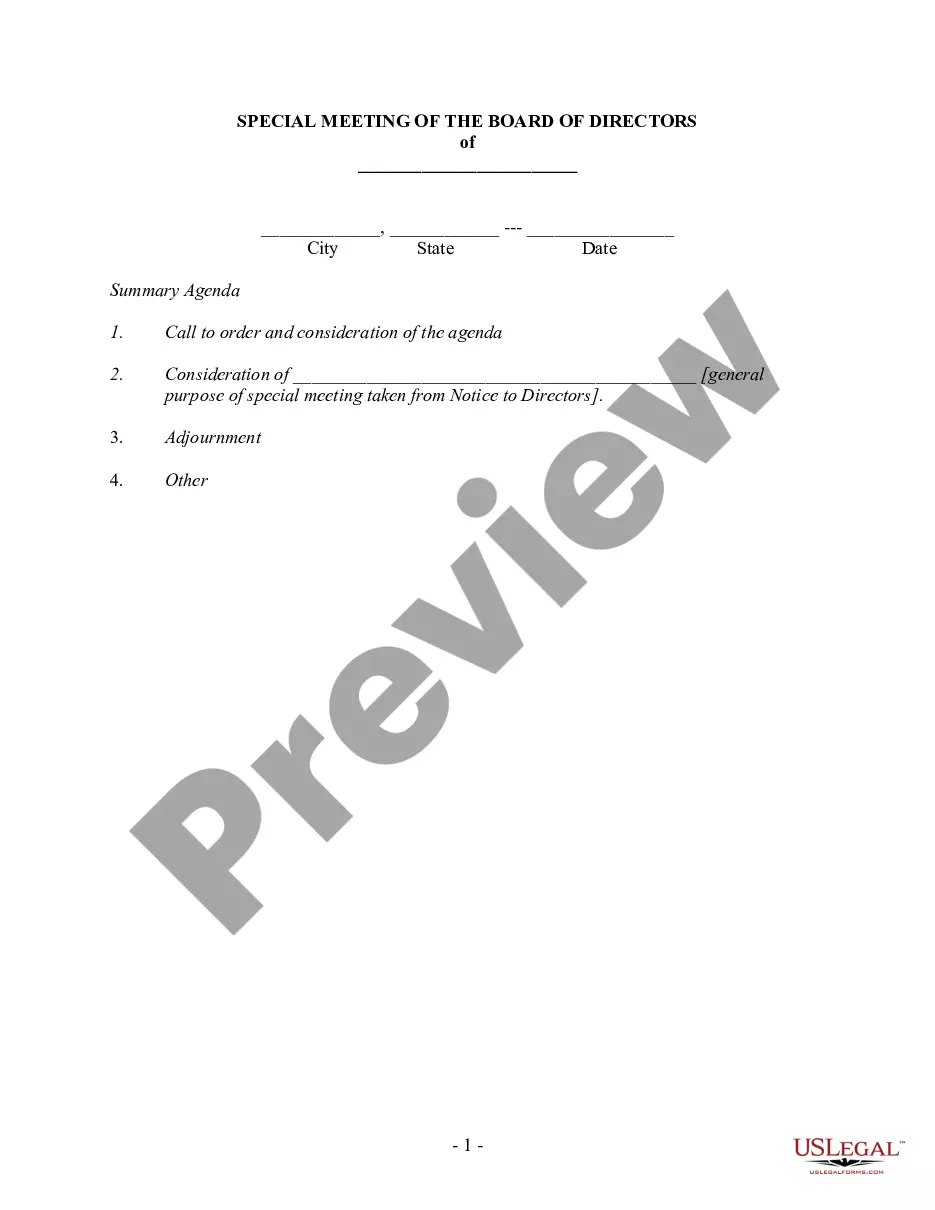
7 Step Meeting Process Clarify Aim/Purpose. Assign Roles. Review Agenda. Work through Agenda. Review meeting record. Plan Next Steps and Next Agenda. Evaluate.
How to Build an Effective Meeting Structure Define Clear Objectives: Develop an Agenda: Prioritize Agenda Items: Assign Roles and Responsibilities: Invite the Right Participants: Communicate the Purpose: Stick to the Schedule: Foster Active Participation:
Meeting Planning Steps Determine the Purpose of the Meeting. Set Goals for Your Meeting. Identify Who Should Attend the Meeting. Notify Attendees in Advance. Prepare the Content for Your Meeting. Define the Duration of Your Meeting. Create a Meeting Agenda. Write Meeting Minutes.
How to Write a Meeting Agenda? 5 Key Steps Establish the meeting type. Not informing your team about the type of meeting they'd be attending can cause a lot of confusion. State the objective of the meeting. Identify specific meeting topics. Allocate time to discuss each topic. Include a list of necessary documents.
The 5Ps are Purpose, Participants, Process, Payoff, and Preparation (some suggest it should be 6Ps including Pizza). Purpose: Every meeting should have a clear purpose, which must be more specific than just a subject line calling for a 'daily meeting' (why should the team meet daily?).
A business meeting is a gathering of professionals who come together to discuss operations, address changes or celebrate the success of an organization. Some groups who might meet together include company executives and employees, company representatives and clients or department leaders and their teams.
7 Step Meeting Process Clarify Aim/Purpose. Assign Roles. Review Agenda. Work through Agenda. Review meeting record. Plan Next Steps and Next Agenda. Evaluate.
The 4 Ps framework helps improve meeting efficiency by ensuring that the meeting has a clear objective (Purpose), a targeted outcome (Product), the right participants (People), and a well-structured agenda (Process).
A simple meeting agenda could be a short bulleted list. More detailed agendas include descriptions for each agenda item, reference material, and expected outcomes for each discussion topic. Formal agendas also include timing and presenter information for each agenda item.

