Agreement Accounts Receivable Without Recourse In Contra Costa
Description









Get your form ready online
Our built-in tools help you complete, sign, share, and store your documents in one place.
Make edits, fill in missing information, and update formatting in US Legal Forms—just like you would in MS Word.
Download a copy, print it, send it by email, or mail it via USPS—whatever works best for your next step.
Sign and collect signatures with our SignNow integration. Send to multiple recipients, set reminders, and more. Go Premium to unlock E-Sign.
If this form requires notarization, complete it online through a secure video call—no need to meet a notary in person or wait for an appointment.
We protect your documents and personal data by following strict security and privacy standards.
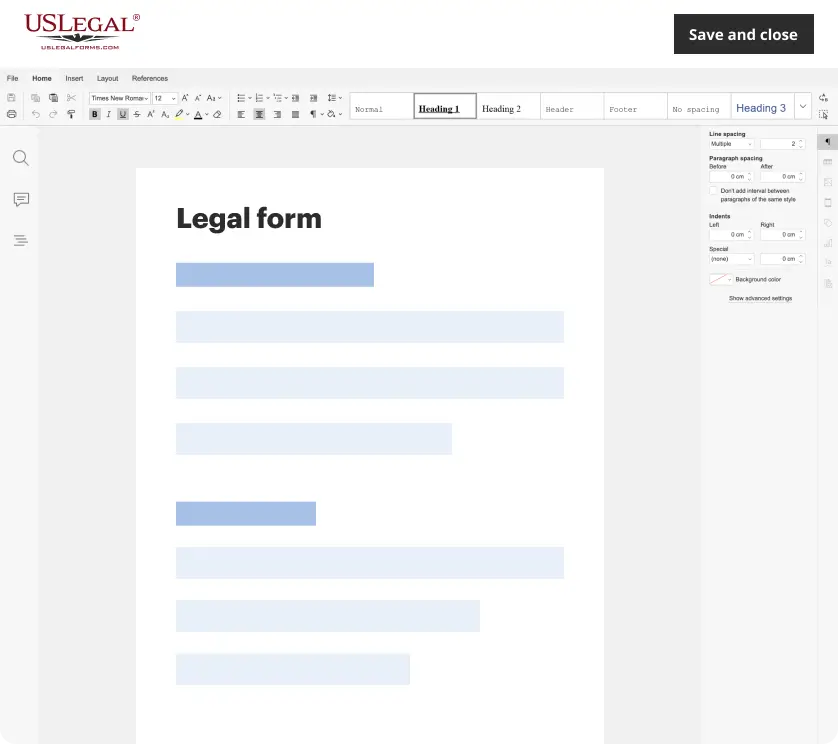
Make edits, fill in missing information, and update formatting in US Legal Forms—just like you would in MS Word.
Download a copy, print it, send it by email, or mail it via USPS—whatever works best for your next step.
Sign and collect signatures with our SignNow integration. Send to multiple recipients, set reminders, and more. Go Premium to unlock E-Sign.

If this form requires notarization, complete it online through a secure video call—no need to meet a notary in person or wait for an appointment.
We protect your documents and personal data by following strict security and privacy standards.
Looking for another form?
Form popularity
FAQ
In contrast, when receivables are purchased on a with-recourse basis, the buyer of receivables has a right of recourse. Thus, the risk of the seller of receivables gains in importance. However, not to the same extent as, for example, in case of another source of liquidity, a working capital facility.
SALE OF RECEIVABLES: A DEFINITION In selling the Receivable without recourse the seller guarantees only the existence and validity of the receivable at the time in which the sale is made.
When a company factors receivables it means that they sell them to another party. If the transaction is without recourse that means the buyer takes on all the risk of credit losses. The seller of the accounts receivable does not bear any risk after the sale is complete.
Receivables finance can be provided to the seller on a “non-recourse” or “recourse” basis. In non-recourse receivables finance, the factor purchases the receivables from the seller and assumes the full debtor default risk. In a recourse transaction, the debtor default risk remains with the seller.
In financial transactions, without recourse disclaims any liability to the subsequent holder of a financial instrument. Thus, endorsing a check and adding without recourse to the signature means that the endorser takes no responsibility if the check bounces for insufficient funds.
Factoring without recourse means that the risk of accounts receivable being uncollectible transfers from the buyer to the seller. Basically, if an accounts receivable cannot be collected, the seller does not have to reimburse the buyer like they would if the factoring was “with recourse”.
Factoring without recourse means that the risk of accounts receivable being uncollectible transfers from the buyer to the seller. Basically, if an accounts receivable cannot be collected, the seller does not have to reimburse the buyer like they would if the factoring was “with recourse”.
