Workplace Discrimination In Australia In Mecklenburg
Description




Get your form ready online
Our built-in tools help you complete, sign, share, and store your documents in one place.
Make edits, fill in missing information, and update formatting in US Legal Forms—just like you would in MS Word.
Download a copy, print it, send it by email, or mail it via USPS—whatever works best for your next step.
Sign and collect signatures with our SignNow integration. Send to multiple recipients, set reminders, and more. Go Premium to unlock E-Sign.
If this form requires notarization, complete it online through a secure video call—no need to meet a notary in person or wait for an appointment.
We protect your documents and personal data by following strict security and privacy standards.
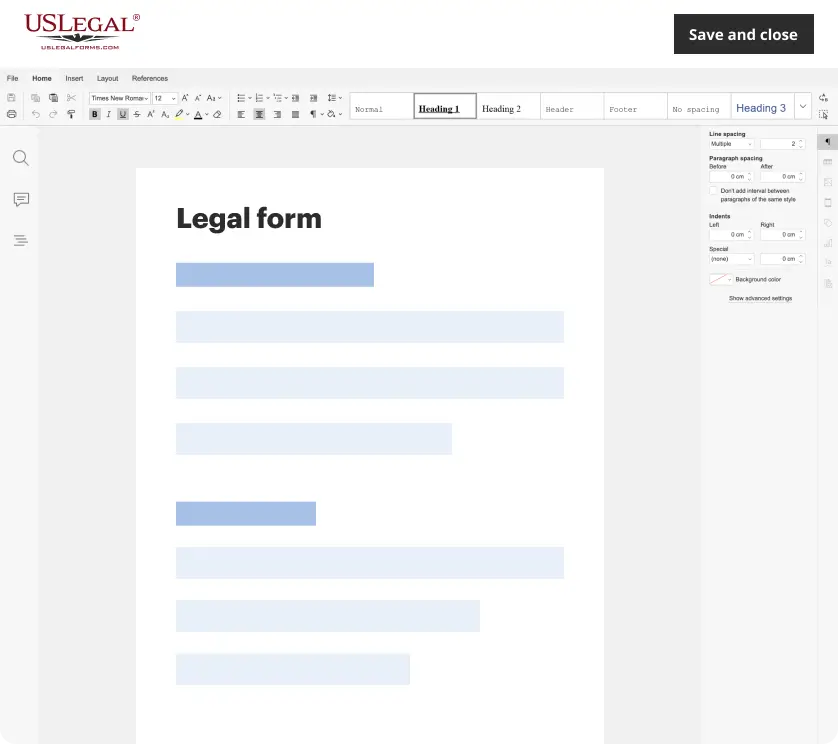
Make edits, fill in missing information, and update formatting in US Legal Forms—just like you would in MS Word.
Download a copy, print it, send it by email, or mail it via USPS—whatever works best for your next step.
Sign and collect signatures with our SignNow integration. Send to multiple recipients, set reminders, and more. Go Premium to unlock E-Sign.
If this form requires notarization, complete it online through a secure video call—no need to meet a notary in person or wait for an appointment.
We protect your documents and personal data by following strict security and privacy standards.
Looking for another form?






Form popularity
FAQ
You must file a complaint with CRD even if you wish to file a case directly in court. If you wish to go to court, you can request an immediate “right to sue” notice when you file your complaint.
Unfortunately, it can be difficult to prove a wrongful termination was due to discrimination in the workplace because the employer may claim “pretext,” or false reason for the wrongful termination.
You can apply to the Federal Court or Federal Circuit and Family Court to have your case heard by the court. You must go through the Australian Human Rights Commission conciliation process first before you can lodge an application. The commission will issue a notice that your complaint has been closed.
To prove discrimination, plaintiffs must provide evidence that they: (a) are a member of a protected class, (b) are qualified for the position at issue, (c) suffered an adverse employment action, and (d) the employer treated similarly situated employees outside of the protected class more favorably (or some other ...
You can make a complaint no matter where you live in Australia. If you are not sure if you can make a complaint about something, you can contact the Commission's National Information Service by phone on 1300 656 419 or by email to infoservice@humanrights.au.
The general position in Australian law is that discrimination in any form against a person, which is due to certain protected attributes, is considered to be unlawful. So, it follows that “positive discrimination”, notwithstanding its best intentions, can still be considered unlawful discrimination.
Wrongful Termination: If your employer fires you in error, you have the right to sue. You can also file it if you are injured on the job.
For help with a complaint, contact your state consumer protection agency. Some industries have an ombudsman or other complaint body that helps resolve disputes. You also have the option of taking legal action. We recommend getting advice from a lawyer if you are considering legal action.
In Australia, employers have the right to hire and dismiss workers providing they are following proper procedures. Employers also have the right to expect reasonable work performance from their staff. The WHS Act covers more employee rights compared to employer rights.