4th Amendment To Constitution In Ohio

State:
Multi-State
Control #:
US-000280
Format:
Word; 
Rich Text
Instant download

Description

The 4th Amendment to the Constitution in Ohio protects individuals from unreasonable searches and seizures, ensuring a right to privacy and requiring law enforcement to obtain warrants based on probable cause. This summary focuses on how this amendment is applicable in legal complaints, particularly those involving malicious prosecution or false arrest, as outlined in the provided complaint form. The form is designed for users to clearly articulate their claims against defendants who have allegedly violated their rights under the 4th Amendment. Key features include sections for detailing the defendant's actions, outlining the plaintiff's suffering, and requesting compensatory and punitive damages. Filling and editing the form requires the user to input specific case details, dates, and relevant facts, emphasizing clarity and factual accuracy. This form is especially useful for attorneys, partners, owners, associates, paralegals, and legal assistants engaged in civil rights cases, as it enables them to structure complaints effectively, ensuring that all necessary legal elements are covered without oversights. Proper use of the form helps in advocating for clients' rights while adhering to Ohio's legal standards regarding search and seizure.
Free preview
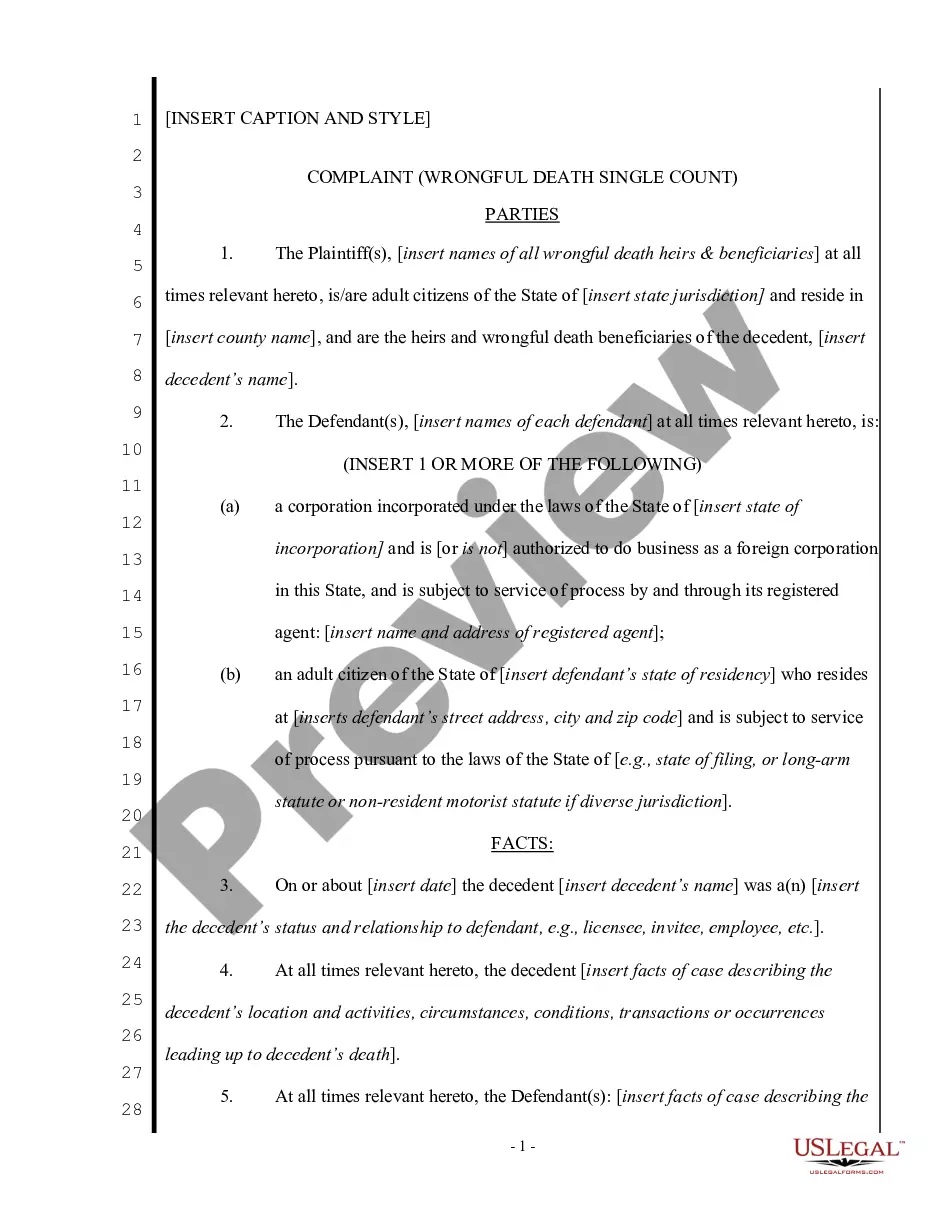
  • Preview Complaint For False Arrest and Imprisonment - 4th and 14th Amendment, US Constitution - Jury Trial Demand
  • Preview Complaint For False Arrest and Imprisonment - 4th and 14th Amendment, US Constitution - Jury Trial Demand

Form popularity

FAQ

Whoever seeks to propose a law or constitutional amendment by initiative petition shall, by a written petition signed by one thousand qualified electors, submit the proposed law or constitutional amendment and a summary of it to the attorney general for examination.

So, the Fourth Amendment says there shall be no unreasonable searches and seizures. And then it says that no warrant shall issue, preauthorizing a search or seizure, but upon probable cause.

Either branch of the General Assembly may propose amendments to the Ohio Constitution. Customarily, constitutional amendments are proposed by joint resolution. A three-fifths vote in favor of the joint resolution is required for its passage.

Generally, a person has no reasonable expectation of privacy for property and personal effects they hold open to the public. The Fourth Amendment does not protect things that are visible or in "plain view" for a person of ordinary and unenhanced vision.

The right of the people to be secure in their persons, houses, papers, and possessions, against unreasonable searches and seizures shall not be violated; and no warrant shall issue, but upon probable cause, supported by oath or affirmation, particularly describing the place to be searched and the person and things to ...

To claim a violation of Fourth Amendment rights as the basis for suppressing relevant evidence, courts have long required that the claimant must prove that they were the victim of an invasion of privacy to have a valid standing.

Trusted and secure by over 3 million people of the world’s leading companies

4th Amendment To Constitution In Ohio