4th Amendment For Police Officers In Miami-Dade
Description






Get your form ready online
Our built-in tools help you complete, sign, share, and store your documents in one place.
Make edits, fill in missing information, and update formatting in US Legal Forms—just like you would in MS Word.
Download a copy, print it, send it by email, or mail it via USPS—whatever works best for your next step.
Sign and collect signatures with our SignNow integration. Send to multiple recipients, set reminders, and more. Go Premium to unlock E-Sign.
If this form requires notarization, complete it online through a secure video call—no need to meet a notary in person or wait for an appointment.
We protect your documents and personal data by following strict security and privacy standards.
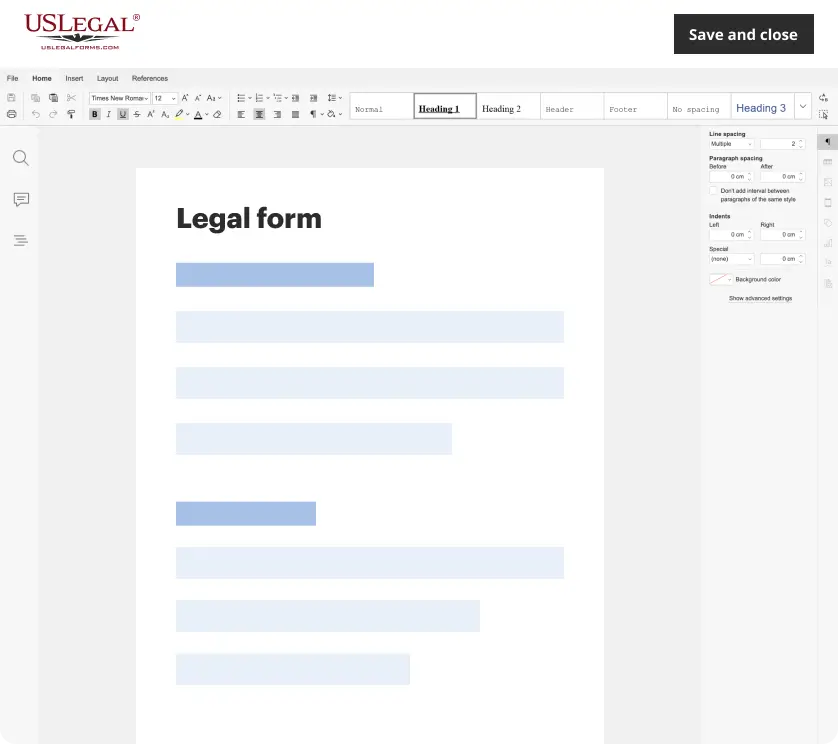
Make edits, fill in missing information, and update formatting in US Legal Forms—just like you would in MS Word.
Download a copy, print it, send it by email, or mail it via USPS—whatever works best for your next step.
Sign and collect signatures with our SignNow integration. Send to multiple recipients, set reminders, and more. Go Premium to unlock E-Sign.
If this form requires notarization, complete it online through a secure video call—no need to meet a notary in person or wait for an appointment.
We protect your documents and personal data by following strict security and privacy standards.
Looking for another form?








Form popularity
FAQ
To claim a violation of Fourth Amendment rights as the basis for suppressing relevant evidence, courts have long required that the claimant must prove that they were the victim of an invasion of privacy to have a valid standing.
Generally, a person has no reasonable expectation of privacy for property and personal effects they hold open to the public. The Fourth Amendment does not protect things that are visible or in "plain view" for a person of ordinary and unenhanced vision.
Ingly, an inspection of private property by a code enforcement officer that is without the consent of the owner, operator, or occupant or without the issuance of an administrative search warrant is an unreasonable search and a violation of one's constitutional rights.
Yes, you can ask the officer to leave your property, as you have the right to control who is on your property. However, if the officer is there to serve legal papers (like a summons or subpoena) or is investigating a potential crime, they might still have the legal right to remain and carry out their duties.
Florida's Amendment 4 text Here is the full text of Amendment 4: “No law shall prohibit, penalize, delay, or restrict abortion before viability or when necessary to protect the patient's health, as determined by the patient's healthcare provider.
The Fourth Amendment generally requires a warrant for searches and seizures, but there are exceptions. Among the presented options, abandoned property can be searched without violating this amendment. Therefore, the correct answer is that abandoned property can be searched without a warrant.
