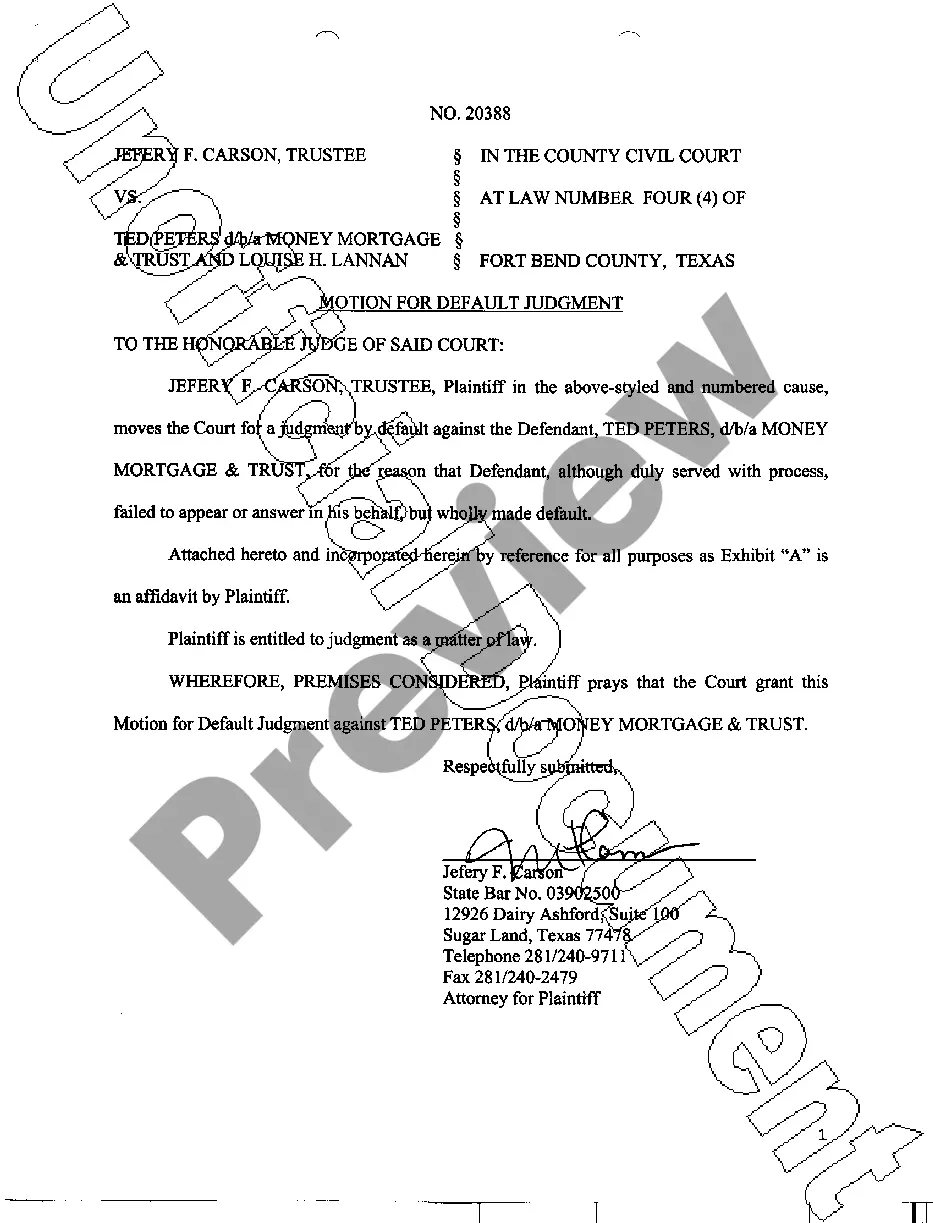
Texas Motion For Default Judgment Sample With Vacate
Description

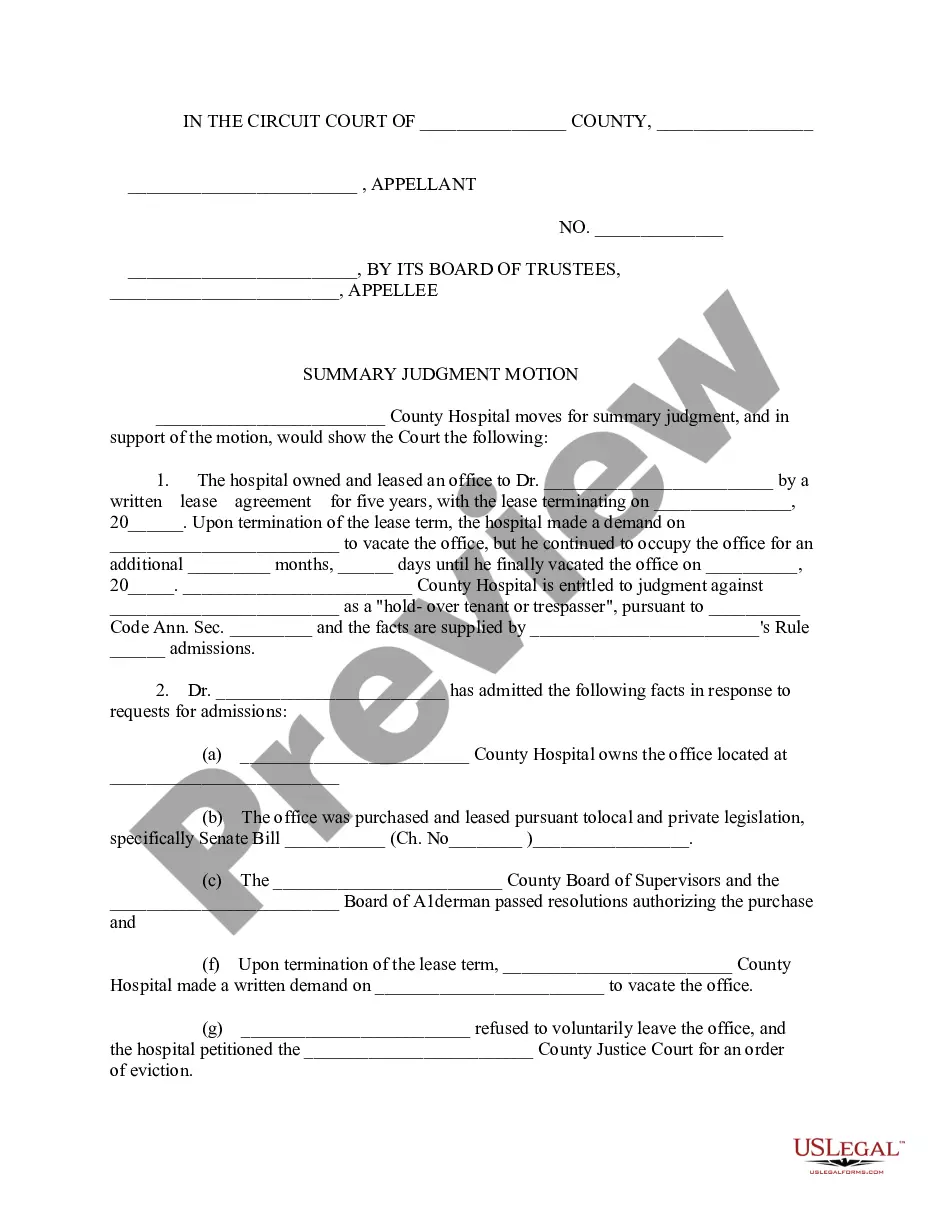
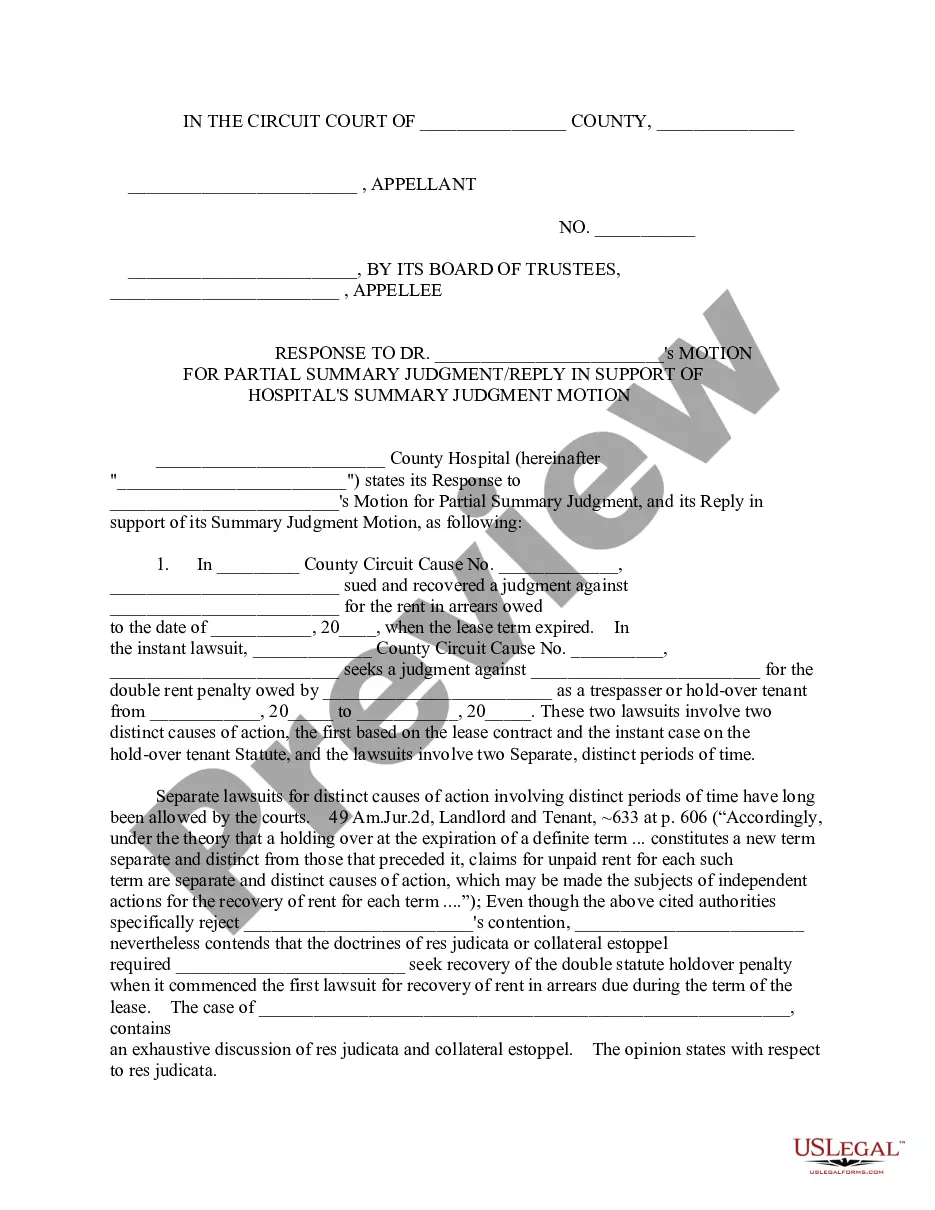

How to fill out Texas Motion For Default Judgment?
It’s well-known that you cannot become a legal authority instantly, nor can you swiftly learn how to prepare Texas Motion For Default Judgment Sample With Vacate without a specialized background.
Assembling legal documents is a lengthy process that necessitates specific education and abilities. So why not entrust the drafting of the Texas Motion For Default Judgment Sample With Vacate to the experts.
With US Legal Forms, one of the most extensive legal template collections, you can find everything from court documents to templates for internal communication.
You can regain access to your documents from the My documents tab anytime. If you’re a returning customer, you can simply Log In, and find and download the template from the same section.
Regardless of the purpose of your documents—whether financial and legal, or personal—our website has you covered. Try US Legal Forms today!
- Identify the document you need using the search bar at the top of the page.
- Preview it (if this option is available) and read the accompanying description to determine if Texas Motion For Default Judgment Sample With Vacate is what you seek.
- If you require a different form, restart your search.
- Create a free account and choose a subscription plan to purchase the template.
- Click Buy now. Once the payment is completed, you can obtain the Texas Motion For Default Judgment Sample With Vacate, fill it out, print it, and send it or mail it to the intended recipients or organizations.
Form popularity
FAQ
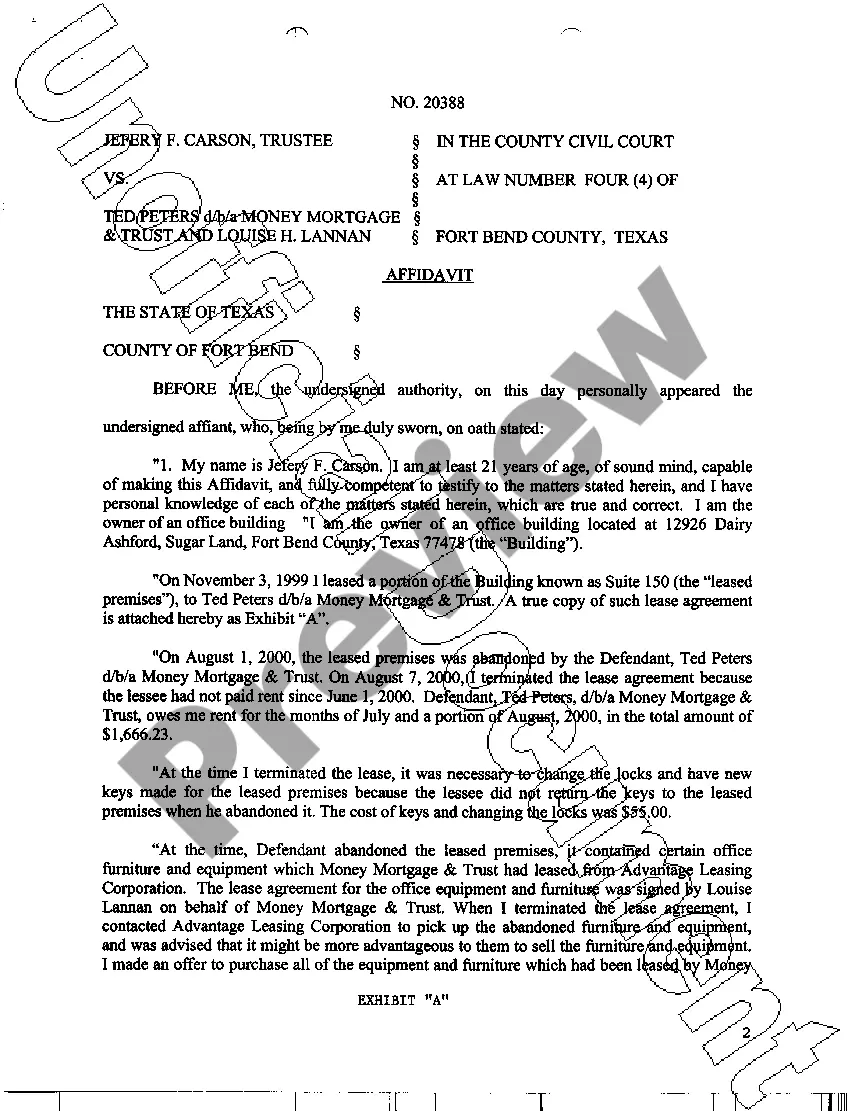
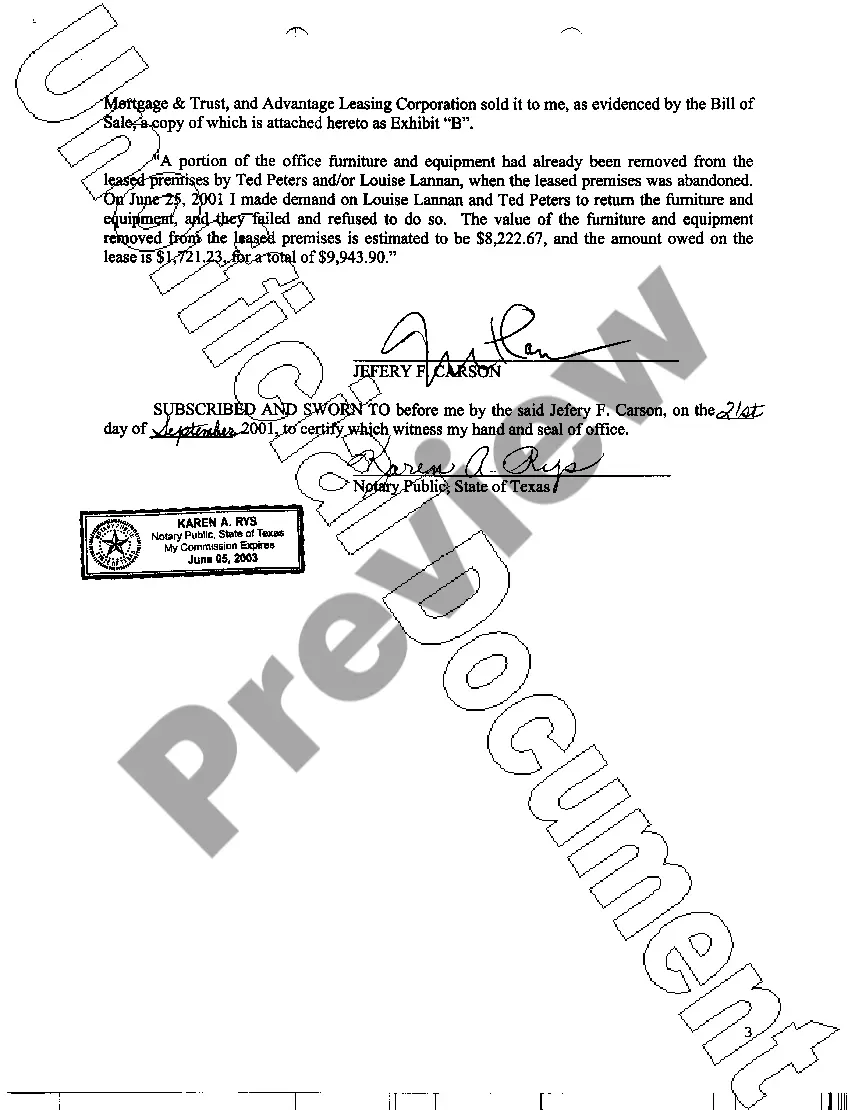
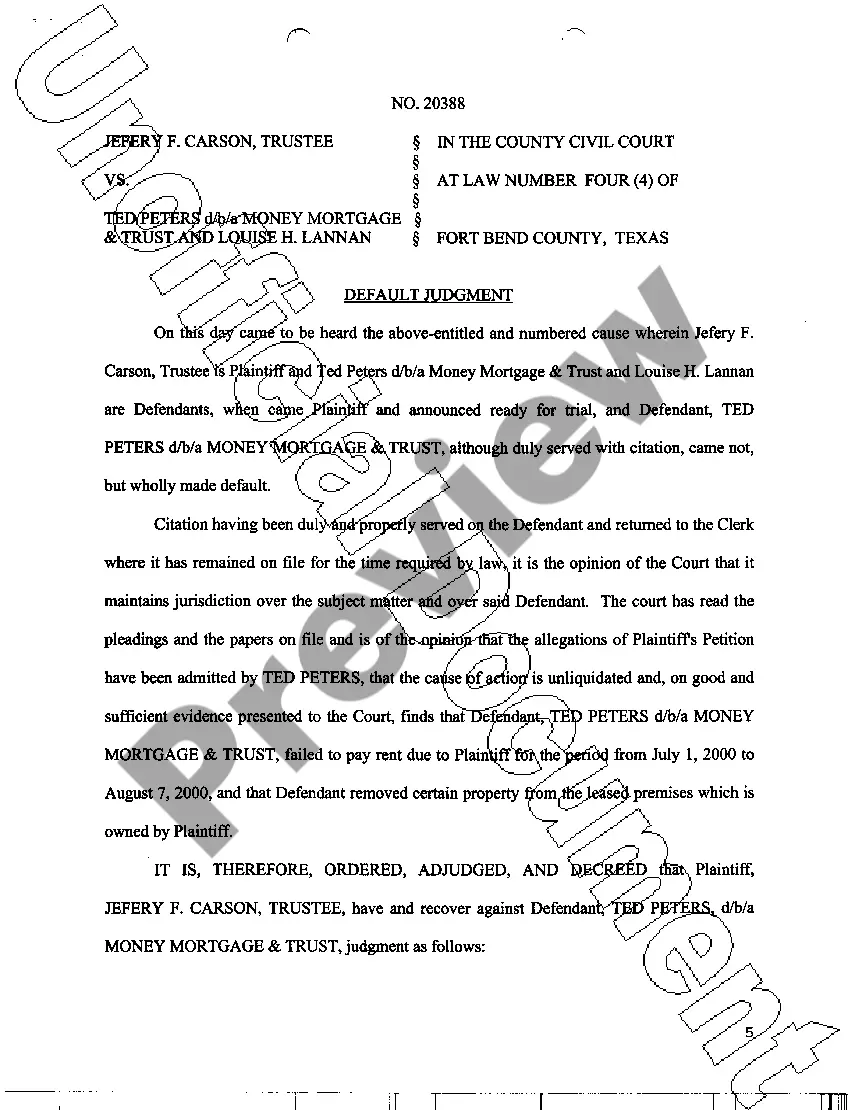
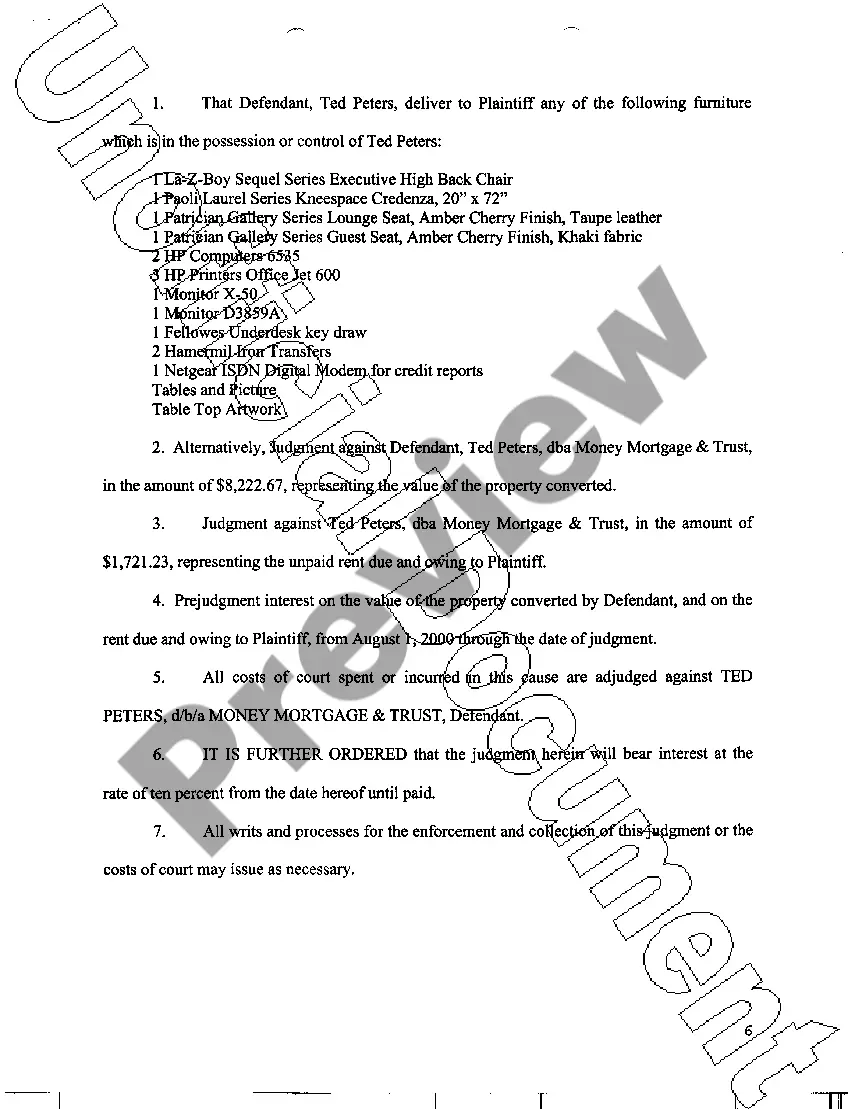
The plaintiff should make a written request for the clerk to enter a default judgment, and provide the clerk with an affidavit of the amount owed by the defendant and a proposed clerk's default judgment. Internal Procedures: All documents are forwarded to the docket clerk for processing within 24 hours.
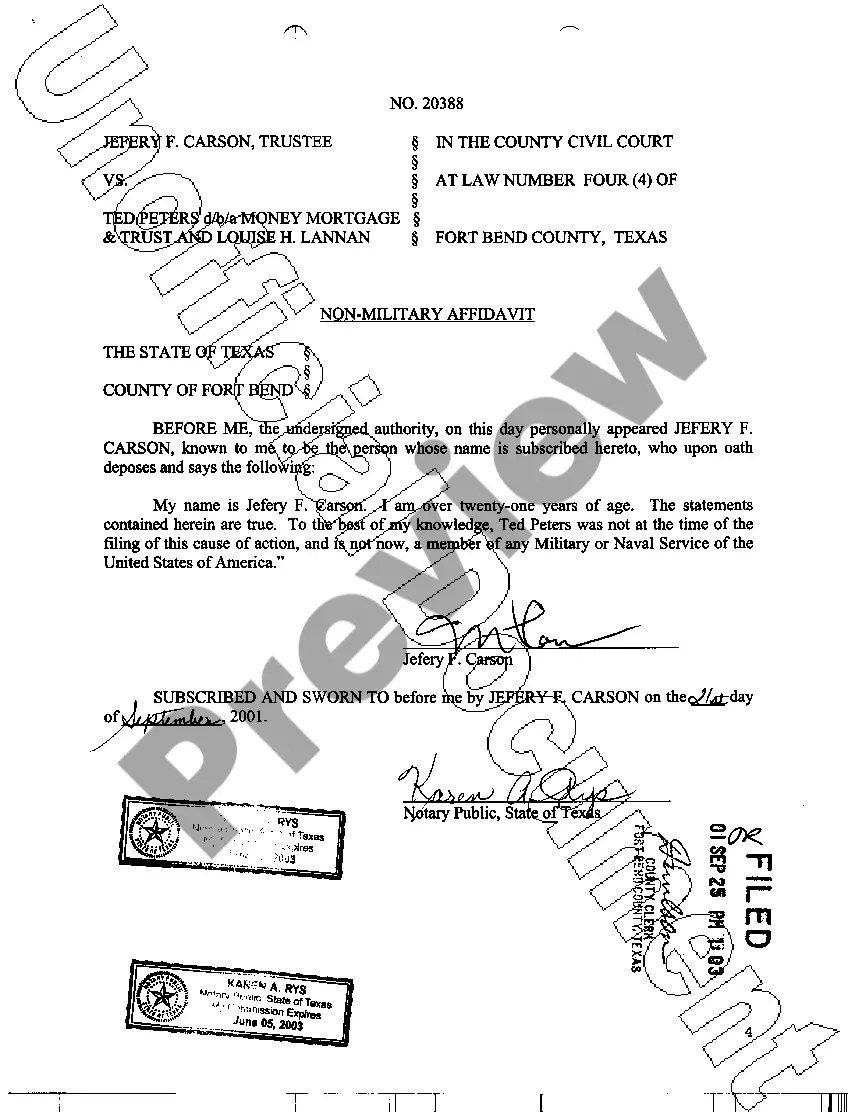
Rule 508.3 - Default Judgment (a)Generally. If the defendant does not file an answer to a claim by the answer date or otherwise appear in the case, the judge must promptly render a default judgment upon the plaintiff's proof of the amount of damages.
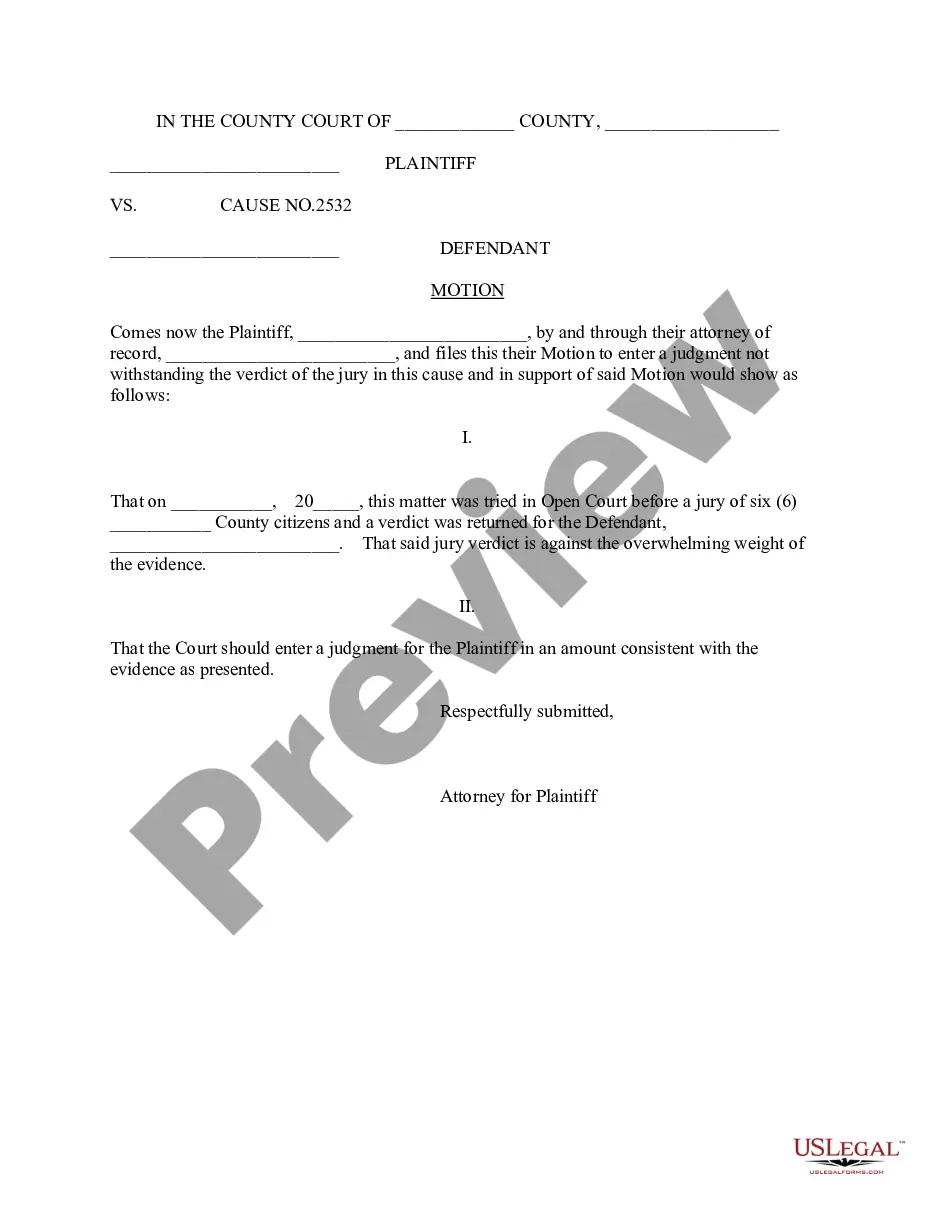
You May Be Able to Vacate the Judgment In Texas, you could possibly motion for a new trial if you can prove you weren't informed of the original hearing, or if you had a ?good? excuse for not showing up. However, you must file this motion within thirty days if you want a chance at vacating the judgment.
A default judgment is what can happen when you lose a case or ruling because you missed the hearing. A motion asks the court to do something. A Motion to Set Aside Default Judgment asks the court to take back a judgment because one party failed to show up to the scheduled hearing.
Under Texas law (Texas Family Code § 157.115), a court may render a default judgment in a divorce case if the party in question has been properly served and he or she fails to appear in court or otherwise properly respond to the divorce petition.