Texas Limited Liability Company Law
Description



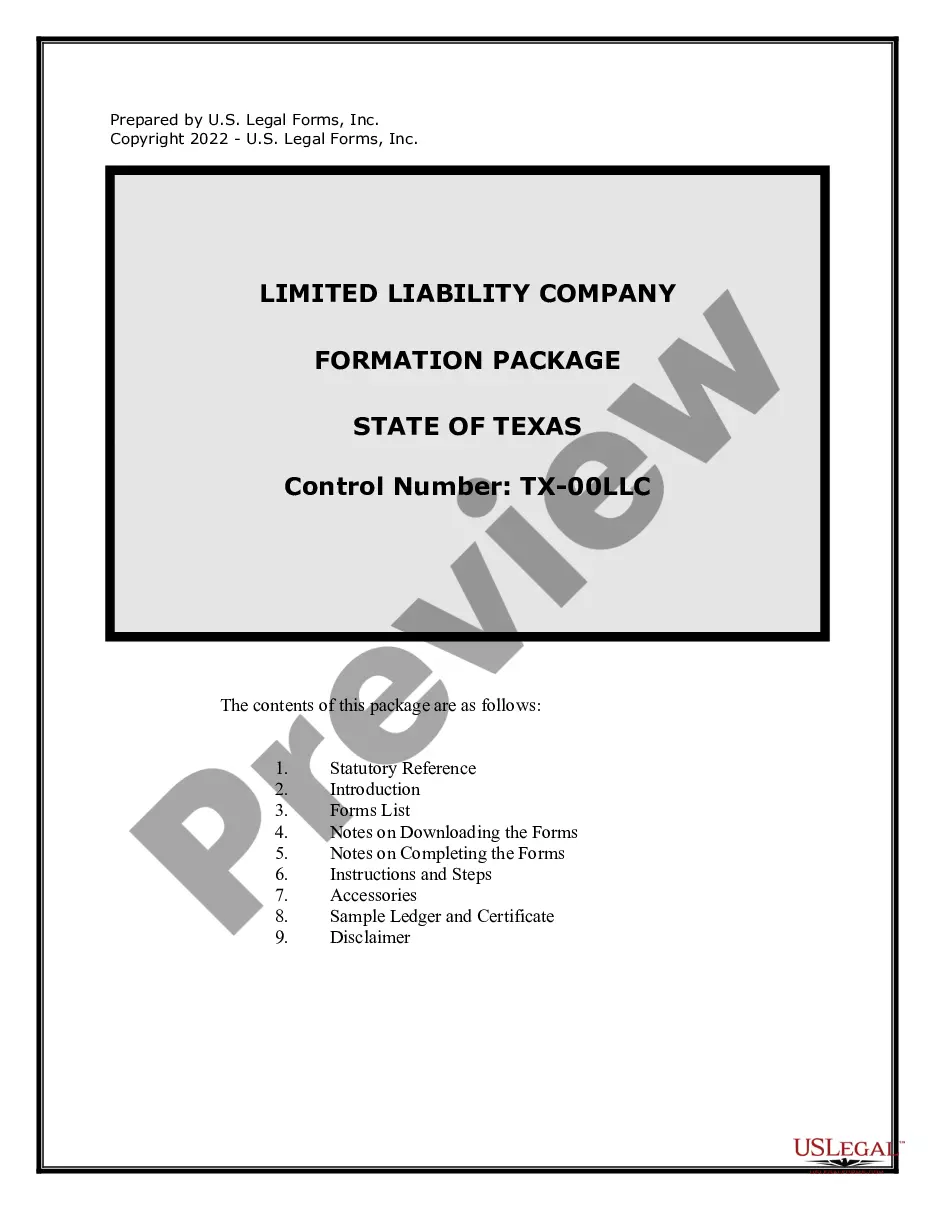
Get your form ready online
Our built-in tools help you complete, sign, share, and store your documents in one place.
Make edits, fill in missing information, and update formatting in US Legal Forms—just like you would in MS Word.
Download a copy, print it, send it by email, or mail it via USPS—whatever works best for your next step.
Sign and collect signatures with our SignNow integration. Send to multiple recipients, set reminders, and more. Go Premium to unlock E-Sign.
If this form requires notarization, complete it online through a secure video call—no need to meet a notary in person or wait for an appointment.
We protect your documents and personal data by following strict security and privacy standards.

Make edits, fill in missing information, and update formatting in US Legal Forms—just like you would in MS Word.

Download a copy, print it, send it by email, or mail it via USPS—whatever works best for your next step.

Sign and collect signatures with our SignNow integration. Send to multiple recipients, set reminders, and more. Go Premium to unlock E-Sign.

If this form requires notarization, complete it online through a secure video call—no need to meet a notary in person or wait for an appointment.

We protect your documents and personal data by following strict security and privacy standards.
Looking for another form?
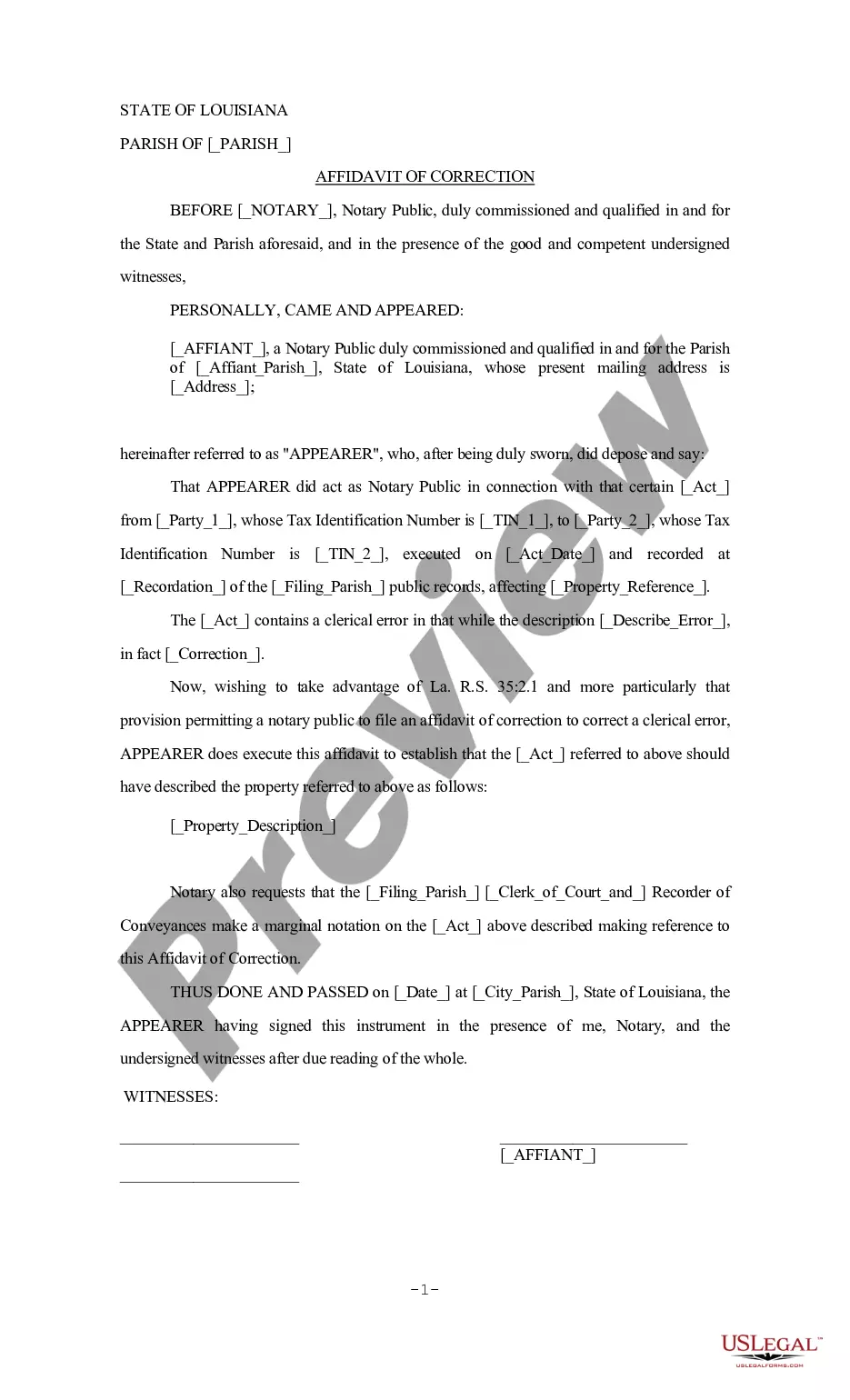


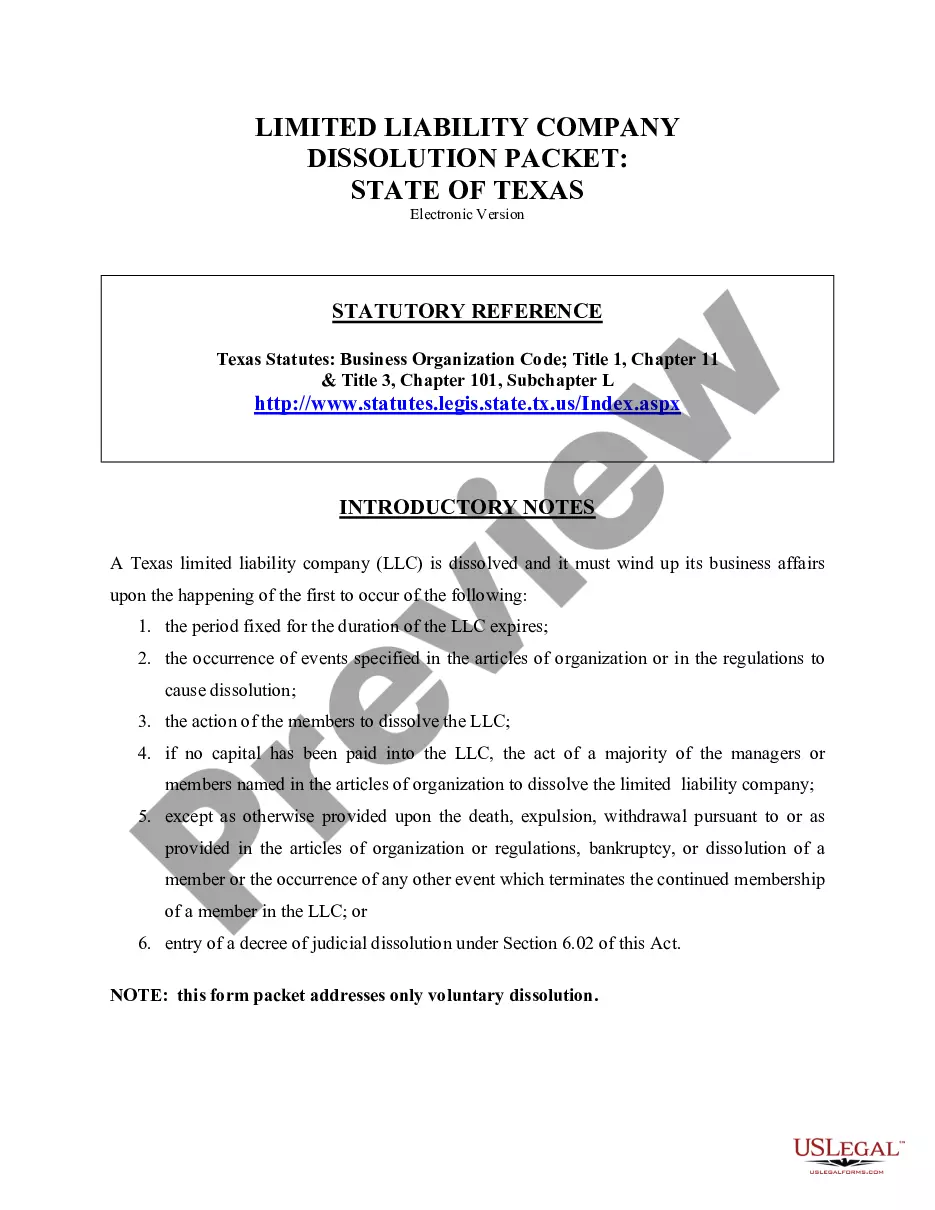
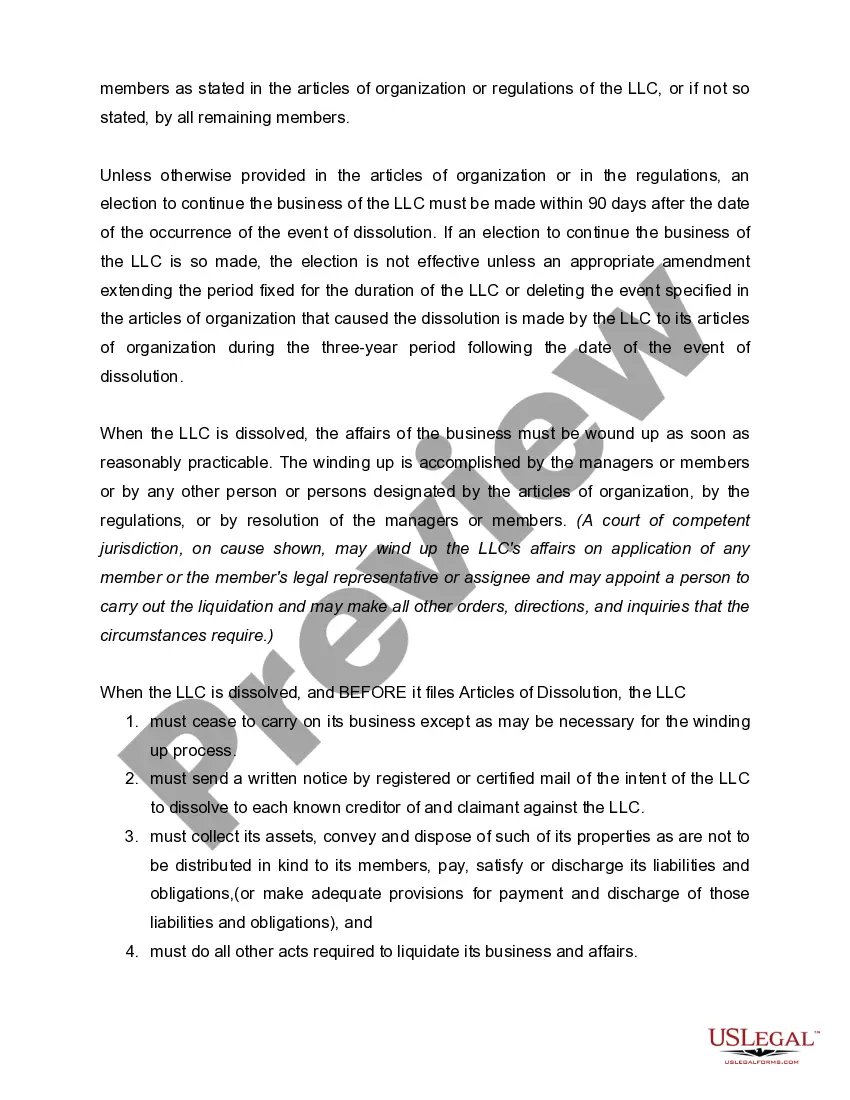
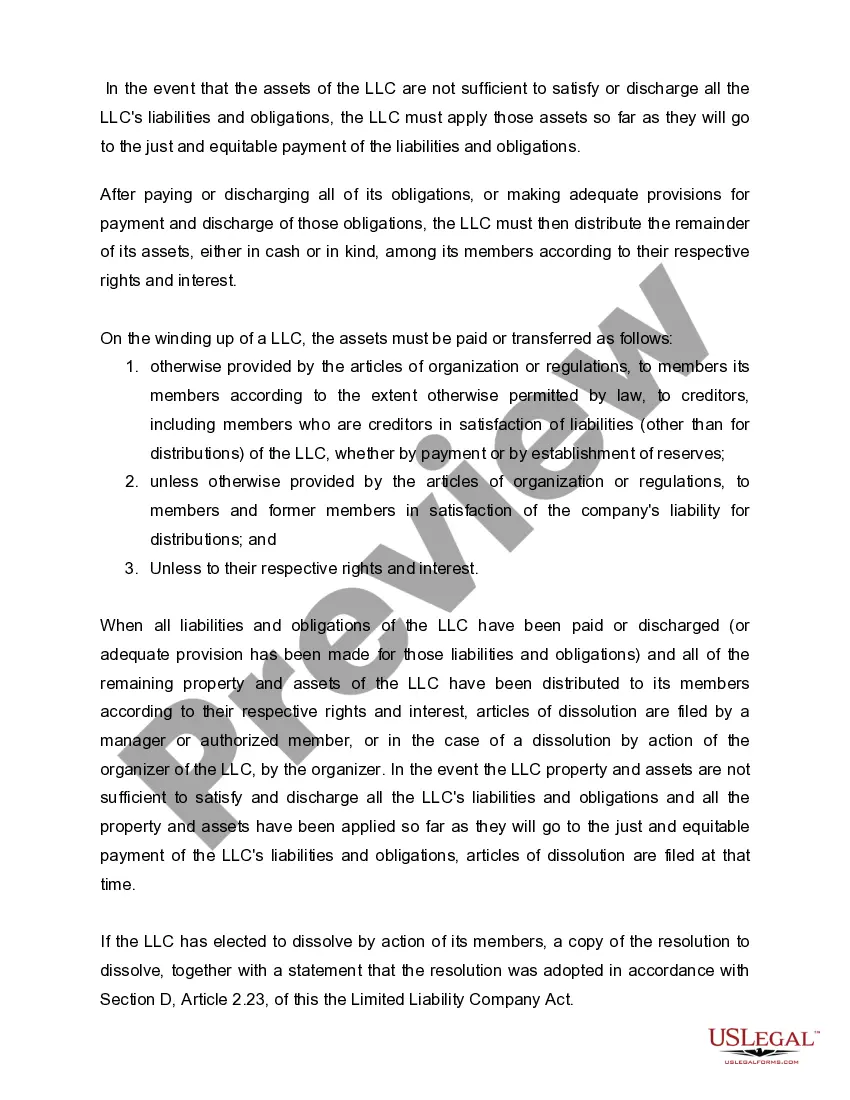
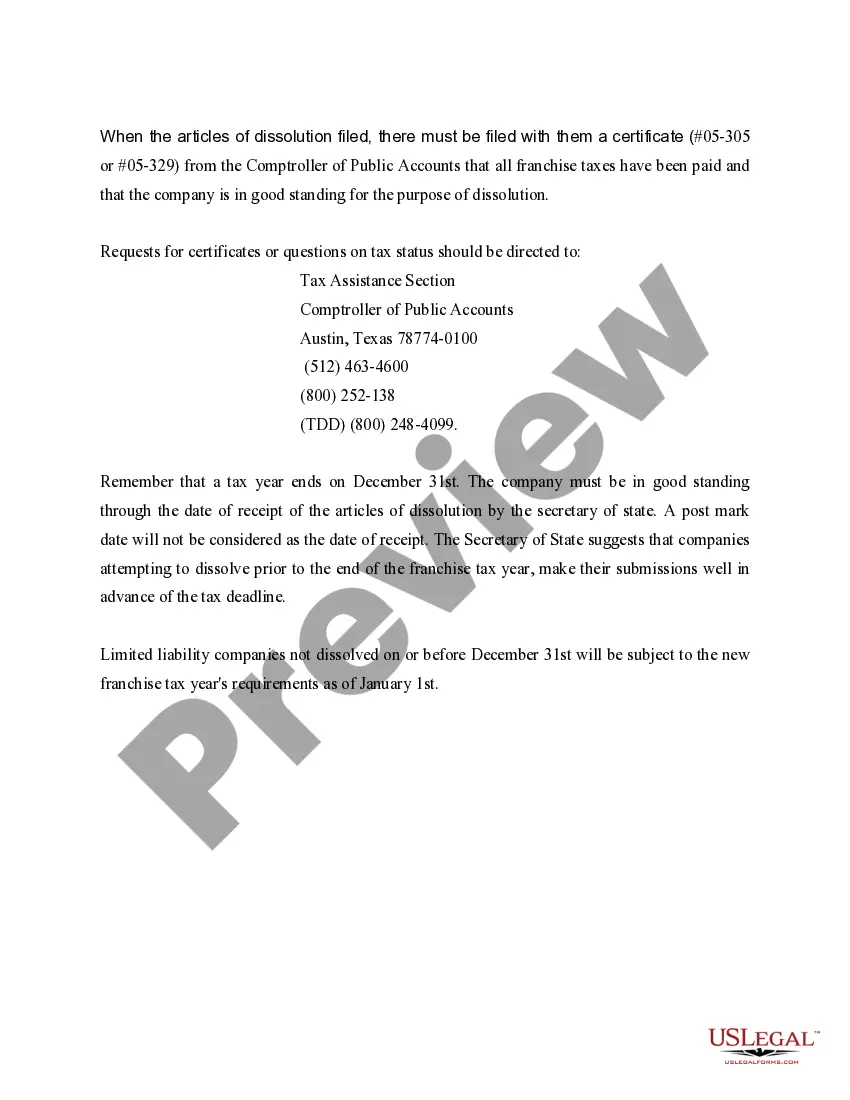
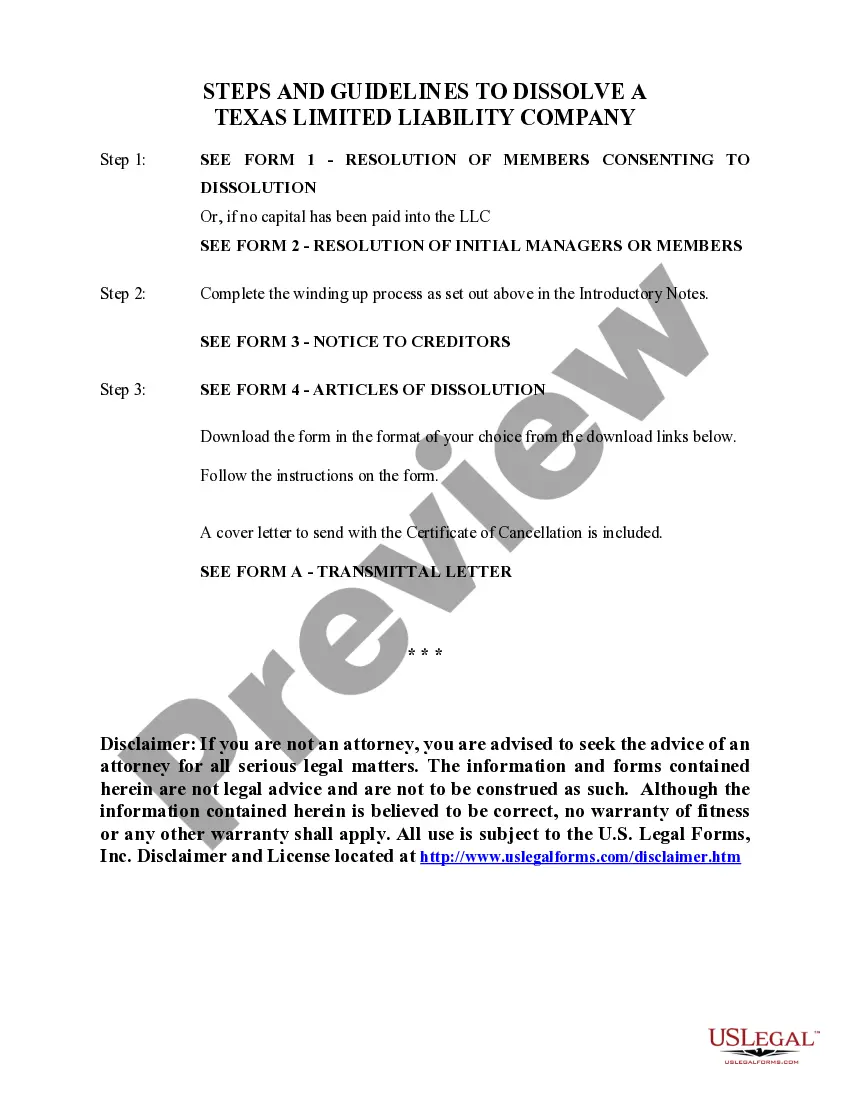
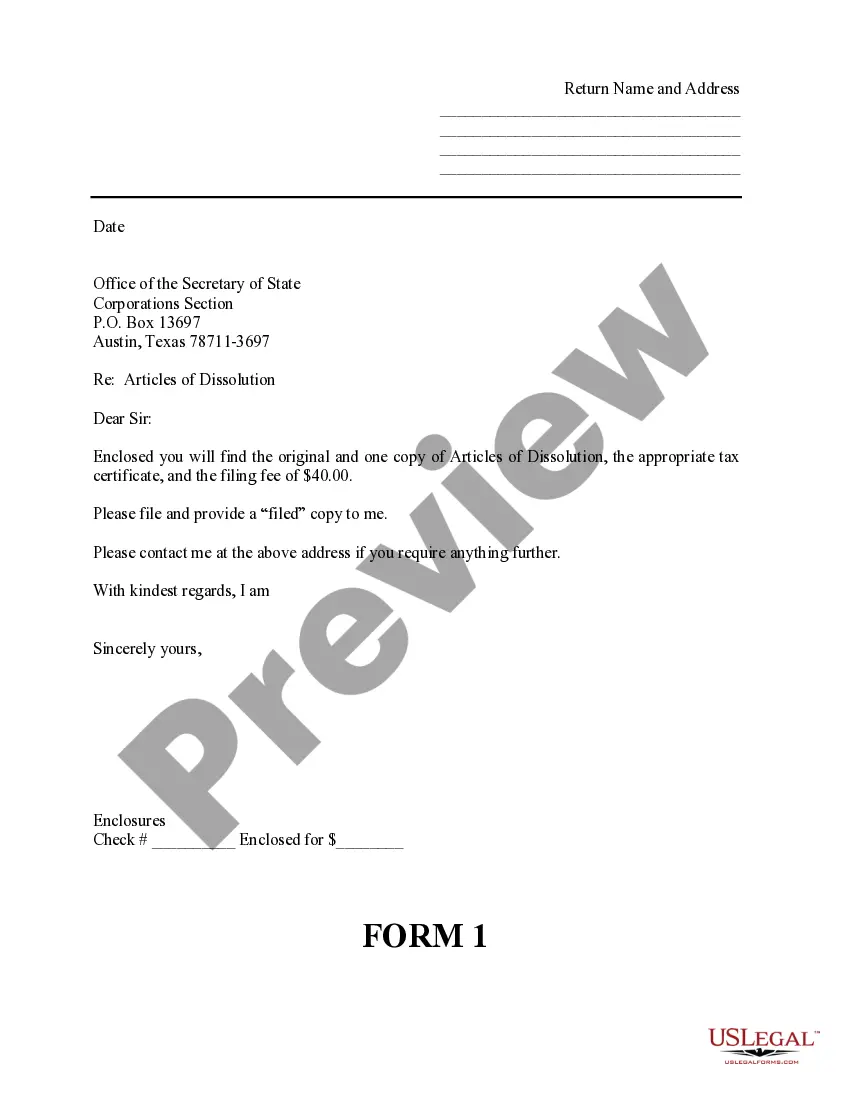
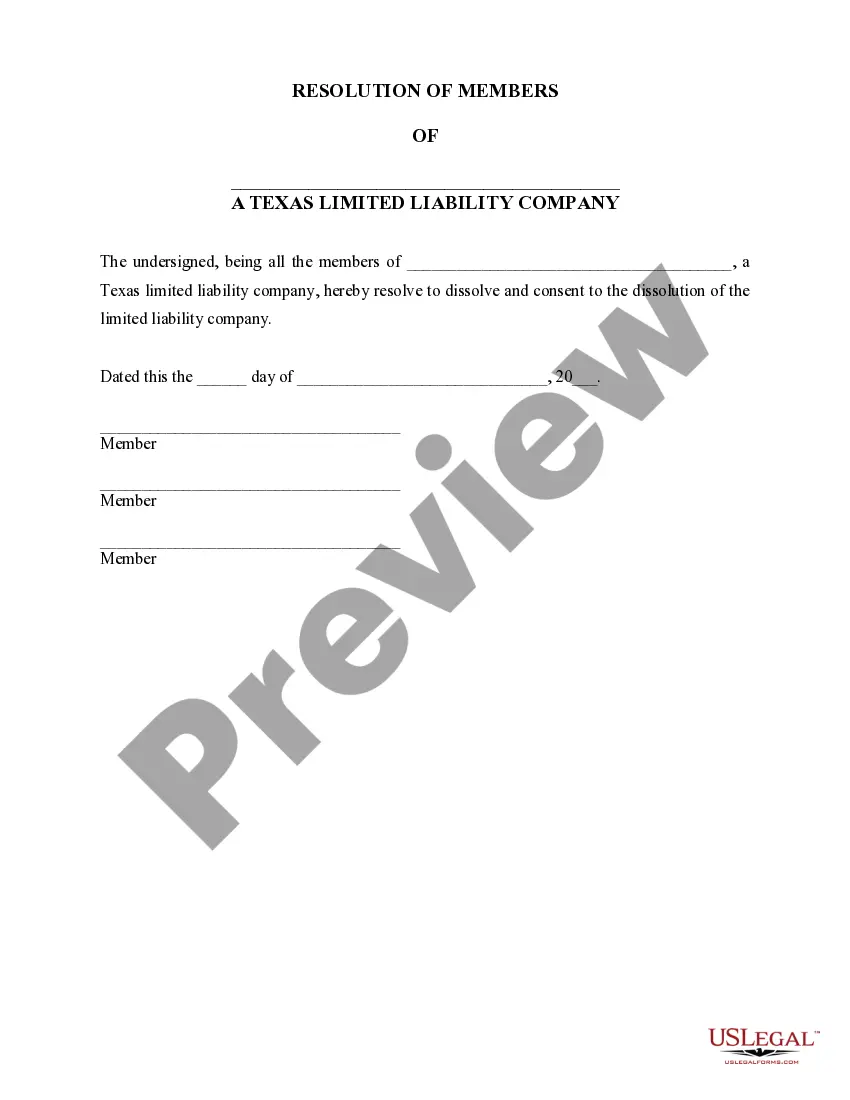
How to fill out Texas Dissolution Package To Dissolve Limited Liability Company LLC?
- If you're a returning user, log in to your account and confirm your subscription is active before downloading the required form template.
- Review the form description in Preview mode to verify that it meets your needs under Texas limited liability company law.
- If the current document doesn’t match your requirements, utilize the Search tab to explore alternative templates appropriate for your jurisdiction.
- Select your desired document by clicking the Buy Now button, then choose a subscription plan that fits your needs. You'll need to create an account to access all resources.
- Complete your purchase by entering your credit card information or using PayPal for a straightforward transaction.
- Download the form directly to your device and access it anytime through the My Forms section of your profile.
US Legal Forms simplifies legal document management, offering a vast collection that outperforms competitors in both quantity and quality.
Empower yourself with the tools you need to ensure your legal documents are precise and compliant. Start your journey by exploring US Legal Forms today!
Form popularity
FAQ
Yes, limited partnerships must be registered in Texas to operate legally. According to Texas limited liability company law, filing a Certificate of Formation with the Secretary of State is essential for compliance. This registration process provides your limited partnership with legal recognition and protections under state law. If you need guidance navigating this requirement, platforms like US Legal Forms can streamline the registration process.
To establish a Limited Liability Partnership (LLP) in Texas, certain conditions must be met under Texas limited liability company law. Partners must file a Certificate of Formation and adhere to specific operational measures, such as having a registered agent. Additionally, forming an LLP typically requires at least two partners actively engaged in the business. Meeting these conditions carefully sets the groundwork for a legally sound partnership.
The primary difference between an LLC and an LLP in Texas lies in their ownership structure and liability protection. An LLC provides limited liability protection to all members, insulating them from personal liability for business debts. In contrast, an LLP specifically protects partners from each other's negligence but does not shield them from their own actions. Understanding these distinctions under Texas limited liability company law helps you choose the right structure for your business needs.
To form a Limited Liability Company (LLC) in Texas, you must file a Certificate of Formation with the Texas Secretary of State. This document includes essential details such as the business name and address, the purpose of the LLC, and the information of the registered agent. Following the state's regulations on Texas limited liability company law ensures that your formation is valid and legally protected. Additionally, you can explore platforms like US Legal Forms for assistance with the process.
One notable downside of a Limited Liability Partnership (LLP) under Texas limited liability company law is the personal liability for individual partners. Unlike an LLC, partners in an LLP may still be liable for their own wrongdoing or negligence. Additionally, an LLP may not provide as much flexibility in management structure compared to an LLC. Consequently, understanding these aspects can help you make a more informed decision.
Form 205 should be filed with the Texas Secretary of State. You can file this form online through their portal or send it through traditional mail. Ensure that you select the correct filing method that aligns with your preferences and needs, while keeping compliance with Texas limited liability company law in mind. Consider using uslegalforms for guidance during the filing process.
You can submit Form 205 to the Texas Secretary of State, which can be done online, by mail, or in person. If you choose to file by mail, be sure to send it to the appropriate address listed on the Texas Secretary of State's website. Submitting the form correctly is vital for compliance with Texas limited liability company law.
Form 205 is completed by the organizers of the LLC, typically the individuals who are forming the company. Each organizer must provide their name and address, along with information about the LLC. It is crucial to follow Texas limited liability company law when filling out this form to avoid potential issues during the filing process.
Filing a Certificate of Formation in Texas involves submitting Form 205 to the Secretary of State. Ensure that you provide all required information, such as the LLC name, duration, registered agent details, and purpose. You can file the form online, by mail, or in person. Adhering to Texas limited liability company law will help ensure your filing is successful.
To form an LLC in Texas, start by choosing a name that complies with Texas limited liability company law. Next, appoint a registered agent who will accept legal documents on behalf of your LLC. After that, file the Certificate of Formation with the Texas Secretary of State, and finally, create an operating agreement to outline the structure and operations of your LLC.