What Does The Deed To My House Look Like
Description

Get your form ready online
Our built-in tools help you complete, sign, share, and store your documents in one place.
Make edits, fill in missing information, and update formatting in US Legal Forms—just like you would in MS Word.
Download a copy, print it, send it by email, or mail it via USPS—whatever works best for your next step.
Sign and collect signatures with our SignNow integration. Send to multiple recipients, set reminders, and more. Go Premium to unlock E-Sign.
If this form requires notarization, complete it online through a secure video call—no need to meet a notary in person or wait for an appointment.
We protect your documents and personal data by following strict security and privacy standards.

Make edits, fill in missing information, and update formatting in US Legal Forms—just like you would in MS Word.

Download a copy, print it, send it by email, or mail it via USPS—whatever works best for your next step.

Sign and collect signatures with our SignNow integration. Send to multiple recipients, set reminders, and more. Go Premium to unlock E-Sign.

If this form requires notarization, complete it online through a secure video call—no need to meet a notary in person or wait for an appointment.

We protect your documents and personal data by following strict security and privacy standards.
Looking for another form?
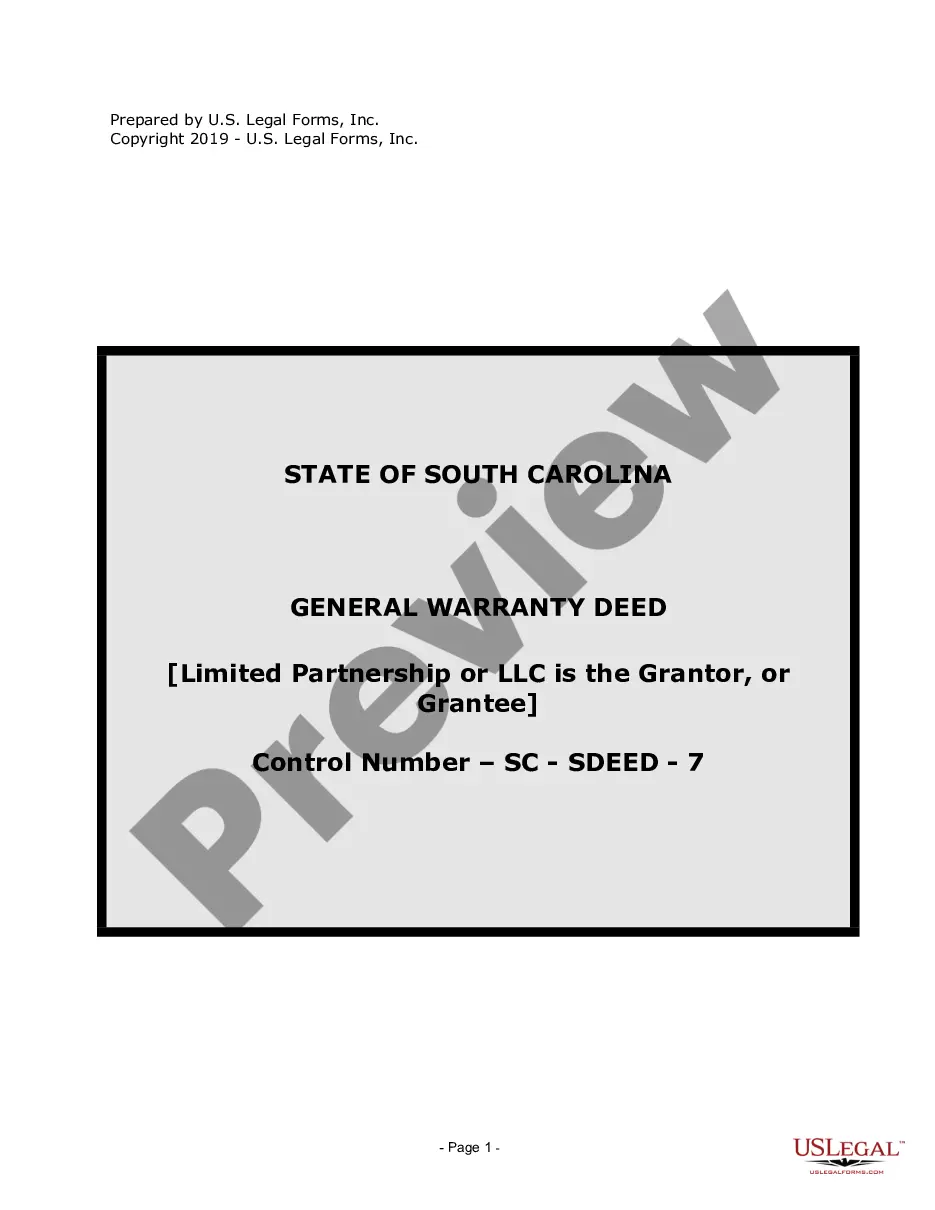

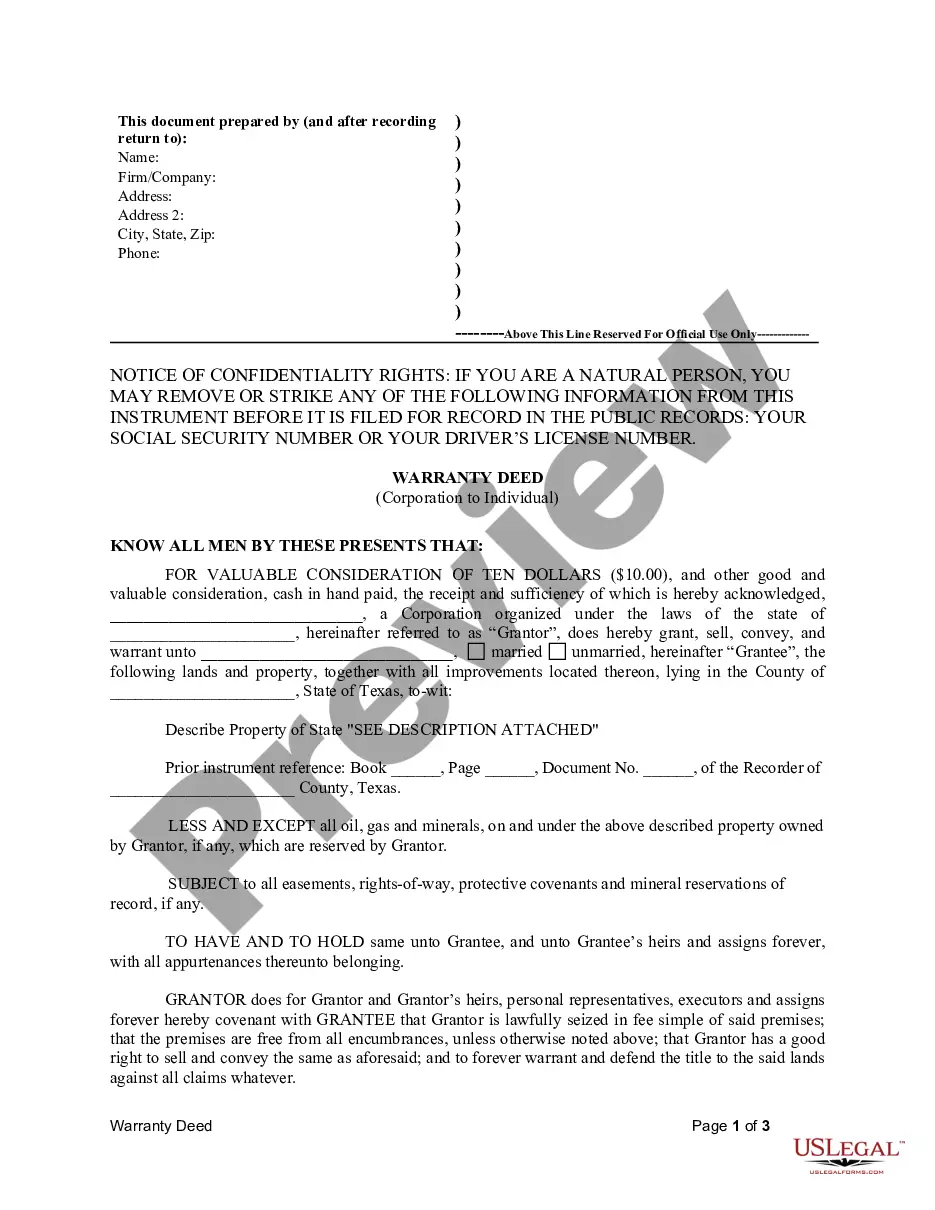
How to fill out Texas Warranty Deed From Corporation To Individual?
- If you're a returning user, log into your account and ensure your subscription is active. Then, download the required document using the Download button.
- For first-time users, start by checking the form's Preview mode and description to ensure it fits your needs and complies with local jurisdiction requirements.
- If necessary, search for an alternative template using the search functionality to ensure you find the correct document.
- Proceed to purchase the form by clicking on the Buy Now button and selecting your preferred subscription plan, ensuring you create an account for full access.
- Complete your payment securely using your credit card or PayPal account.
- Finally, download your document and save it on your device. You can access it anytime through the My Forms section of your profile.
With US Legal Forms, you benefit from an extensive library, featuring over 85,000 editable legal forms. This platform equips both individuals and attorneys with all the resources needed to swiftly complete legal documents.
Unlock the ease and efficiency of managing your legal documentation today. Start your journey with US Legal Forms and experience the difference for yourself!
Form popularity
FAQ
Generally, the original deed is retained either by the homeowner or their mortgage lender if there is an ongoing mortgage. It's important to keep this document in a safe place since it is a key proof of ownership. Knowing what does the deed to my house look like can help you ensure that you are storing the right document. If you ever need a copy, US Legal Forms can assist you in obtaining one.
Losing the deed to your home does not mean you lose ownership. You can always request a copy from your local land records office to replace it. It’s essential to know what does the deed to my house look like so you can recognize the authenticated document. Additionally, platforms like US Legal Forms can help you navigate the replacement process efficiently.
If you've lost the deed to your house, the first step is to check with your local land records office. They usually maintain copies of property deeds and can help you retrieve the information needed to verify ownership. It's important to understand what does the deed to my house look like to identify the correct document during this process. If needed, you can also utilize services like US Legal Forms to expedite getting a certified copy.
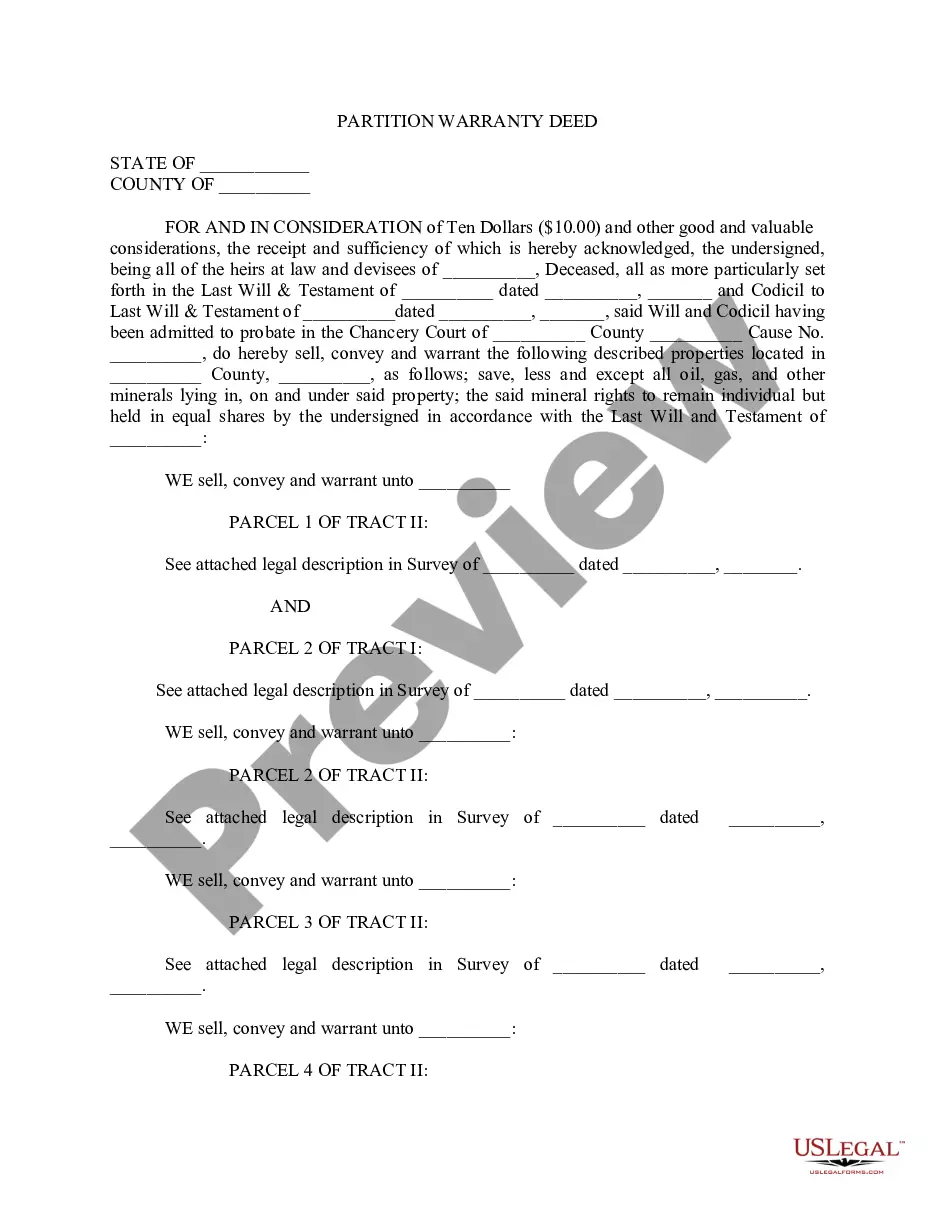
An example of a deed can be a quitclaim deed, which transfers any interest the grantor has in the property without making any promises related to the quality of the title. This type of deed is often used between family members or when a property is transferred as part of a divorce. Recognizing what does the deed to my house look like will help you identify different types of deeds and their specific purposes.
The deed to your house is typically located in the county recorder's office where the property is situated. You can request a copy of your deed through the office or access it online, if available. Additionally, some homeowners keep a copy within their personal records for ease of access. Understanding what does the deed to my house look like can assist you in locating and reviewing this important document.
The most common type of deed is the warranty deed, which guarantees that the granter holds clear title to the property and has the right to sell it. This type of deed offers the highest level of protection to the buyer, as it assures them of full ownership rights without any claims against the property. Familiarity with what does the deed to my house look like might lead you to choose this secure option when making a property transaction.
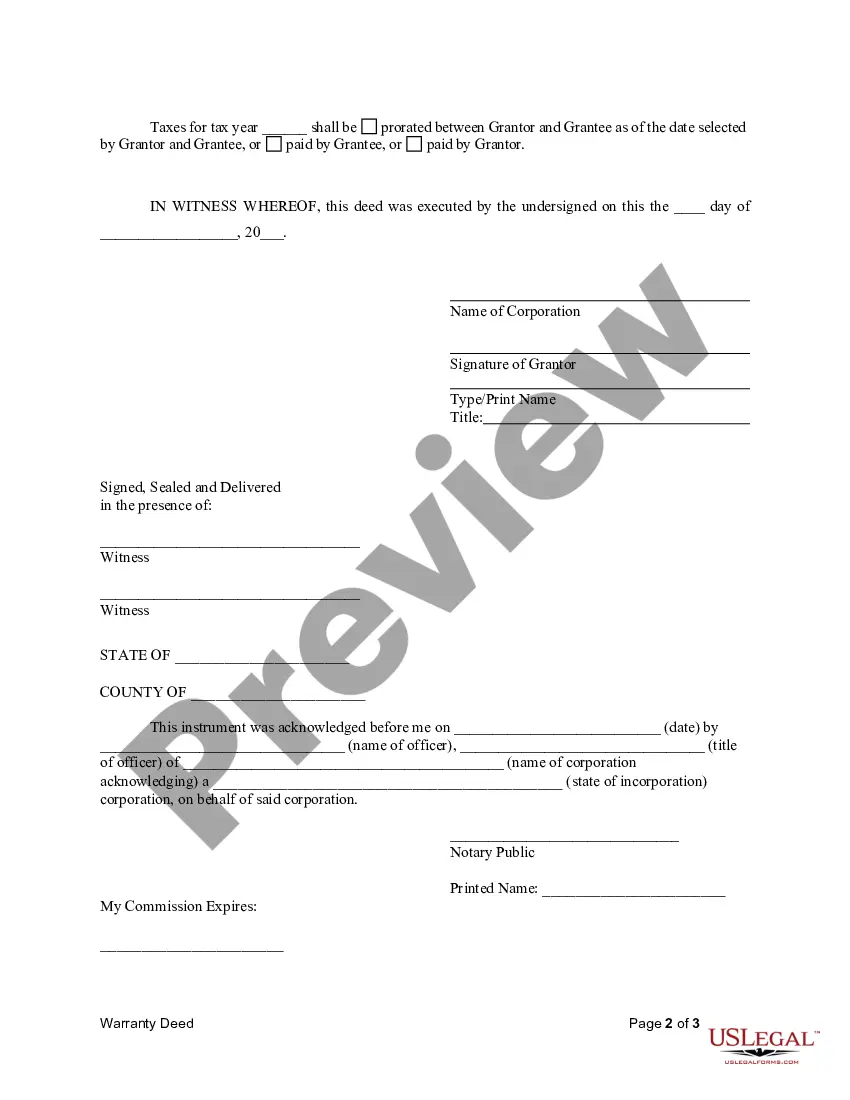
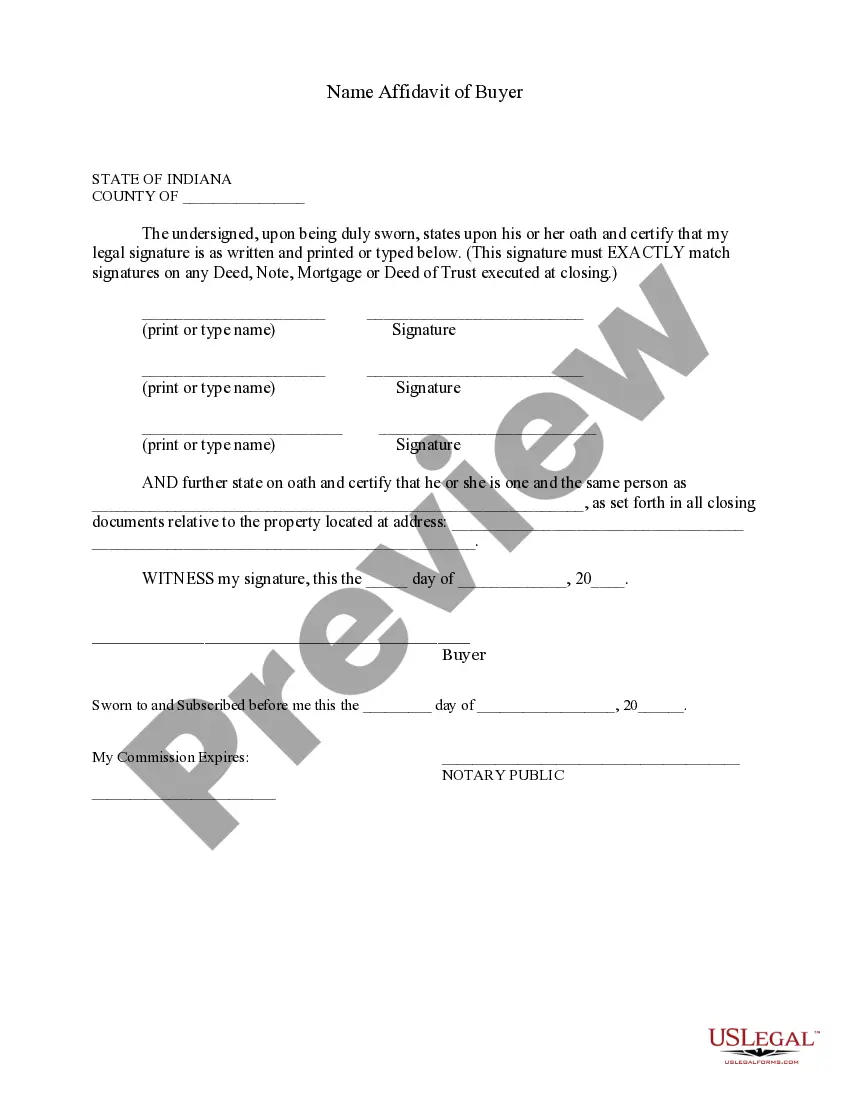
A deed is a legal document that conveys ownership of property from one party to another. It typically includes key details like the names of the parties involved, a description of the property, and is often marked with the signatures of the involved parties. In terms of appearance, the deed may feature a formal layout, with headings and legal language that specify the rights being transferred. Knowing what does the deed to my house look like helps you recognize and understand its significance.
To write a simple deed, you need to include essential elements such as the names of the grantor and grantee, a legal description of the property, and the date of transfer. It’s important to state clearly the intent to transfer ownership. Once you draft the deed, sign it in front of a notary public to make it legally binding. Understanding what does the deed to my house look like will help you format your document correctly.
You can find the title deed to your house at your local county recording office, where property records are maintained. Additionally, many counties have online databases for easy access to property deeds. By knowing what the deed to your house looks like, you can quickly locate and verify your ownership documentation.
To obtain your house title deed, contact your local recorder's office, where you can request a certified copy. You will need to provide information about the property, like the address and parcel number. Having a clear understanding of what the deed to your house looks like allows you to verify your ownership and any other relevant legal information.