Pennsylvania Residential Code
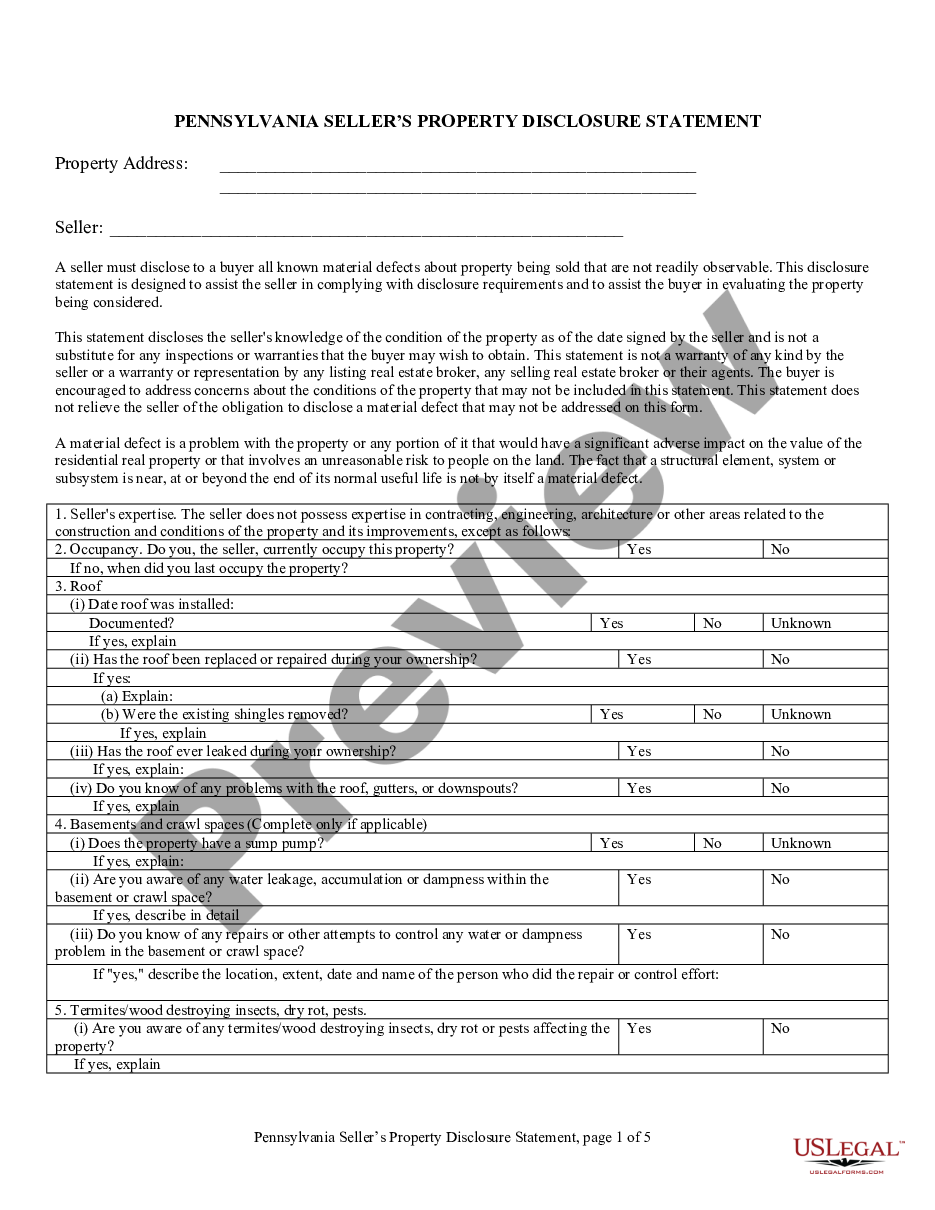
Description
Get your form ready online
Our built-in tools help you complete, sign, share, and store your documents in one place.
Make edits, fill in missing information, and update formatting in US Legal Forms—just like you would in MS Word.
Download a copy, print it, send it by email, or mail it via USPS—whatever works best for your next step.
Sign and collect signatures with our SignNow integration. Send to multiple recipients, set reminders, and more. Go Premium to unlock E-Sign.
If this form requires notarization, complete it online through a secure video call—no need to meet a notary in person or wait for an appointment.
We protect your documents and personal data by following strict security and privacy standards.

Make edits, fill in missing information, and update formatting in US Legal Forms—just like you would in MS Word.

Download a copy, print it, send it by email, or mail it via USPS—whatever works best for your next step.

Sign and collect signatures with our SignNow integration. Send to multiple recipients, set reminders, and more. Go Premium to unlock E-Sign.

If this form requires notarization, complete it online through a secure video call—no need to meet a notary in person or wait for an appointment.

We protect your documents and personal data by following strict security and privacy standards.
Looking for another form?






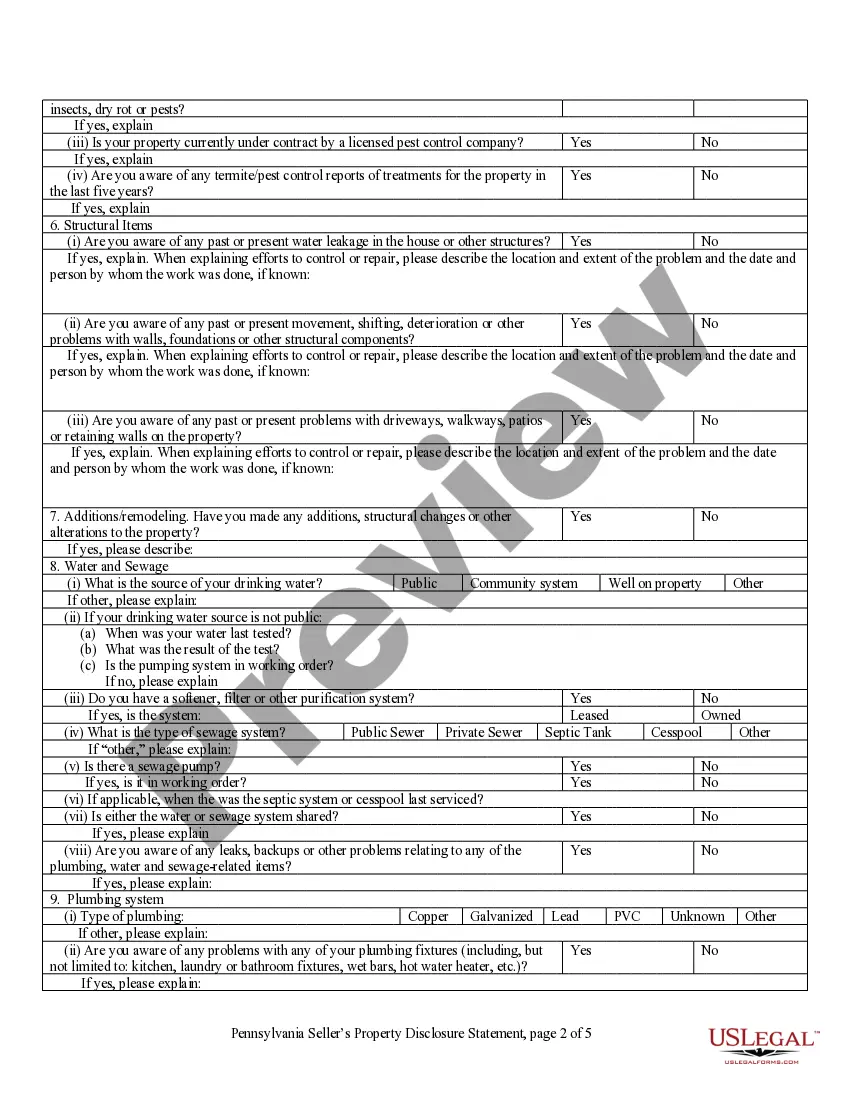
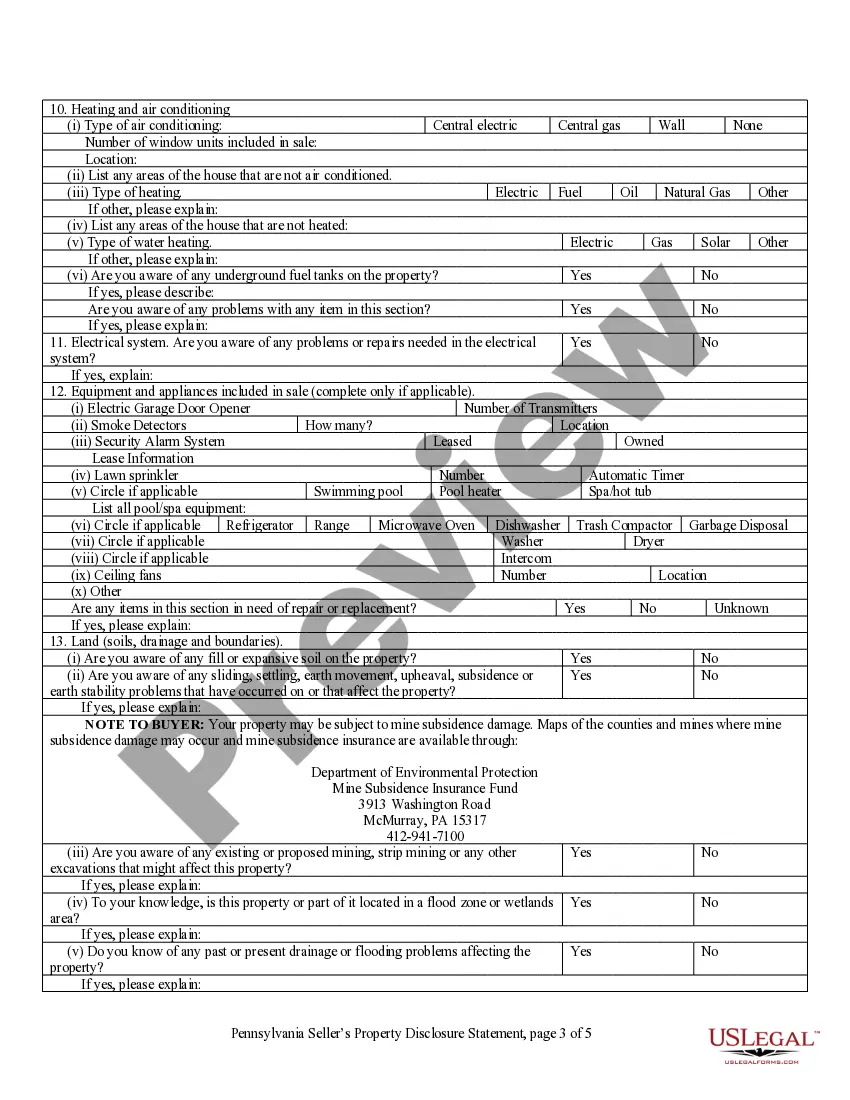
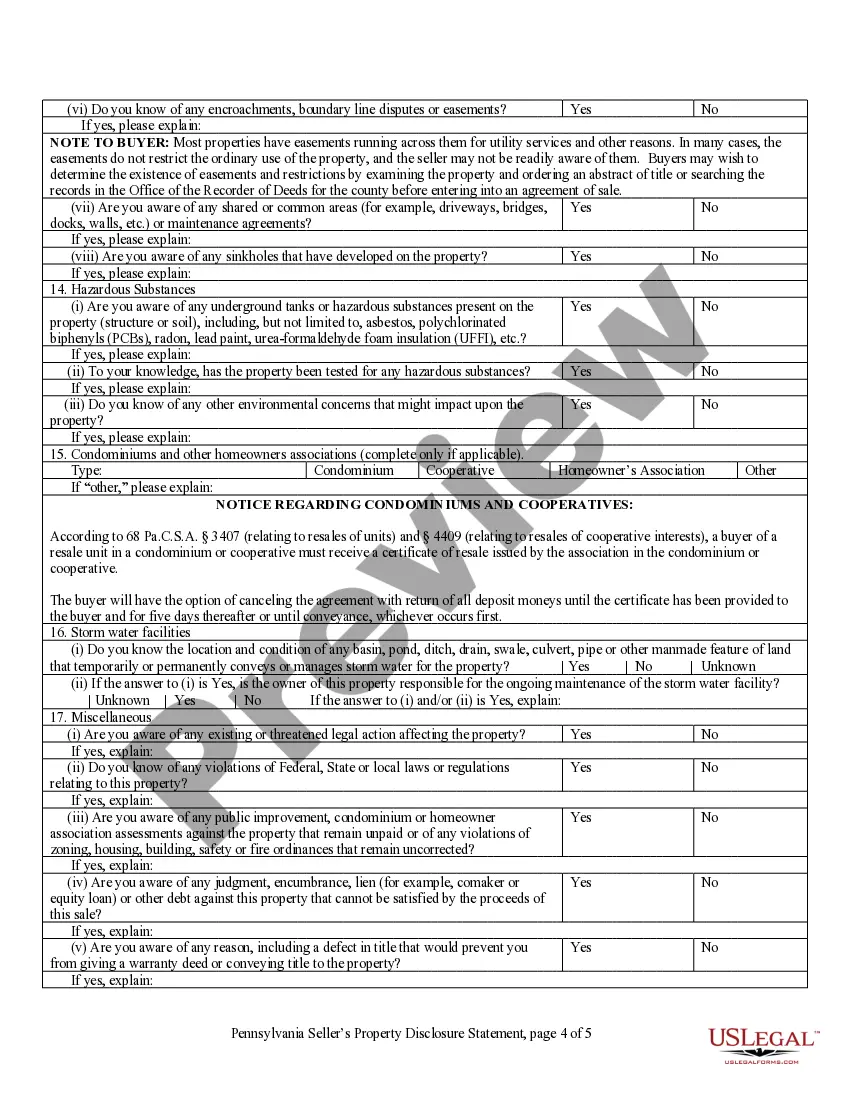
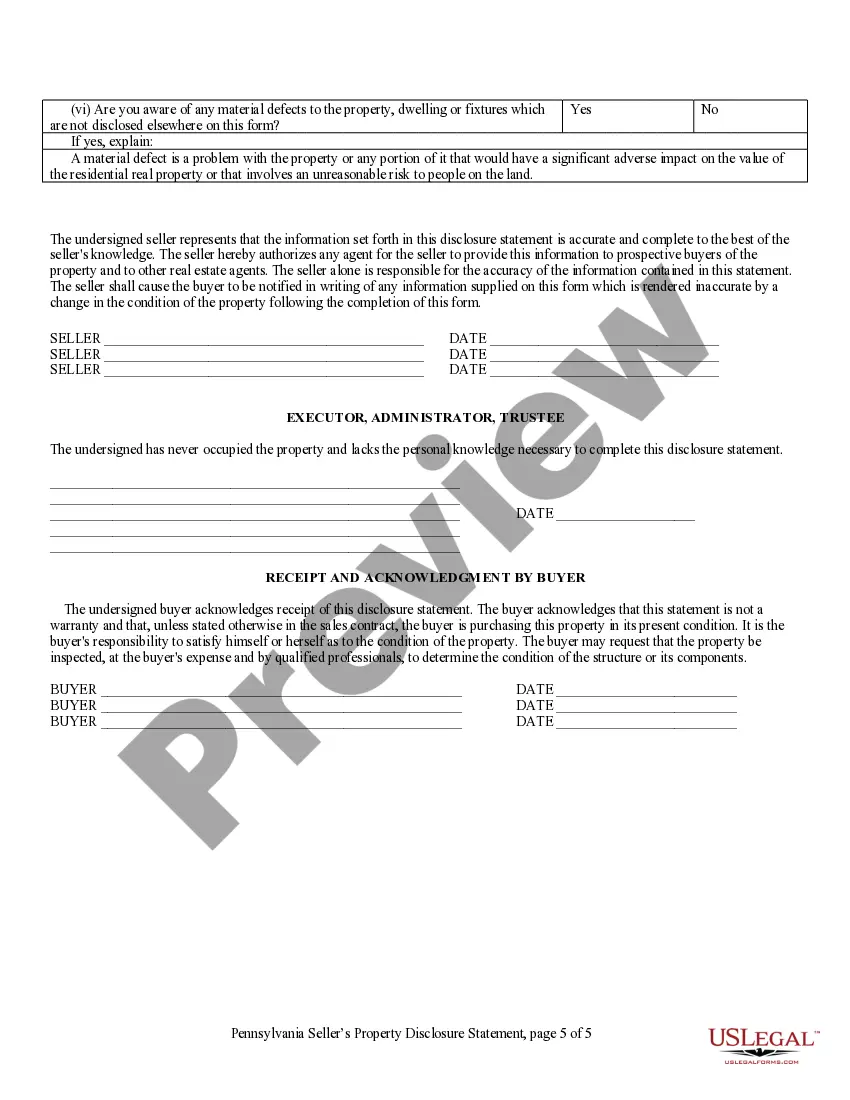
How to fill out Pennsylvania Residential Real Estate Sales Disclosure Statement?
It’s clear that you cannot transform into a legal authority instantly, nor can you masterfully outline Pennsylvania Residential Code without possessing a distinct set of abilities.
Assembling legal documents is a lengthy endeavor that necessitates specific education and expertise. So why not entrust the formulation of the Pennsylvania Residential Code to the experts.
With US Legal Forms, one of the most comprehensive libraries of legal templates, you can discover anything from courtroom papers to formats for internal correspondence.
You can regain access to your forms from the My documents section at any time. If you’re a current client, you can simply Log In, and find and download the template from the same area.
Regardless of the aim of your documents—whether financial and legal, or personal—our platform is here to assist you. Try US Legal Forms today!
- Find the form you need by utilizing the search bar at the top of the page.
- View it (if this feature is available) and examine the accompanying description to determine whether Pennsylvania Residential Code is what you seek.
- Restart your search if you require any additional template.
- Create a free account and select a subscription plan to buy the template.
- Select Buy now. Once the transaction is completed, you can download the Pennsylvania Residential Code, complete it, print it, and mail it to the required individuals or organizations.
Form popularity
FAQ
The Pennsylvania Uniform Construction Code (UCC) regulates the codes and standards of building projects in the Commonwealth. The UCC has been enforced since April 2004 across Pennsylvania.
The certificate of occupancy shall contain the following information: (1) The permit number and address of the building, structure or facility. (2) The permit holder's name and address. (3) A description of the portion of the building, structure or facility covered by the occupancy permit.
The certificate of occupancy must contain the following information: (1) The permit number and address of the residential building. (2) The name and address of the owner of the residential building. (3) A description of the portion of the residential building covered by the occupancy permit.
A good place to start is the website for the local building department or zoning board. There you will find a list of the codes that apply to your area and information on how to comply with them. Below you will find a list of building resources and building codes by state.
WORK NOT REQUIRING A BUILDING PERMIT OR ZONING APPROVAL (ROZA ? RECORD OF ZONING APPROVAL): One-story detached accessory structures used as tool and storage sheds, playhouse and similar uses, provided the floor area does not exceed 120 square feet and they are accessory to a single-family or two-family dwelling.