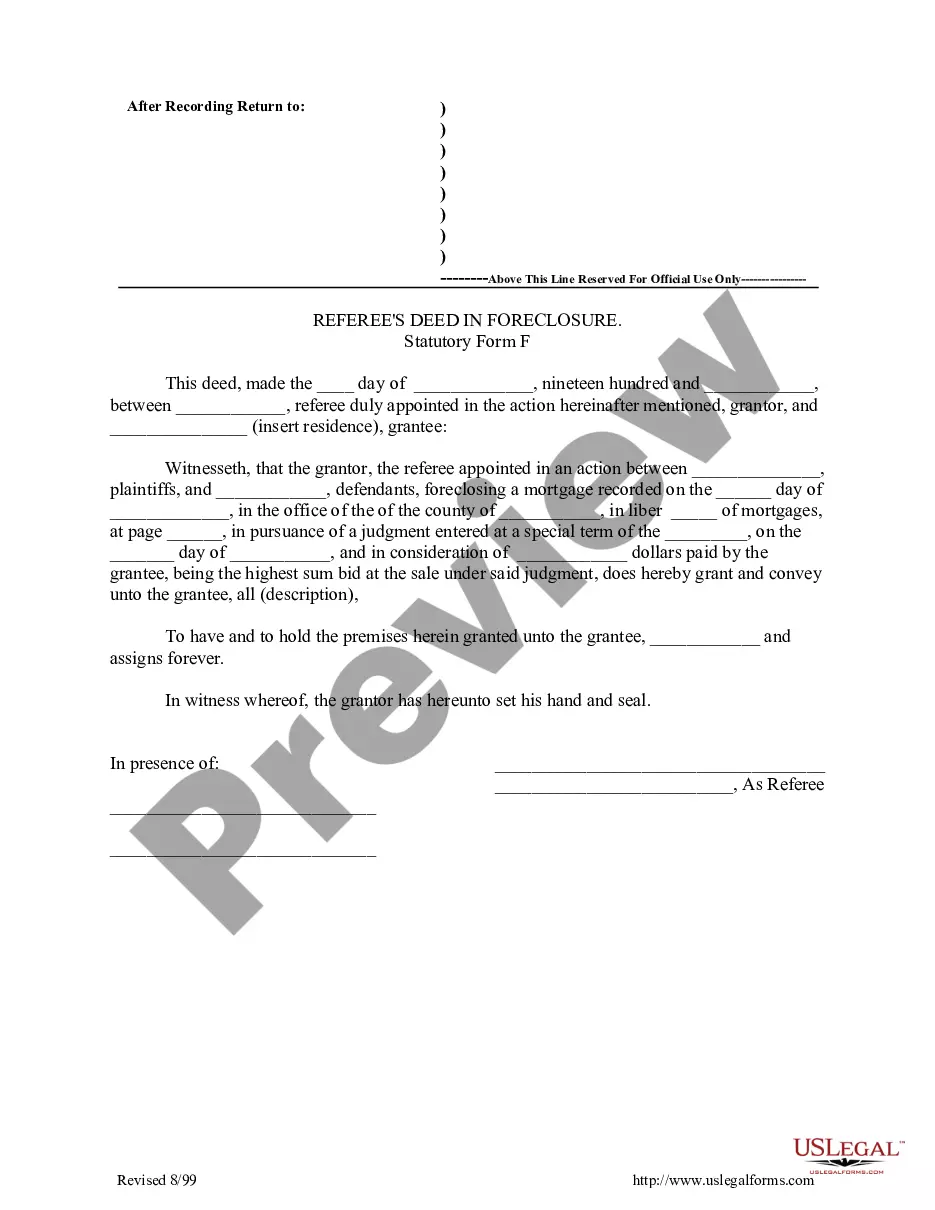
Foreclosure With Reverse Mortgage
Description

Get your form ready online
Our built-in tools help you complete, sign, share, and store your documents in one place.
Make edits, fill in missing information, and update formatting in US Legal Forms—just like you would in MS Word.
Download a copy, print it, send it by email, or mail it via USPS—whatever works best for your next step.
Sign and collect signatures with our SignNow integration. Send to multiple recipients, set reminders, and more. Go Premium to unlock E-Sign.
If this form requires notarization, complete it online through a secure video call—no need to meet a notary in person or wait for an appointment.
We protect your documents and personal data by following strict security and privacy standards.

Make edits, fill in missing information, and update formatting in US Legal Forms—just like you would in MS Word.

Download a copy, print it, send it by email, or mail it via USPS—whatever works best for your next step.

Sign and collect signatures with our SignNow integration. Send to multiple recipients, set reminders, and more. Go Premium to unlock E-Sign.

If this form requires notarization, complete it online through a secure video call—no need to meet a notary in person or wait for an appointment.

We protect your documents and personal data by following strict security and privacy standards.
Looking for another form?
How to fill out New York Referee's Deed In Foreclosure?
- If you're a returning user, log in to your account and choose the required form template. Ensure your subscription is active; renew if necessary.
- For first-time users, start by browsing the form description and Preview mode to ensure you select the appropriate document that aligns with your local legal requirements.
- If the initial form doesn't meet your needs, use the Search tab to find another relevant document.
- Once you've confirmed the right form, click the Buy Now button and select a subscription plan that fits your needs. You'll need to create an account for access.
- Complete your purchase by entering your payment details through credit card or PayPal.
- Finally, download the document to your device, and find it any time in the My Forms section of your profile.
In conclusion, US Legal Forms simplifies the process of managing legal documents related to foreclosure with reverse mortgage. They provide a vast library of over 85,000 forms, empowering you to handle your legal needs effectively.
Start utilizing US Legal Forms today to ensure your documentation is accurate and legally sound!
Form popularity
FAQ
Yes, homes with a reverse mortgage can be foreclosed under certain conditions. Typically, if the homeowner moves out, passes away, or fails to keep up with essential payments, the lender may pursue foreclosure with the reverse mortgage. To avoid this outcome, it's crucial to understand your obligations and consider consulting resources like US Legal Forms for guidance.
Yes, a bank can take your home if you default on a reverse mortgage. If you fail to meet the obligations, such as paying property taxes, homeowners insurance, or maintaining the home, the lender may initiate foreclosure with the reverse mortgage. It is important to stay aware of these responsibilities to protect your home from foreclosure.
A reverse mortgage can go into foreclosure if the borrower fails to meet certain obligations. These obligations include not living in the home, neglecting repairs, or not paying property taxes and insurance. When these conditions are not met, lenders may choose to foreclose. Knowing the risks associated with foreclosure with reverse mortgage is crucial, and resources like US Legal Forms can provide valuable guidance.
The 95% rule on a reverse mortgage indicates that borrowers can only access up to 95% of the home's value. This rule helps protect lenders and ensures that borrowers maintain equity in their homes. Consequently, maintaining a healthy equity level can help avoid situations that lead to foreclosure with reverse mortgage. Understanding this rule can assist homeowners in making informed decisions regarding their finances.
Unlike traditional mortgages, reverse mortgages do not require monthly payments, which may lead to confusion regarding potential foreclosure. However, missing payments on property taxes or insurance is problematic and can result in foreclosure. Homeowners must remain diligent about their financial commitments to avoid foreclosure with reverse mortgage implications. Keeping track of obligations is essential for maintaining home ownership.
The foreclosure rate for reverse mortgages may be surprising; many borrowers face foreclosure due to unpaid property taxes, insurance, or failure to live in the home. Data shows that these factors contribute to a notable percentage of reverse mortgage foreclosures. Understanding the reasons behind these rates can help homeowners take proactive measures to avoid foreclosure with reverse mortgage scenarios.