Enhanced Life Individual With Disability Insurance
Description
Get your form ready online
Our built-in tools help you complete, sign, share, and store your documents in one place.
Make edits, fill in missing information, and update formatting in US Legal Forms—just like you would in MS Word.
Download a copy, print it, send it by email, or mail it via USPS—whatever works best for your next step.
Sign and collect signatures with our SignNow integration. Send to multiple recipients, set reminders, and more. Go Premium to unlock E-Sign.
If this form requires notarization, complete it online through a secure video call—no need to meet a notary in person or wait for an appointment.
We protect your documents and personal data by following strict security and privacy standards.

Make edits, fill in missing information, and update formatting in US Legal Forms—just like you would in MS Word.

Download a copy, print it, send it by email, or mail it via USPS—whatever works best for your next step.

Sign and collect signatures with our SignNow integration. Send to multiple recipients, set reminders, and more. Go Premium to unlock E-Sign.

If this form requires notarization, complete it online through a secure video call—no need to meet a notary in person or wait for an appointment.

We protect your documents and personal data by following strict security and privacy standards.
Looking for another form?
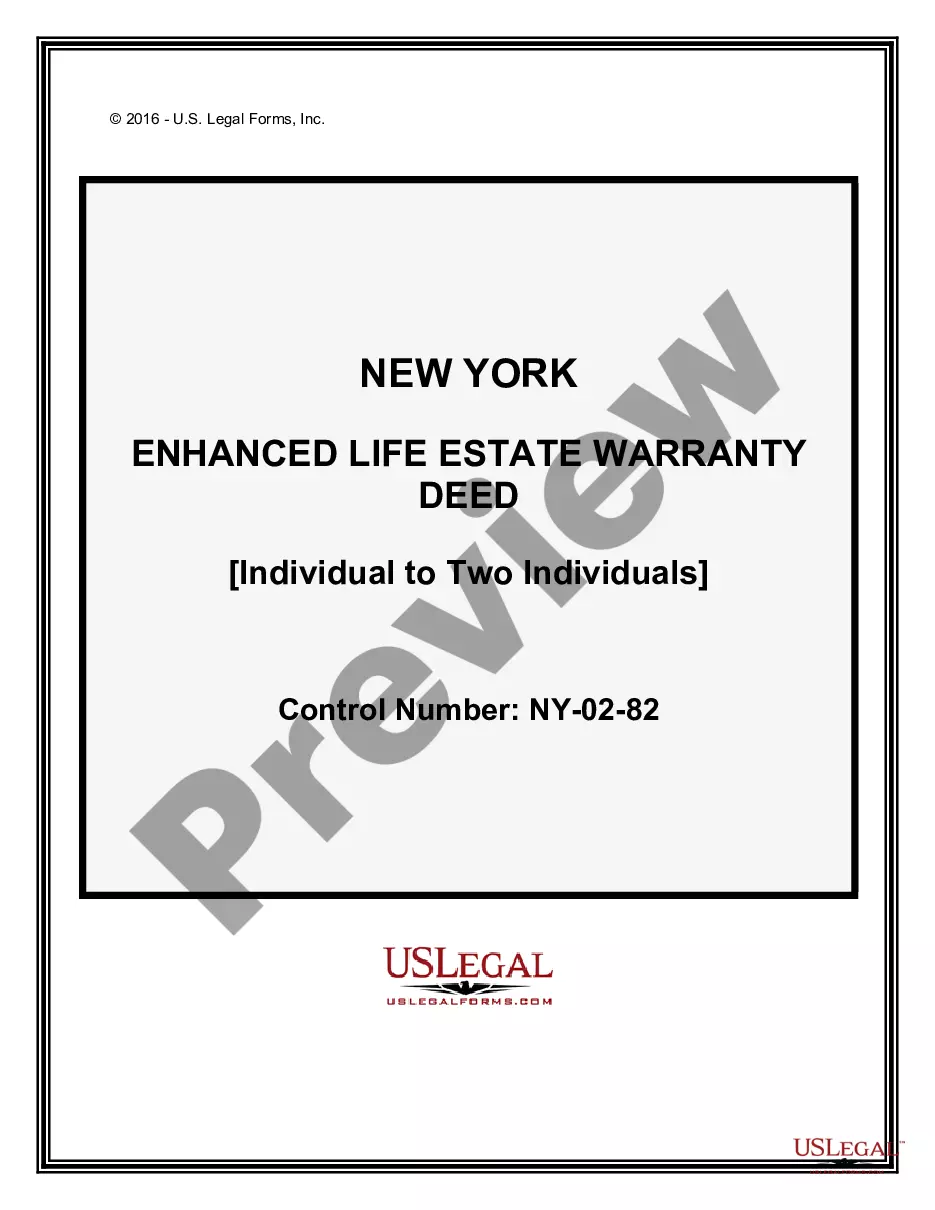
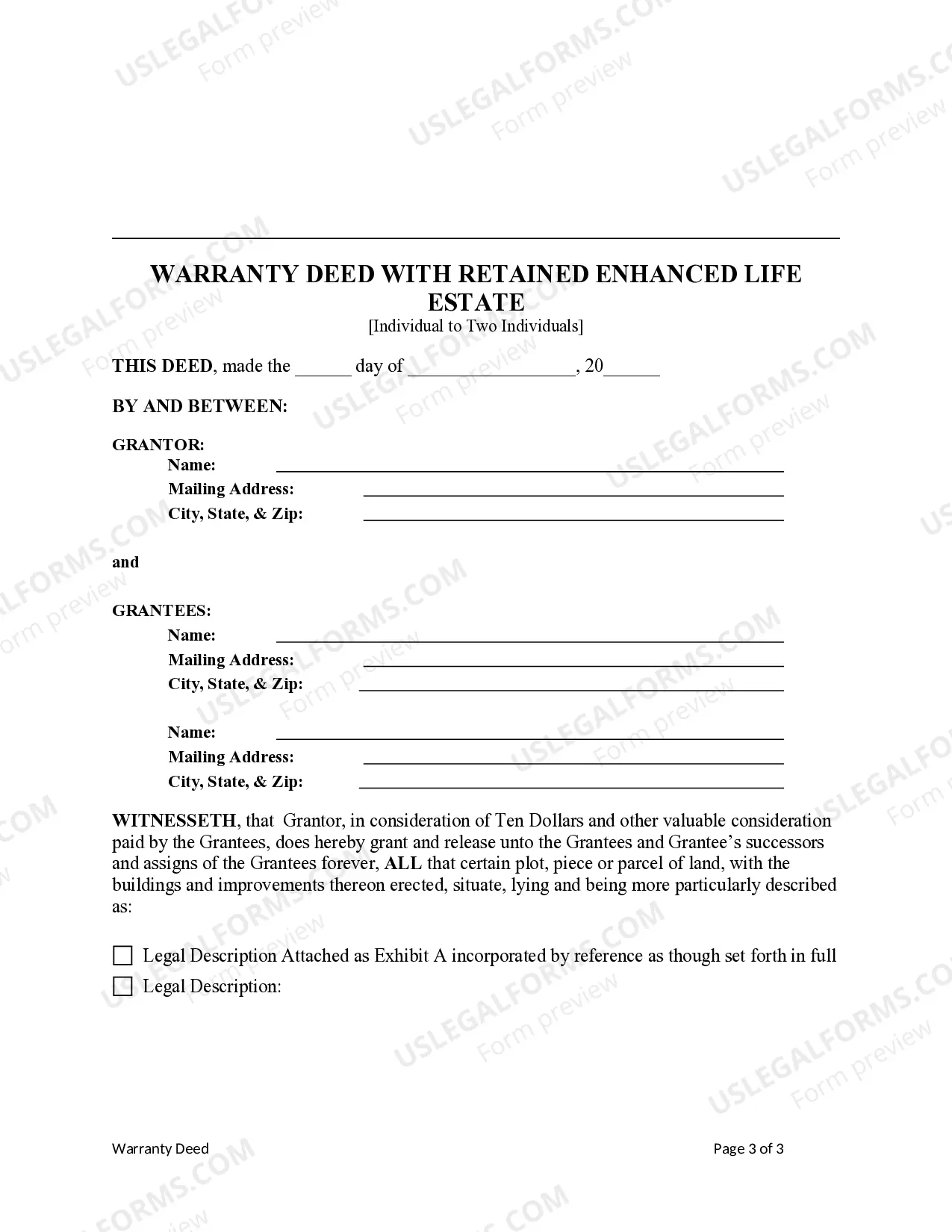
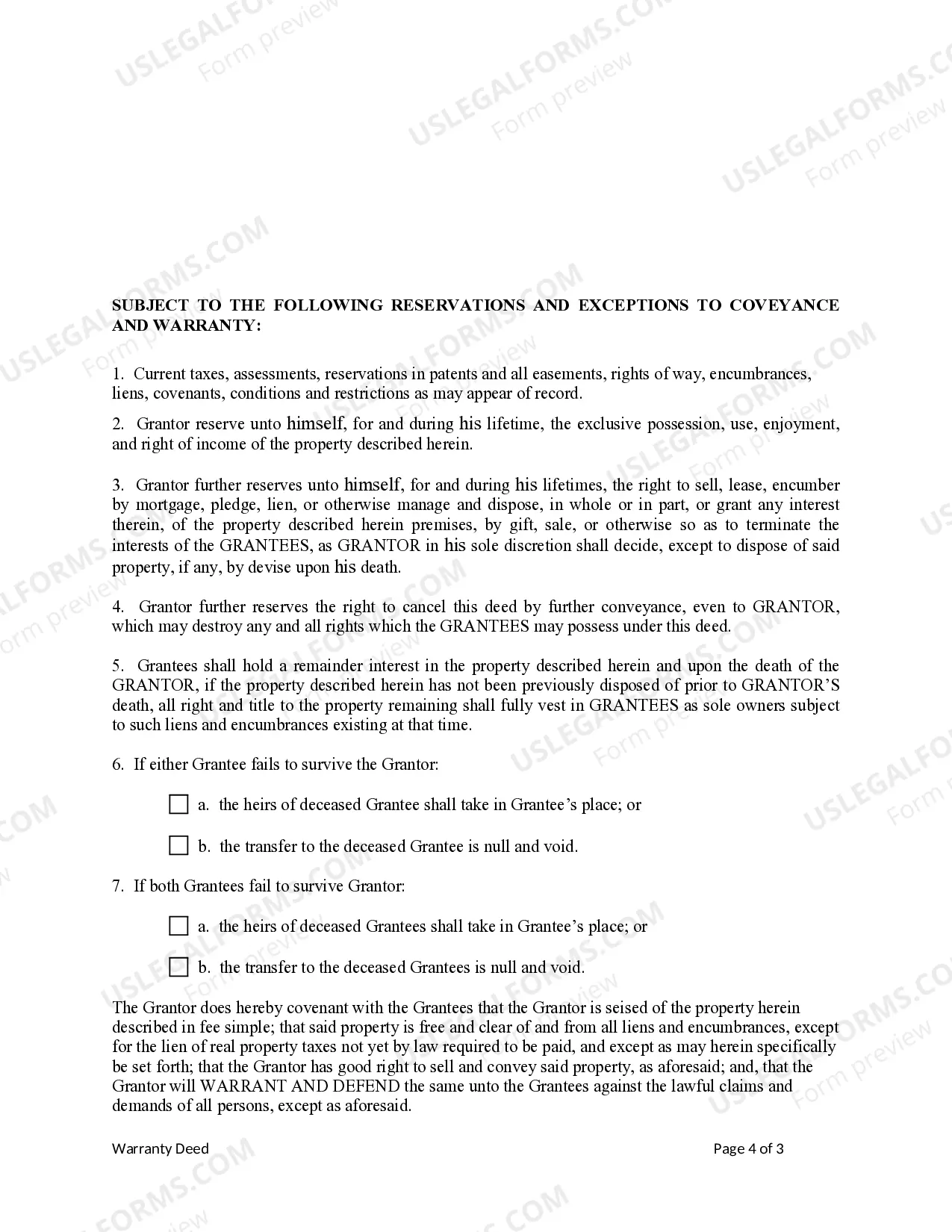
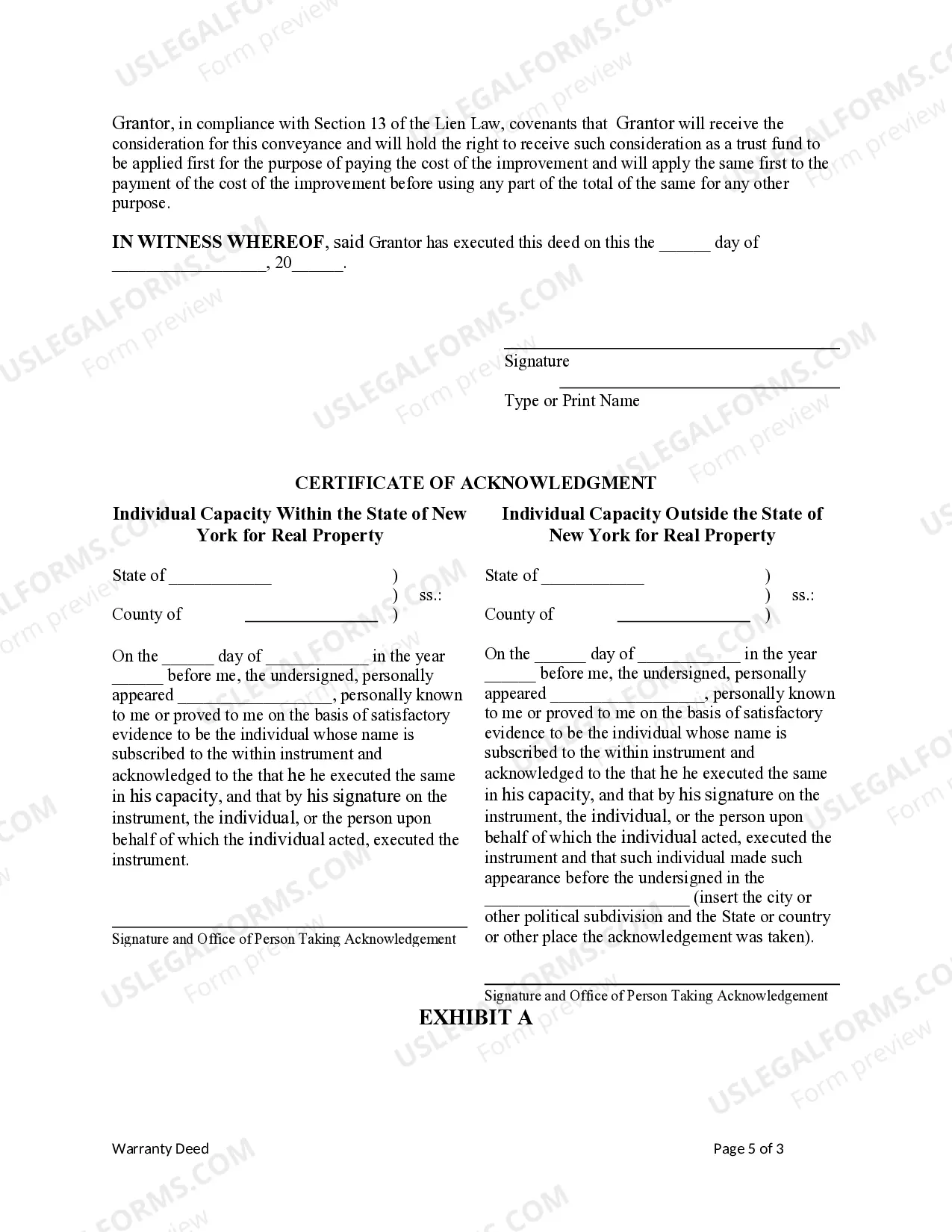
How to fill out New York Enhanced Life Estate Or Lady Bird Warranty Deed From Individual To Two Individuals?
- If you are a returning user, log into your US Legal Forms account and select your desired form template. Make sure your subscription is still active. Renew it if necessary according to your payment plan.
- Preview your selected document for accuracy and relevance to your local jurisdiction.
- If your chosen template doesn't meet your requirements, utilize the Search feature to find the appropriate form.
- Select your preferred subscription plan by clicking on the Buy Now button and create an account if it's your first purchase.
- Complete your transaction by entering your credit card information or using your PayPal account for payment.
- Download the completed form to your device, and you can find it later in the My Forms section of your profile.
By following these straightforward steps, you can easily manage your legal documentation related to enhanced life individual with disability insurance.
Don’t wait any longer—get started today and secure your future with US Legal Forms!
Form popularity
FAQ
You might consider stopping your long-term disability insurance when you have a substantial emergency fund that can cover your expenses during a disability. However, if you rely on your income for daily living or have dependents, it may be wise to maintain your coverage. Assessing your financial situation is key. Additionally, enhanced life individual with disability insurance may provide a safety net that adapts as your life circumstances change.
When speaking to a long-term disability company, avoid making statements that could suggest you are not genuinely unable to work. Do not minimize your condition or imply that you are ready to return to work without appropriate medical backing. It's best to be straightforward but cautious about how you convey your situation. Engaging with a provider experienced in enhanced life individual with disability insurance can greatly assist you in navigating these conversations.
Long-term disability (LTD) insurance can be valuable for safeguarding your financial future in case of unexpected health issues. It provides a steady income when you cannot work due to disability, helping you maintain your lifestyle. However, the effectiveness of LTD depends on your personal situation and health. Evaluating enhanced life individual with disability insurance can offer deeper protection tailored to your needs.
Short-term disability insurance often provides benefits for only a limited duration, typically up to six months. This can leave individuals unprotected if their disability extends beyond that period. Additionally, short-term policies may have lower benefit amounts, which might not cover essential expenses. Therefore, considering enhanced life individual with disability insurance can be a prudent choice for those seeking long-term security.
Life insurance payouts typically do not need to be reported as income to Social Security Disability. However, if you receive a payout, it is essential to understand how it may impact your overall financial situation. Maintaining transparency with Social Security can help you avoid potential issues. For comprehensive guidance on managing your finances alongside enhanced life individual with disability insurance, platforms like USLegalForms can provide valuable resources.
Individuals on disability can receive a tax refund, depending on their overall income and tax situation. SSDI generally counts as taxable income, but many beneficiaries may not owe taxes due to their low earnings. It's advisable to consult with a tax professional to explore your specific circumstances. Furthermore, considering enhanced life individual with disability insurance can help you prepare for future financial needs.
Typically, you do not lose your health or life insurance when you go on disability. Many policies allow you to keep your coverage, although premium payments and policy conditions may vary. Regular communication with your provider is essential to ensure you retain your benefits. Utilizing enhanced life individual with disability insurance can further safeguard your financial future while on disability.
When you go on disability, your life insurance policy usually remains in effect, but the premiums may need to be managed differently if your income changes. If you qualify for certain types of disability insurance, it might even provide additional coverage options. It's crucial to communicate with your insurance provider about your situation to understand your coverage. Enhanced life individual with disability insurance can still benefit you by providing peace of mind during your disability journey.
No, you do not automatically lose your life insurance when you go on disability. Your coverage typically remains intact, allowing you to maintain your policy regardless of your work status or health challenges. It's essential to review your policy terms closely, as some may have specific conditions that apply. To navigate the complexities of enhanced life individual with disability insurance, consider using USLegalForms for resources and guidance.
Social Security periodically reviews your condition if you are receiving disability benefits. This age varies, but generally, reviews occur every three to seven years, depending on your specific condition. When you reach retirement age, disability benefits automatically convert to retirement benefits without further reviews. Enhancing your life with individual disability insurance can provide additional financial security regardless of these reviews.