Nj Covenants Grantors Acts For Trust
Description


Get your form ready online
Our built-in tools help you complete, sign, share, and store your documents in one place.
Make edits, fill in missing information, and update formatting in US Legal Forms—just like you would in MS Word.
Download a copy, print it, send it by email, or mail it via USPS—whatever works best for your next step.
Sign and collect signatures with our SignNow integration. Send to multiple recipients, set reminders, and more. Go Premium to unlock E-Sign.
If this form requires notarization, complete it online through a secure video call—no need to meet a notary in person or wait for an appointment.
We protect your documents and personal data by following strict security and privacy standards.

Make edits, fill in missing information, and update formatting in US Legal Forms—just like you would in MS Word.

Download a copy, print it, send it by email, or mail it via USPS—whatever works best for your next step.

Sign and collect signatures with our SignNow integration. Send to multiple recipients, set reminders, and more. Go Premium to unlock E-Sign.

If this form requires notarization, complete it online through a secure video call—no need to meet a notary in person or wait for an appointment.

We protect your documents and personal data by following strict security and privacy standards.
Looking for another form?




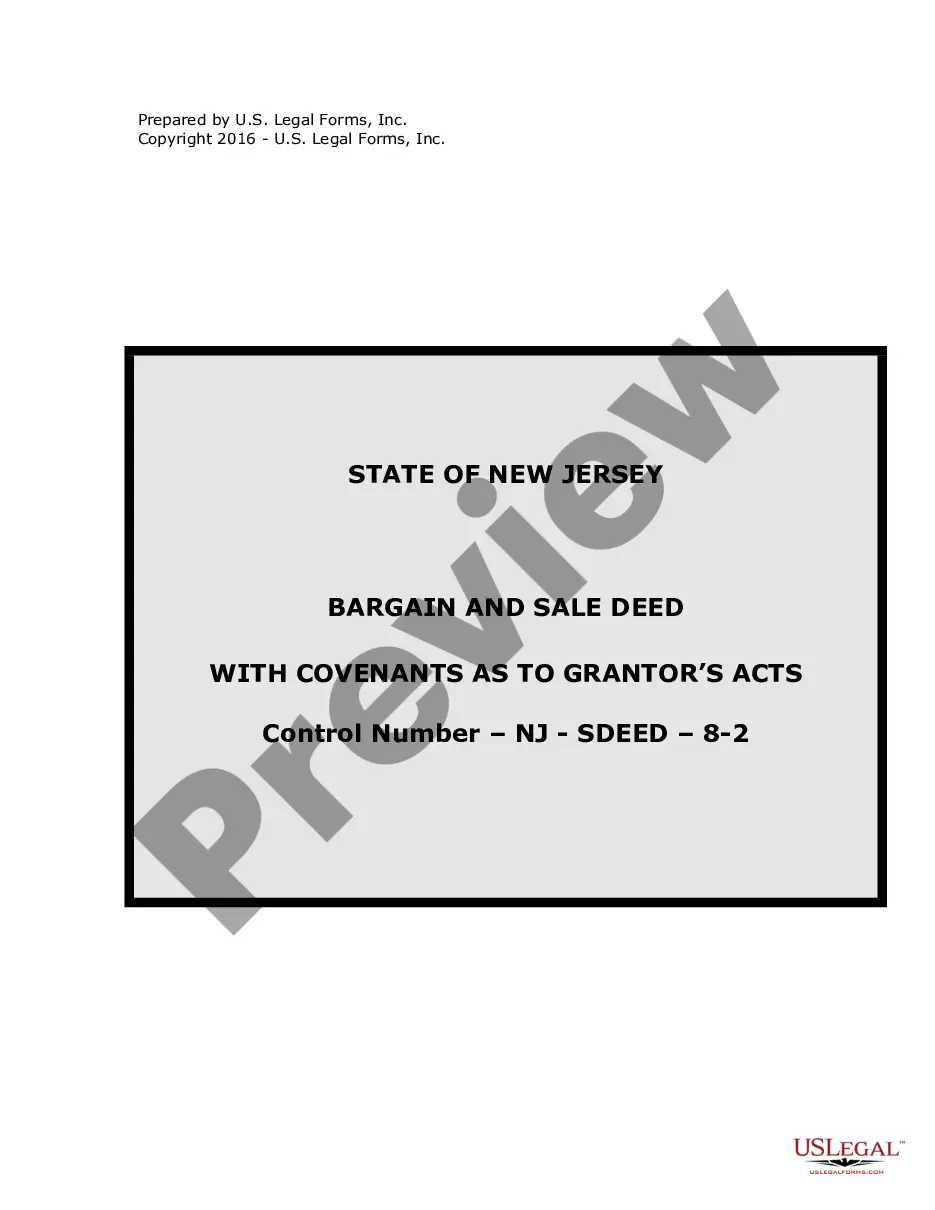
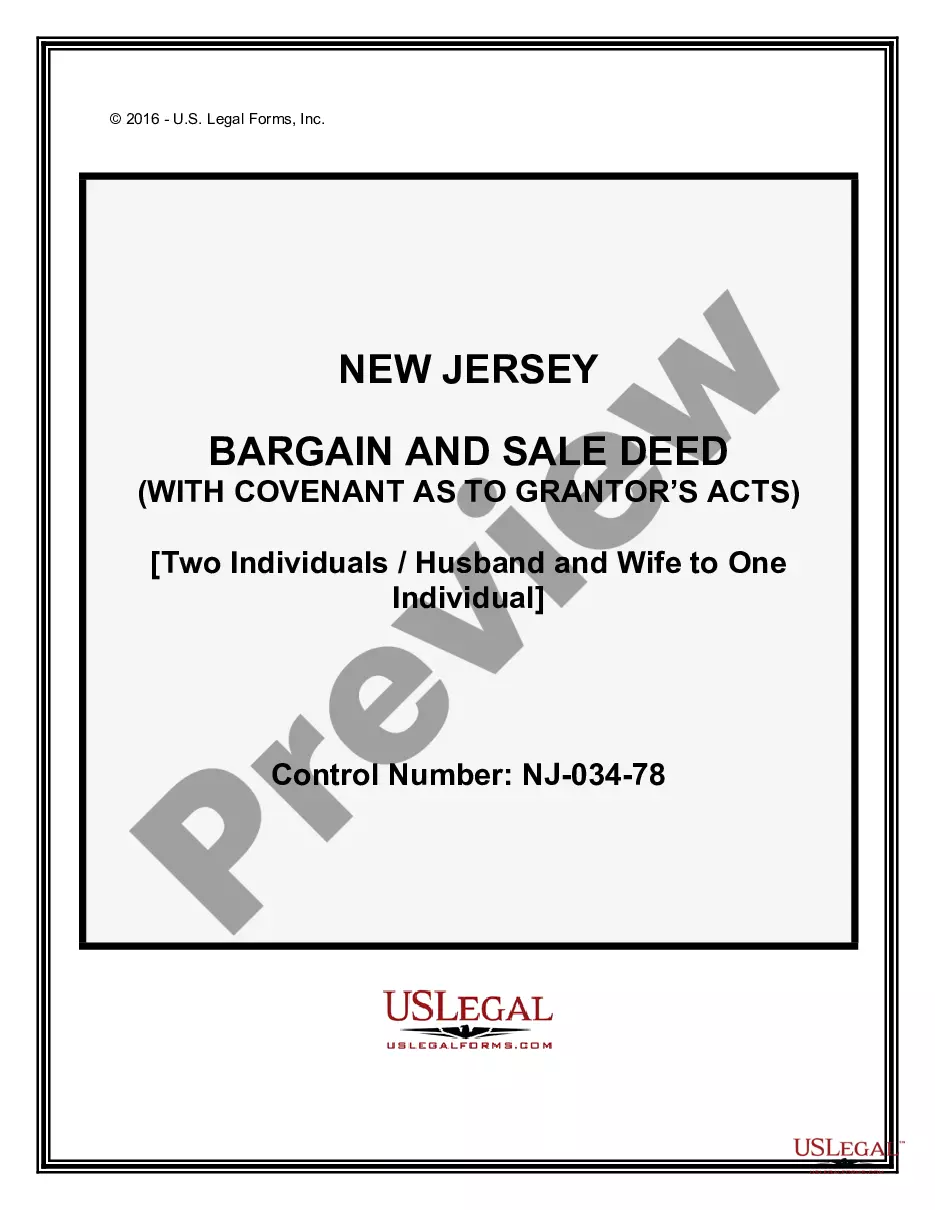
How to fill out New Jersey Bargain And Sale Deed - With Covenants As To Grantor's Acts?
Creating legal documents from the ground up can frequently be intimidating.
Certain situations may require extensive research and substantial financial investment.
If you’re searching for a simpler and more economical method of generating Nj Covenants Grantors Acts For Trust or any other documents without unnecessary obstacles, US Legal Forms is always available to you.
Our online repository of over 85,000 current legal documents covers nearly every facet of your financial, legal, and personal affairs. With just a few clicks, you can swiftly obtain state- and county-compliant templates that have been meticulously crafted for you by our legal experts.
Ensure that the template you select adheres to the guidelines and laws of your state and county. Choose the appropriate subscription plan to obtain the Nj Covenants Grantors Acts For Trust. Download the form, then complete, sign, and print it. US Legal Forms boasts an impeccable reputation and over 25 years of expertise. Join us today and simplify the document completion process!
- Utilize our platform whenever you need a dependable and trustworthy service through which you can conveniently find and download the Nj Covenants Grantors Acts For Trust.
- If you’re familiar with our services and have previously set up an account, simply Log In to your account, select the form, and download it right away or re-download it anytime later in the My documents section.
- No account? No problem. Registering takes minimal time and is easy to navigate through the library.
- However, before proceeding to download the Nj Covenants Grantors Acts For Trust, consider these suggestions.
- Examine the document preview and descriptions to ensure you have located the document you seek.
Form popularity
FAQ
Yes, the covenants in a deed are often considered the most important differences among various types of deeds. Each type of deed, whether a warranty deed or a quitclaim deed, varies significantly in the level of protection it offers. Understanding these nuances is vital for anyone dealing with NJ covenants grantors acts for trust, as the covenants determine the extent of legal assurances and buyer protections. Therefore, knowledge of these differences can help individuals make informed decisions when purchasing property.
Promises by Grantor. This promise is called a "covenant as to grantor's acts" (N.J.S.A. -6). This promise means that the Grantor has not allowed anyone else to obtain any legal rights which affect the property (such as by making a mortgage or allowing a judgment to be entered against the Grantor).
To create a trust that is irrevocable, the grantor must create a written trust agreement. He or she names a trustee to hold the property ing to the terms of the trust.
To create a trust that is irrevocable, the grantor must create a written trust agreement. He or she names a trustee to hold the property ing to the terms of the trust.
A bargain and sale deed with covenant against grantor's acts provides the grantee with a covenant that the grantor has not committed any act that would encumber title to the real property being conveyed. This is the most common type of deed used in New Jersey.
To make a living trust in New Jersey, you: Choose whether to make an individual or shared trust. Decide what property to include in the trust. Choose a successor trustee. Decide who will be the trust's beneficiaries?that is, who will get the trust property. Create the trust document.