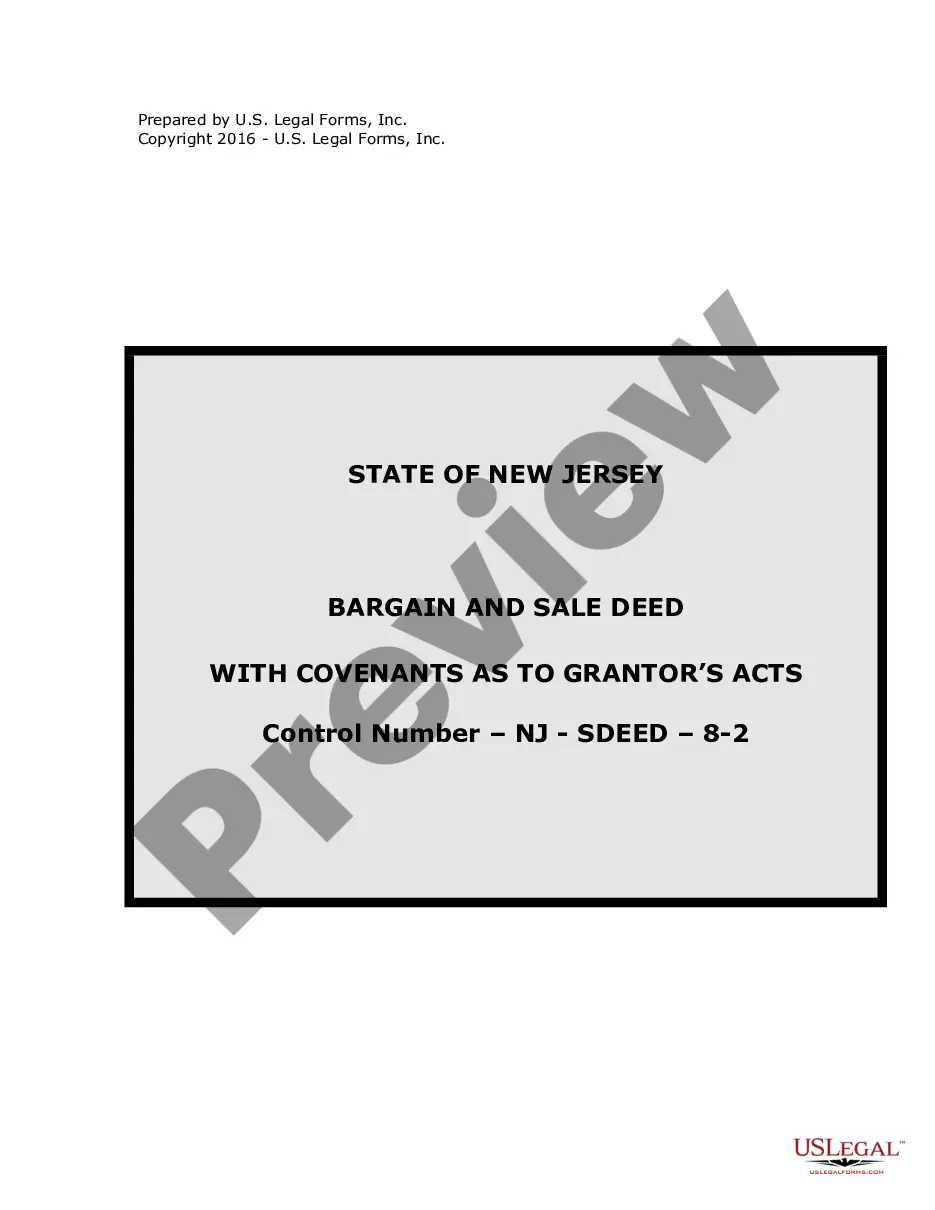
New Jersey Bargain and Sale Deed - With Covenants as to Grantor's Acts
What this document covers
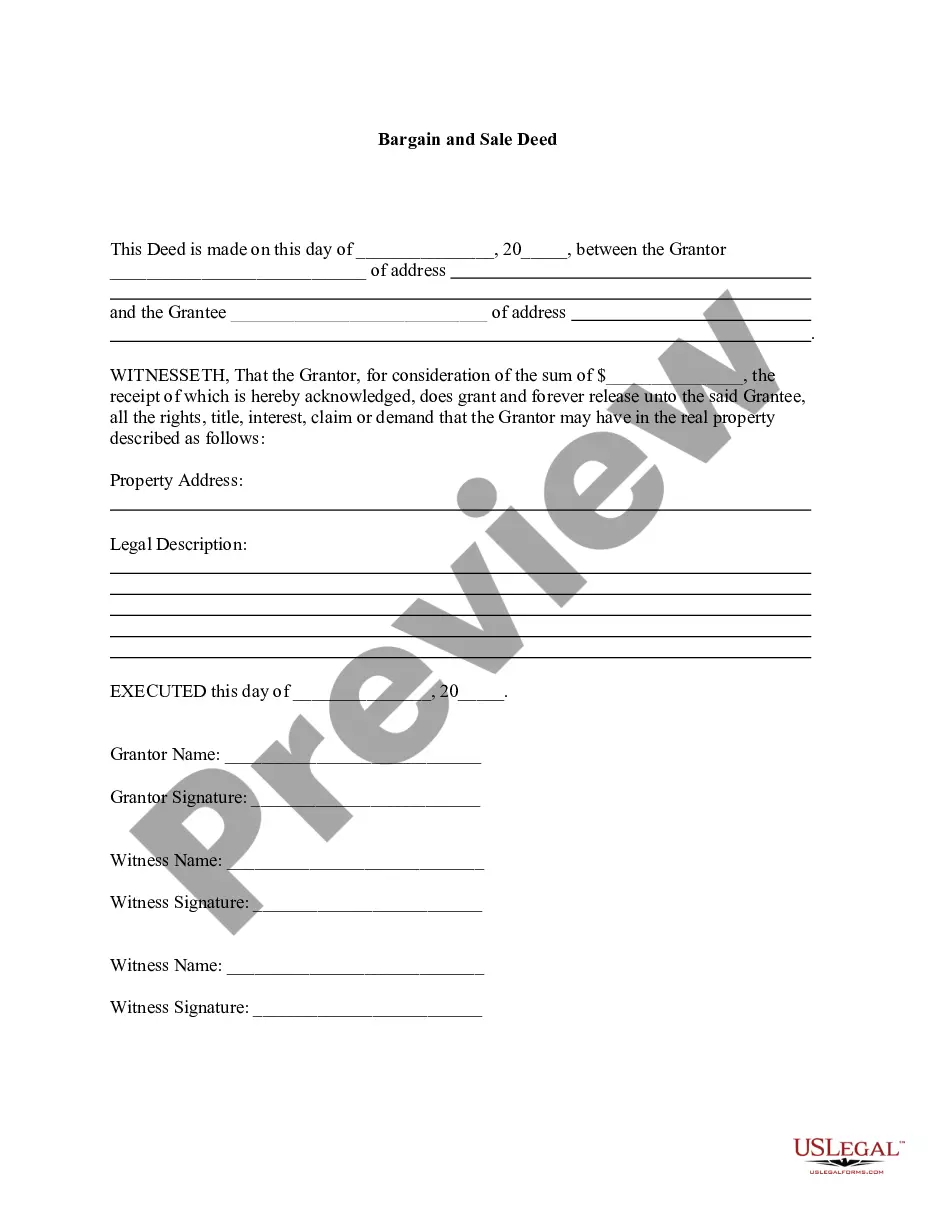
The Bargain and Sale Deed with Covenants as to Grantor's Acts is a legal document used to transfer property ownership from a grantor to a grantee. This type of deed provides specific covenants that assure the grantee of the grantor's actions regarding the property. Unlike other deeds, this form emphasizes the responsibilities of the grantor, providing the grantee with a degree of protection against claims related to the grantor's acts prior to the transfer.
Form components explained
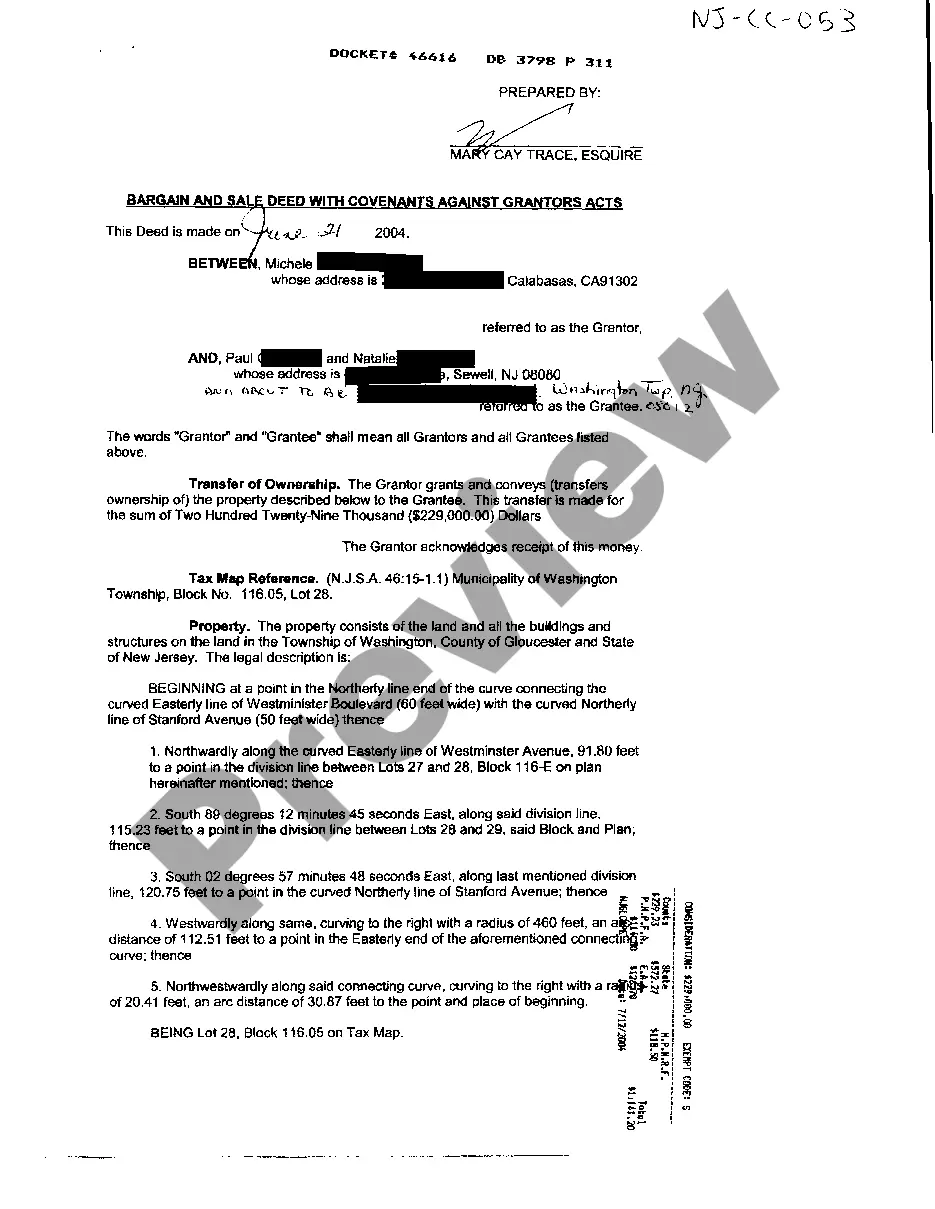
- Grantor and Grantee Identification: Names and addresses of the parties involved in the transaction.
- Property Description: Detailed description of the property being transferred.
- Covenants: Specific promises made by the grantor regarding their previous actions related to the property.
- Execution Date: The date on which the deed is signed by the grantor.


When this form is needed
This form should be used when a property owner (grantor) wishes to transfer ownership of residential or commercial real estate while assuring the new owner (grantee) about the grantor's past actions related to the property. Situations may include sales or transfers of real estate where covenants are necessary for the buyer's protection. This deed may be particularly useful when the property has been previously encumbered or when there are concerns about the grantor's title history.
Who this form is for
Individuals or entities involved in property transactions looking for assurance regarding the grantor's prior actions should consider using this form:
- Property owners looking to sell or transfer their property.
- Real estate agents or brokers facilitating property transactions.
- Buyers seeking protection against potential claims related to the grantor's actions.
How to prepare this document
- Identify the parties involved: Enter the names and addresses of the grantor and grantee.
- Describe the property: Provide a clear and detailed description of the property being transferred.
- Enter the execution date: Fill in the date the deed will be signed and executed.
- Review the covenants: Ensure that the specific obligations of the grantor are accurately reflected.
- Sign and date: Have the grantor sign the form, ensuring all required information has been entered before signing.
Is notarization required?
This form must be notarized to be legally valid. US Legal Forms provides secure online notarization powered by Notarize, allowing you to complete the process through a verified video call.
Get your form ready online
Our built-in tools help you complete, sign, share, and store your documents in one place.
Make edits, fill in missing information, and update formatting in US Legal Forms—just like you would in MS Word.
Download a copy, print it, send it by email, or mail it via USPS—whatever works best for your next step.
Sign and collect signatures with our SignNow integration. Send to multiple recipients, set reminders, and more. Go Premium to unlock E-Sign.
If this form requires notarization, complete it online through a secure video call—no need to meet a notary in person or wait for an appointment.
We protect your documents and personal data by following strict security and privacy standards.

Make edits, fill in missing information, and update formatting in US Legal Forms—just like you would in MS Word.

Download a copy, print it, send it by email, or mail it via USPS—whatever works best for your next step.

Sign and collect signatures with our SignNow integration. Send to multiple recipients, set reminders, and more. Go Premium to unlock E-Sign.

If this form requires notarization, complete it online through a secure video call—no need to meet a notary in person or wait for an appointment.

We protect your documents and personal data by following strict security and privacy standards.
Mistakes to watch out for
- Failing to provide complete and accurate property descriptions.
- Missing signatures or dates, which can render the deed invalid.
- Not clearly identifying both the grantor and grantee, leading to confusion over ownership.
Benefits of completing this form online
- Convenient access: Download and complete your form from anywhere at any time.
- Editability: Easily fill in fields and update information as needed before printing.
- Legal assurance: Forms are drafted by licensed attorneys, ensuring they meet legal standards.
Looking for another form?
Form popularity
FAQ
When done properly, a deed is recorded anywhere from two weeks to three months after closing.
Bargain and Sale With Covenants If a bargain and sale deed comes with expressly stated guarantees beyond simple ownership rights, it is known as a bargain and sale deed with covenants. The grantor of such a deed is guaranteeing the property against any possible claims expressly covered by the covenant.
In its most basic form, a bargain and sale deed includes a warranty that the grantor has title to the property but does not guarantee that the property is free of claims. This is known as a bargain and sale deed without covenants.
In New Jersey, the deed must be in English, identify the seller/buyer (grantor/grantee), name the person that prepared the deed, state the consideration (amount paid) for the transfer, contain a legal description of the property (a survey), include the signature of the grantor and be signed before a notary.
A bargain and sale with covenants against grantor's acts contains only one covenant or promise; that is, that the grantor has done nothing to encumber title with easements, liens, judgements and the like while owing the property.It does not run with the land. This type of deed is typically used in New Jersey.
Be in English or include an English translation (N.J.S.A. Identify the grantor / grantee (N.J.S.A. Be signed by the grantor with the name printed underneath (N.J.S.A. Include the name and mailing address of the grantee (N.J.S.A. Be notarized (N.J.S.A.
Bargain and sale deeds are generally used to transfer the grantor's entire interest in the property at the time of conveyance without any warranties of title.Unlike quitclaim deeds, bargain and sale deeds imply that the grantor holds an actual interest in the property being conveyed.
In New Jersey, the preparation of legal documents such as a deed is considered the practice of law which may only be undertaken by an Attorney at Law of the State of New Jersey. The only exception to that rule is that an individual representing him/herself may prepare his/her own documents.
Retrieve your original deed. Get the appropriate deed form. Draft the deed. Sign the deed before a notary. Record the deed with the county recorder. Obtain the new original deed.