Transfer On Death Deed North Dakota With Mortgage
Description

Get your form ready online
Our built-in tools help you complete, sign, share, and store your documents in one place.
Make edits, fill in missing information, and update formatting in US Legal Forms—just like you would in MS Word.
Download a copy, print it, send it by email, or mail it via USPS—whatever works best for your next step.
Sign and collect signatures with our SignNow integration. Send to multiple recipients, set reminders, and more. Go Premium to unlock E-Sign.
If this form requires notarization, complete it online through a secure video call—no need to meet a notary in person or wait for an appointment.
We protect your documents and personal data by following strict security and privacy standards.

Make edits, fill in missing information, and update formatting in US Legal Forms—just like you would in MS Word.

Download a copy, print it, send it by email, or mail it via USPS—whatever works best for your next step.

Sign and collect signatures with our SignNow integration. Send to multiple recipients, set reminders, and more. Go Premium to unlock E-Sign.

If this form requires notarization, complete it online through a secure video call—no need to meet a notary in person or wait for an appointment.

We protect your documents and personal data by following strict security and privacy standards.
Looking for another form?
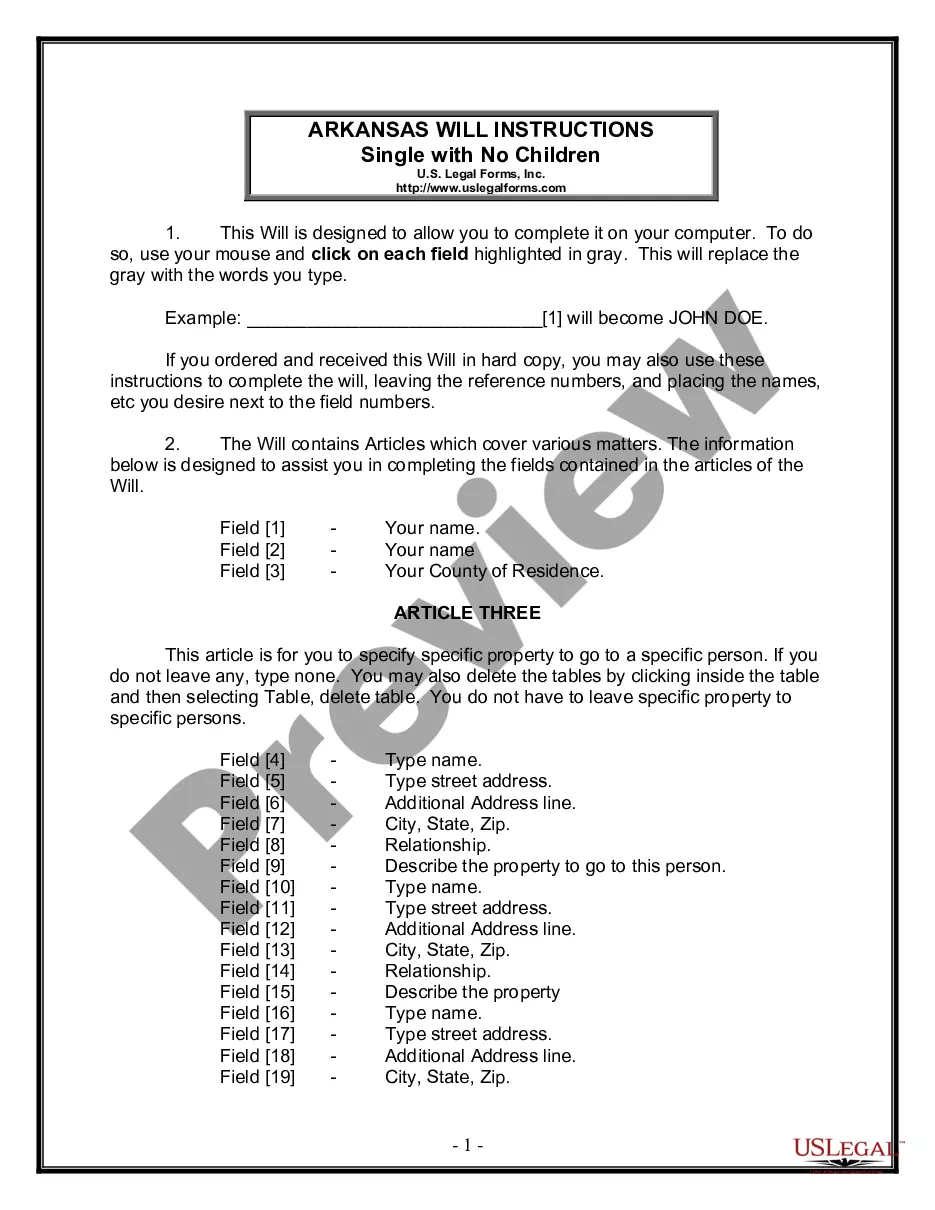


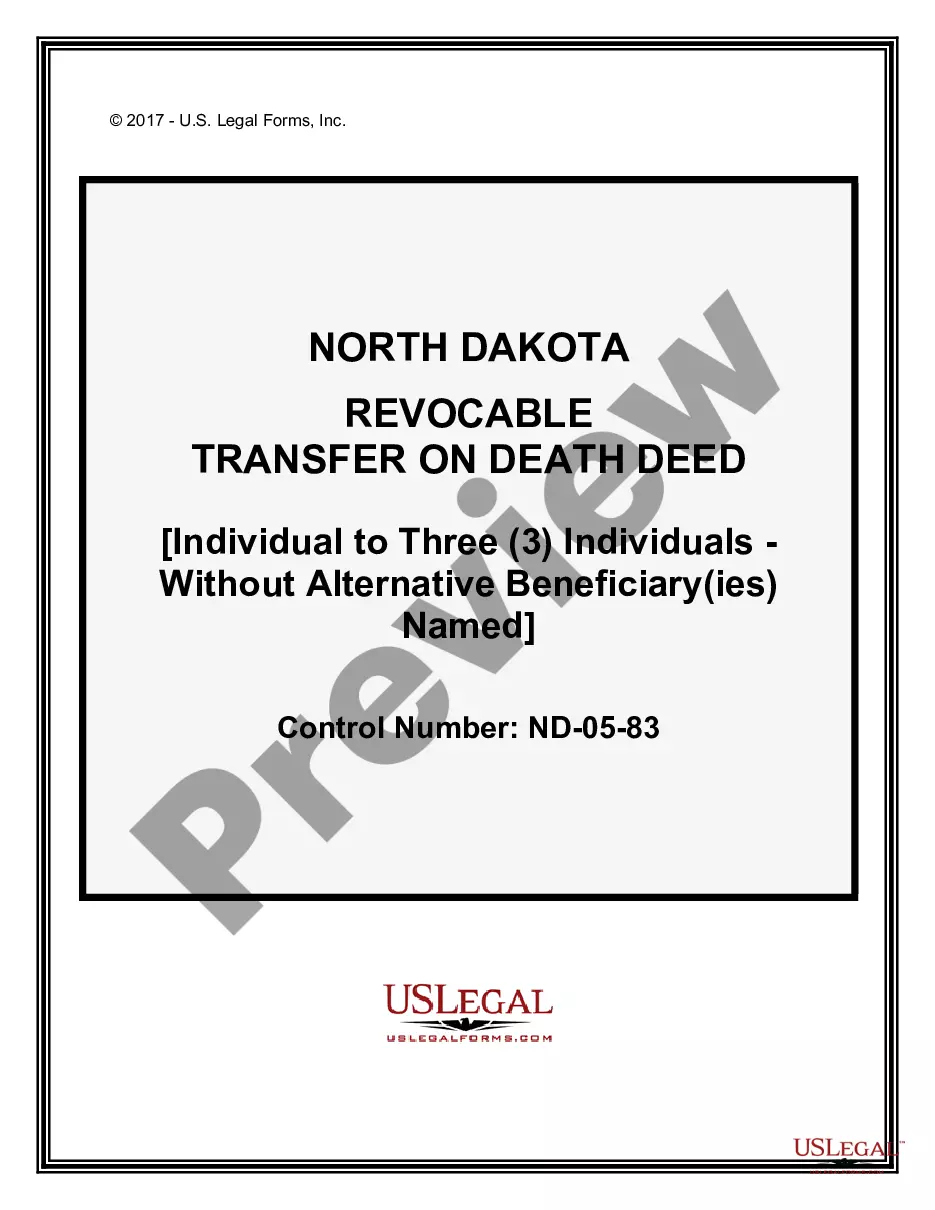
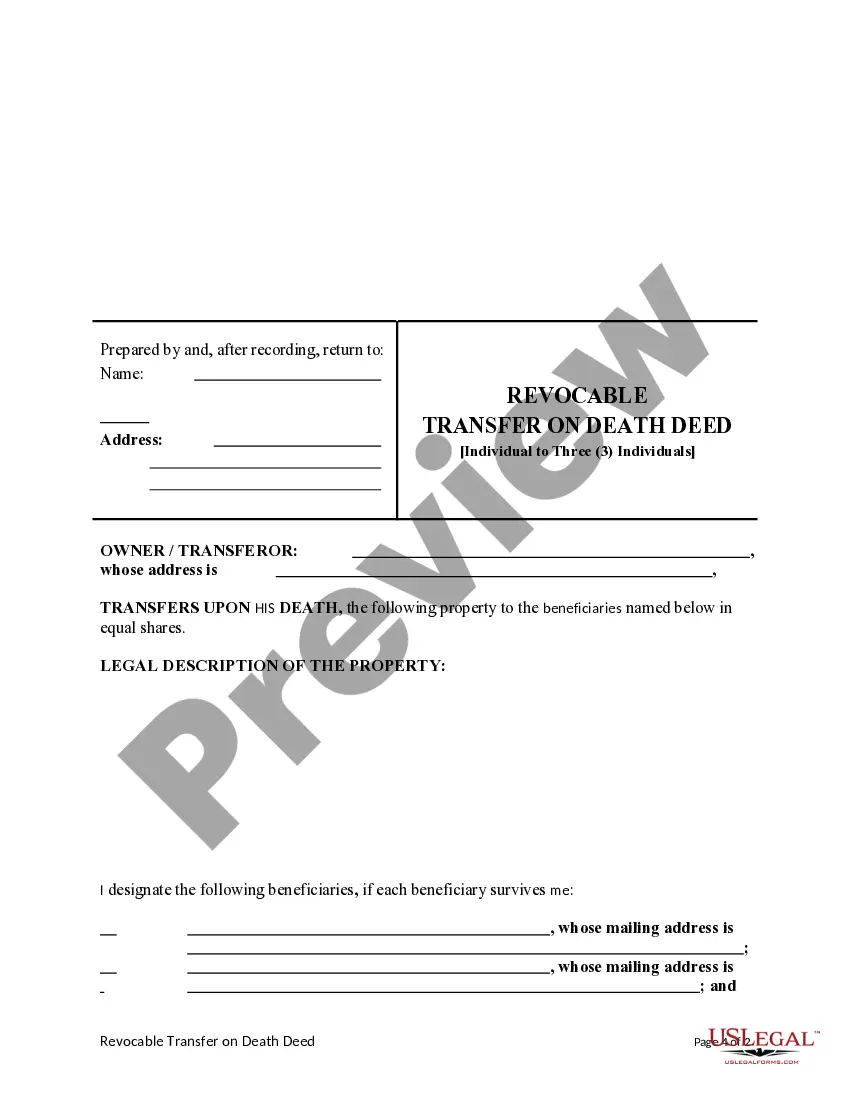
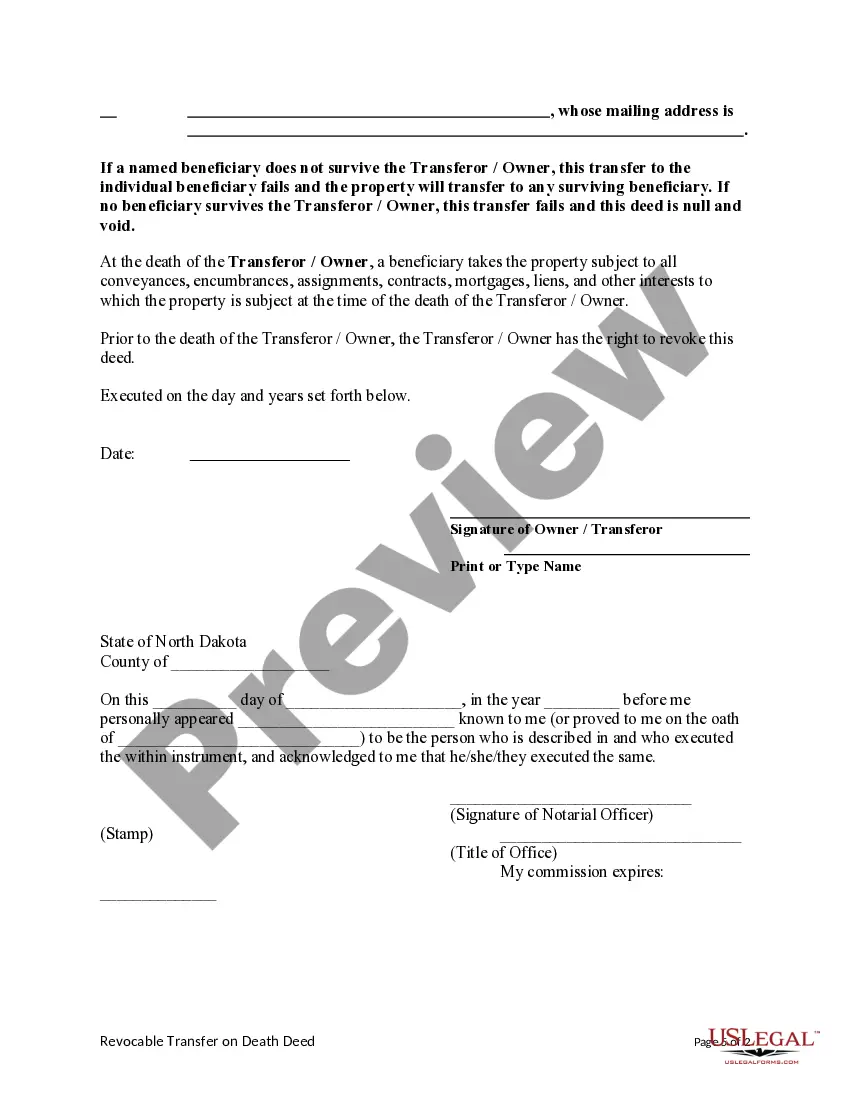
How to fill out North Dakota Transfer On Death Deed Or TOD - Beneficiary Deed From An Individual To Three (3) Individuals?
What is the most reliable service to acquire the Transfer On Death Deed North Dakota With Mortgage and other updated versions of legal documents.
US Legal Forms is the answer! It has the largest collection of legal forms for any purpose.
If you haven't created an account with us yet, here are the steps to follow.
- Each template is professionally drafted and verified for adherence to federal and state laws.
- They are organized by region and state of use, making it easy to locate the necessary document.
- Experienced users of the platform simply need to Log In, verify their subscription status, and click the Download button adjacent to the Transfer On Death Deed North Dakota With Mortgage to obtain it.
- Once saved, the document is accessible for future reference within the My documents section of your profile.
Form popularity
FAQ
The 3-year rule for a deceased estate refers to the period during which the IRS may examine the estate’s tax returns for any discrepancies. In North Dakota, if you have used a Transfer on Death deed, it's essential to understand how the property assets relate to this timeframe, especially in connection with any outstanding mortgages. Staying compliant with tax regulations helps prevent complications for your heirs. Engaging with resources like US Legal Forms can provide guidance on managing these requirements effectively.
The best way to leave a house to someone is through a Transfer on Death deed in North Dakota. This deed enables you to transfer ownership to a designated beneficiary without subjecting the property to probate. It's important to ensure that the beneficiary understands any mortgage obligations tied to the property. By using this deed, you make the process simpler and provide a clear path for asset transfer.
To avoid probate in North Dakota, you can consider using a Transfer on Death deed for property ownership. This deed allows you to designate a beneficiary to receive your property after your death, thereby bypassing the probate process. Ensure the deed is properly executed and recorded to make it valid. This strategy works even if there is a mortgage on the property, providing an efficient way to transfer your assets.
In North Dakota, there is no minimum value for an estate to be subject to probate. If the deceased has assets needing distribution, the probate process is required. However, utilizing a transfer on death deed in North Dakota with a mortgage can help you avoid probate for specific properties. By using this deed, you ensure a smoother transition of ownership and potentially save on probate costs.
Yes, several methods can help you avoid probate in North Dakota. One effective strategy is using a transfer on death deed in North Dakota with a mortgage, which allows you to directly transfer your property to a beneficiary upon your death. Additionally, you can consider joint ownership, life insurance policies, and certain trust types. Each option offers unique advantages, so it’s wise to explore what fits your situation best.
Probate is triggered in North Dakota when a person passes away and leaves behind assets that are not jointly owned or do not have a designated beneficiary. If the deceased has a will, it must be presented for probate to distribute estate assets according to their wishes. On the other hand, if you utilize a transfer on death deed in North Dakota with a mortgage, you can prevent that property from entering probate, simplifying the transfer process for your heirs.
In North Dakota, a will typically must go through probate to validate and distribute the deceased’s assets. However, if you use a transfer on death deed in North Dakota with a mortgage, you can bypass probate for that asset. This means your property can go directly to your beneficiaries without the need for a lengthy legal process. It's important to ensure that your transfer on death deed is properly executed to avoid complications.
Yes, North Dakota allows the use of a transfer on death deed. This deed enables property owners to transfer their real estate to designated beneficiaries upon their death, avoiding the lengthy probate process. It's an effective way to ensure that your assets pass directly to your heirs. If you're navigating the complexities of a transfer on death deed in North Dakota with a mortgage, platforms like uslegalforms can provide valuable guidance and resources.
To avoid probate in North Dakota, options include using Transfer on Death Deeds, establishing revocable living trusts, and holding properties in joint tenancy. These methods allow for the direct transfer of assets to beneficiaries without going through the time-consuming probate process. A Transfer on Death Deed in North Dakota with a mortgage is particularly effective, allowing property to pass to chosen heirs easily. Exploring these options will help secure your estate planning goals.
To transfer a deed in North Dakota, you typically need to complete a property deed transfer form and file it with the county recorder's office. If you choose a Transfer on Death Deed in North Dakota with a mortgage, the process involves designating beneficiaries on the form before signing it. This legal method ensures that recipients are clearly noted, facilitating a straightforward transfer upon your passing. Always consult a legal expert to ensure compliance with local laws.
