Louisiana Cc Civil Forfeiture

Description

Get your form ready online
Our built-in tools help you complete, sign, share, and store your documents in one place.
Make edits, fill in missing information, and update formatting in US Legal Forms—just like you would in MS Word.
Download a copy, print it, send it by email, or mail it via USPS—whatever works best for your next step.
Sign and collect signatures with our SignNow integration. Send to multiple recipients, set reminders, and more. Go Premium to unlock E-Sign.
If this form requires notarization, complete it online through a secure video call—no need to meet a notary in person or wait for an appointment.
We protect your documents and personal data by following strict security and privacy standards.

Make edits, fill in missing information, and update formatting in US Legal Forms—just like you would in MS Word.

Download a copy, print it, send it by email, or mail it via USPS—whatever works best for your next step.

Sign and collect signatures with our SignNow integration. Send to multiple recipients, set reminders, and more. Go Premium to unlock E-Sign.

If this form requires notarization, complete it online through a secure video call—no need to meet a notary in person or wait for an appointment.

We protect your documents and personal data by following strict security and privacy standards.
Looking for another form?
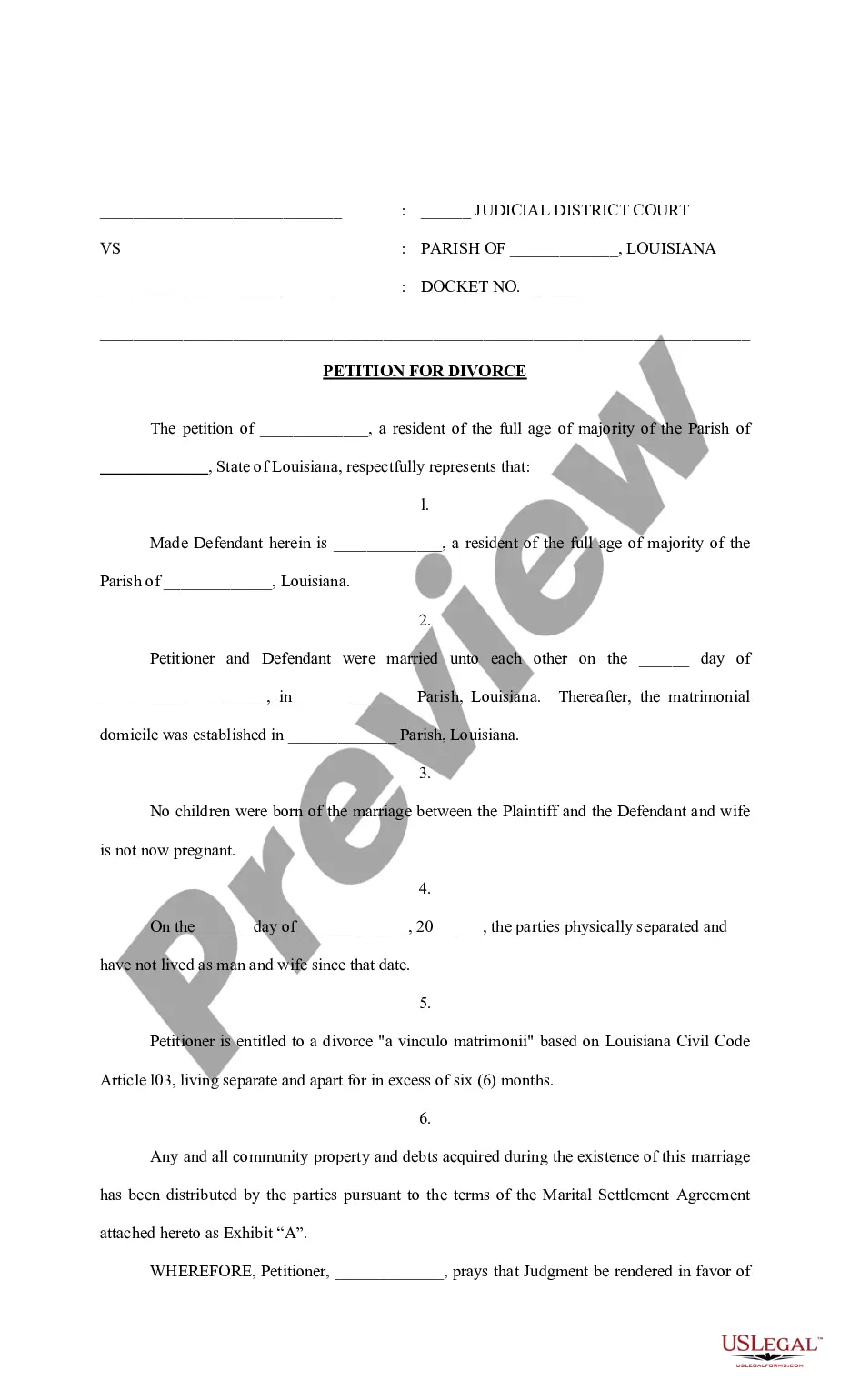
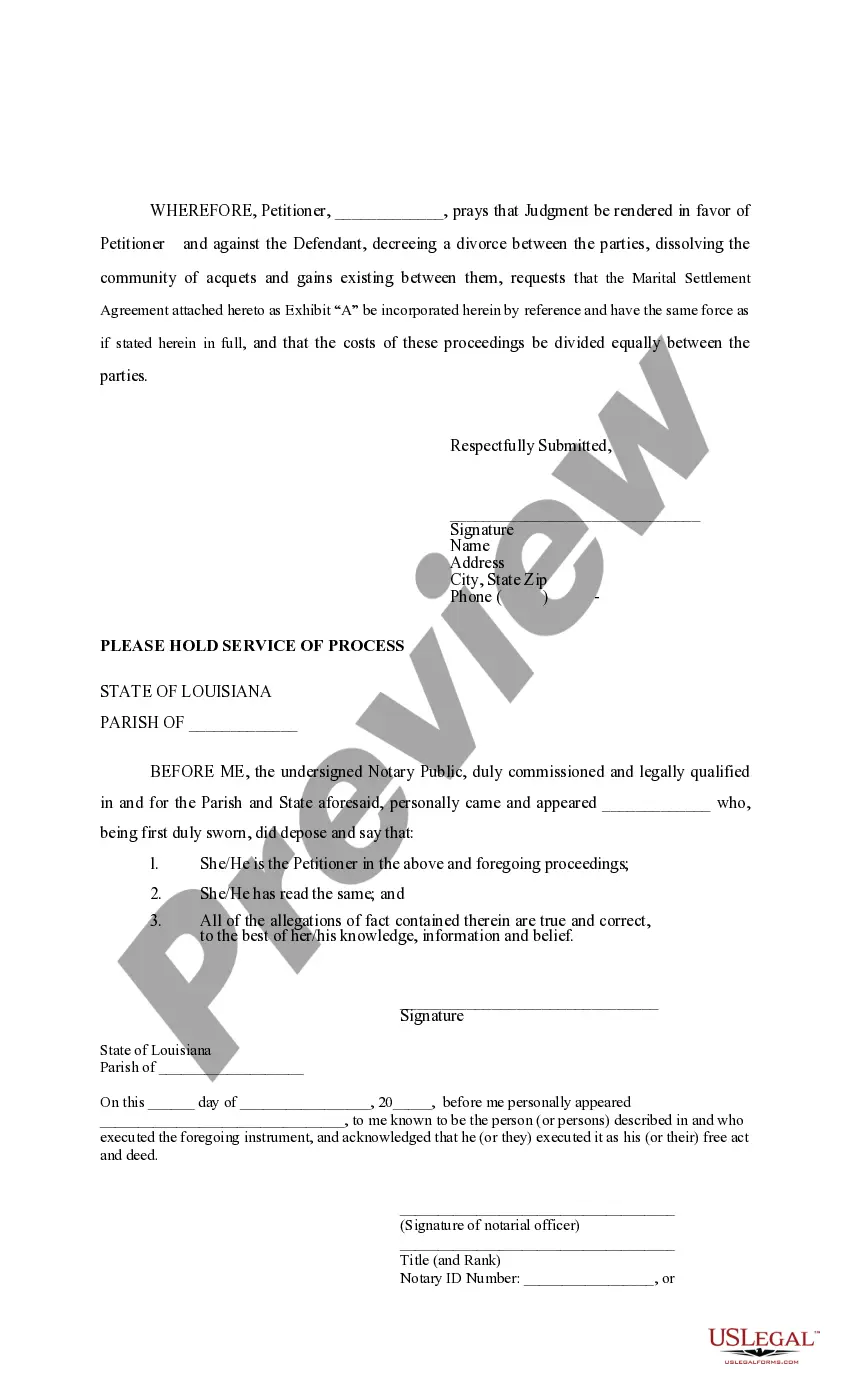
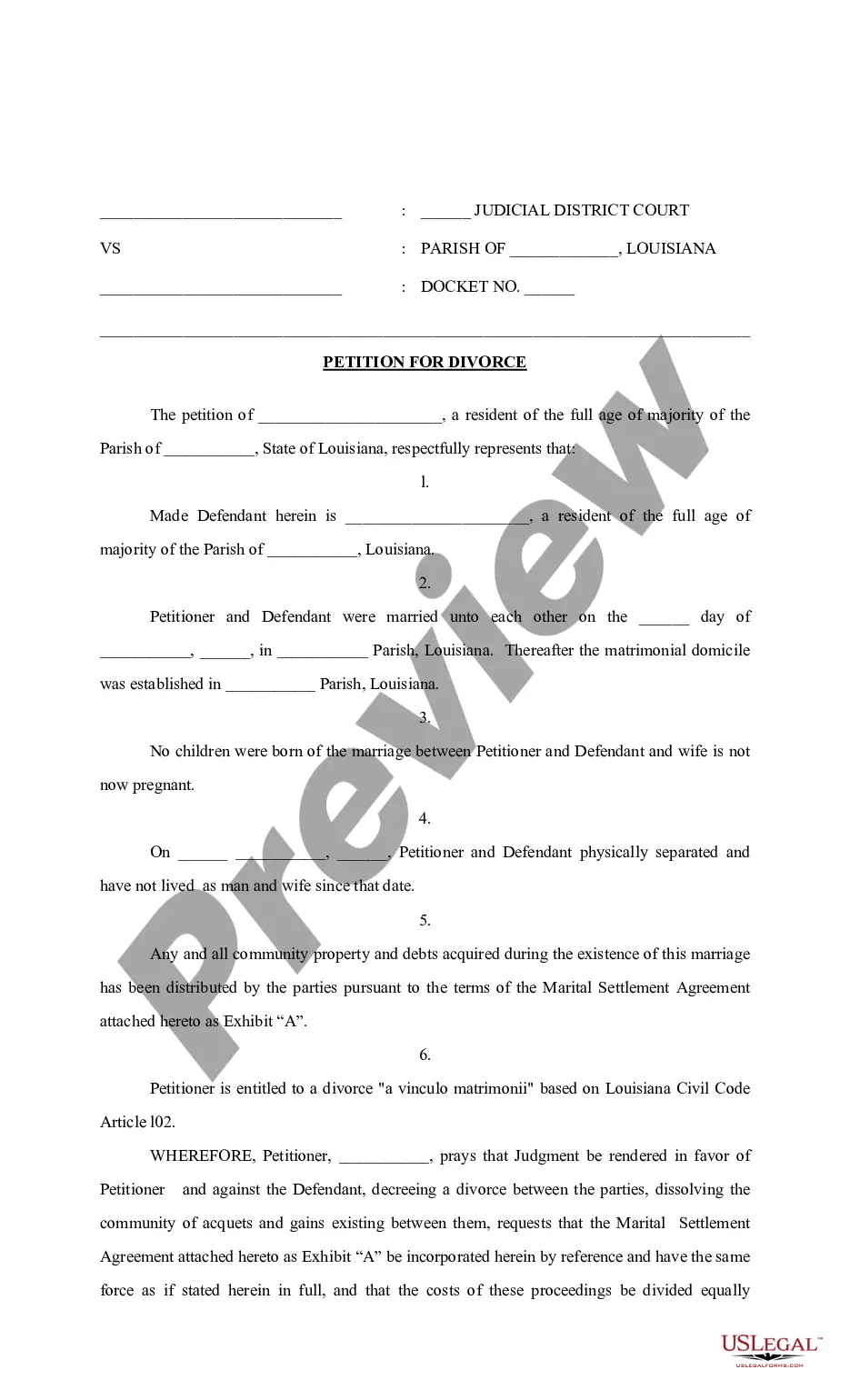
How to fill out Louisiana Petition For Divorce - La. CC Art. 103 - No Children?
The Louisiana Cc Civil Forfeiture presented on this page is a reusable legal form created by expert attorneys in accordance with federal and state laws and regulations.
For over 25 years, US Legal Forms has supplied individuals, organizations, and legal practitioners with over 85,000 validated, state-specific templates for various business and personal needs. It’s the fastest, most uncomplicated, and most dependable method to acquire the documentation you require, as the service ensures the utmost level of data protection and anti-malware safeguards.
Choose the format you prefer for your Louisiana Cc Civil Forfeiture (PDF, DOCX, RTF) and download the template onto your device. Print the form to fill it out manually. Alternatively, utilize an online multifunctional PDF editor to quickly and accurately complete and sign your form with a legally-binding electronic signature. Access the My documents section in your profile to redownload any previously saved documents. Enroll in US Legal Forms to have verified legal templates for every scenario in life readily available.
- Search for the document you require and examine it.
- Browse through the sample you found and preview it or review the form description to confirm it meets your requirements. If it doesn’t, use the search bar to find the correct one. Click Buy Now once you have identified the template you need.
- Register and Log In.
- Select the pricing option that fits you and create an account. Use PayPal or a credit card for a swift payment. If you already possess an account, Log In and verify your subscription to continue.
- Acquire the fillable template.
Form popularity
FAQ
To file a civil lawsuit in Louisiana, you must first prepare your complaint, which outlines your case and the relief you seek. Next, you will file this complaint with the appropriate court, along with any required filing fees. It is essential to serve the defendant with a copy of the complaint and a summons. For those dealing with Louisiana cc civil forfeiture cases, seeking guidance from platforms like US Legal Forms can streamline the process and ensure all necessary documents are correctly prepared.
The 90 day rule in Louisiana mandates that law enforcement must file a forfeiture action within 90 days of seizing property under Louisiana cc civil forfeiture laws. If they fail to do so, the property must be returned to the owner. This rule protects individuals by ensuring timely legal proceedings and preventing prolonged uncertainty. If you face a forfeiture situation, consider using the resources available through US Legal Forms to guide you through the process.
In Louisiana, there are three main types of forfeiture cases: administrative forfeiture, judicial forfeiture, and criminal forfeiture. Administrative forfeiture occurs when law enforcement seizes property and the owner does not contest it. Judicial forfeiture requires a court hearing, allowing the property owner to challenge the seizure. Understanding these types is crucial when navigating Louisiana cc civil forfeiture, as each has different processes and implications.
The 65% law in Louisiana refers to a provision that mandates a certain percentage of seized assets to be allocated for law enforcement funding. Under this law, 65% of the proceeds from civil asset forfeiture go to local law enforcement agencies, which can create incentives for aggressive forfeiture actions. Understanding this law is vital for individuals involved in Louisiana cc civil forfeiture cases, as it sheds light on the motivations behind asset seizures. Consulting with legal professionals can help clarify how this law may affect your specific situation.
The forfeiture law in Louisiana allows the government to seize property believed to be linked to criminal activity. This process is governed by both state and federal laws, which provide specific guidelines on how seizures occur and how property owners can contest them. Understanding these laws is essential for anyone facing potential forfeiture, as they can impact your rights and options. For assistance navigating Louisiana cc civil forfeiture, consider using resources like uslegalforms to access legal documents and guidance.
In Louisiana, the burden of proof in civil asset forfeiture cases lies with the government. They must establish that the property is connected to illegal activity by a preponderance of the evidence. This standard is lower than the criminal threshold, making it crucial for individuals facing forfeiture to present a robust defense. Engaging with legal experts knowledgeable in Louisiana cc civil forfeiture can help you counter the government's claims effectively.
Winning a civil forfeiture case in Louisiana requires a solid understanding of the law and effective legal strategies. First, gather evidence to show ownership of the property and its legitimate use. Additionally, consider hiring an attorney experienced in Louisiana cc civil forfeiture cases, as they can navigate the legal system and present your case compellingly. Remember, demonstrating a strong defense can significantly improve your chances of reclaiming your assets.