Louisiana Territory
Description
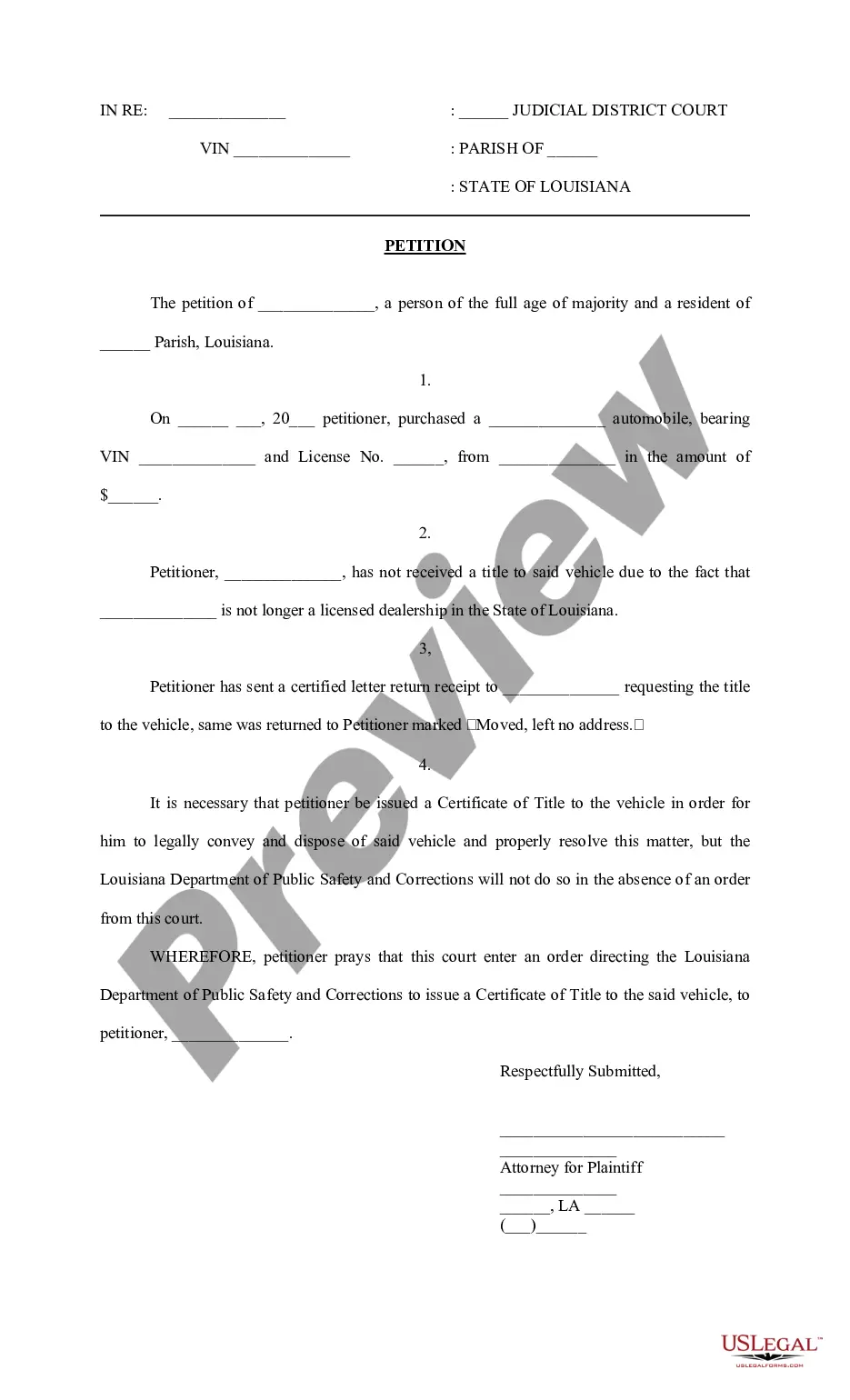
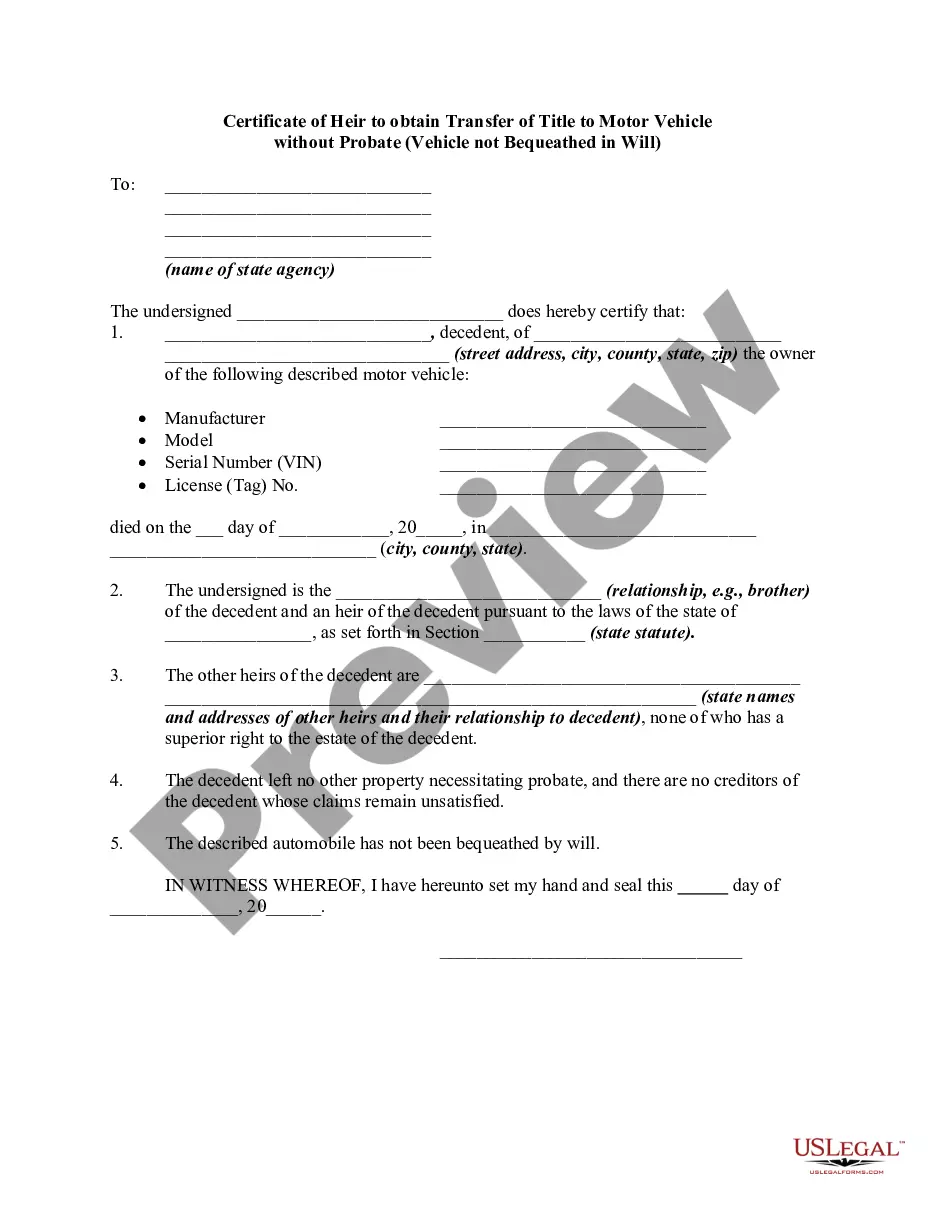
Get your form ready online
Our built-in tools help you complete, sign, share, and store your documents in one place.
Make edits, fill in missing information, and update formatting in US Legal Forms—just like you would in MS Word.
Download a copy, print it, send it by email, or mail it via USPS—whatever works best for your next step.
Sign and collect signatures with our SignNow integration. Send to multiple recipients, set reminders, and more. Go Premium to unlock E-Sign.
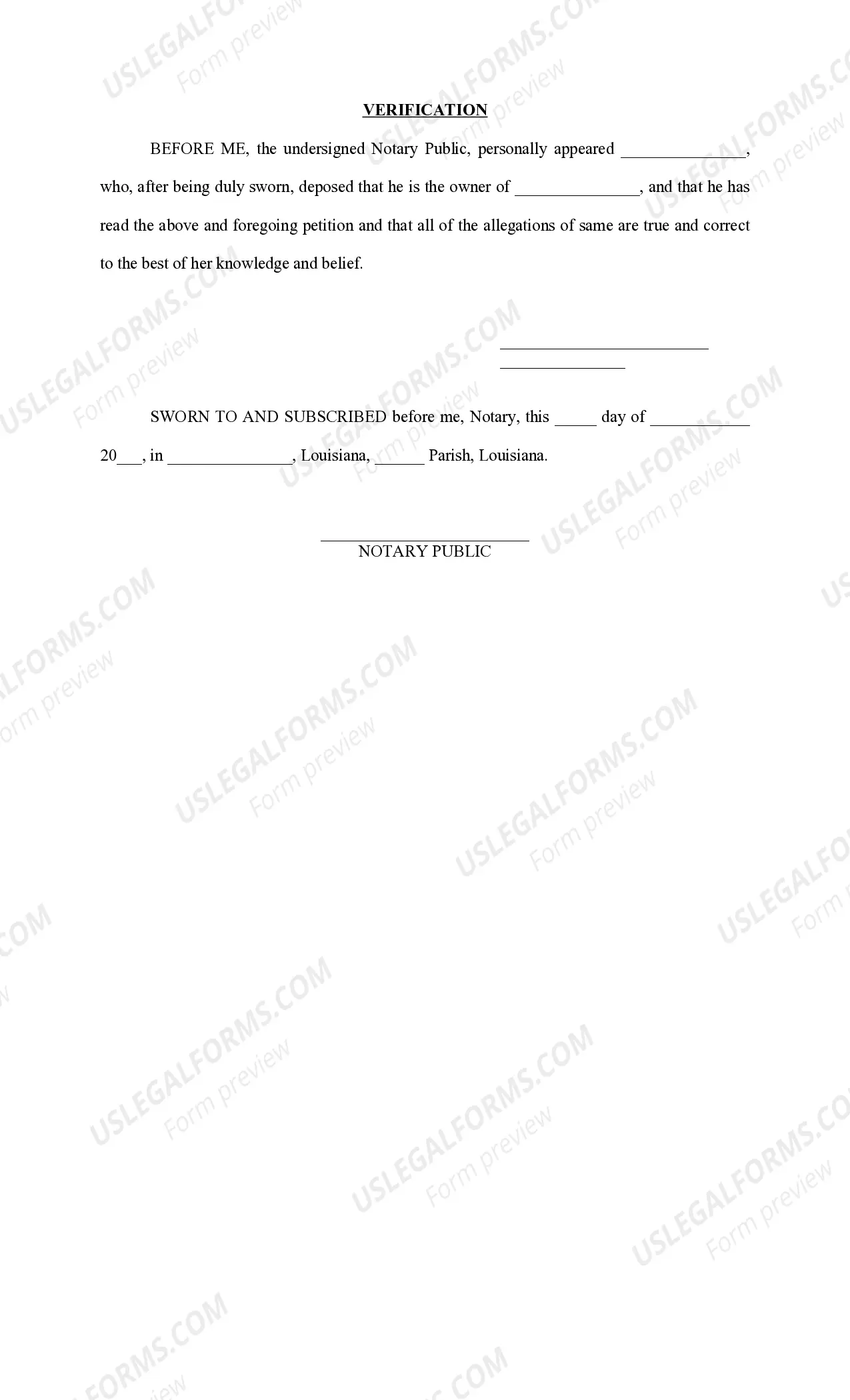
If this form requires notarization, complete it online through a secure video call—no need to meet a notary in person or wait for an appointment.
We protect your documents and personal data by following strict security and privacy standards.

Make edits, fill in missing information, and update formatting in US Legal Forms—just like you would in MS Word.

Download a copy, print it, send it by email, or mail it via USPS—whatever works best for your next step.

Sign and collect signatures with our SignNow integration. Send to multiple recipients, set reminders, and more. Go Premium to unlock E-Sign.

If this form requires notarization, complete it online through a secure video call—no need to meet a notary in person or wait for an appointment.

We protect your documents and personal data by following strict security and privacy standards.
Looking for another form?
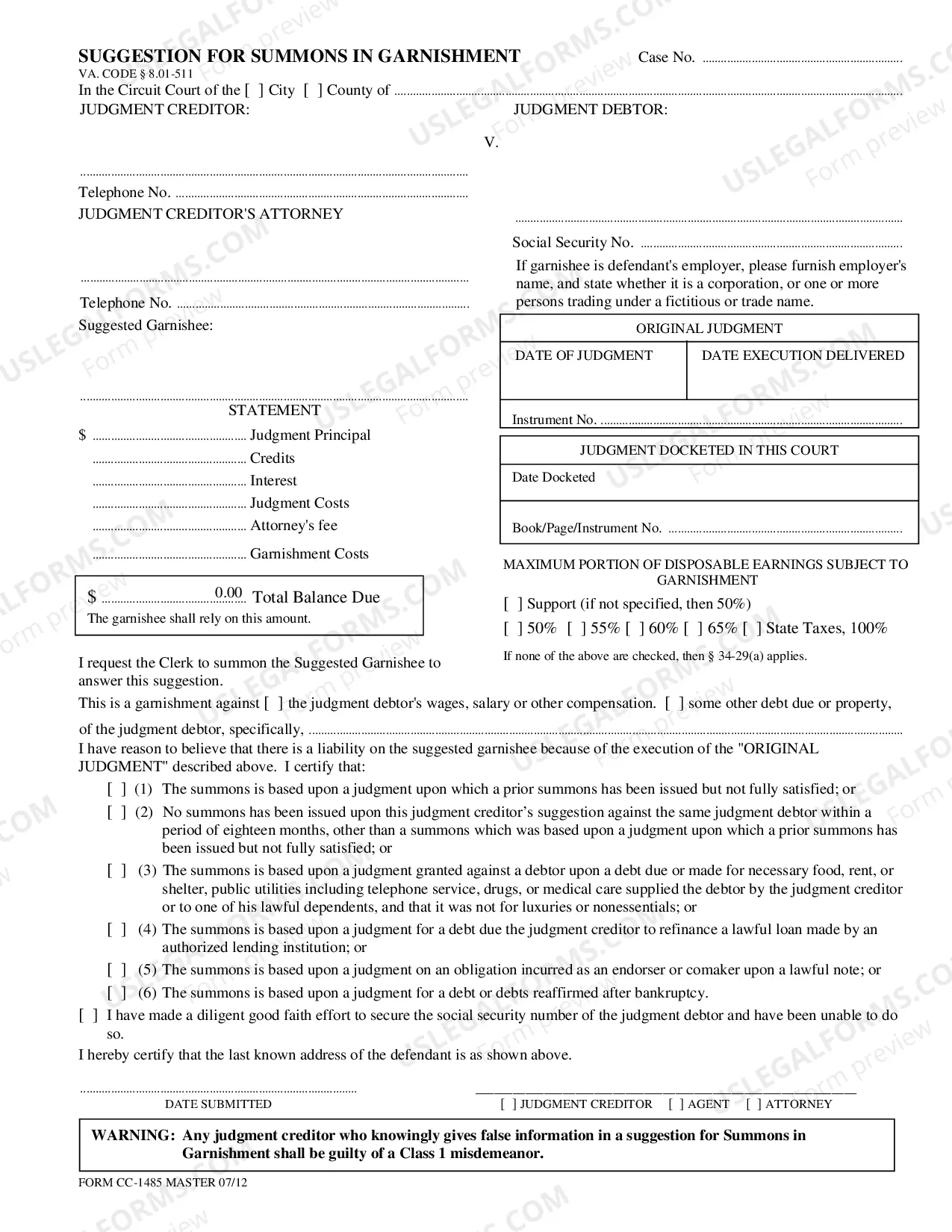
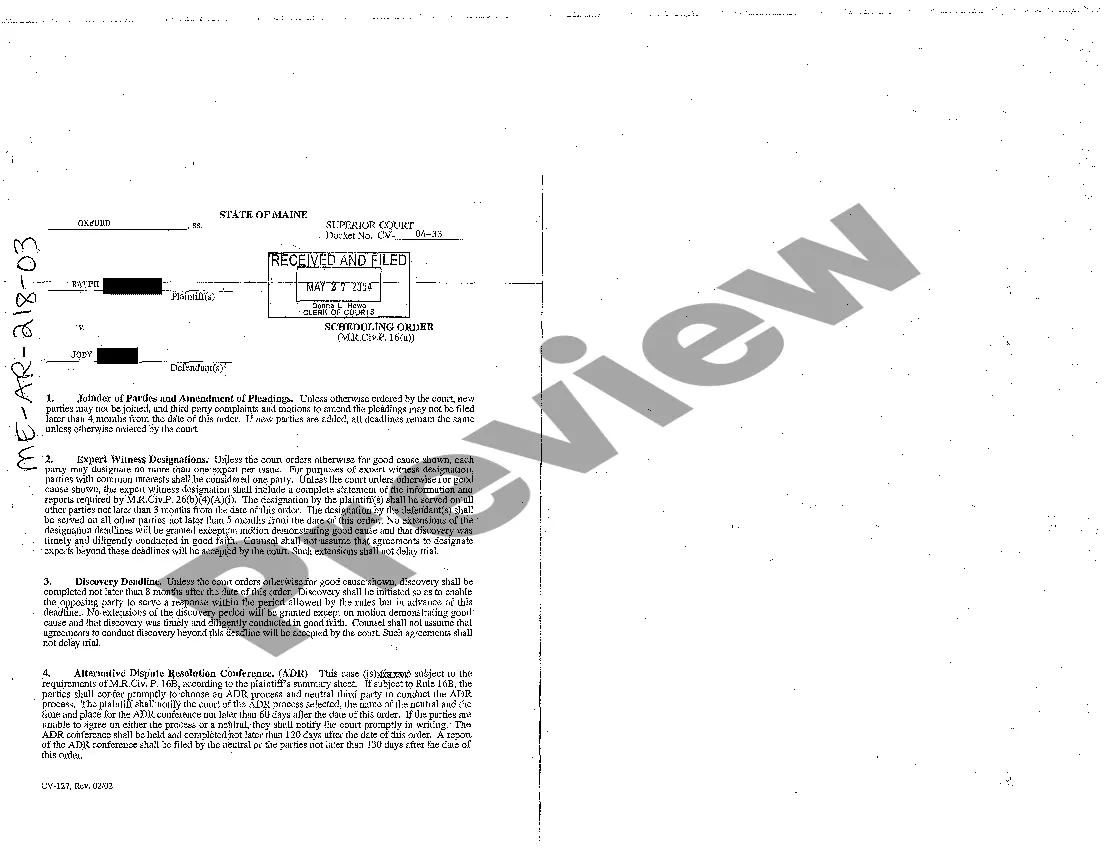



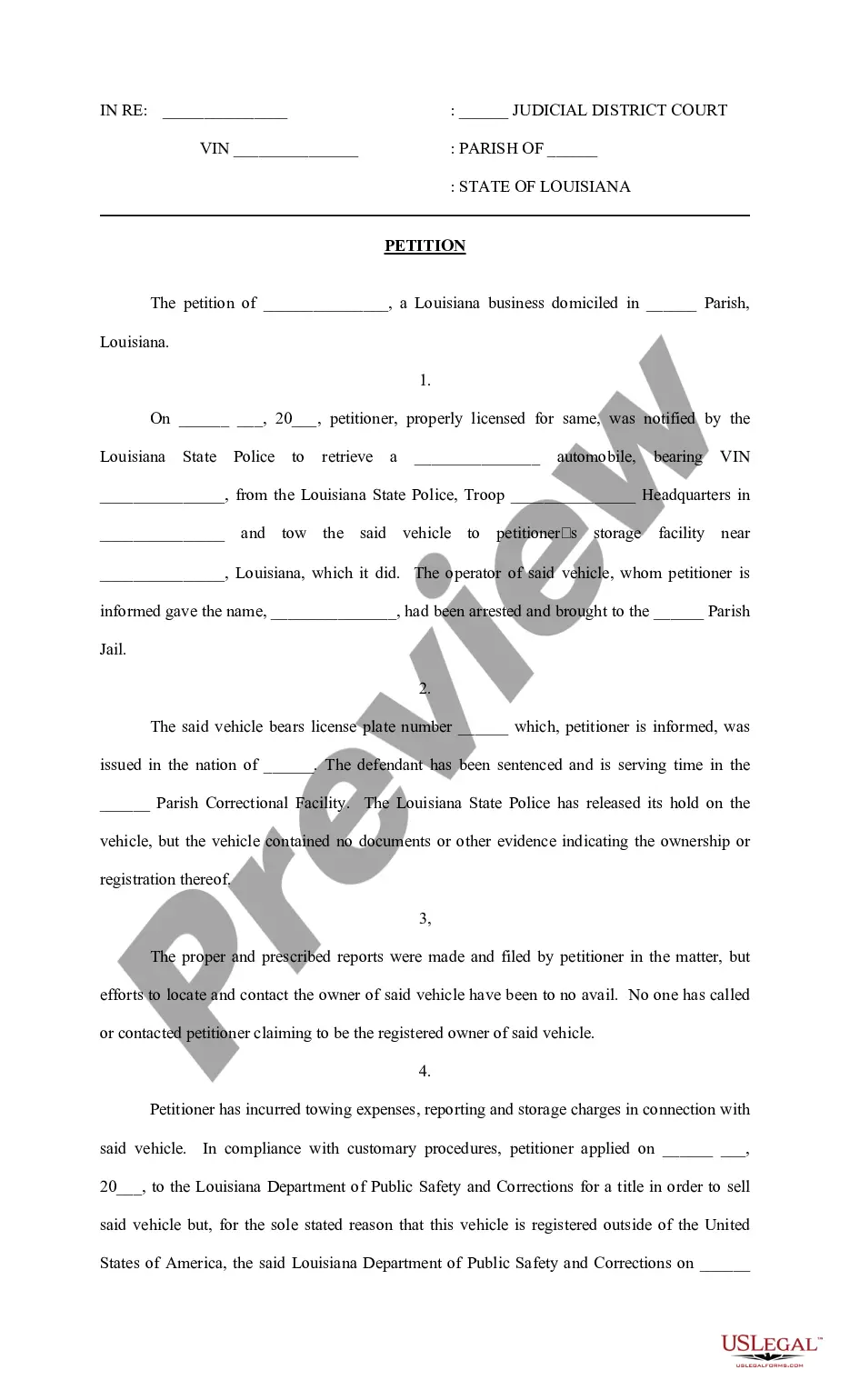
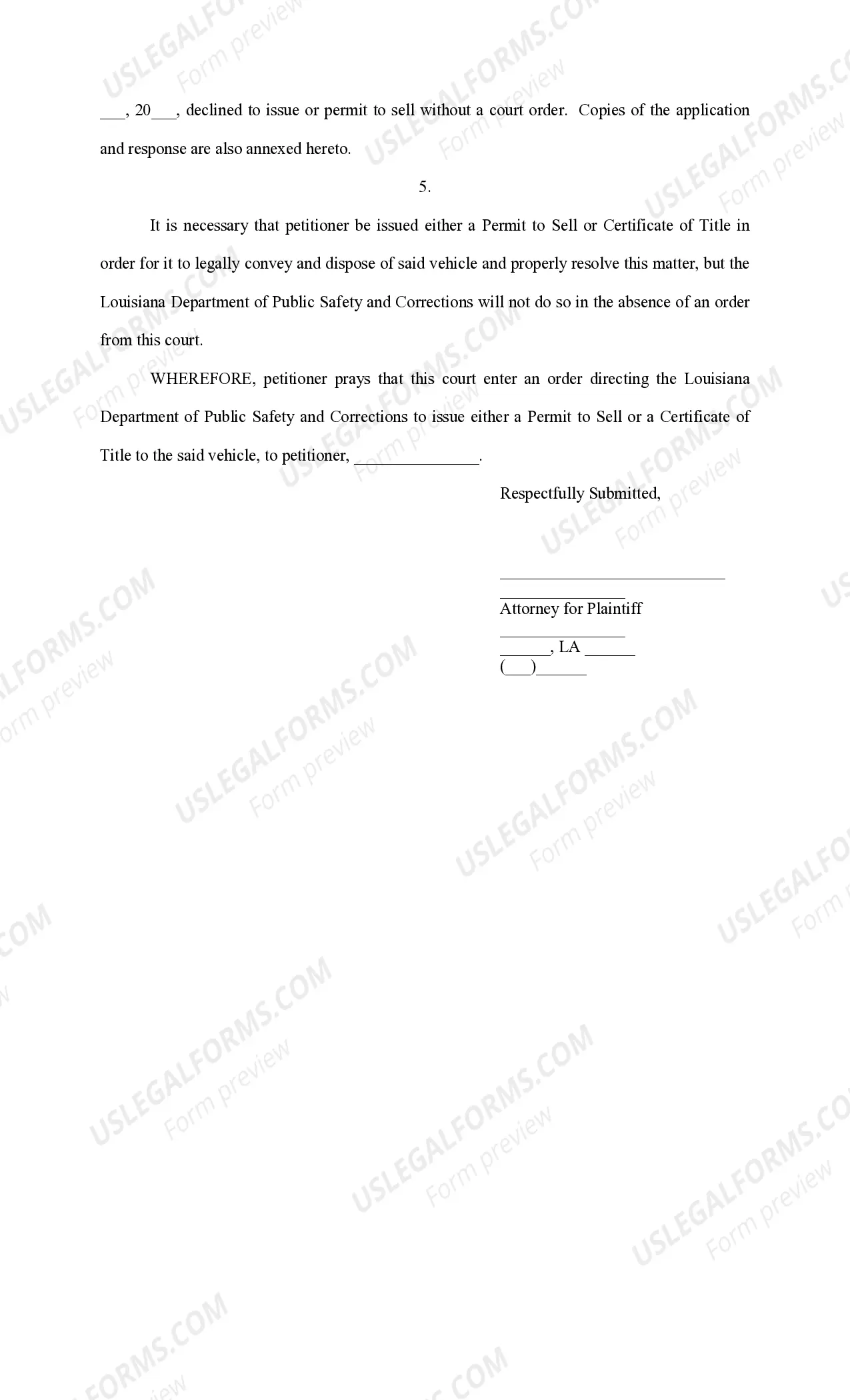
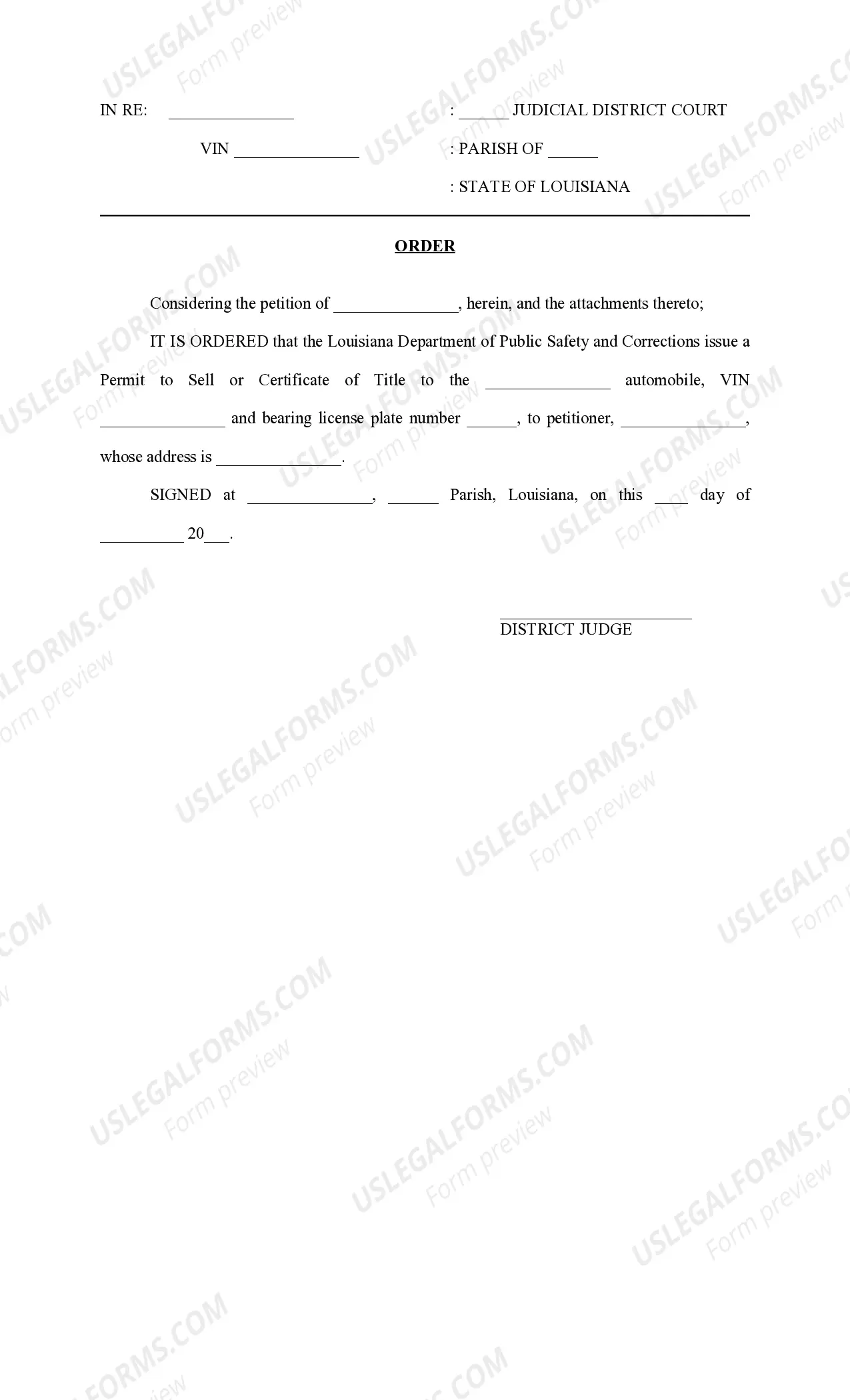
How to fill out Louisiana Petition For Issuance Of Permit To Sell Or Certificate Of Title Of Vehicle?
- Log in to your US Legal Forms account if you're a returning user. Ensure your subscription is active; if not, renew it based on your selected payment plan.
- For first-time users, start by previewing the available forms. Check the description carefully to make sure it meets your needs and complies with local Louisiana regulations.
- If the form does not meet your requirements, utilize the Search tab to find another template that suits your needs better.
- Once you find the correct form, click on 'Buy Now' and select the subscription plan that works for you. Account registration will be necessary to access the full resources.
- Complete your purchase by entering your payment details, either with a credit card or through your PayPal account.
- Finally, download your chosen legal form and save it to your device. You can also find it later in the 'My Forms' section of your US Legal Forms account.
By leveraging US Legal Forms, users can benefit from an extensive collection of over 85,000 legal templates, ensuring that they have access to more options than competitors offer at similar costs.
Whether a user is a legal professional or an individual, US Legal Forms empowers everyone to create accurate and legally sound documents quickly. Get started by accessing the platform today!
Form popularity
FAQ
The boundaries of the state of Louisiana are defined by its borders with Texas to the west, Arkansas to the north, and Mississippi to the east. The southern border is formed by the Gulf of Mexico, which provides a unique geographical setting for the state. These boundaries have shaped Louisiana's culture, economy, and environmental landscape. The state's location within the Louisiana Territory further highlights its historical significance.
France sold the Louisiana Territory primarily due to the need for funds and to divert attention away from conflicts brewing in Europe. Controlling such a large land area proved challenging, especially amidst rising tensions with Great Britain and other powers. By selling, France aimed to strengthen its position while allowing the US to expand its influence across North America. This historical move laid the groundwork for future development and statehood across the region.
France sold the Louisiana Territory to the United States primarily due to financial pressures and the challenges of managing vast territories. In 1803, Napoleon Bonaparte recognized that retaining control over the territory would be difficult, especially with increasing tensions in Europe. Selling it provided a substantial sum to finance military campaigns. This sale not only impacted the US but reshaped the continent's future, opening up opportunities for settlement and governance.
The Louisiana Territory originally encompassed several regions that eventually became seven states: Louisiana, Arkansas, Missouri, Iowa, North Dakota, South Dakota, and parts of Montana. This vast area stretched from the Gulf of Mexico to Canada, showcasing the significant expansion of the United States. Understanding the historical context of the Louisiana Territory can provide insights into present-day geography. For those interested in legal matters related to these states, USLegalForms offers resources to navigate various legal situations.
Anyone earning income above the filing threshold in the Louisiana territory must file a tax return. This includes full-time residents and non-residents earning income from Louisiana sources. Timely filing is crucial to avoid penalties, so understanding your requirements is essential. US Legal Forms can simplify this process and ensure you meet your filing obligations.
Not everyone in the Louisiana territory is required to file a tax return. Individuals whose income falls below the set threshold, as well as certain categories of individuals such as minors with limited earnings or the elderly with specific incomes, may be exempt. If you are unsure about your status, consulting US Legal Forms can provide clarity and necessary documentation.
The Louisiana territory does not tax certain types of income, such as Social Security benefits, unemployment benefits, and certain pension incomes. Additionally, interest from municipal bonds is typically exempt from state taxation. Understanding these exemptions can help you effectively manage your tax obligations. Resources like US Legal Forms can assist you in navigating these details.
Residents of the Louisiana territory must file state taxes if they earn income above a certain threshold. This includes wages, salaries, and other forms of income. Additionally, non-residents who earn income from Louisiana sources also need to file. If you are unsure about your filing requirements, consider using US Legal Forms for guidance.
The land that makes up the Louisiana territory has a rich history shaped by European colonization. Initially, French explorers claimed the region in the early 18th century, establishing settlements and trade routes. Over time, ownership shifted as other nations, including Spain and later the United States, acquired parts of this vast area. This complex history lays the groundwork for understanding the current status of the Louisiana territory.