Personal Representative For A Deceased Person
Description
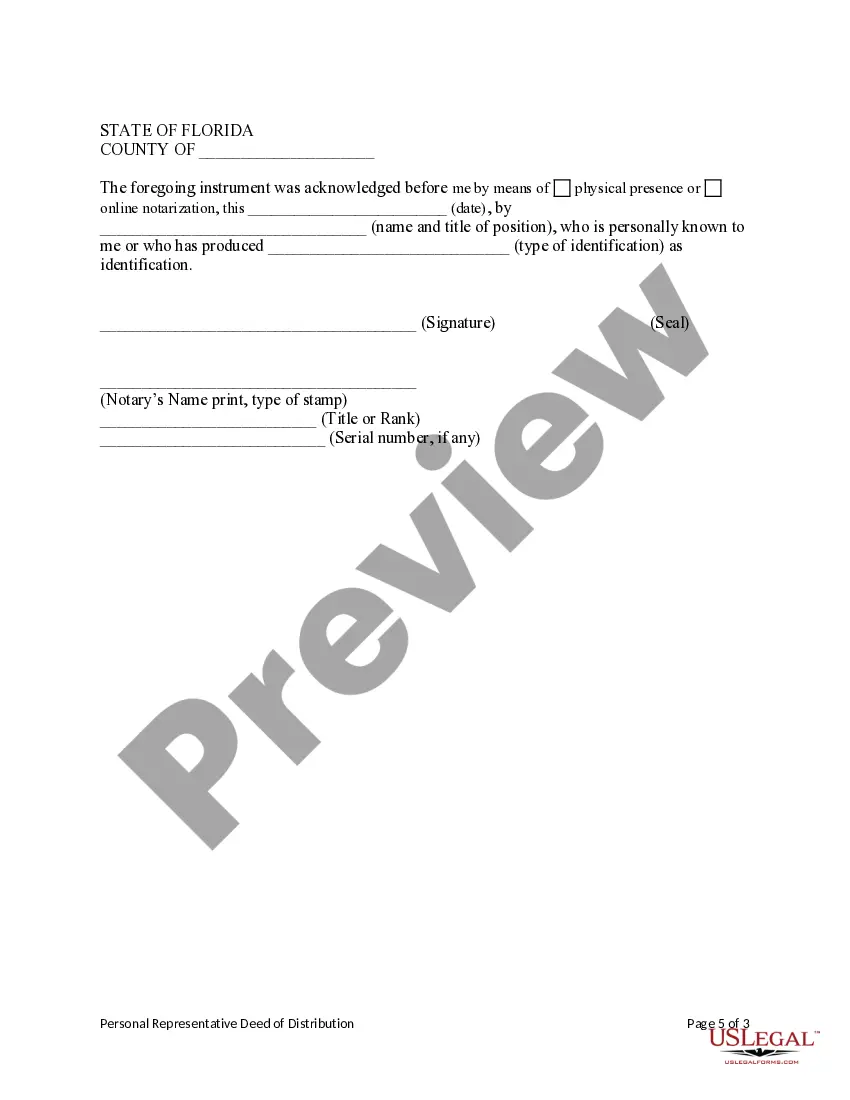
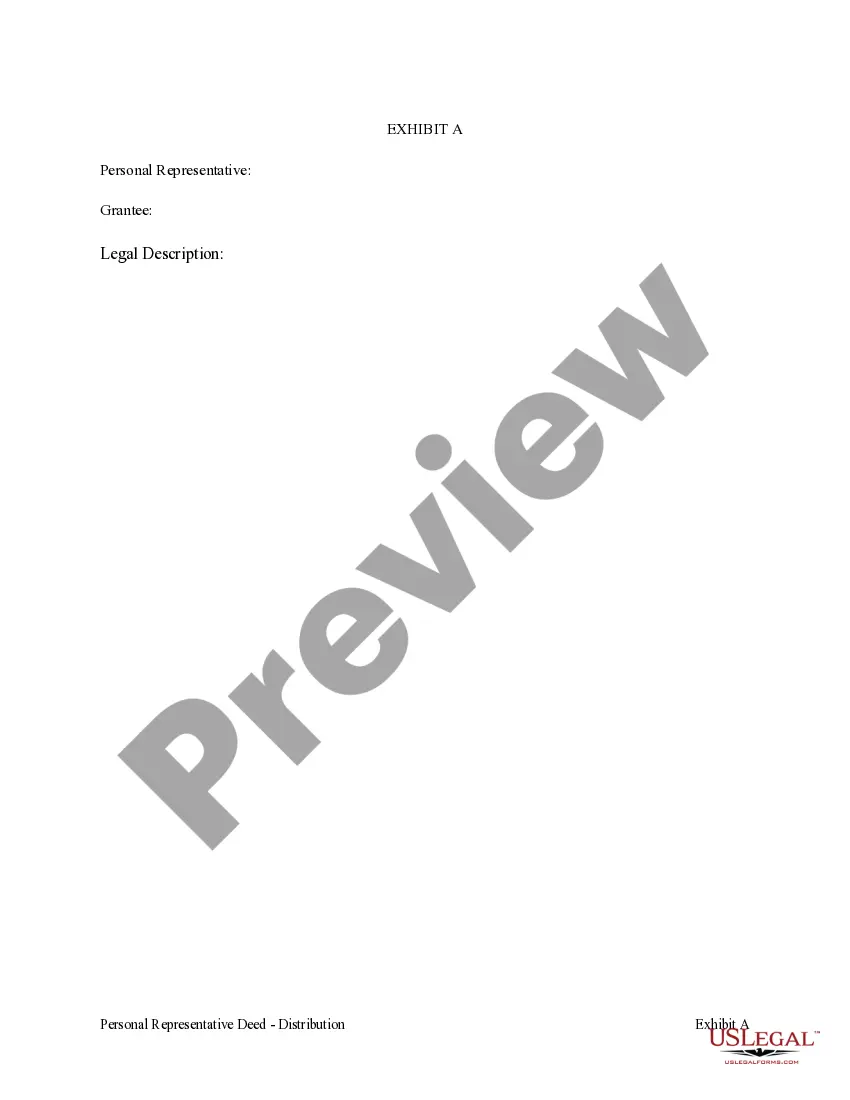

Get your form ready online
Our built-in tools help you complete, sign, share, and store your documents in one place.
Make edits, fill in missing information, and update formatting in US Legal Forms—just like you would in MS Word.
Download a copy, print it, send it by email, or mail it via USPS—whatever works best for your next step.
Sign and collect signatures with our SignNow integration. Send to multiple recipients, set reminders, and more. Go Premium to unlock E-Sign.
If this form requires notarization, complete it online through a secure video call—no need to meet a notary in person or wait for an appointment.
We protect your documents and personal data by following strict security and privacy standards.

Make edits, fill in missing information, and update formatting in US Legal Forms—just like you would in MS Word.

Download a copy, print it, send it by email, or mail it via USPS—whatever works best for your next step.

Sign and collect signatures with our SignNow integration. Send to multiple recipients, set reminders, and more. Go Premium to unlock E-Sign.

If this form requires notarization, complete it online through a secure video call—no need to meet a notary in person or wait for an appointment.

We protect your documents and personal data by following strict security and privacy standards.
Looking for another form?
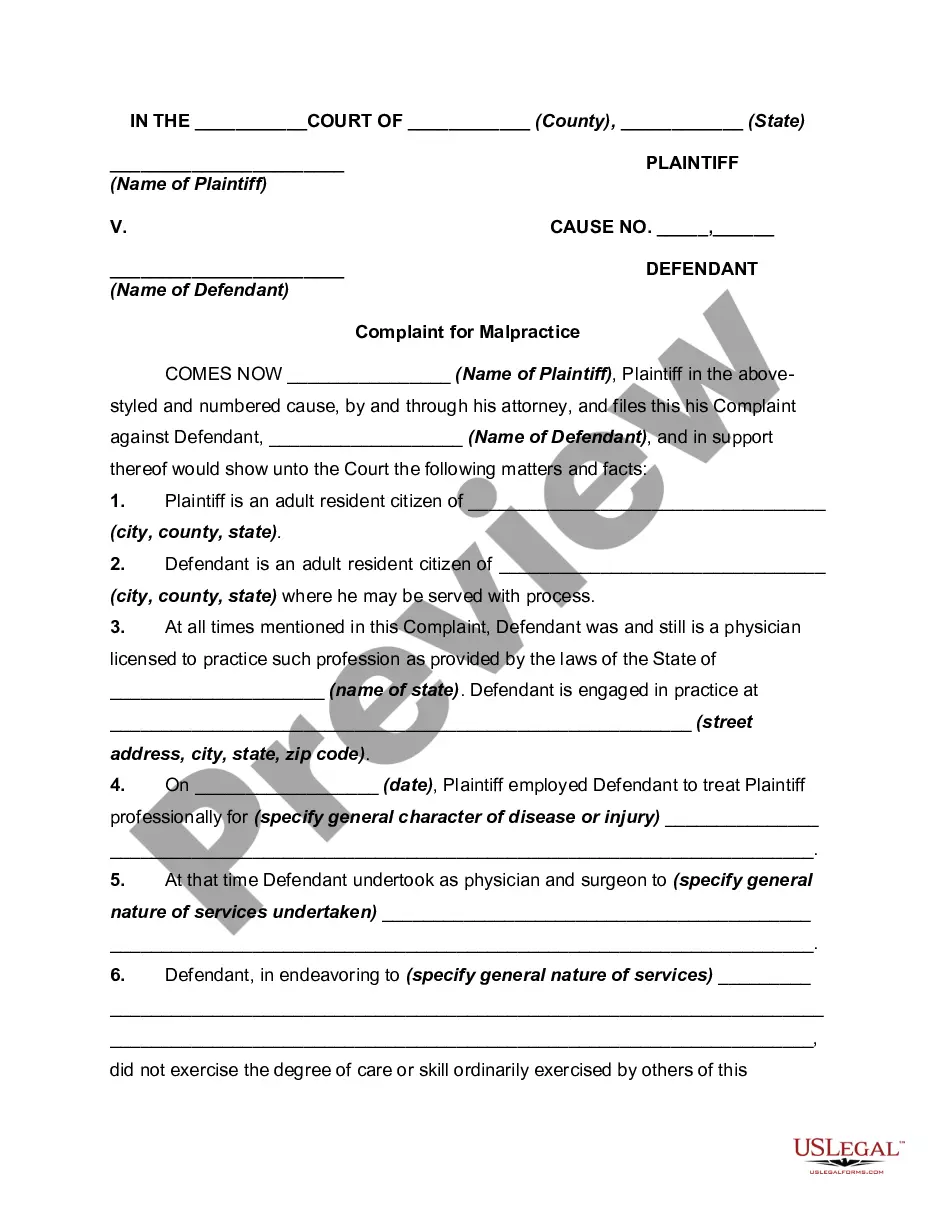
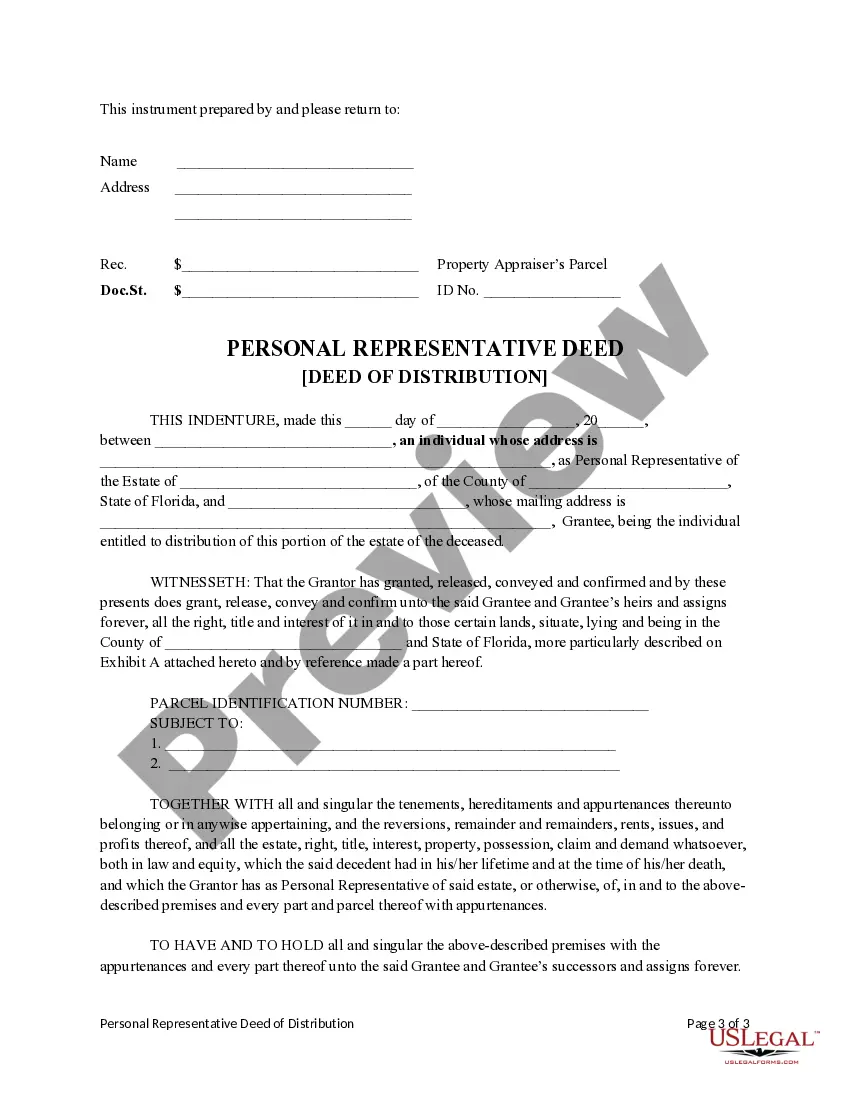
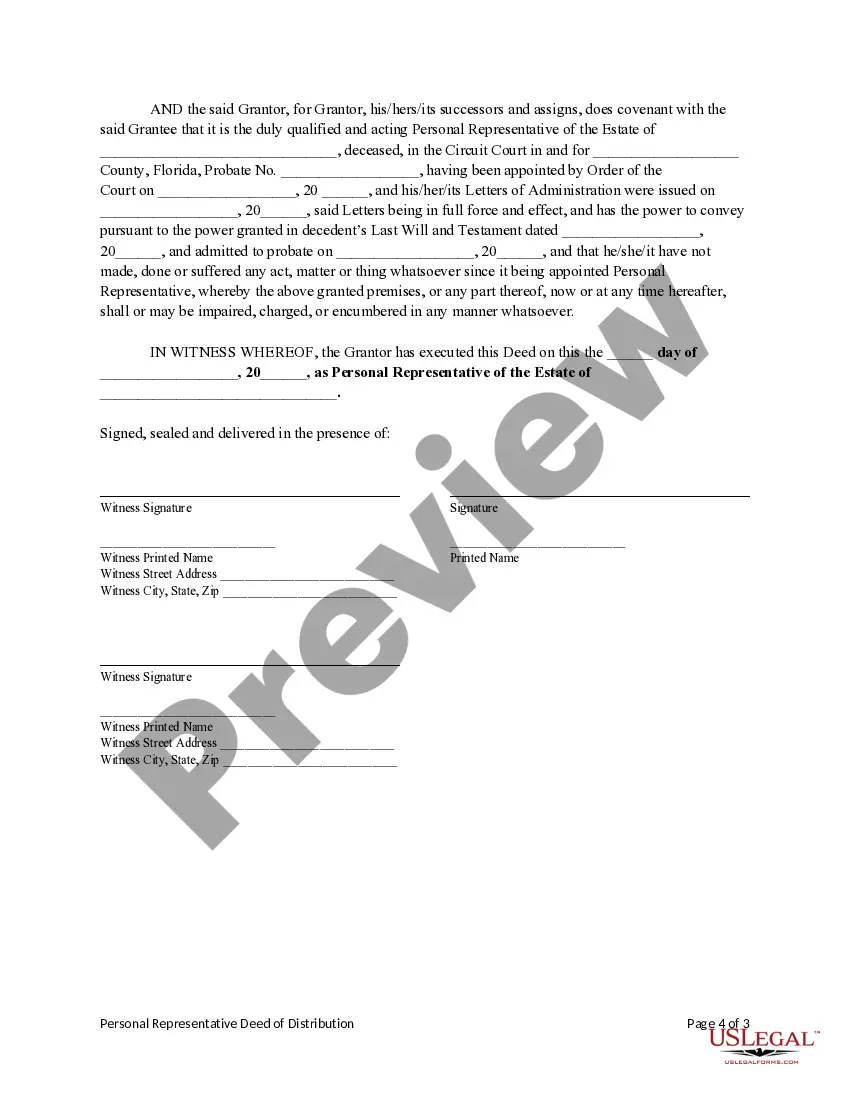
How to fill out Florida Personal Representative's Deed Of Distribution?
Accessing legal document examples that comply with federal and state regulations is essential, and the internet provides countless choices to choose from.
However, what is the benefit of spending time searching for the properly formulated Personal Representative For A Deceased Individual template online when the US Legal Forms digital library already has such documents gathered in one location.
US Legal Forms is the most extensive online legal library featuring over 85,000 fillable documents created by attorneys for various professional and personal circumstances.
Examine the template using the Preview feature or through the text outline to confirm it aligns with your requirements.
- They are easy to navigate with all forms organized by state and intended purpose.
- Our experts keep abreast of legislative updates, ensuring that you can always trust your form is current and compliant when obtaining a Personal Representative For A Deceased Individual from our platform.
- Securing a Personal Representative For A Deceased Individual is straightforward and quick for both existing and new users.
- If you already possess an account with an active subscription, Log In and save the document example you require in the appropriate format.
- If you are a newcomer to our site, please follow the instructions outlined below.
Form popularity
FAQ
Addressing a deceased person can be sensitive. In writing, you can use their full name followed by 'the late' which shows respect. If discussing them in conversation, refer to them as a 'deceased person,' especially when discussing legal matters concerning a personal representative for a deceased person. This language ensures clarity and maintains dignity.
Court-appointed or court-certified personal representatives must attach to the return a copy of the court document showing the appointment. If there's an appointed personal representative, that person must sign the return. If it's a joint return, the surviving spouse must also sign it.
A personal representative is the person, or it may be more than one person, who is legally entitled to administer the estate of the person who has died (referred to as 'the deceased'). The term 'personal representatives', sometimes abbreviated to PR, is used because it includes both executors and administrators.
If paper-filed, write ?Deceased,? the taxpayer's name, and the taxpayer's date of death across the top of the final return. If e-filed, follow the directions provided by the tax software and be sure to indicate the taxpayer is deceased and the date of death.
Generally, the person who oversees your estate is known as your ?personal representative.? California law also refers to a personal representative as an ?executor? or ?administrator.? All three terms describe the same function, although there is a legal distinction between their method of appointment.
Generally, the person who oversees your estate is known as your ?personal representative.? California law also refers to a personal representative as an ?executor? or ?administrator.? All three terms describe the same function, although there is a legal distinction between their method of appointment.