Attorney Client Rejection Letter Sample For Job
Description
Get your form ready online
Our built-in tools help you complete, sign, share, and store your documents in one place.
Make edits, fill in missing information, and update formatting in US Legal Forms—just like you would in MS Word.
Download a copy, print it, send it by email, or mail it via USPS—whatever works best for your next step.
Sign and collect signatures with our SignNow integration. Send to multiple recipients, set reminders, and more. Go Premium to unlock E-Sign.
If this form requires notarization, complete it online through a secure video call—no need to meet a notary in person or wait for an appointment.
We protect your documents and personal data by following strict security and privacy standards.

Make edits, fill in missing information, and update formatting in US Legal Forms—just like you would in MS Word.

Download a copy, print it, send it by email, or mail it via USPS—whatever works best for your next step.

Sign and collect signatures with our SignNow integration. Send to multiple recipients, set reminders, and more. Go Premium to unlock E-Sign.

If this form requires notarization, complete it online through a secure video call—no need to meet a notary in person or wait for an appointment.

We protect your documents and personal data by following strict security and privacy standards.
Looking for another form?




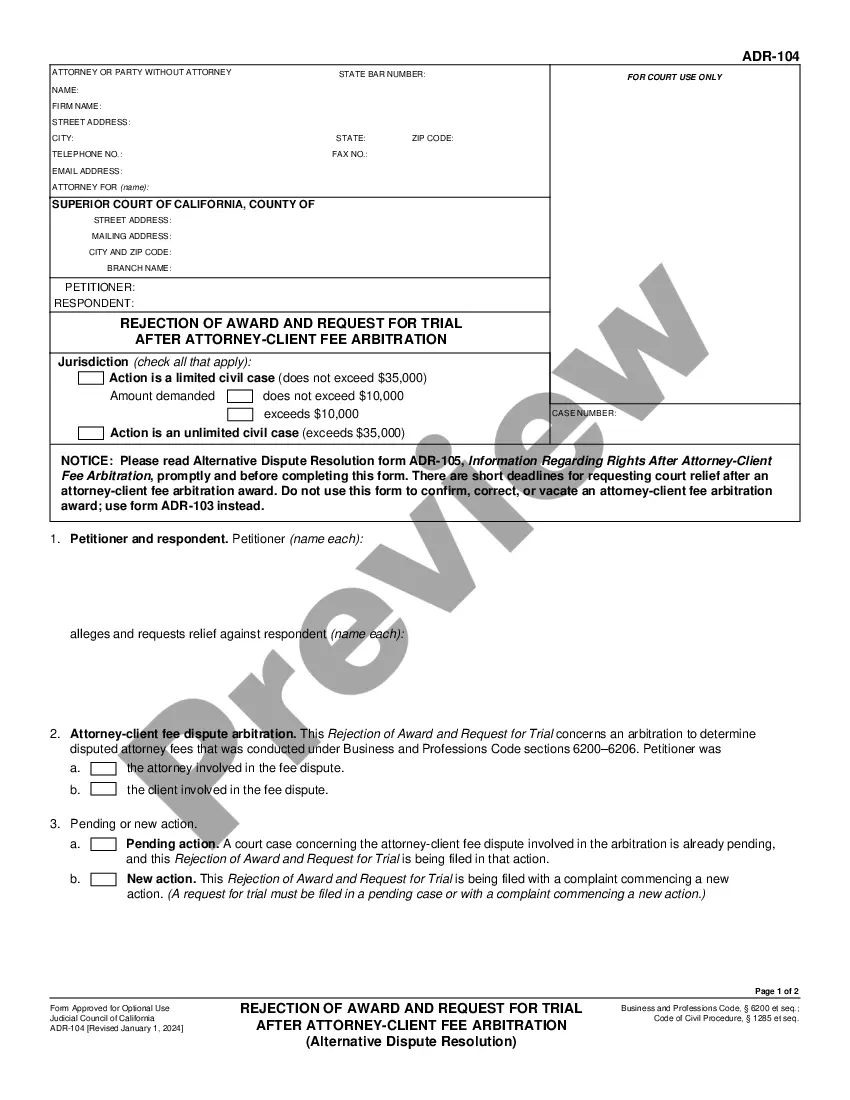
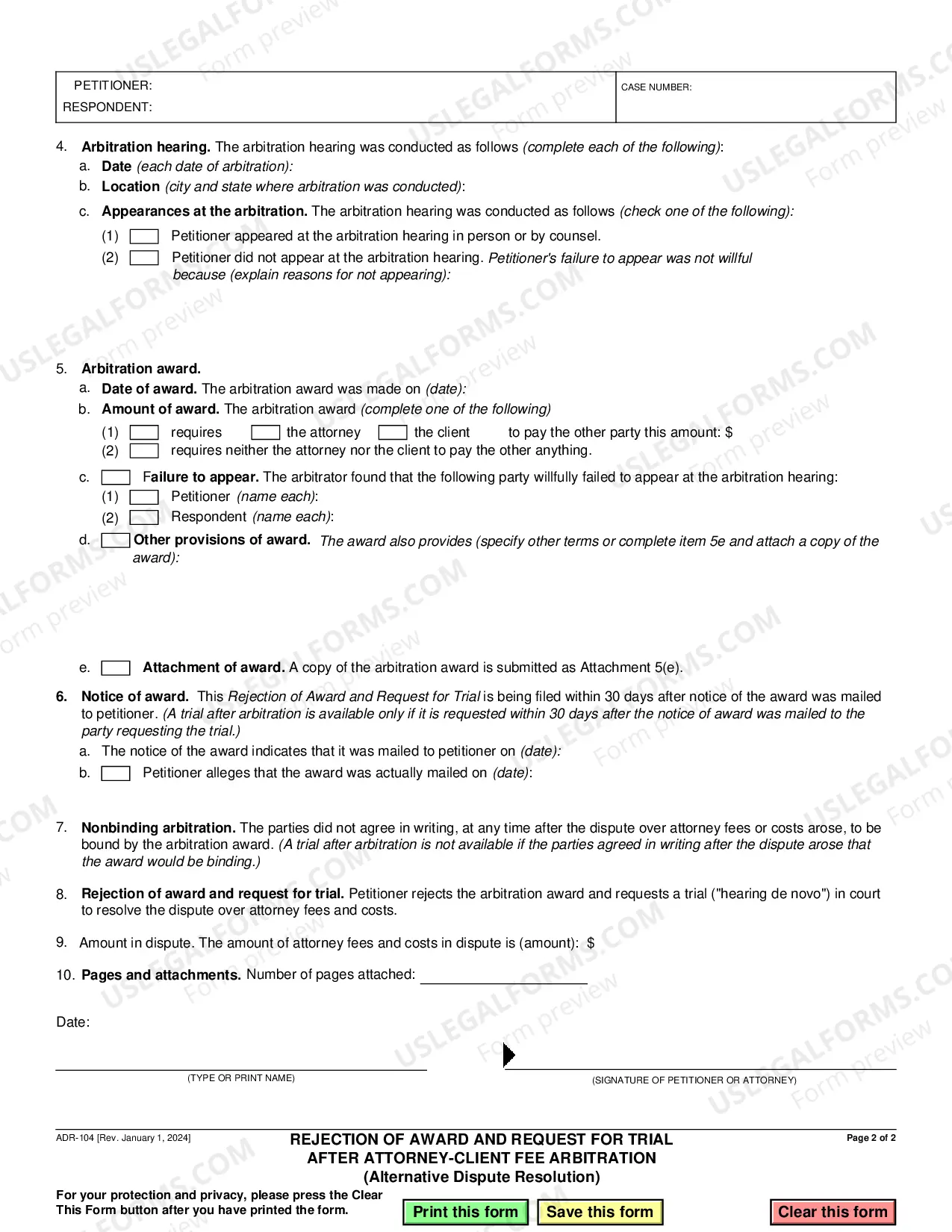
How to fill out California Rejection Of Award And Request For Trial After Attorney-Client Fee Arbitration?
It’s well-known that you cannot become a legal expert instantly, nor can you swiftly learn how to compose an Attorney Client Rejection Letter Sample For Job without possessing a particular skill set.
Creating legal documents is a lengthy endeavor that necessitates specialized training and expertise. So why not entrust the preparation of the Attorney Client Rejection Letter Sample For Job to the experts.
With US Legal Forms, one of the most extensive legal document repositories, you can find anything from court forms to templates for internal communication.
You can regain access to your forms from the My documents section at any time. If you’re an existing client, you can simply Log In and find and download the template from the same section.
Regardless of the aim of your documents—whether they are financial, legal, or personal—our platform has you covered. Experience US Legal Forms now!
- Recognize the form you require using the search bar at the top of the page.
- Preview it (if this option is available) and read the accompanying description to ascertain if the Attorney Client Rejection Letter Sample For Job is what you need.
- Initiate your search again if you require another template.
- Sign up for a free account and select a subscription option to purchase the template.
- Click Buy now. After the payment is processed, you can acquire the Attorney Client Rejection Letter Sample For Job, fill it out, print it, and send it or mail it to the relevant parties or organizations.
Form popularity
FAQ
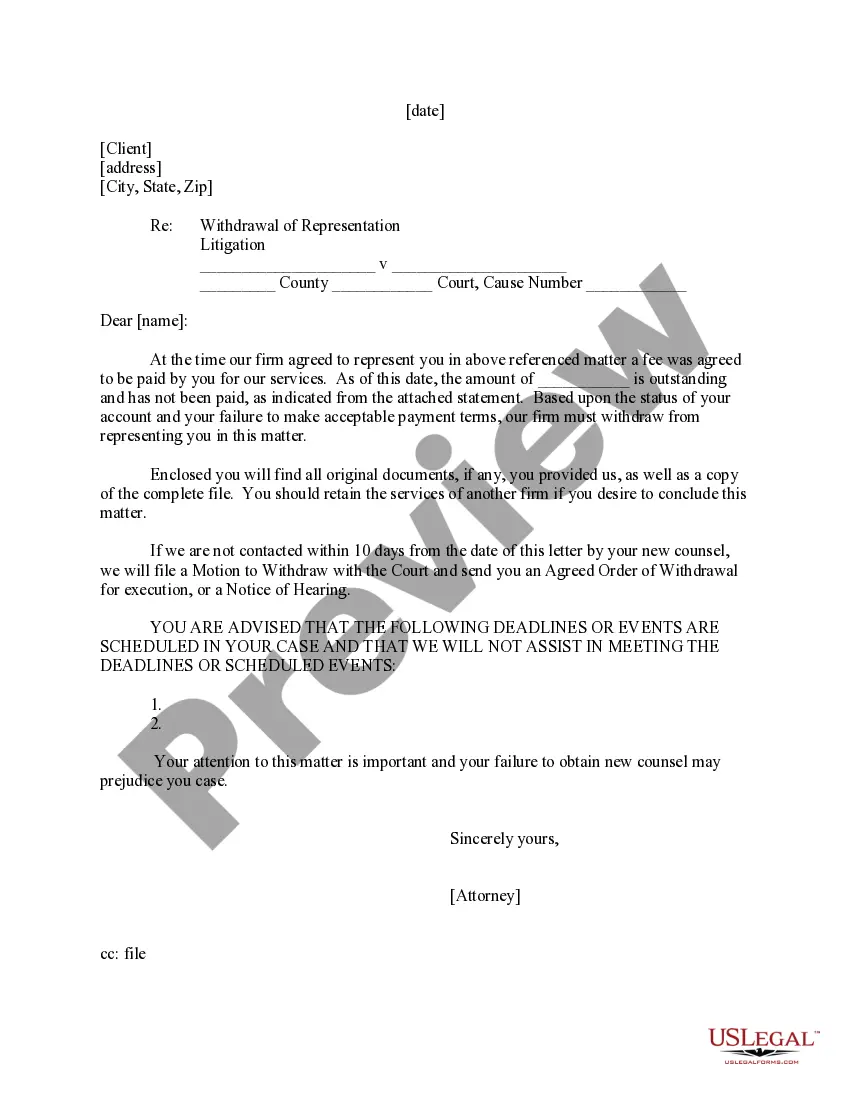
The lawyer should send a disengagement letter to establish that the relationship is no longer continuing, and to refer the client to another lawyer. In the disengagement letter, the lawyer should warn the client of applicable time limitations, deadlines, and uncompleted investigation or casework.
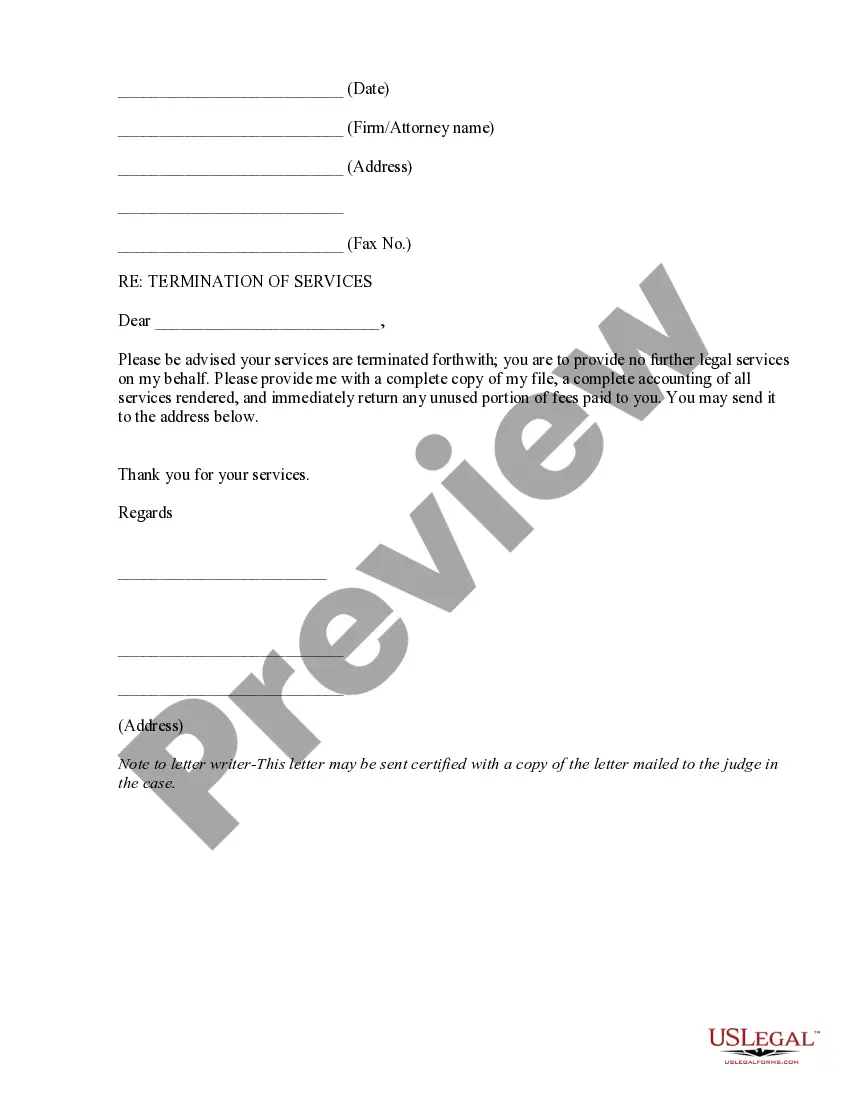
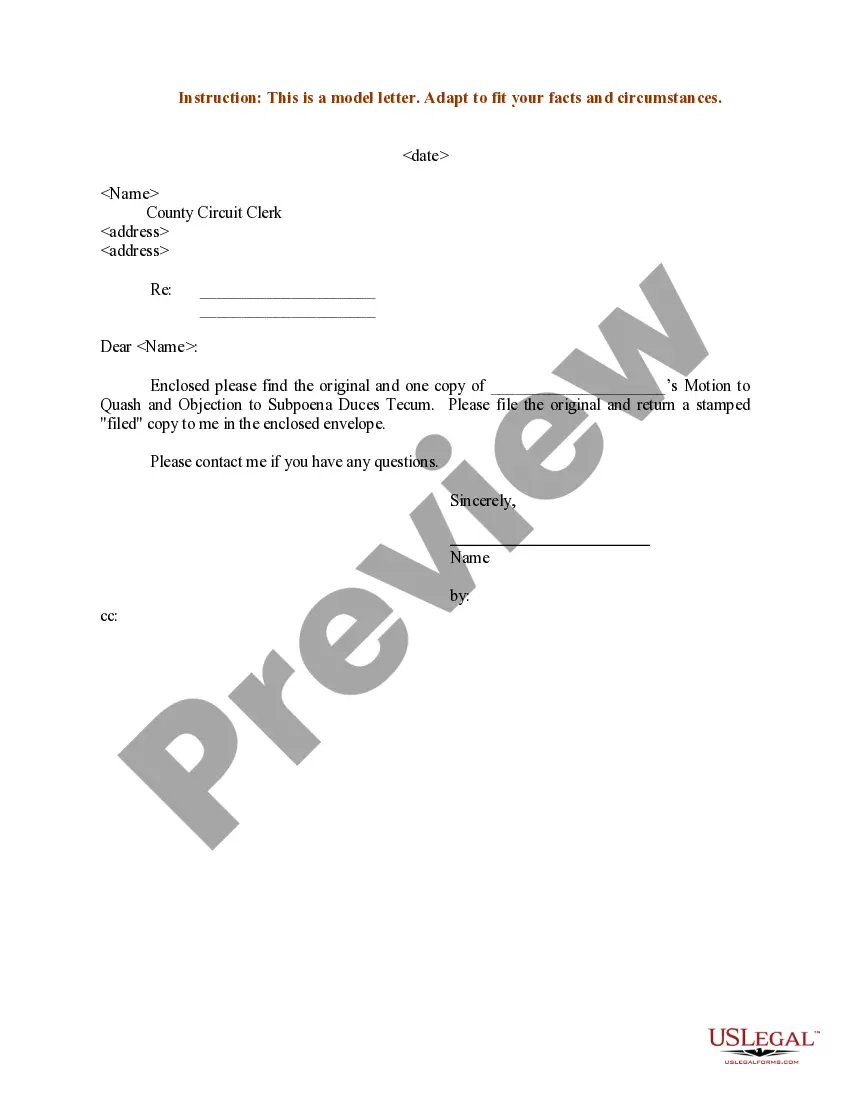
The decision to decline a representation is best to communicate that declination in writing. "Non-engagement letters" should clearly inform the prospective client that the law firm will not represent the prospective client in that matter and that he or she should not rely on the lawyer for any advice or legal action.
Every time you want to decline to represent a prospective client, you should use a non-engagement letter. Otherwise, you risk the possibility that the prospective client could mistakenly think you're their attorney on a matter.
A disengagement letter is sent by an attorney or law firm to a client when they're withdrawing from representing them. The purpose of a disengagement letter is to provide notice and document the withdrawal in ance with Rule of Professional Conduct (RPC) 1.16 Declining or Terminating Representation.
After you left our offices yesterday, we performed a formal conflict-of-interest check and found that our firm does indeed have a conflict of interest involving your intended adversary in this case, [Name]. Unfortunately, this conflict cannot be resolved in a manner that would allow us to represent you in this matter.