Home Improvement Contract With The United States
Description
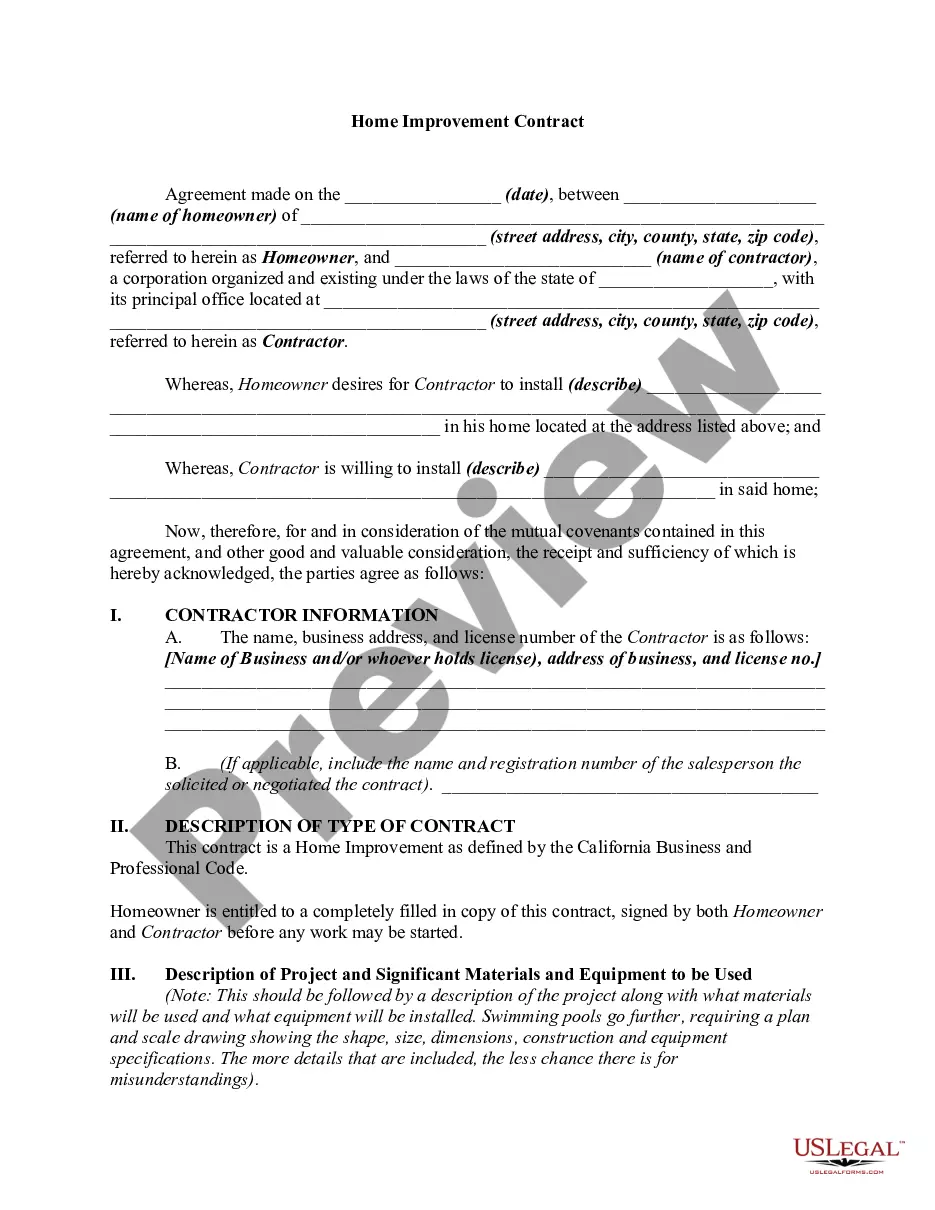


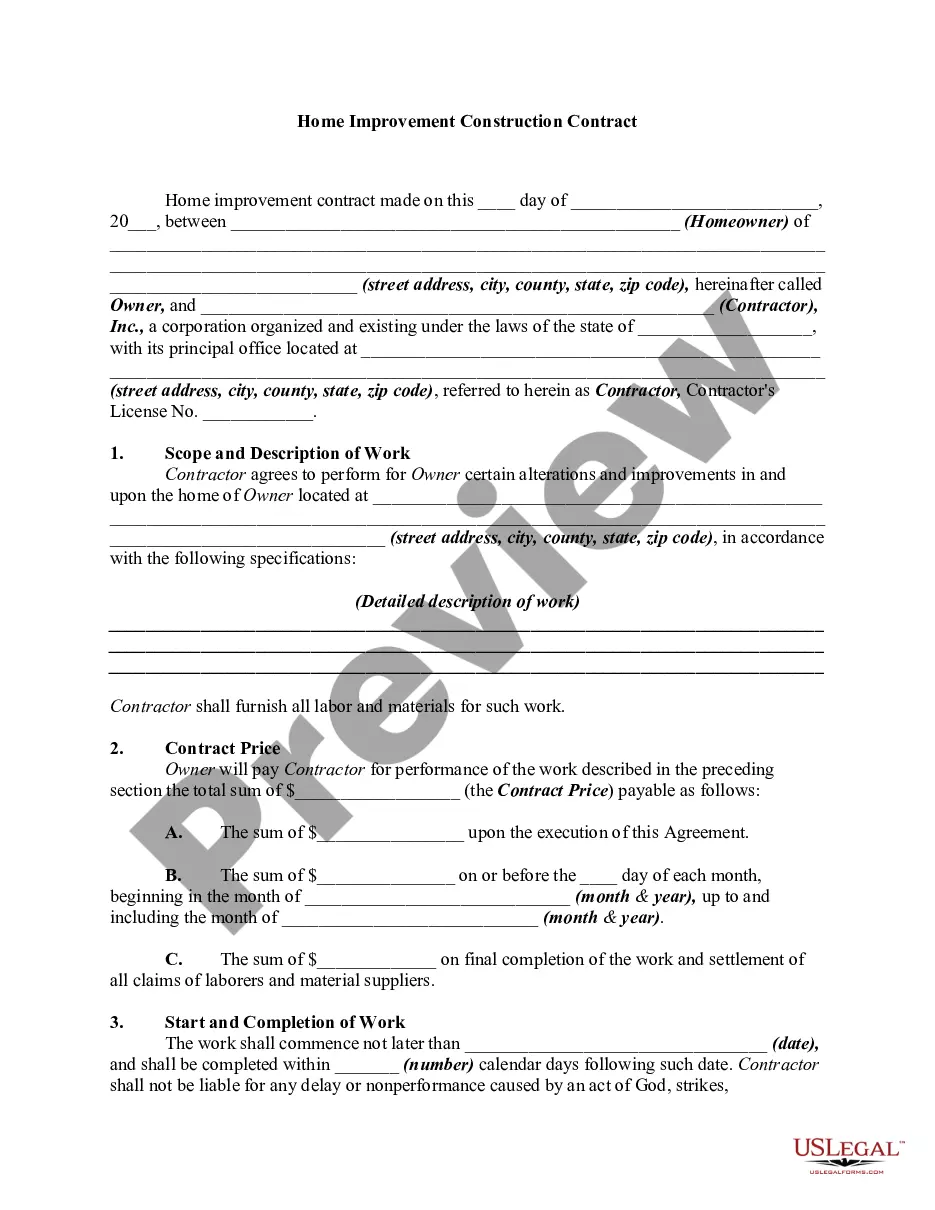
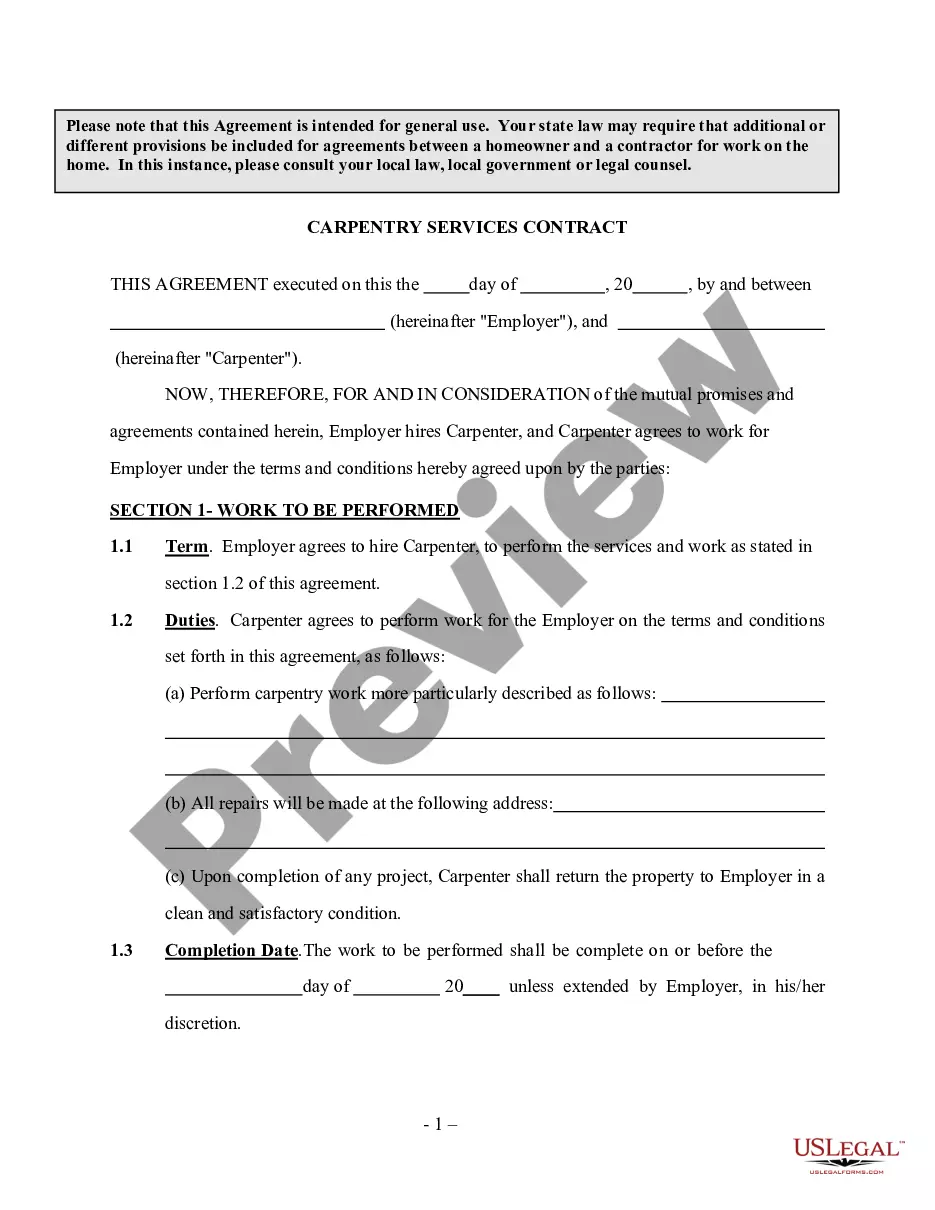
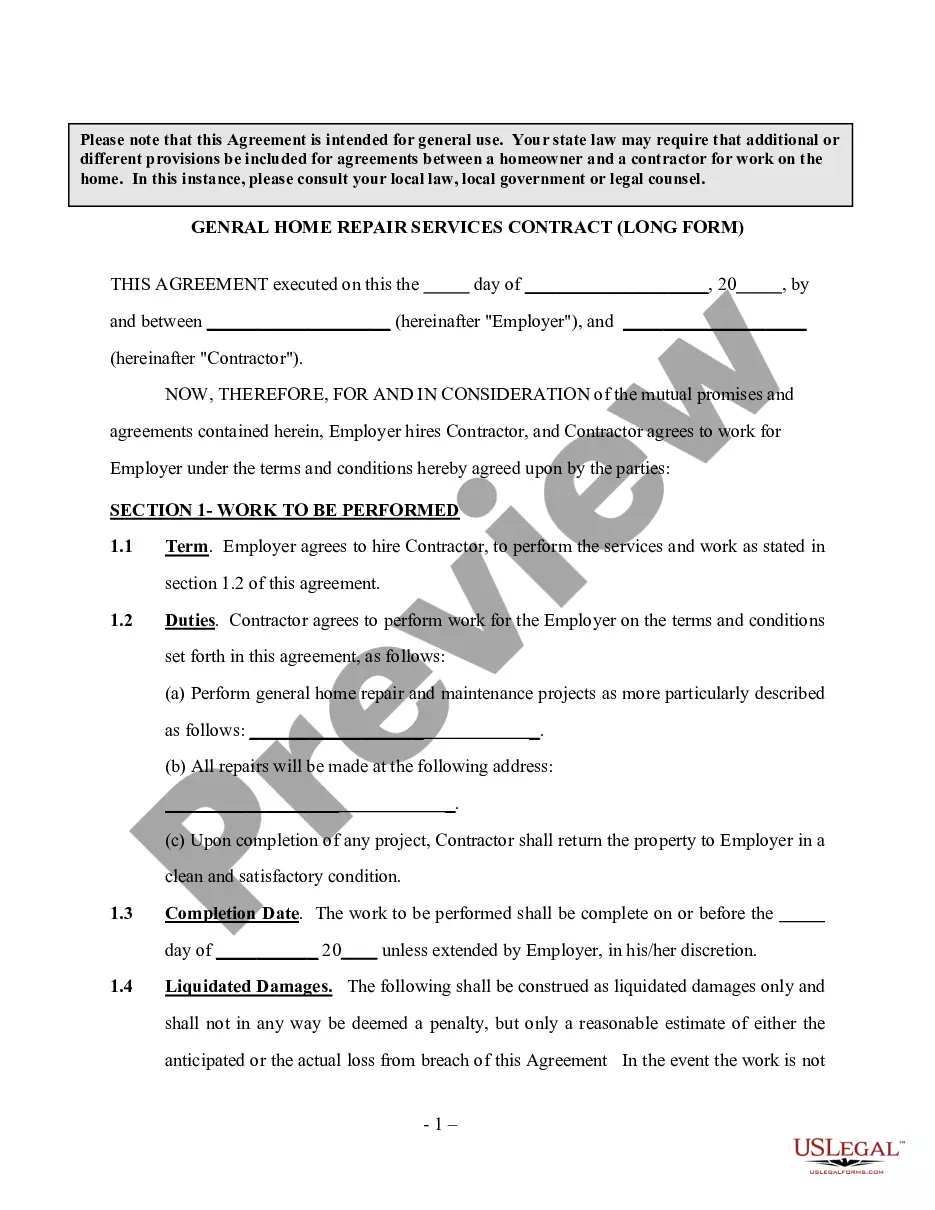
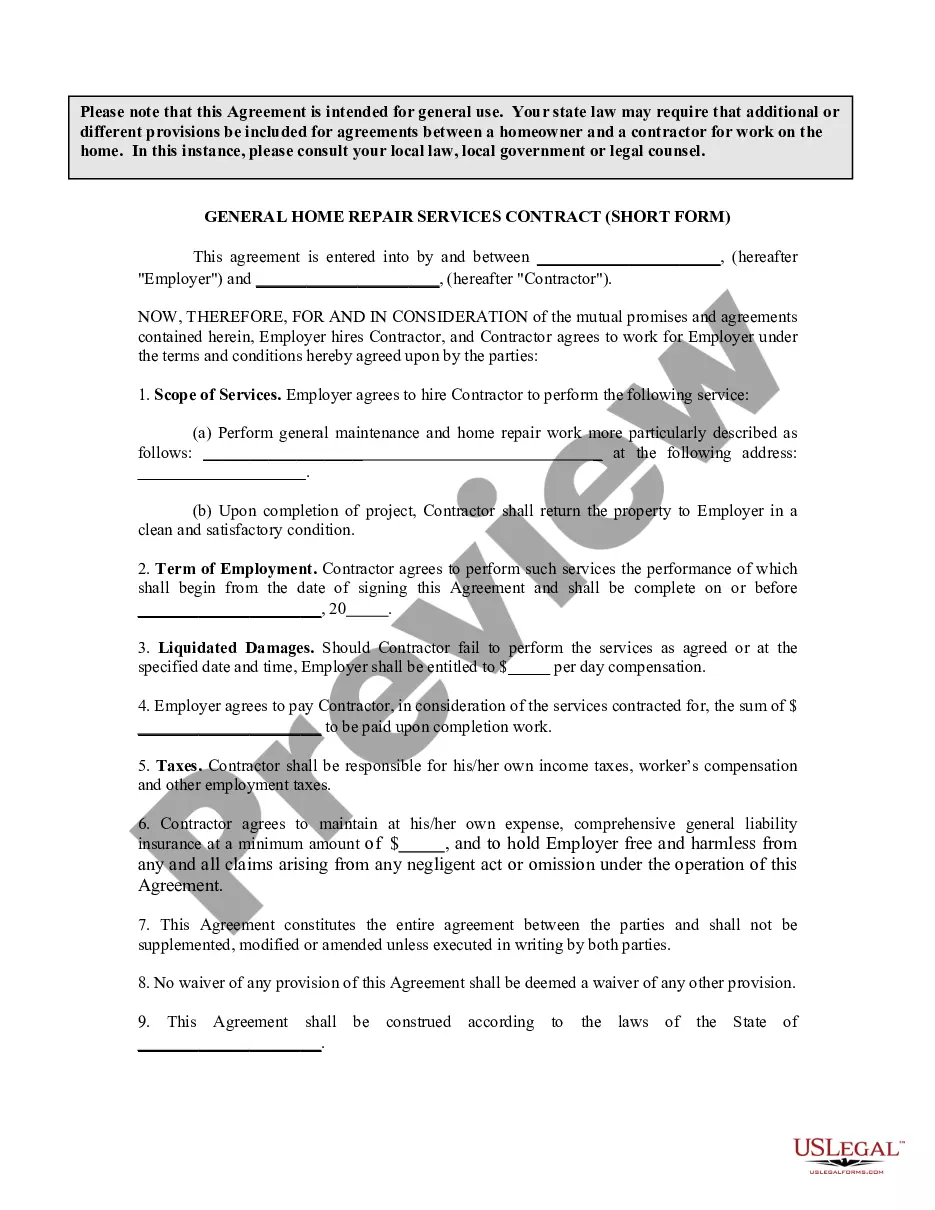
Get your form ready online
Our built-in tools help you complete, sign, share, and store your documents in one place.
Make edits, fill in missing information, and update formatting in US Legal Forms—just like you would in MS Word.
Download a copy, print it, send it by email, or mail it via USPS—whatever works best for your next step.
Sign and collect signatures with our SignNow integration. Send to multiple recipients, set reminders, and more. Go Premium to unlock E-Sign.
If this form requires notarization, complete it online through a secure video call—no need to meet a notary in person or wait for an appointment.
We protect your documents and personal data by following strict security and privacy standards.

Make edits, fill in missing information, and update formatting in US Legal Forms—just like you would in MS Word.

Download a copy, print it, send it by email, or mail it via USPS—whatever works best for your next step.

Sign and collect signatures with our SignNow integration. Send to multiple recipients, set reminders, and more. Go Premium to unlock E-Sign.

If this form requires notarization, complete it online through a secure video call—no need to meet a notary in person or wait for an appointment.

We protect your documents and personal data by following strict security and privacy standards.
Looking for another form?

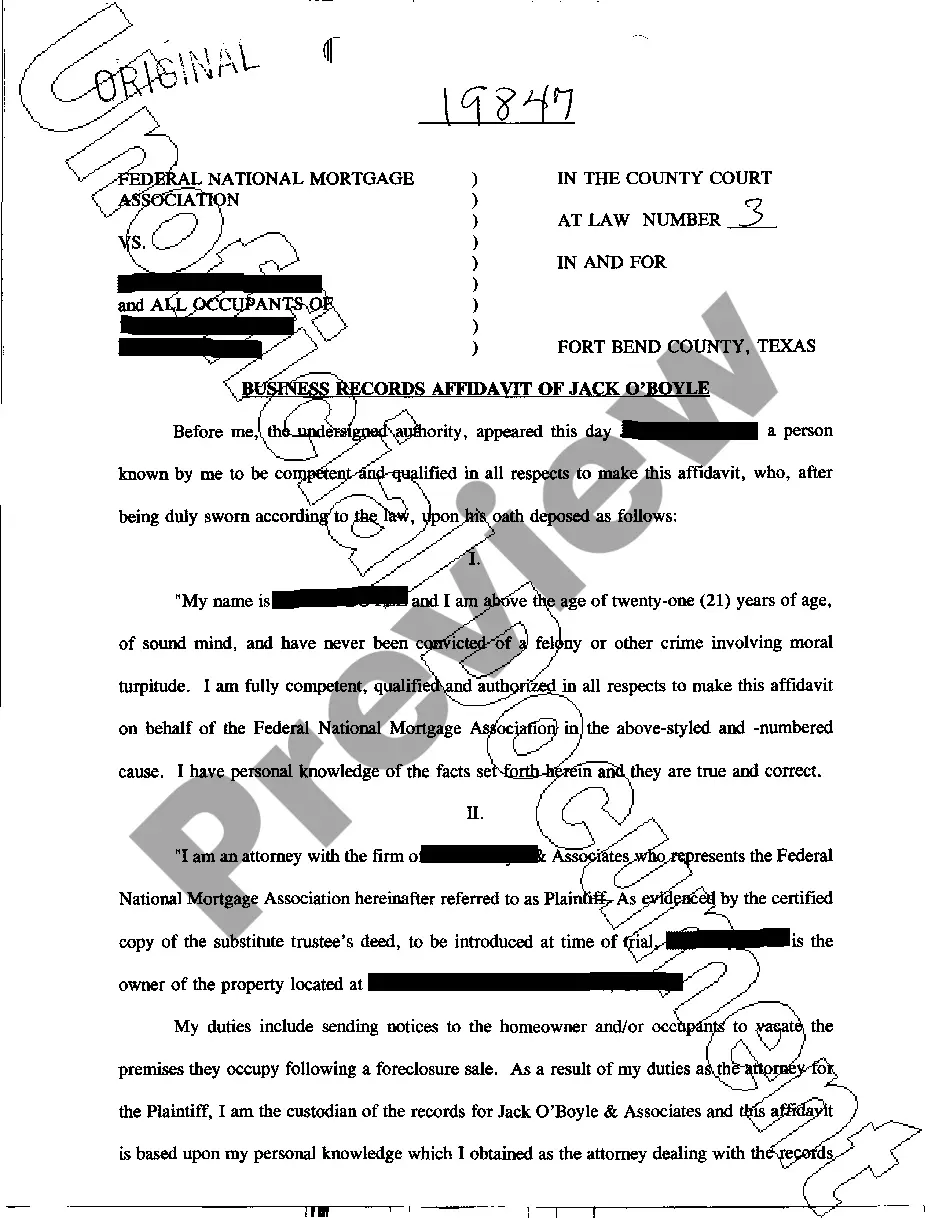



How to fill out California Home Improvement Contract - Self-Employed?
- Visit the US Legal Forms website and log in to your account if you're a returning user, or create a new account if this is your first time.
- Search for 'Home improvement contract with the United States' in the extensive online library, and check the form description to ensure it meets your needs.
- If no suitable form is found, utilize the Search tab to look for alternative templates that may fulfill your requirements.
- Once you've selected your document, click on the 'Buy Now' button and choose a subscription plan that fits your needs.
- Complete your purchase by entering your payment details or using PayPal, if available.
- After the transaction, download your editable template directly to your device and access it anytime via the 'My Forms' section.
By following these straightforward steps, you can efficiently acquire the home improvement contract that aligns with your project requirements.
Start using US Legal Forms today to ensure your legal documents are comprehensive, precise, and tailored to your needs. Don't hesitate—take charge of your home improvement projects with confidence!
Form popularity
FAQ
The Home Improvement Contractor Protection Act establishes important guidelines for residential renovation projects within the United States. This legislation aims to safeguard homeowners by regulating how home improvement contracts are created and executed. It provides clear requirements for contracts to include essential details like estimates, payment schedules, and completion timelines. By understanding this act, you can ensure that your home improvement contract with the United States complies with these regulations, protecting your rights as a homeowner.
The four types of contracts are express, implied, unilateral, and bilateral contracts. Each serves a distinct purpose in legal agreements, including construction. For a home improvement contract with the United States, understanding these types can guide you in making sound agreements with contractors. This knowledge will help you ensure clarity in your dealings and protect your rights.
Creating a home improvement contract involves a few key steps. First, specify the work to be performed, including materials and timelines. Then, clearly outline payment terms to avoid confusion later. Utilize platforms like USLegalForms to access templates that help you craft a comprehensive home improvement contract with the United States that protects your interests.
The four types of construction include residential, commercial, industrial, and infrastructure. Each category serves different purposes and involves various regulations. For a home improvement contract with the United States, you would primarily focus on residential construction, which is where most home renovation projects fall. Understanding these types can help you navigate your options more effectively.
To obtain a construction contract, start by outlining your project needs clearly. Engage with licensed contractors and request bids based on your specifications. Once you receive proposals, compare them carefully, and ensure they include a detailed scope of work. Finally, finalize and sign a home improvement contract with the United States that outlines all agreed-upon terms.
The five essential elements of a construction contract include the project's scope of work, payment terms, timelines, responsibilities of each party, and a dispute resolution process. These elements are crucial when writing a home improvement contract with the United States, as they provide clarity and legal backing. Ensuring each element is well-defined protects you from future issues and fosters a successful working relationship.
Writing a home improvement contract with the United States involves several key steps. Begin by defining the project scope, including detailed descriptions of work and materials. Clearly outline payment schedules, permits, and timelines to prevent misunderstandings. Utilizing tools from US Legal Forms can streamline this process, ensuring compliance with legal standards and robust protection for your project.
When crafting a construction contract, steer clear of ambiguous language that can lead to misinterpretations. Avoid broad timelines that lack specificity, as these can create confusion about project completion dates. Also, do not neglect to include contingency plans for unexpected issues. A well-defined home improvement contract with the United States reduces conflicts and protects all parties involved.
To draft a simple contract agreement for a home improvement project, start by clearly stating the purpose of the contract. Include details such as the scope of work, payment terms, and deadlines. Ensure both parties sign the document to establish mutual consent. Using platforms like US Legal Forms can help simplify this process and ensure that you meet legal requirements for a home improvement contract with the United States.
When discussing your home improvement contract with the United States, avoid making vague statements about your budget. Instead, provide specific limits to help your contractor work within your financial constraints. Refrain from disclosing personal details or being overly emotional, as this can cloud professional judgment. Transparency is important, but there are boundaries that should be respected.