Interspousal Transfer Deed Example
Description
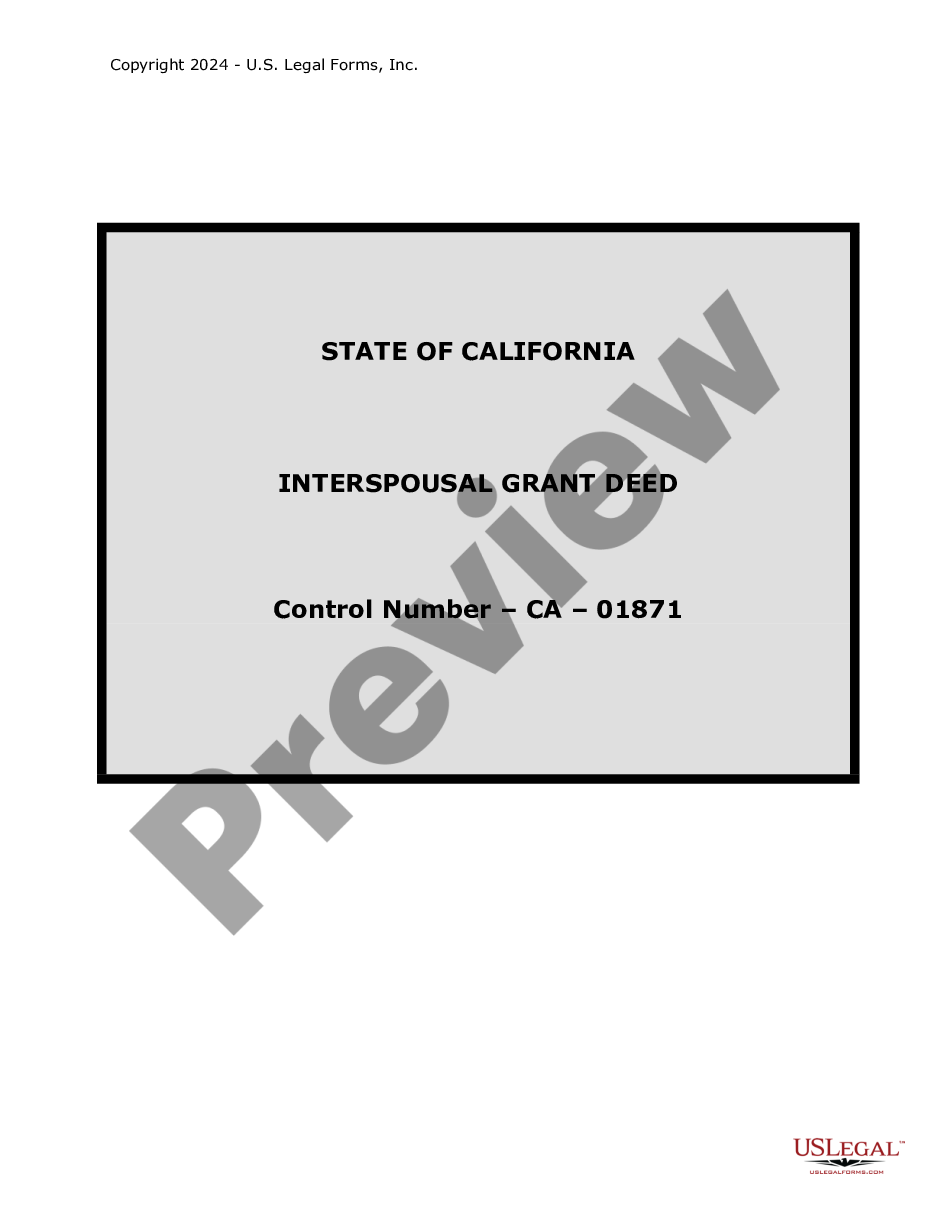
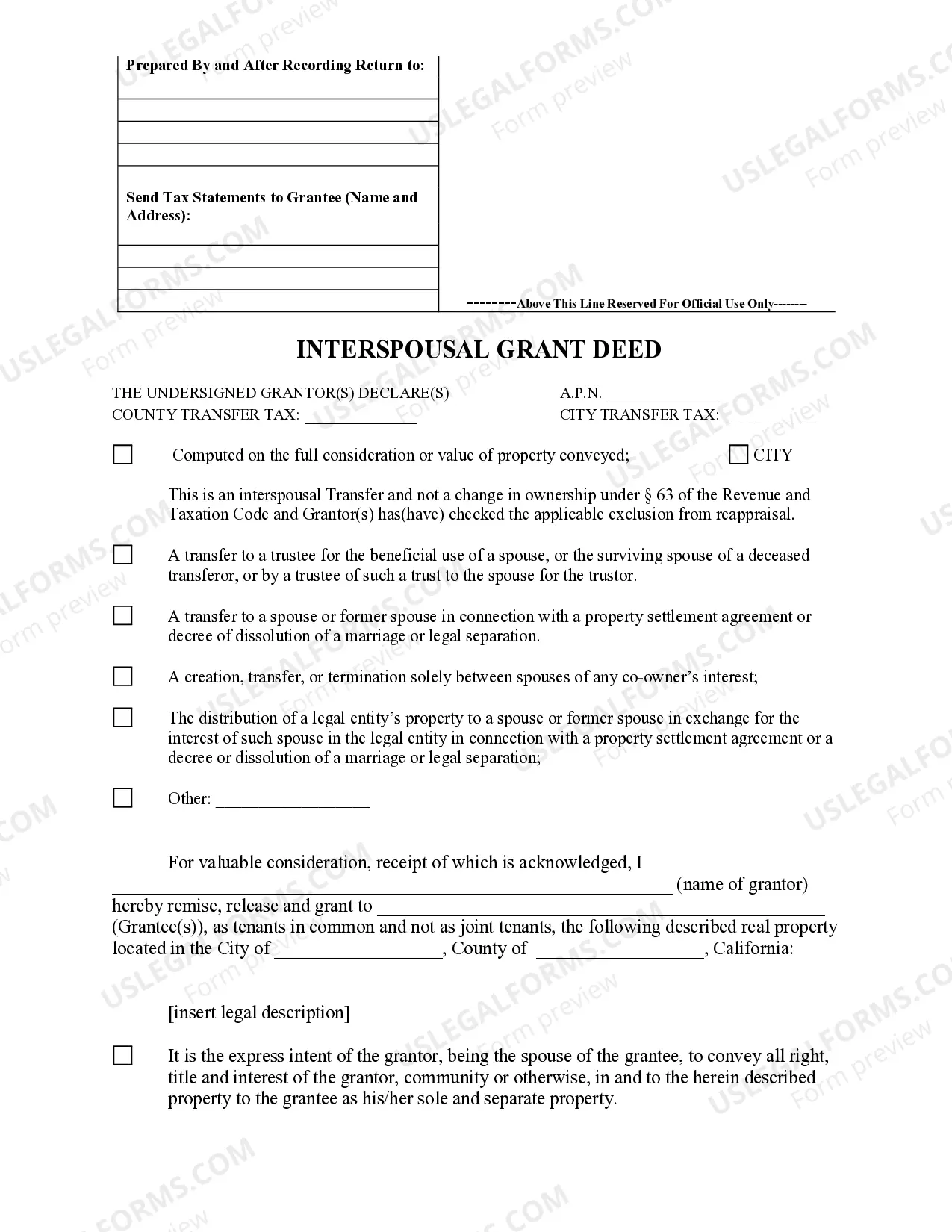
Get your form ready online
Our built-in tools help you complete, sign, share, and store your documents in one place.
Make edits, fill in missing information, and update formatting in US Legal Forms—just like you would in MS Word.
Download a copy, print it, send it by email, or mail it via USPS—whatever works best for your next step.
Sign and collect signatures with our SignNow integration. Send to multiple recipients, set reminders, and more. Go Premium to unlock E-Sign.
If this form requires notarization, complete it online through a secure video call—no need to meet a notary in person or wait for an appointment.
We protect your documents and personal data by following strict security and privacy standards.

Make edits, fill in missing information, and update formatting in US Legal Forms—just like you would in MS Word.

Download a copy, print it, send it by email, or mail it via USPS—whatever works best for your next step.

Sign and collect signatures with our SignNow integration. Send to multiple recipients, set reminders, and more. Go Premium to unlock E-Sign.

If this form requires notarization, complete it online through a secure video call—no need to meet a notary in person or wait for an appointment.

We protect your documents and personal data by following strict security and privacy standards.
Looking for another form?



How to fill out California Interspousal Grant Deed From Individual?
It's widely recognized that you cannot transform into a legal expert in a single night, nor can you swiftly learn how to effortlessly compose an Interspousal Transfer Deed Example without possessing a unique set of abilities. Compiling legal paperwork is an extensive process that demands specific training and expertise. So, why not entrust the development of the Interspousal Transfer Deed Example to the experts.
With US Legal Forms, one of the most extensive legal template collections, you can locate everything from court documents to templates for internal business communication. We appreciate how essential adherence to federal and local statutes and regulations is. That’s why, on our platform, all forms are location-specific and current.
Let’s get started with our platform and obtain the form you need in just a few minutes.
You can access your forms from the My documents tab at any time. If you’re already a client, you can simply Log In, and find and download the template from the same section.
Regardless of the intent of your documents—whether financial, legal, or personal—our platform is here to assist you. Give US Legal Forms a try now!
- Identify the form you require by utilizing the search bar at the top of the web page.
- Examine it (if this feature is available) and review the accompanying description to see if the Interspousal Transfer Deed Example is what you are looking for.
- Initiate your search once more if you seek a different template.
- Sign up for a free account and select a subscription plan to purchase the form.
- Click on Buy now. Once the payment is processed, you can download the Interspousal Transfer Deed Example, complete it, print it, and send it or forward it by postal service to the needed individuals or organizations.
Form popularity
FAQ
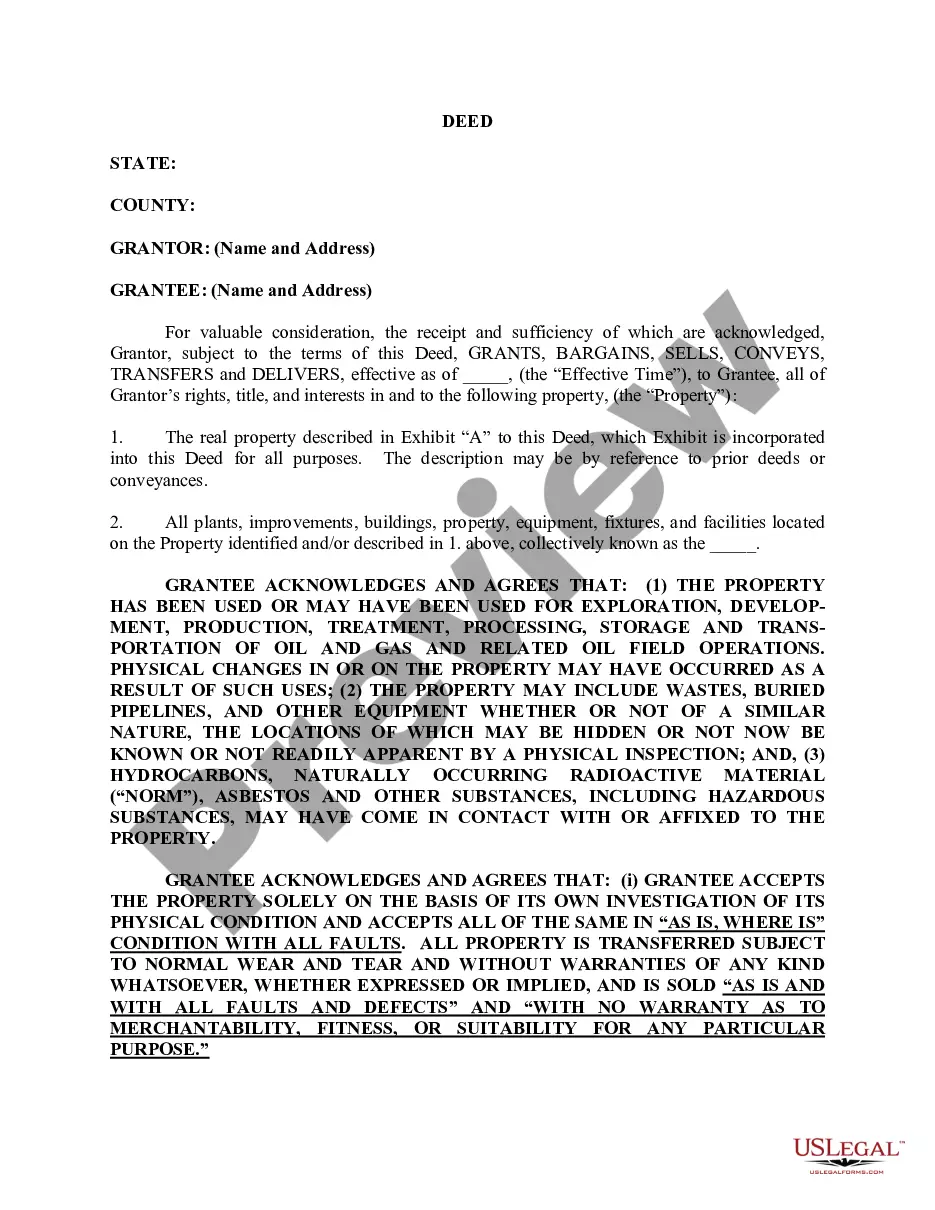
To prepare an interspousal transfer deed, start by gathering necessary information, such as property details and both spouses' names. You can also review an interspousal transfer deed example to understand the required clauses and wording. Using a reliable platform like US Legal Forms can simplify this process, as they provide templates and guidance tailored for your needs. Following these steps ensures that the deed is completed accurately and efficiently.
While having a lawyer is not strictly necessary to transfer a deed, it is highly advisable. A legal professional can ensure that the process is followed correctly and that the documentation is properly prepared. Additionally, they can provide insights into an interspousal transfer deed example to avoid any potential pitfalls. By consulting a lawyer, you can gain peace of mind through the entire transfer process.
The Interspousal transfer deed serves to transfer ownership of property between spouses. This deed is particularly useful during divorce proceedings or when a spouse wishes to gift their interest in a property. Understanding an interspousal transfer deed example can help clarify how this process works. It simplifies the transfer and avoids complications with title issues.
The purpose of an interspousal transfer deed is to formally convey property between spouses without the need for a sale or exchange. This legal document helps simplify the transfer process and can protect property rights, especially in the event of divorce. Additionally, it can provide tax benefits and facilitate estate planning. Understanding the purpose of this deed can help couples make informed decisions, so refer to an interspousal transfer deed example for clarity.
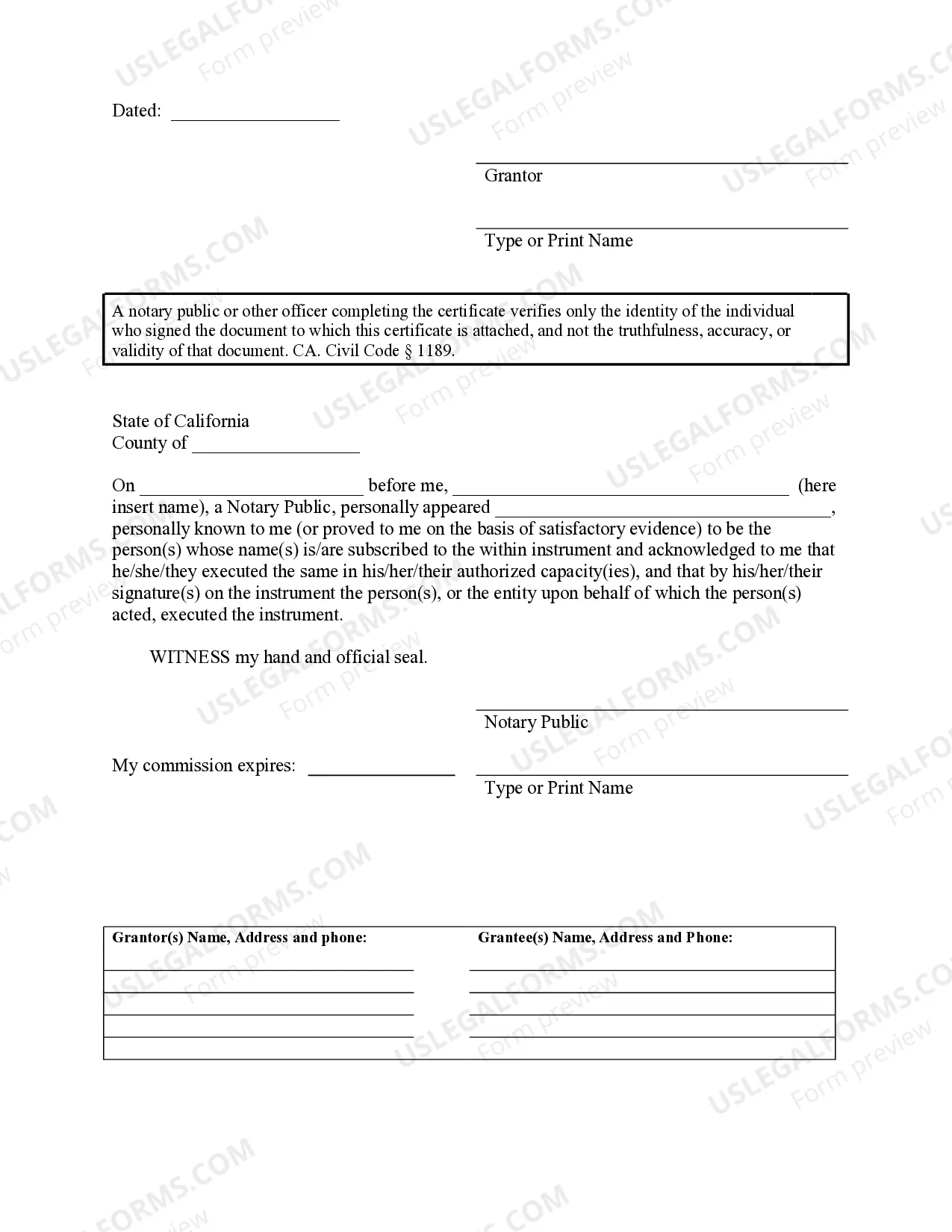
Filling out an interspousal transfer deed requires careful attention to detail. Start by entering the full names of both spouses, along with the property's legal description. Ensure that the document is correctly dated, and include information about any necessary consideration, even if it's just a nominal amount. If you need guidance, consider using a resource like uslegalforms to see an interspousal transfer deed example that matches your situation.
Filing an interspousal transfer deed in California involves several steps. First, you need to complete the deed form correctly with both spouses' names and relevant property details. Next, you must have the form notarized to ensure its validity. Finally, file the deed with the county recorder's office where the property is located to officially document the interspousal transfer deed example.
You'll need to provide accurate information and sign the form in the presence of a notary public. File the form: Once completed and signed, it should be recorded with the county recorder's office where the property is located.
The key difference between an interspousal deed and a quitclaim deed is a liability. In the case of a quitclaim deed, a spouse who chooses to give up their interest in a jointly-owned property may still be held liable for the mortgage or other taxes, liens, claims, and debts associated with the property.
How to Fill Out an Interspousal Transfer Deed Find the current deed for the property. On a computer, or in print, take out a blank Interspousal Transfer Deed. Determine how new owners will take the title. Fill out the new deed.
In most states, an interspousal deed must: be in writing. list the spouses involved in the transfer. identify the property being transferred by address and legal description. be signed before a notary public, and. be recorded in the county where the property is located.