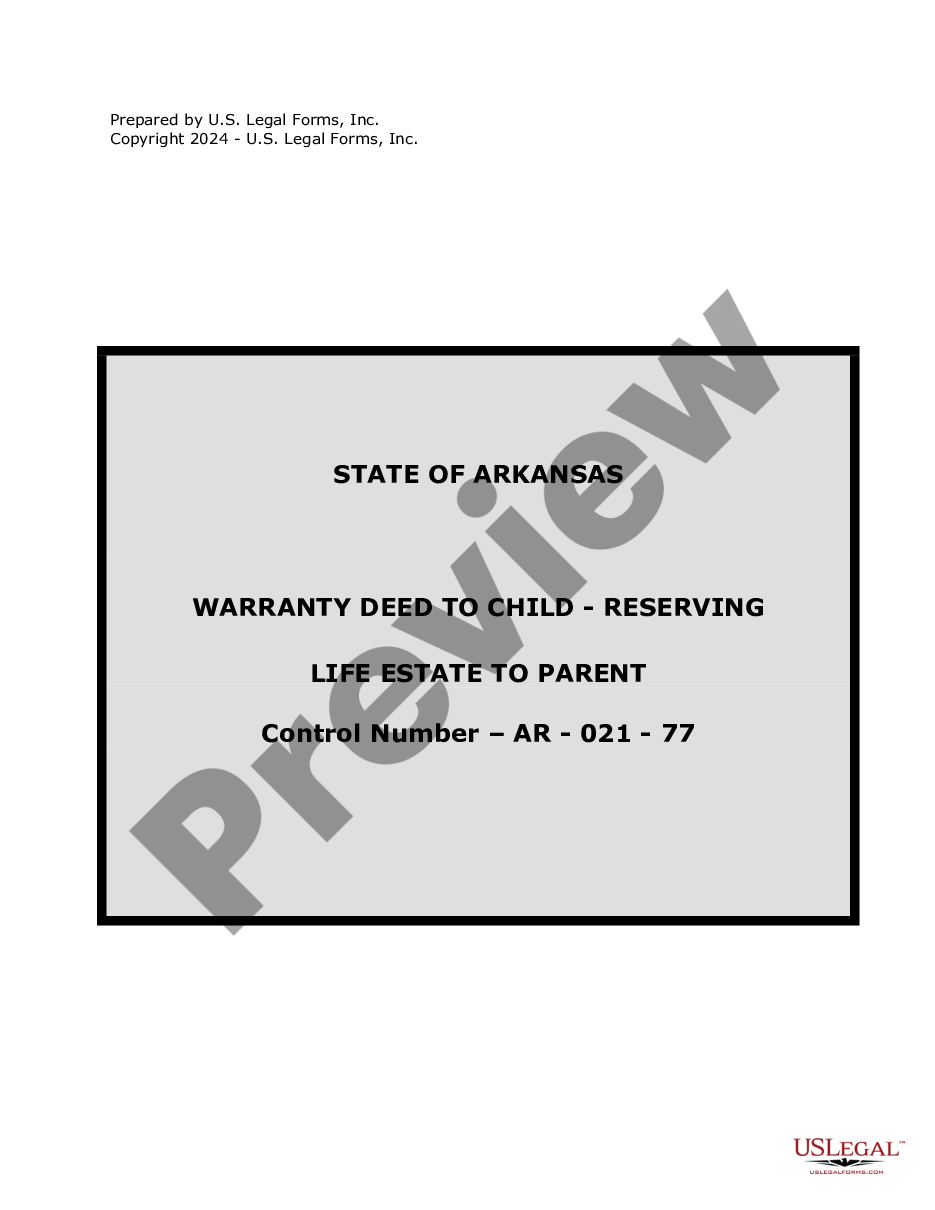
Life Estate Deed Arkansas Without Powers
Description



Get your form ready online
Our built-in tools help you complete, sign, share, and store your documents in one place.
Make edits, fill in missing information, and update formatting in US Legal Forms—just like you would in MS Word.
Download a copy, print it, send it by email, or mail it via USPS—whatever works best for your next step.
Sign and collect signatures with our SignNow integration. Send to multiple recipients, set reminders, and more. Go Premium to unlock E-Sign.
If this form requires notarization, complete it online through a secure video call—no need to meet a notary in person or wait for an appointment.
We protect your documents and personal data by following strict security and privacy standards.

Make edits, fill in missing information, and update formatting in US Legal Forms—just like you would in MS Word.

Download a copy, print it, send it by email, or mail it via USPS—whatever works best for your next step.

Sign and collect signatures with our SignNow integration. Send to multiple recipients, set reminders, and more. Go Premium to unlock E-Sign.

If this form requires notarization, complete it online through a secure video call—no need to meet a notary in person or wait for an appointment.

We protect your documents and personal data by following strict security and privacy standards.
Looking for another form?


How to fill out Arkansas Warranty Deed To Child Reserving A Life Estate In The Parents?
Regardless of whether it's for corporate reasons or personal affairs, everyone encounters legal issues at some point in their lives.
Completing legal documents demands meticulous focus, starting with choosing the correct form template. For example, if you select an incorrect version of a Life Estate Deed Arkansas Without Powers, it will be rejected once you submit it.
With an extensive US Legal Forms catalog available, you don’t need to waste time searching for the appropriate template online. Utilize the library’s straightforward navigation to find the right template for any circumstance.
- Obtain the template you require by utilizing the search box or exploring the catalog.
- Review the form’s description to verify that it corresponds with your situation, state, and county.
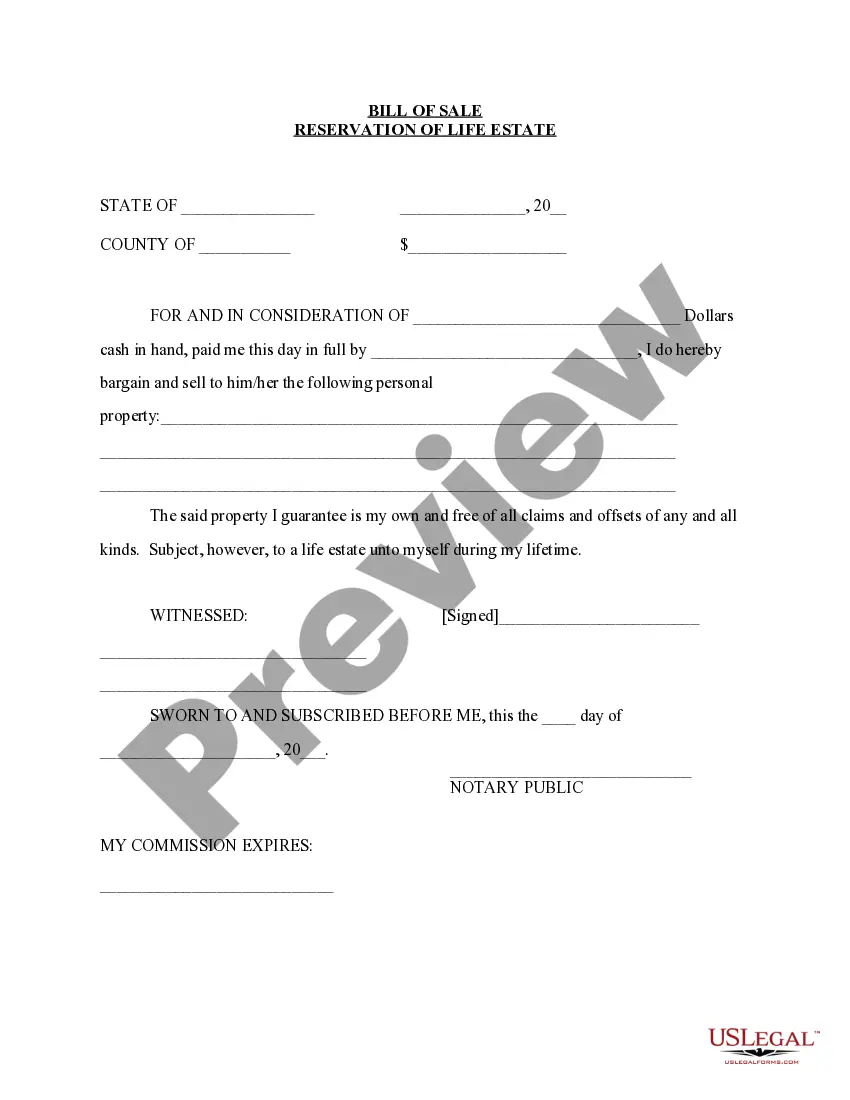
- Click on the form’s preview to examine it.
- If it’s the wrong document, return to the search function to find the Life Estate Deed Arkansas Without Powers template you need.
- Obtain the file when it fits your requirements.
- If you already have a US Legal Forms account, simply click Log in to access previously saved documents in My documents.
- In case you do not have an account yet, you may download the form by clicking Buy now.
- Choose the suitable pricing option.
- Complete the account registration form.
- Select your payment method: use a credit card or PayPal account.
- Choose the document format you want and download the Life Estate Deed Arkansas Without Powers.
- Once it is saved, you can fill out the form using editing software or print it and complete it by hand.
Form popularity
FAQ
Typically, a life estate deed takes precedence over a will regarding the property specified in the deed. This means that when you create a life estate deed in Arkansas without powers, the property will pass directly to the designated heirs upon your death, regardless of directions in your will. Understanding this distinction is vital for effective estate planning, as it impacts how your assets are distributed.
A life estate deed allows you to transfer property to your heirs while retaining the right to live in it during your lifetime. This arrangement can simplify the transfer of assets and avoid probate, making it an efficient estate planning tool. When structured correctly, a life estate deed in Arkansas without powers provides peace of mind, ensuring that your loved ones inherit the property as intended.
A life estate in Arkansas allows a person to have ownership of property for their lifetime, after which the property passes to remaindermen. This type of estate permits life tenants to use and benefit from the property, but they cannot sell or mortgage it without the remaindermen's consent. The life estate conveys certain responsibilities, such as maintaining the property and paying property taxes. Understanding these aspects is crucial when considering a life estate deed Arkansas without powers.
Breaking a life estate deed in Arkansas typically requires the consent of all parties involved, including the life tenant and remaindermen. If everyone agrees, you can create a document that renounces the life estate. If there's disagreement or conflict, legal action may be necessary to resolve the issue. Consulting a legal expert familiar with life estate deed Arkansas without powers can provide clarity and guidance.
To transfer a life estate deed in Arkansas without powers, you need to complete a new deed and record it with the local county clerk’s office. First, gather necessary information about the life tenant and remaindermen. Fill out the deed form accurately, including the legal description of the property. After signing the deed, you must take it to the county office for recording, ensuring that the change is legally recognized.
A life estate deed can be either with or without powers, depending on how it is structured. A deed without powers restricts the life tenant from selling or altering the property without consent, whereas a deed with powers permits these actions. Deciding between the two requires careful consideration of your estate goals, especially if you are looking at a life estate deed Arkansas without powers.
A life estate deed in Arkansas is a legal document that grants ownership of property for the lifetime of the individual, known as the life tenant. Upon the life tenant’s death, the property automatically transfers to the designated remainderman. This arrangement is often utilized in estate planning to help reduce probate issues and avoid estate taxes.
To claim an estate without a will, you can file for intestate succession through the probate court. The court will determine how to distribute the deceased's assets according to the state's intestacy laws. This process may require documentation of your relationship to the deceased and can take time, so it is advised to seek legal assistance to navigate this situation more effectively.
A will cannot override a life estate deed, as the terms of the life estate dictate what happens to the property after the life tenant's death. The property automatically transfers to the remainderman named in the deed, regardless of any wishes stated in a will. Therefore, it is essential to understand how these legal instruments interact when planning your estate.
A life estate with powers allows the life tenant to sell, mortgage, or change the property while they are alive, providing flexibility. Conversely, a life estate without powers limits these rights, ensuring that the property remains unchanged and goes directly to the remainderman upon the life tenant's death. Understanding these distinctions is crucial when considering a life estate deed Arkansas without powers.