Alaska Deeds
Deeds are essential documents for property transfers. Attorney-drafted templates are quick and easy to complete.

Similar documents: key differences
- Warranty Deed vs. Quitclaim Deed — Warranty deeds provide guarantees, quitclaim deeds do not.
- Grant Deed vs. Bargain and Sale Deed — Grant deeds imply ownership assurances, bargain and sale deeds do not.
- Deed of Trust vs. Mortgage — A deed of trust involves a third-party trustee, whereas a mortgage does not.
- Gift Deed vs. Sale Deed — Gift deeds transfer property without payment, sale deeds involve a transaction.
Search for more forms
Types of Deed forms
Deed in Lieu of Foreclosure
Use this document to transfer property to a lender, avoiding foreclosure, and to release financial obligations related to the property.
Warranty Deed for Fiduciary
Use this legal document to transfer property with a guarantee from a fiduciary, ensuring all obligations were met.
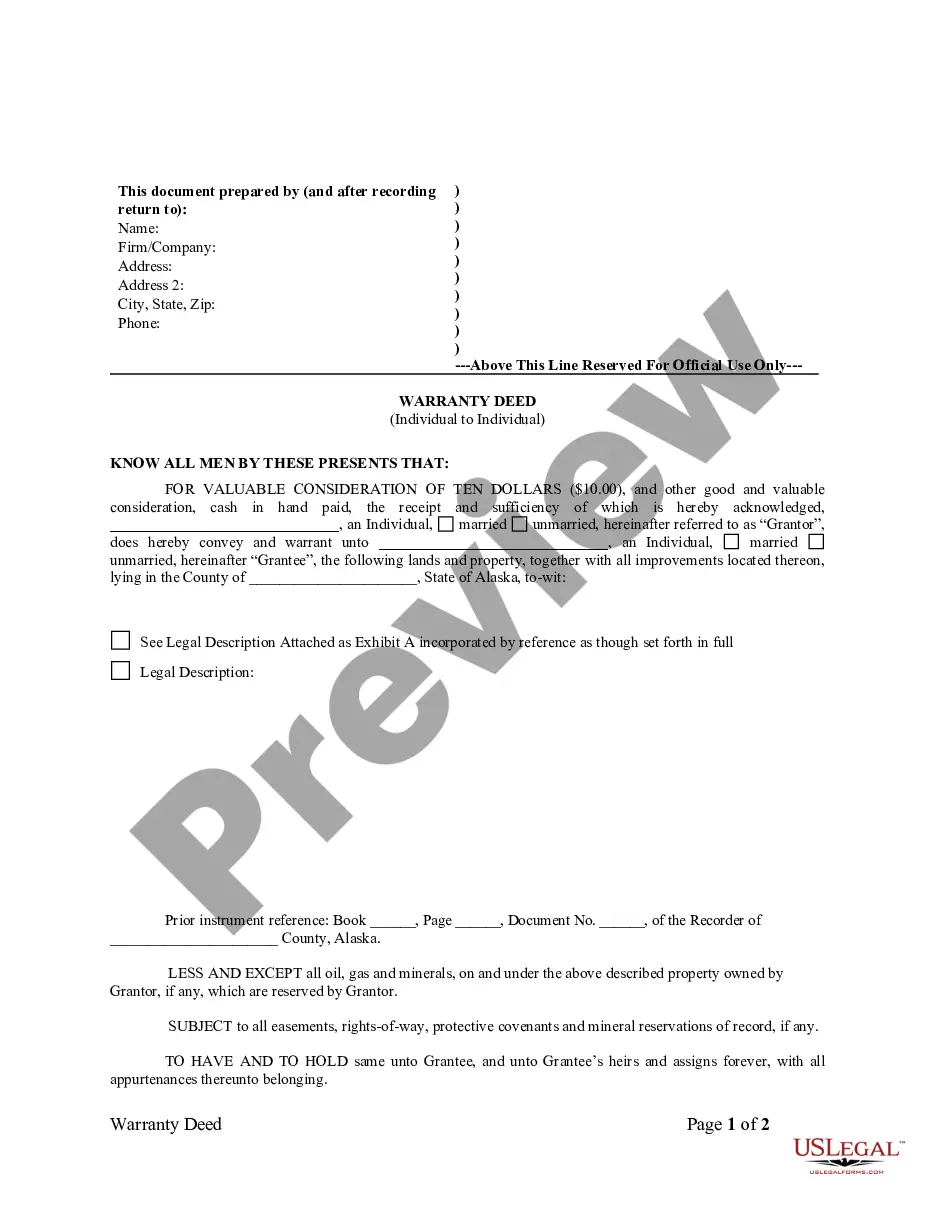
Warranty Deed - From Individual → Individual
Transfer property ownership between individuals while ensuring clear title and legal protections.
Warranty Deed - From Corporation → Corporation
Transfer property ownership between two corporations, ensuring legal protection from claims and encumbrances.
Warranty Deed - From Individual → Corporation
Transfer property ownership from an individual to a corporation, ensuring clear title and rights. Essential for corporate real estate transactions.
Warranty Deed - From Corporation → Individual
Secure ownership transfer from a corporation to an individual with a legally binding warranty deed.
Warranty Deed - From Corporation → 2 Individuals
Transfer property ownership from a corporation to two individuals, ensuring joint tenancy and survivorship rights.
Warranty Deed - From Husband & Wife → Individual
Use this document to transfer property from a couple to an individual, ensuring legal protection of the title against all claims.
Warranty Deed - From Corporation → Husband & Wife
Use this document to transfer property ownership from a corporation to a couple, ensuring joint tenancy with rights of survivorship.
Warranty Deed - From Tenants in Common → Joint Tenants
Easily convert shared property ownership from tenants in common to joint tenancy, ensuring rights of survivorship between partners.
Special Warranty Deed Form
Use this document to transfer property ownership with limited warranties, protecting the buyer from claims related to the seller's ownership.
Quitclaim Deed - From Individual → Individual
Used to transfer property rights between individuals, this form simplifies the process of conveying ownership without warranties.
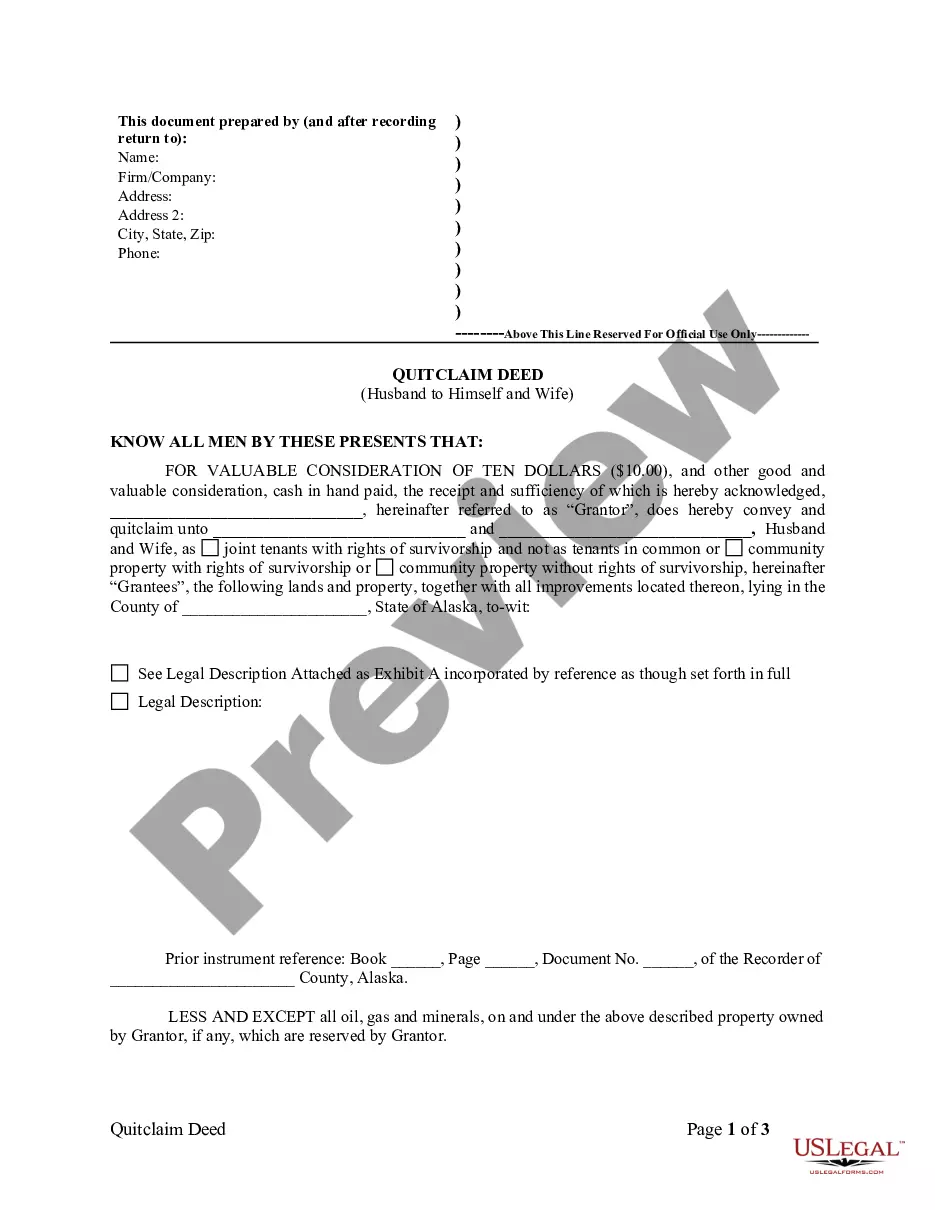
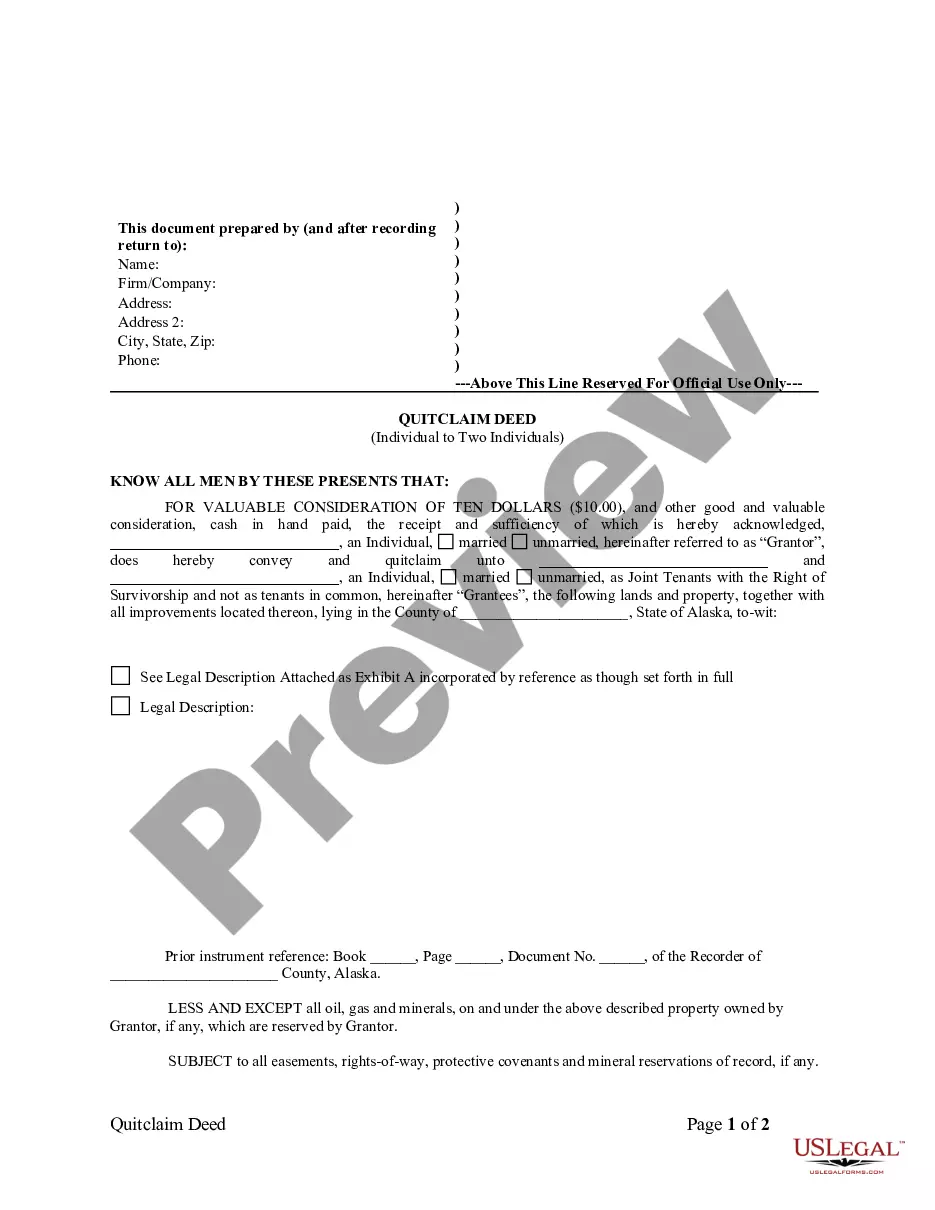
Quitclaim Deed - From Individual → 2 Individuals in Joint Tenancy
Easily transfer property ownership to two individuals as joint tenants, ensuring rights of survivorship.
Quitclaim Deed - From 2 Individuals → Corporation
Transfer property ownership from two individuals to a corporation, protecting the rights of all parties involved.
Quitclaim Deed - From 2 Individuals → LLC
Transfer property ownership from two individuals to an LLC, important for clear title management and asset protection.
Quitclaim Deed - From Corporation → Individual
Transfer property ownership from a corporation to an individual, simplifying real estate transactions.
Quitclaim Deed - From Corporation → 2 Individuals
Facilitate the transfer of property from a corporation to two individuals, establishing joint ownership with rights of survivorship.
Quitclaim Deed - From 2 Individuals → Husband & Wife
Transfer property ownership between two individuals and a married couple, while ensuring joint tenancy rights. Ideal for simplifying property conveyance.
Quitclaim Deed - From Corporation → Husband & Wife
Transfer property ownership from a corporation to joint owners with specific rights and protections for spouses.
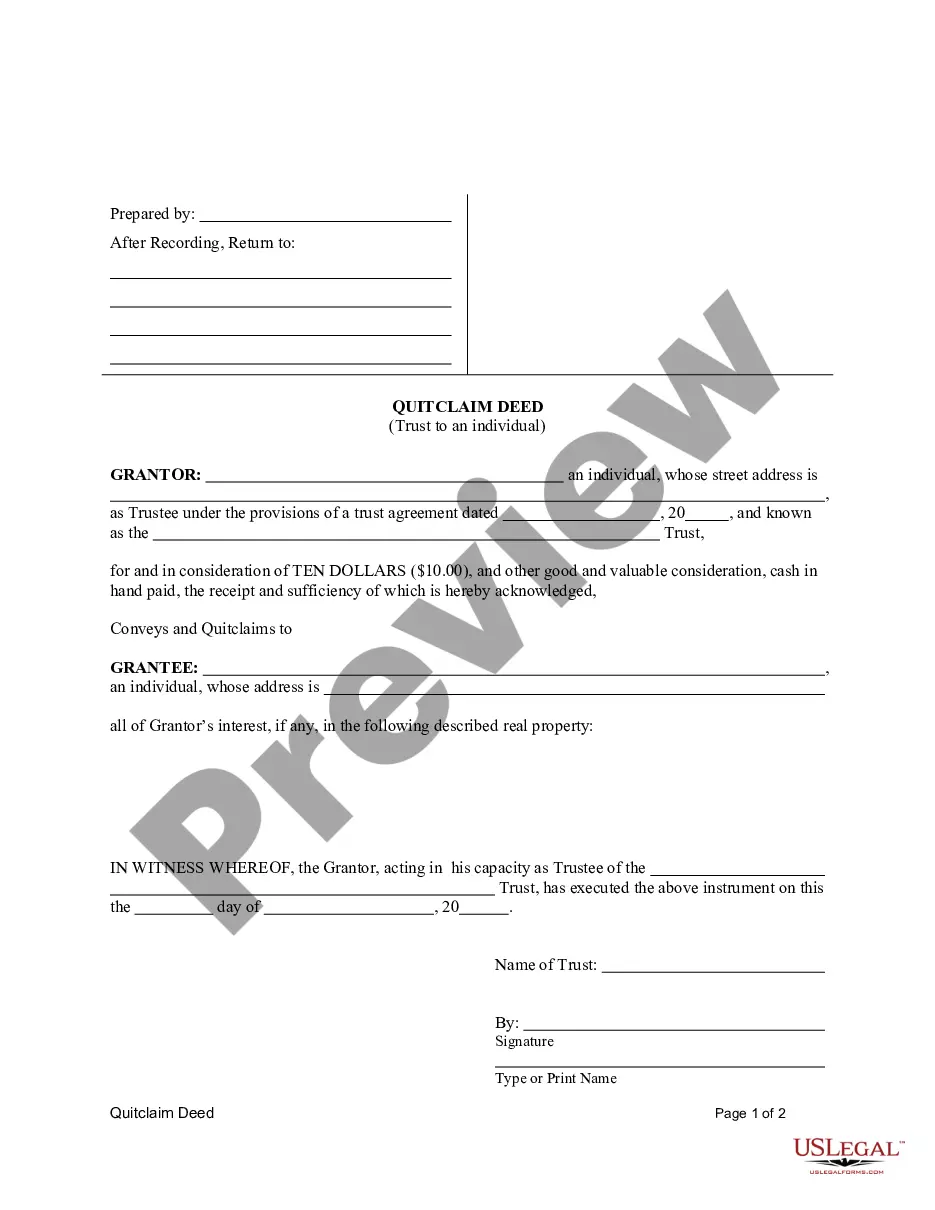
Quitclaim Deed - From Individual → Trust
Use this document to transfer property from an individual to a trust, streamlining estate management and ensuring secure asset allocation.
Quitclaim Deed - From Trust → Individual
Transfer property ownership from a trust to an individual, simplifying the process without the need for a formal sale.
Grant Deed
Use this form to legally transfer property ownership, ensuring clear title and proper documentation.
Revocation of Transfer on Death Deed - Beneficiary Deed for One Grantor
Easily revoke previously issued transfer on death deeds to ensure your property passes according to your current wishes.
Revocation of Transfer on Death Deed - Beneficiary Deed for Two Grantors
Easily revoke your transfer on death deed and update beneficiary designations before it's too late.
TOD - from Individual → Married Beneficiaries
Easily transfer property to married beneficiaries upon your death, ensuring a smooth transition of assets without probate complications.
TOD - from Individual → Business Entity
Designate a business entity as a beneficiary for real property to ensure smooth transfer upon your death.
TOD - from Individual → Individual
Designate beneficiaries for your property to transfer after your death, ensuring a smoother transition without going through probate.
TOD - from 2 Individuals → Individual
Designate one individual to inherit real property from two owners after their death, ensuring clear succession.
TOD - from Individual → 2 Individuals
Use this deed to designate who will inherit your property when you pass away, ensuring a smooth transition without the need for probate.
TOD - from 2 Individuals → 2 Individuals
Easily transfer property to beneficiaries upon death, ensuring a smooth transition of ownership without probate hassles.
TOD - from Individual → Trust
Designate a beneficiary for your property to transfer at death, avoiding probate complications.
TOD - from 2 Individuals → Trust
Easily designate beneficiaries for your property after your death, ensuring a smooth transfer of ownership without probate.
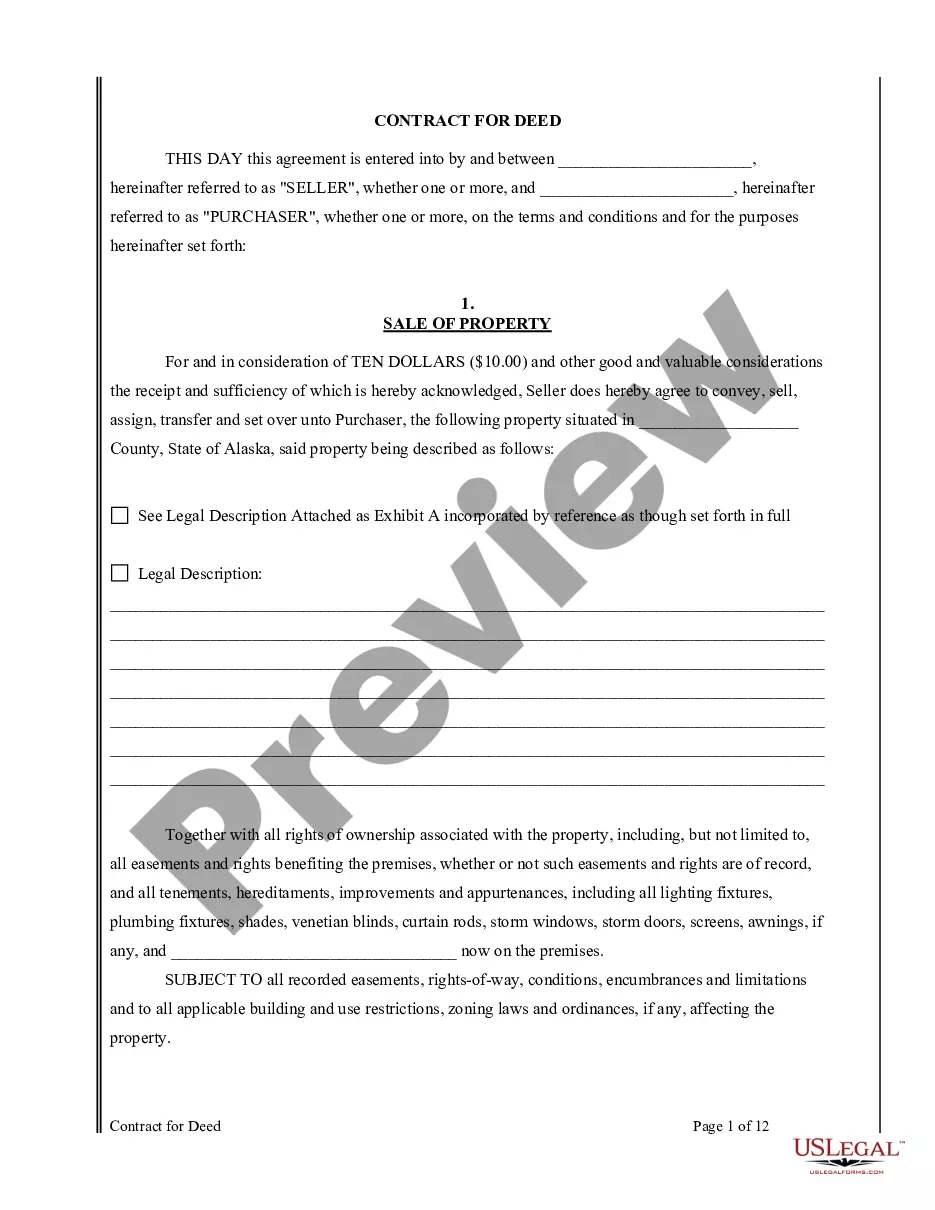
Agreement or Contract for Deed for Sale and Purchase of Real Estate
Secure sales of real estate with flexible payment terms, protecting both buyers and sellers.
Assignment of Contract for Deed by Seller
Used to transfer a seller's rights under a contract for deed, this assignment ensures the new party is responsible for all obligations.
Contract for Deed Seller's Annual Accounting Statement
Keep track of financial transactions and obligations in real estate agreements with this essential annual accounting statement.
Notice of Assignment of Contract for Deed
Use this notice to formally assign rights under a contract for deed, ensuring legal clarity and documentation of the transfer.
Seller’s Financing Disclosure
Ensure transparency in real estate transactions by detailing financing terms between seller and buyer, particularly in land contracts.
Buyer's Notice of Intent to Vacate and Surrender Property
Notify the seller of your intention to vacate the property under a contract for deed agreement.
Buyer's Request for Accounting from Seller Under Contract for Deed
Request detailed payment information related to your contract for deed and obtain the current balance due.
Final Notice of Default — Past Due Payments
Learn about your payment defaults and the seller's rights regarding the property you are purchasing under a contract for deed.
Final Notice of Forfeiture and Vacate Request
Use this form to formally request the vacating of a property when you’ve received a default notice under a contract for deed.
General Notice of Default for Contract for Deed
Serve notice to the buyer if they default on payments for a contract for deed, ensuring the seller can take appropriate action.
Fiduciary Deed
Ideal for individuals transferring property under fiduciary duty, ensuring legal clarity and compliance.
Common Alaska Deed documents
- Warranty Deed — guarantees a clear title and protects against claims.
- Quitclaim Deed — transfers rights without guaranteeing title quality.
- Grant Deed — conveys property with some assurances about title.
- Bargain and Sale Deed — implies ownership but not warranty against claims.
- Gift Deed — transfers property as a gift without consideration.
- Deed of Trust — secures a loan by transferring title to a trustee.
- Tax Deed — conveys property after a tax sale, typically with limited warranties.
Complete Alaska Deeds packages
Bundle every form you need for a complete situation — not just one document.

 11 forms
Alaska Contract for Deed Package
Access multiple essential forms for owner-financed real estate transactions, providing everything needed in one convenient package.
- Alaska Agreement or Contract for Deed for Sale and Purchase of Real Estate a/k/a Land or Executory Contract
- Alaska Notice of Intent to Enforce Forfeiture Provisions of Contact for Deed
- Alaska Final Notice of Forfeiture and Request to Vacate Property under Contract for Deed
- Alaska General Notice of Default for Contract for Deed
- Alaska Seller's Disclosure of Forfeiture Rights for Contract for Deed
- Alaska Seller's Disclosure of Financing Terms for Residential Property in connection with Contract or Agreement for Deed a/k/a Land Contract
- Alaska Contract for Deed Seller's Annual Accounting Statement
- Alaska Notice of Default for Past Due Payments in connection with Contract for Deed
- Alaska Final Notice of Default for Past Due Payments in connection with Contract for Deed
- Alaska Assignment of Contract for Deed by Seller
- Alaska Notice of Assignment of Contract for Deed
4 forms
Alaska Satisfaction, Cancellation or Release of Mortgage Package
Gather everything needed to release or satisfy a mortgage in one convenient package.
4 forms
Alaska Assignment of Mortgage Package
Get the essential forms needed to transfer mortgage interests all in one convenient package.
6 forms
Alaska Commercial Property Sales Package
Access essential forms for closing a commercial real estate transaction, all in one convenient package.
- Addendum for Continued Marketing of Property by Seller due to Contingencies
- Environmental Assessment, Threatened or Endangered Species, And Wetlands Addendum
- Contract for the Sale and Purchase of Real Estate - No Broker - Commercial Lot or Land
- Exchange Addendum to Contract - Tax Free Exchange Section 1031
- Option For the Sale and Purchase of Real Estate - Commercial Lot or Land
- Option For the Sale and Purchase of Real Estate - Commercial Building
8 forms
Alaska Option to Purchase Package
Access everything needed to secure a property purchase or sale with multiple related forms, all in one package.
- Alaska Option to Purchase Addendum to Residential Lease - Lease or Rent to Own
- Alaska Residential Rental Lease Agreement
- Option For the Sale and Purchase of Real Estate - Residential Lot or Land
- Option For the Sale and Purchase of Real Estate - Residential Home
- Option For the Sale and Purchase of Real Estate - Commercial Lot or Land
- Option For the Sale and Purchase of Real Estate - Commercial Building
- Option For the Sale and Purchase of Real Estate - Farm Land
- Option For the Sale and Purchase of Real Estate - General Form
FAQs
A trust can manage assets during your lifetime, while a will takes effect after death.
Assets may be distributed according to state laws, which may not reflect your wishes.
Review your plan regularly, especially after major life events or changes in circumstances.
Beneficiary designations typically override instructions in your will or trust.
Yes, you can designate separate agents for financial and healthcare matters.
Key legal points
- Deeds must be signed, often requiring notarization.
- Different types of deeds offer varying levels of protection.
- Property transfers require clear identification of the parties involved.
- Deeds may need to be recorded with local authorities.
- Certain deeds can have tax implications.
How to get started
Begin your process in just a few steps.
- Find a template that suits your specific situation.
- Review the template description and any signing requirements.
- Access the full template with a subscription.
- Complete the document in the online editor.
- Export or send the document as needed, including e-signature options.
Practical tip
Consider using a warranty deed for added protection when transferring property.