Delaware Last Will and Testament for Divorced Person Not Remarried with Adult and Minor Children
What this document covers
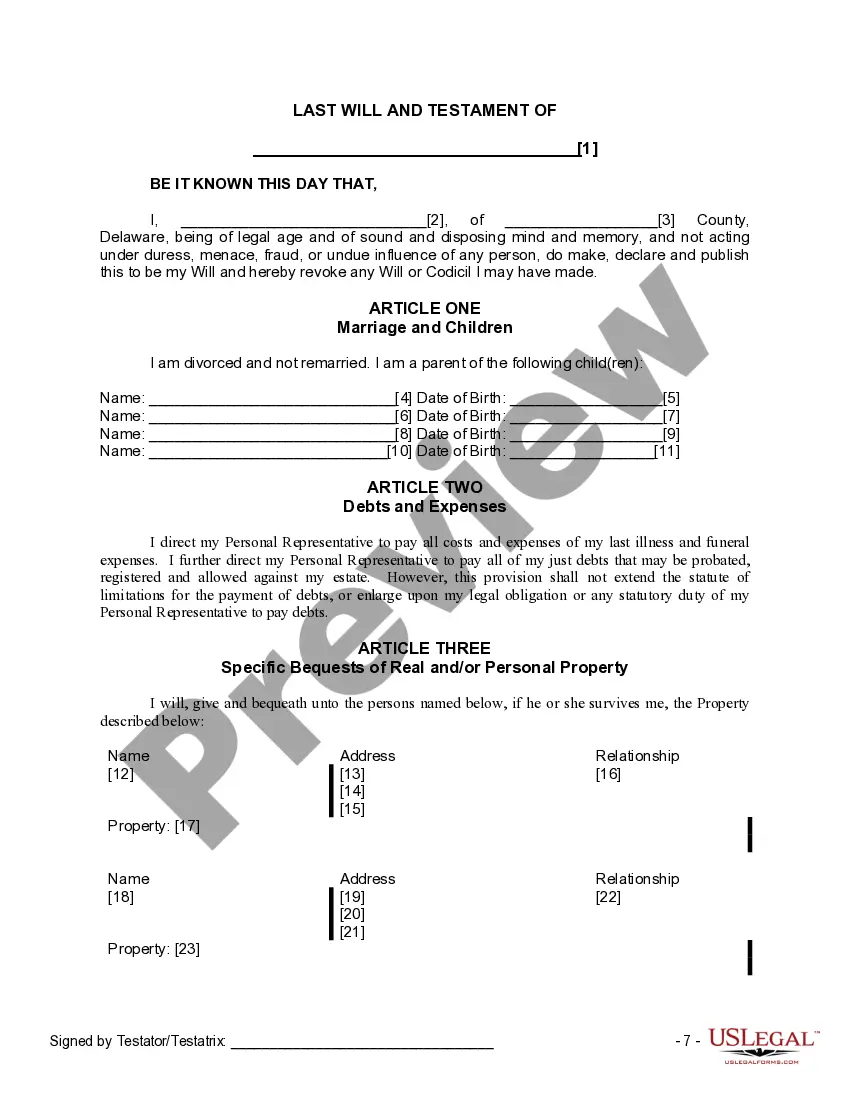
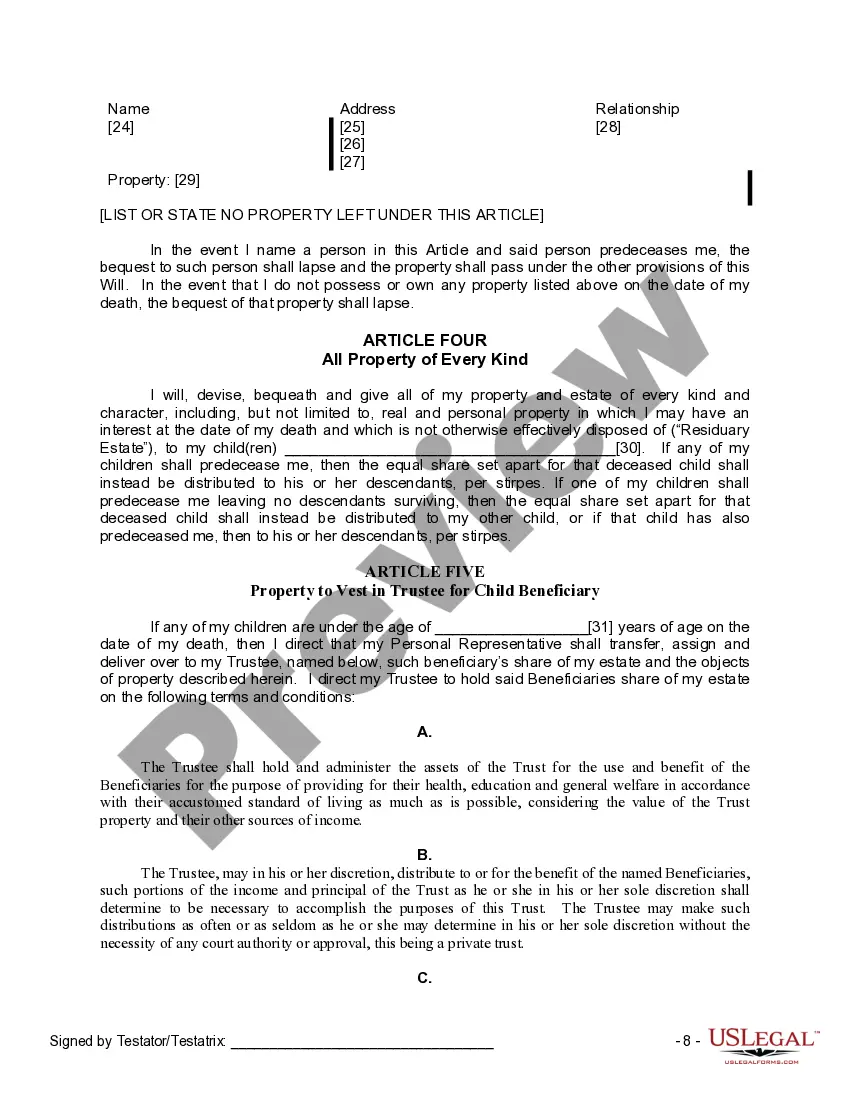
This Last Will and Testament is specifically designed for a divorced individual who has not remarried and has both adult and minor children. It outlines the distribution of your estate, the appointment of a personal representative or executor, and includes provisions for the care of minor children, such as establishing a trust. This differs from other wills in that it takes into account the unique circumstances of divorce and the presence of children from that marriage.
Key components of this form
- Designation of a personal representative to manage the estate.
- Specific bequests of property to individuals.
- Provisions for the distribution of remaining assets to children.
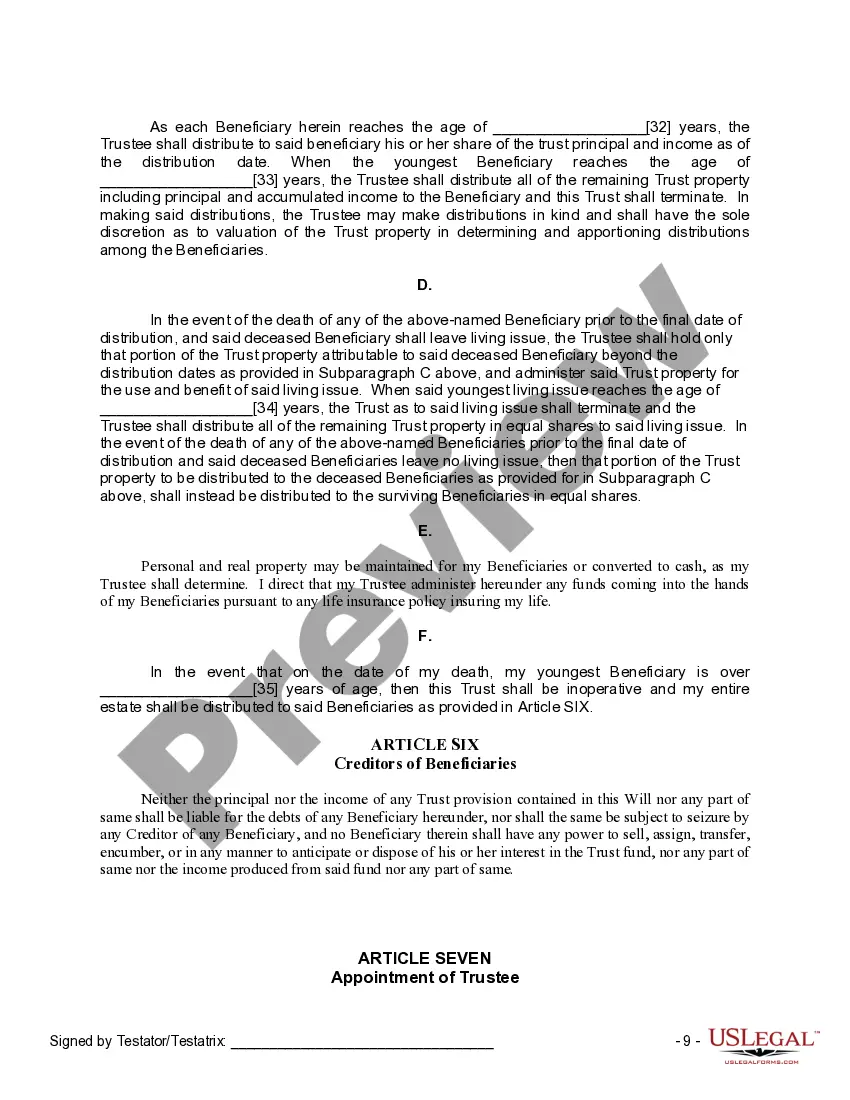
- Establishment of a trust for minor children until they reach a specified age.
- Appointment of a guardian for minor children.
- Signature requirements for legal validity with witnesses and notary where applicable.




Situations where this form applies
This form should be used when a divorced person without a current spouse wishes to make legal arrangements for the distribution of their estate, particularly when they have both adult and minor children. It is essential for ensuring that the children's financial needs are considered, especially for minor children, and that your assets are distributed according to your wishes after your passing.
Intended users of this form
This form is suitable for:
- Divorced individuals who are not remarried.
- Parents with minor and adult children.
- Individuals wishing to specify guardianship and trusts for minor children.
- Anyone needing a structured estate distribution plan.
Instructions for completing this form
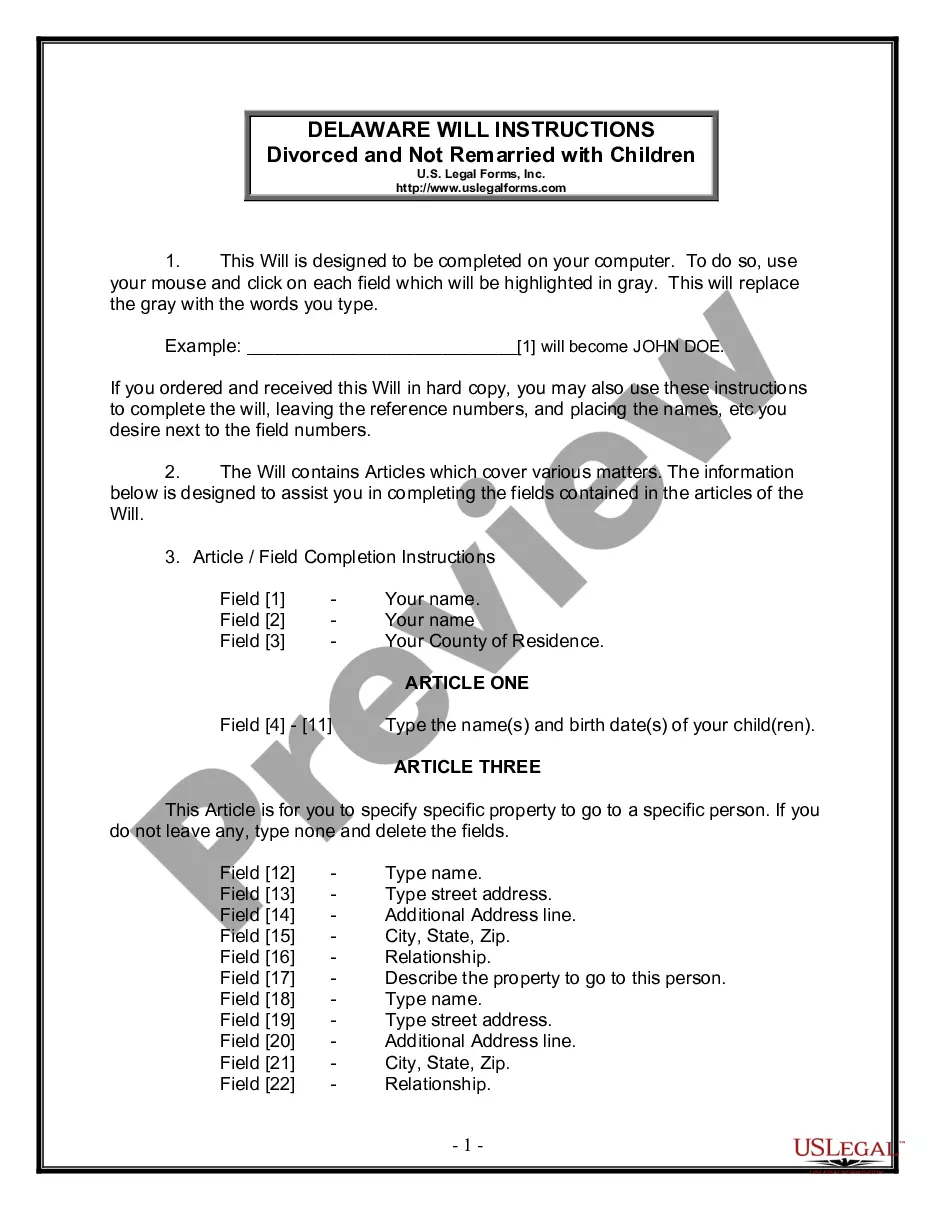
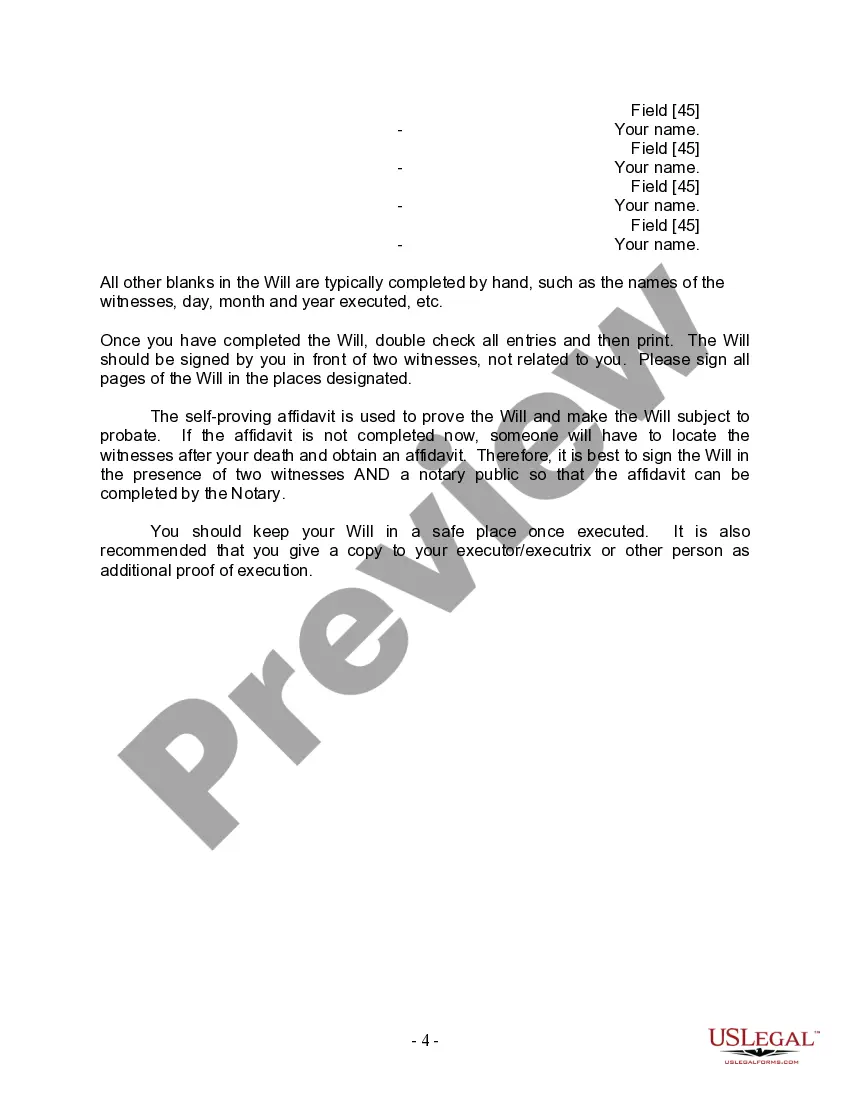
- Provide your full name and county of residence.
- List your childrenâs names and their birth dates.
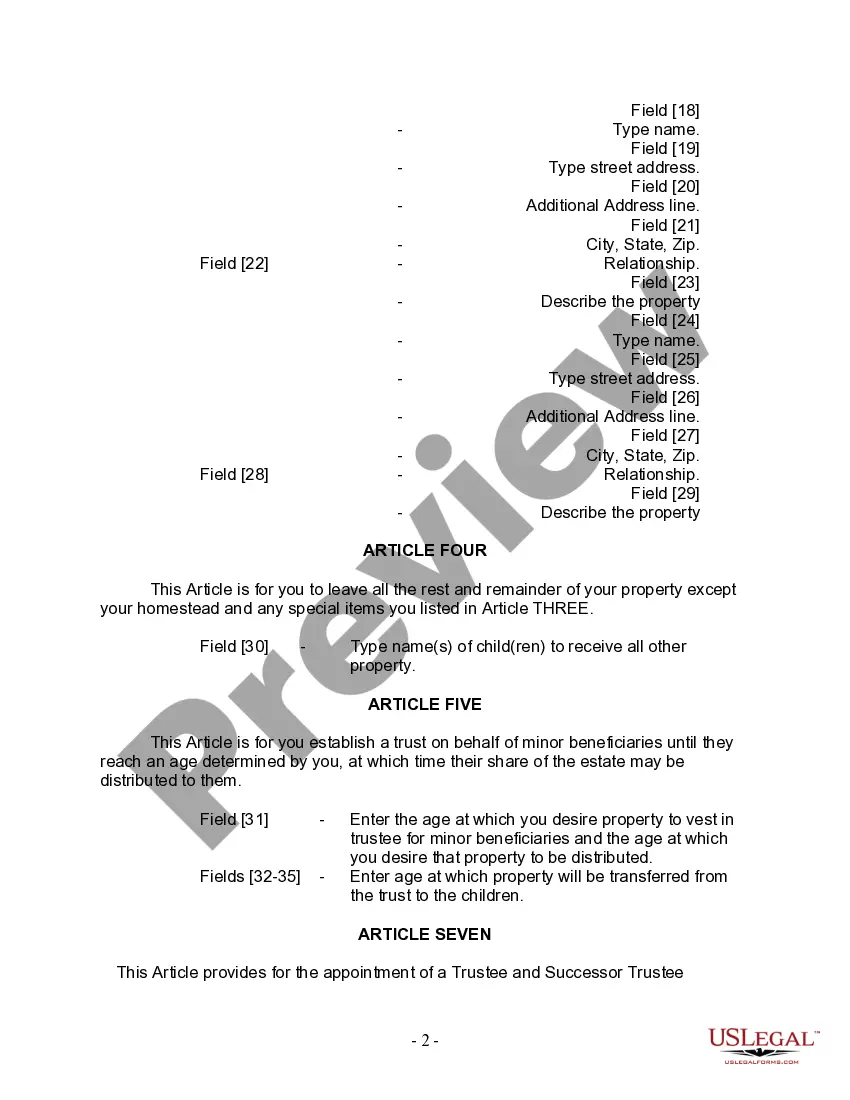
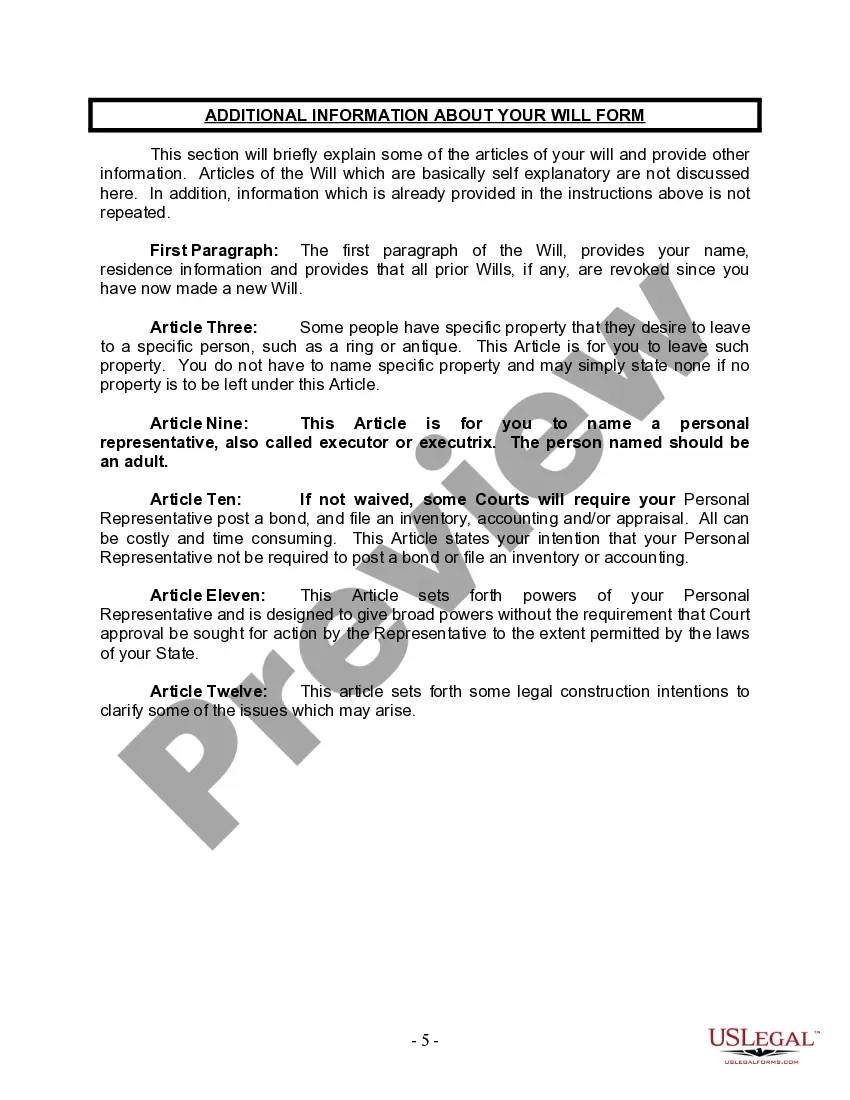
- Designate specific individuals to receive specific property, if applicable.
- Outline the remaining property distribution to your children.
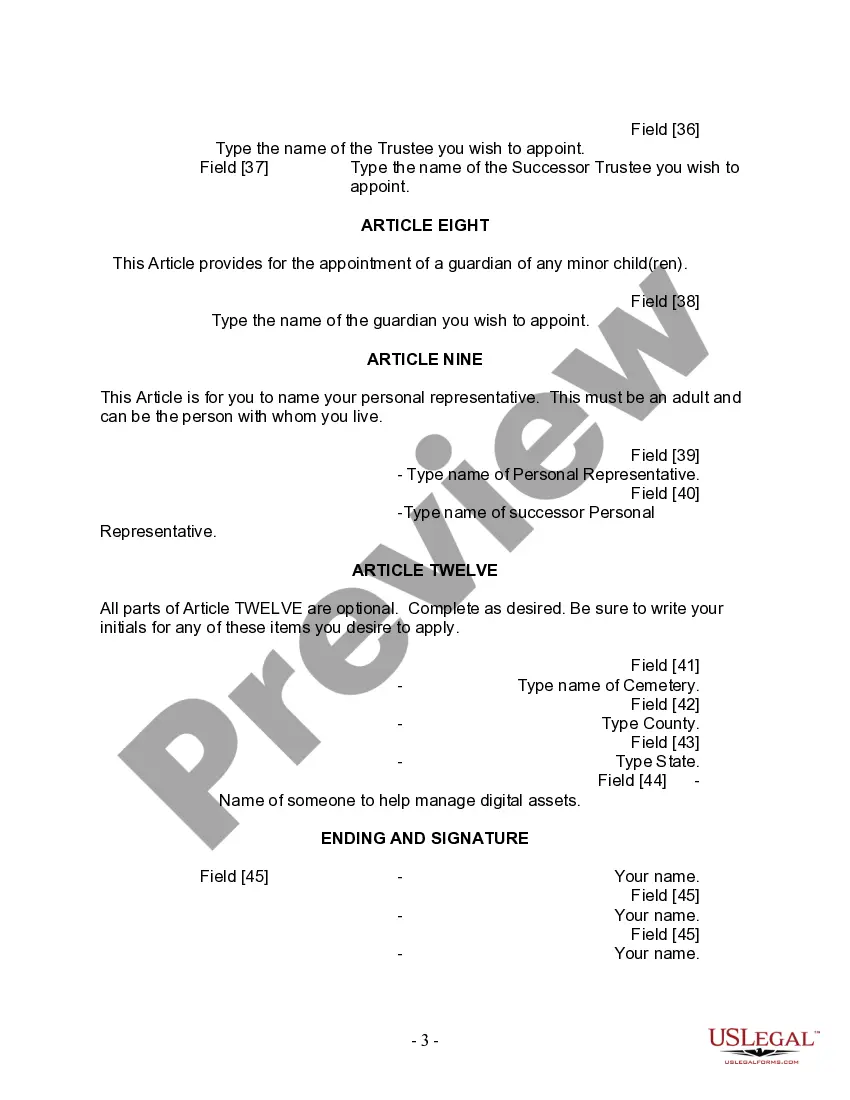
- Establish any trusts for minor children, specifying age terms and trustees.
- Sign the document in the presence of two unrelated witnesses and a notary public if using a self-proving affidavit.
Notarization guidance
Yes, this form must be notarized to be legally valid in Delaware. Completing the self-proving affidavit with the notary public simplifies the probate process, allowing the will to be admitted without further proof of execution.
Get your form ready online
Our built-in tools help you complete, sign, share, and store your documents in one place.
Make edits, fill in missing information, and update formatting in US Legal Forms—just like you would in MS Word.
Download a copy, print it, send it by email, or mail it via USPS—whatever works best for your next step.
Sign and collect signatures with our SignNow integration. Send to multiple recipients, set reminders, and more. Go Premium to unlock E-Sign.
If this form requires notarization, complete it online through a secure video call—no need to meet a notary in person or wait for an appointment.
We protect your documents and personal data by following strict security and privacy standards.

Make edits, fill in missing information, and update formatting in US Legal Forms—just like you would in MS Word.

Download a copy, print it, send it by email, or mail it via USPS—whatever works best for your next step.

Sign and collect signatures with our SignNow integration. Send to multiple recipients, set reminders, and more. Go Premium to unlock E-Sign.

If this form requires notarization, complete it online through a secure video call—no need to meet a notary in person or wait for an appointment.

We protect your documents and personal data by following strict security and privacy standards.
Typical mistakes to avoid
- Failing to sign the will in the presence of two witnesses.
- Not specifying alternate beneficiaries in case the primary ones predecease you.
- Leaving out essential details about the trust for minors.
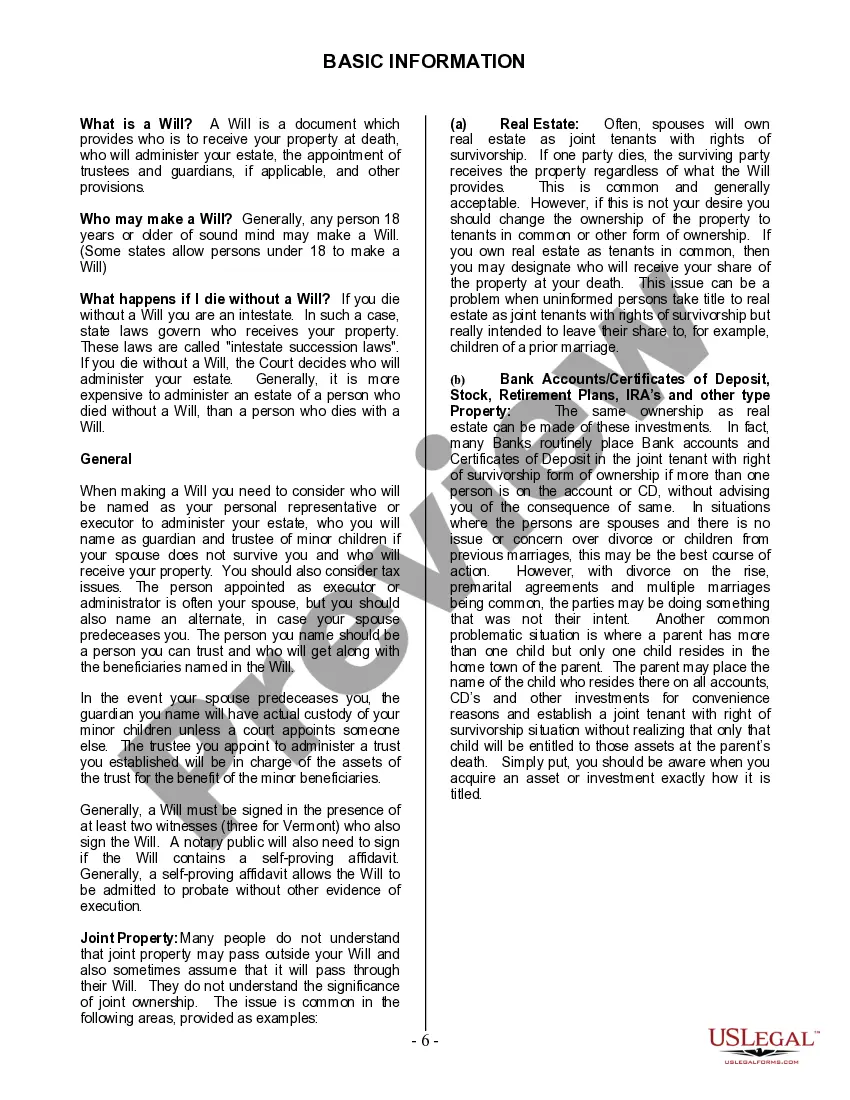
- Assuming that joint property will be distributed according to the will.
Advantages of online completion
- Convenience of filling out the form digitally.
- Immediate access to legal forms without the need for physical visits.
- Step-by-step guidance makes the form easy to complete.
- Templates are drafted by licensed attorneys to ensure legal compliance.
What to keep in mind
- The Last Will and Testament is crucial for divorced individuals wanting to secure their children's financial future.
- Clear instructions for appointing a personal representative and establishing trusts are integral components.
- Ensuring compliance with signing and witnessing requirements is essential for the will's validity.
Looking for another form?
Form popularity
FAQ
In Delaware, a spouse does not automatically become a beneficiary of your estate unless specified in a will or by law. If you want to ensure your wishes are respected, it's vital to create a Delaware Last Will and Testament for Divorced Person Not Remarried with Adult and Minor Children that clearly outlines who benefits from your estate. Understanding these legal nuances enables you to plan effectively and avoid unintended consequences.
In general, your spouse has rights to inherit from your estate even if you designate someone else in your will. This can lead to confusion, especially when drafting a Delaware Last Will and Testament for Divorced Person Not Remarried with Adult and Minor Children. Being aware of state laws regarding spousal rights can help you create a more precise estate plan. Many find it beneficial to seek assistance on these matters for clarity.
A last will and testament does not override a marriage in Delaware. In fact, if you have a spouse, they may have certain rights to your estate regardless of what your will states. When creating your Delaware Last Will and Testament for Divorced Person Not Remarried with Adult and Minor Children, it's important to account for your marital status and any children involved. Proper documentation ensures your wishes are honored.
A will generally does not override divorce papers in Delaware. The Delaware Last Will and Testament for Divorced Person Not Remarried with Adult and Minor Children needs to explicitly state one's intentions regarding assets after a divorce. If divorce papers and a will conflict, the most recent legal document often takes precedence. It is wise to draft your will clearly after any divorce to avoid unwanted complications.
In Delaware, when a husband dies, his wife may be entitled to a share of the estate under intestate succession laws if there is no will. This means that if there is a Delaware Last Will and Testament for Divorced Person Not Remarried with Adult and Minor Children, the terms outlined in those documents will dictate what she receives. It’s essential for a divorced individual to ensure their will reflects their current wishes. Understanding these laws helps in planning effectively for the family's future.
Yes, a handwritten will, known as a holographic will, can be valid in Delaware provided it meets specific criteria. You must write it in your own handwriting and include your signature. However, for a Delaware Last Will and Testament for Divorced Persons Not Remarried with Adult and Minor Children, having it formally witnessed is advisable to prevent any disputes.
You can find forms to write your own will at various online legal resource platforms. These platforms often provide templates specifically tailored to different needs, including a Delaware Last Will and Testament for Divorced Persons Not Remarried with Adult and Minor Children. Make sure to select a reliable source to ensure the form's legality in your state.
You do not necessarily need a lawyer to create a will in Delaware, but consulting one can bring peace of mind. A lawyer can help ensure your Delaware Last Will and Testament for Divorced Persons Not Remarried with Adult and Minor Children is comprehensive and legally sound. Additionally, they can guide you on complex family situations, especially when minor children are involved.
Yes, you can write your own will in Delaware, but it is critical to follow specific legal guidelines. A well-drafted Delaware Last Will and Testament for Divorced Persons Not Remarried with Adult and Minor Children helps ensure that your wishes are honored. It is also wise to consult resources or professionals to confirm your will's validity.
To create a valid will in Delaware, you must be at least 18 years old and of sound mind. The will should be in writing, signed by you, and witnessed by at least two individuals who are not beneficiaries of the will. Using a Delaware Last Will and Testament for Divorced Persons Not Remarried with Adult and Minor Children ensures you meet all necessary legal requirements.