Delaware Last Will and Testament for Divorced person not Remarried with Adult Children
Overview of this form
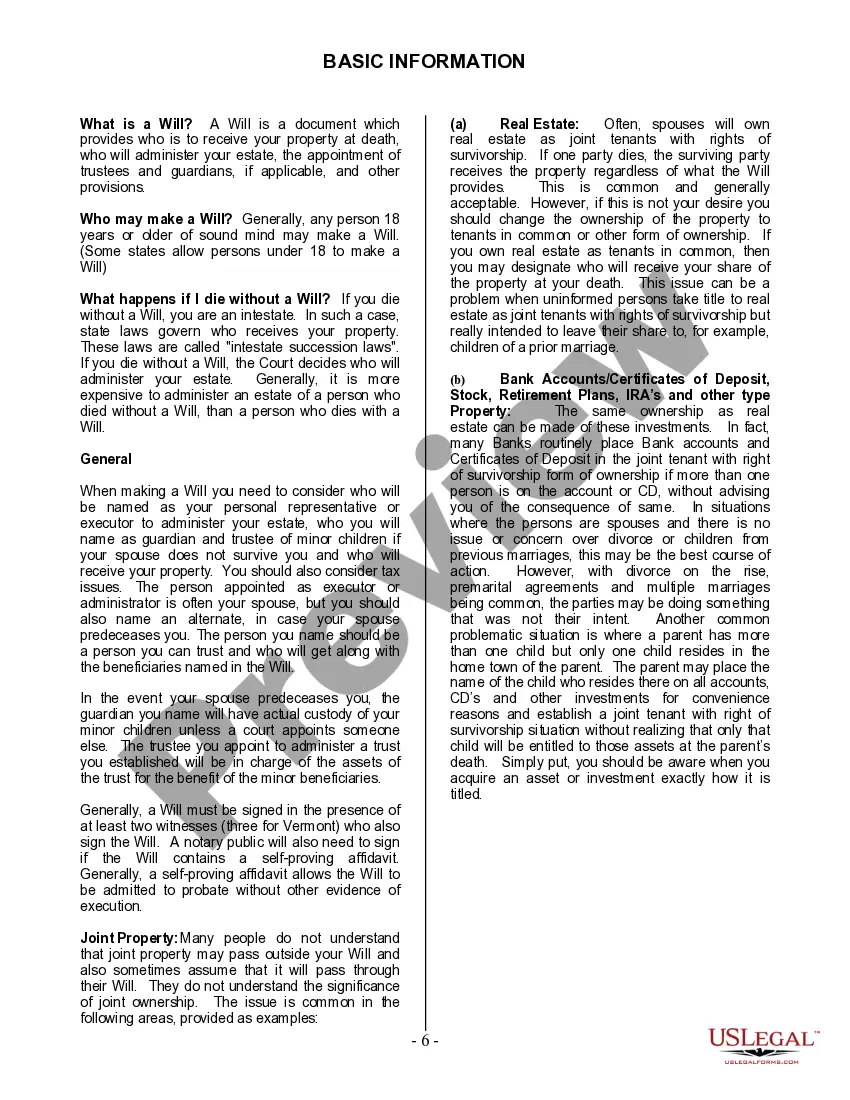
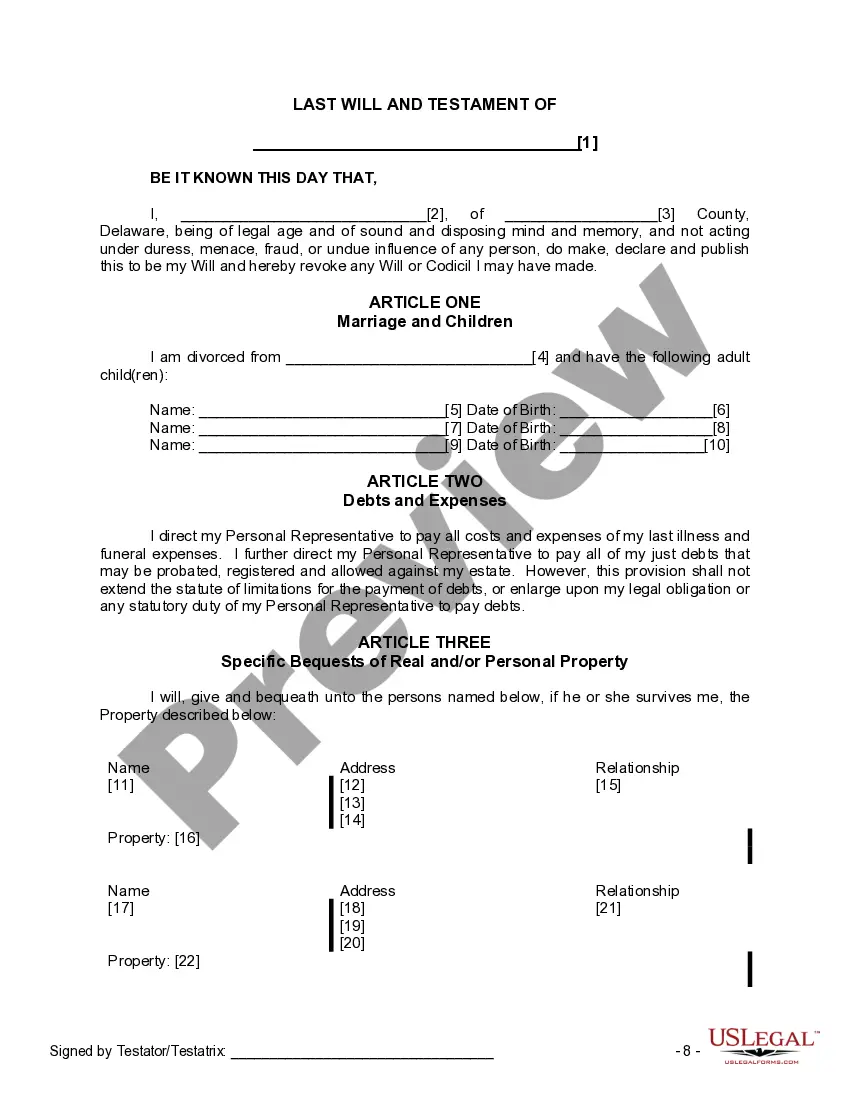
This Last Will and Testament is specifically designed for a divorced person who is not remarried and has adult children. It outlines how the individual's assets will be distributed upon death, who will act as the executor of the estate, and includes provisions for specific property bequests. Unlike other wills suitable for married individuals or those with minor children, this will addresses the unique circumstances of a divorced parent with adult offspring.
Key parts of this document
- Article One: Personal details and marriage status.
- Article Two: Directions for settling debts and expenses.
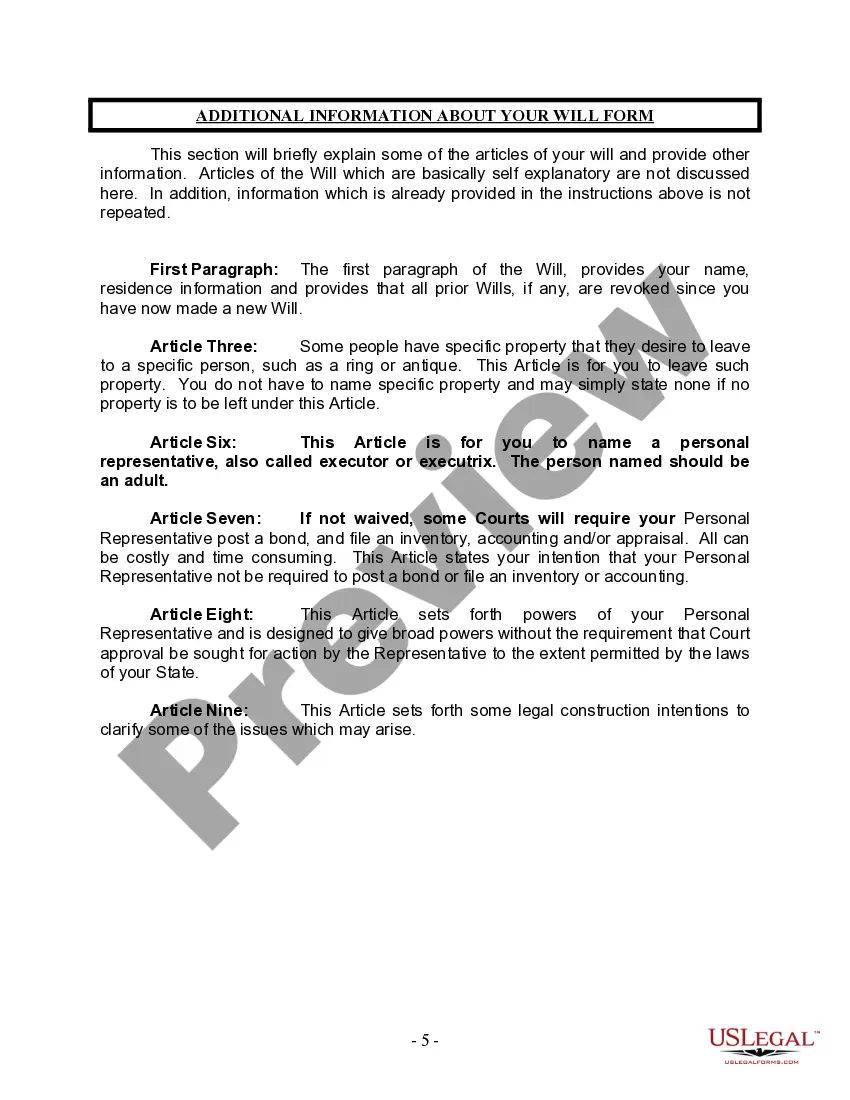
- Article Three: Specific bequests of personal property.
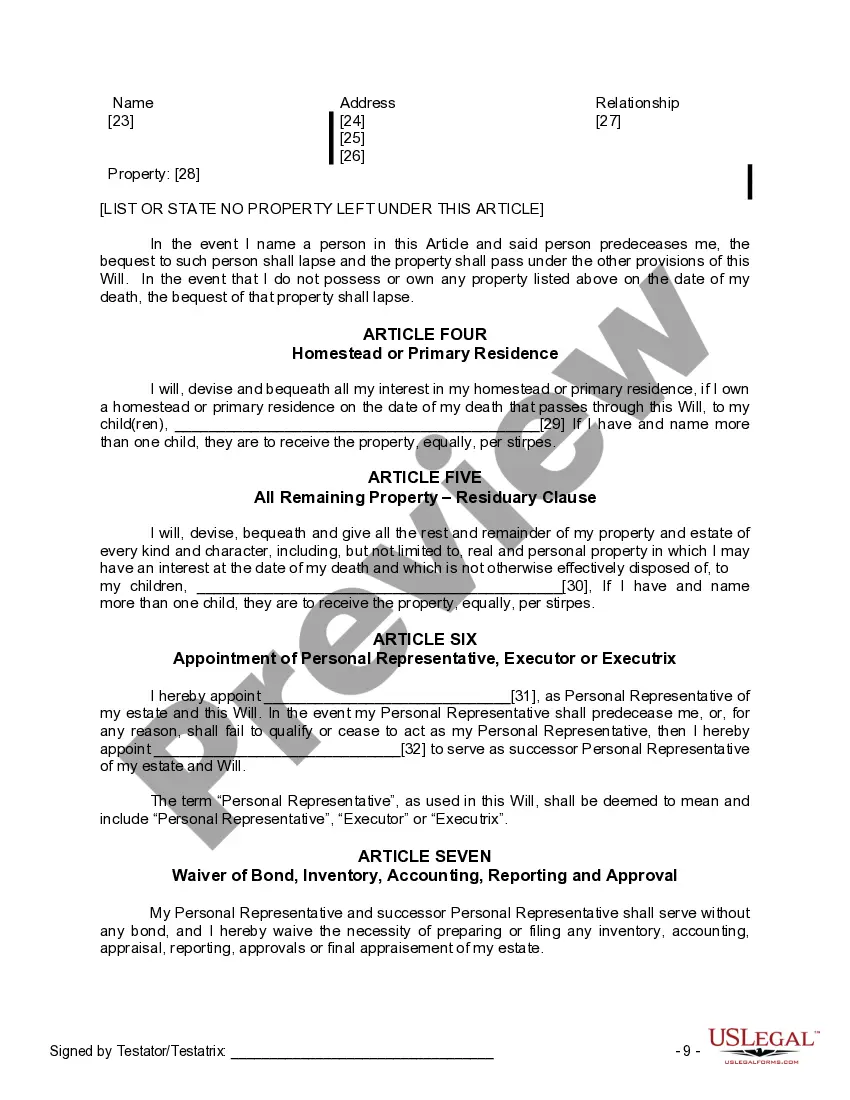
- Article Four: Distribution of the homestead or primary residence.
- Article Five: Allocation of any remaining assets.
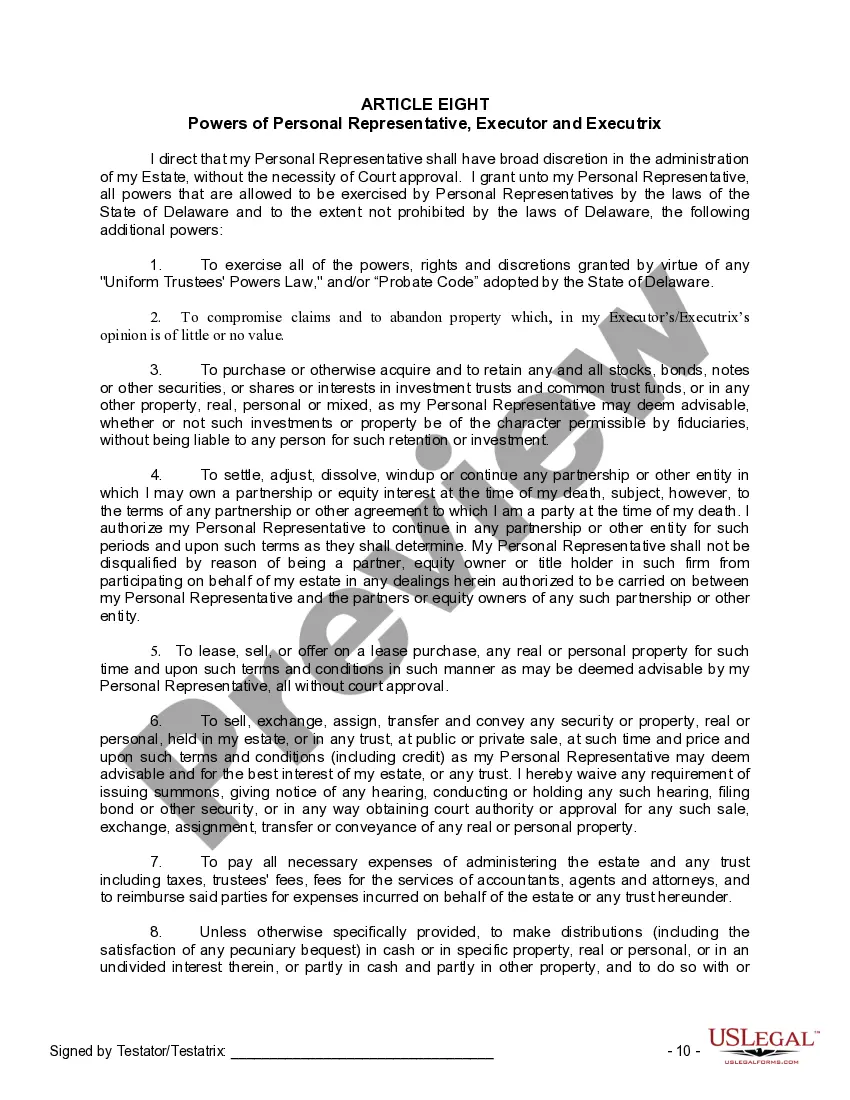
- Article Six: Appointment of a personal representative.





Common use cases
This form should be used when a divorced individual wishes to ensure that their assets are distributed according to their wishes, without the complexities that may arise from remarriage or minor children. It is ideal for those who want a straightforward way to express their final wishes regarding their estate and who they trust to manage their affairs after death.
Who should use this form
- Divorced individuals who are not remarried.
- Parents with adult children who wish to specify asset distribution.
- Individuals seeking to simplify their estate planning process.
- Those wanting to revoke any previous wills made before their divorce.
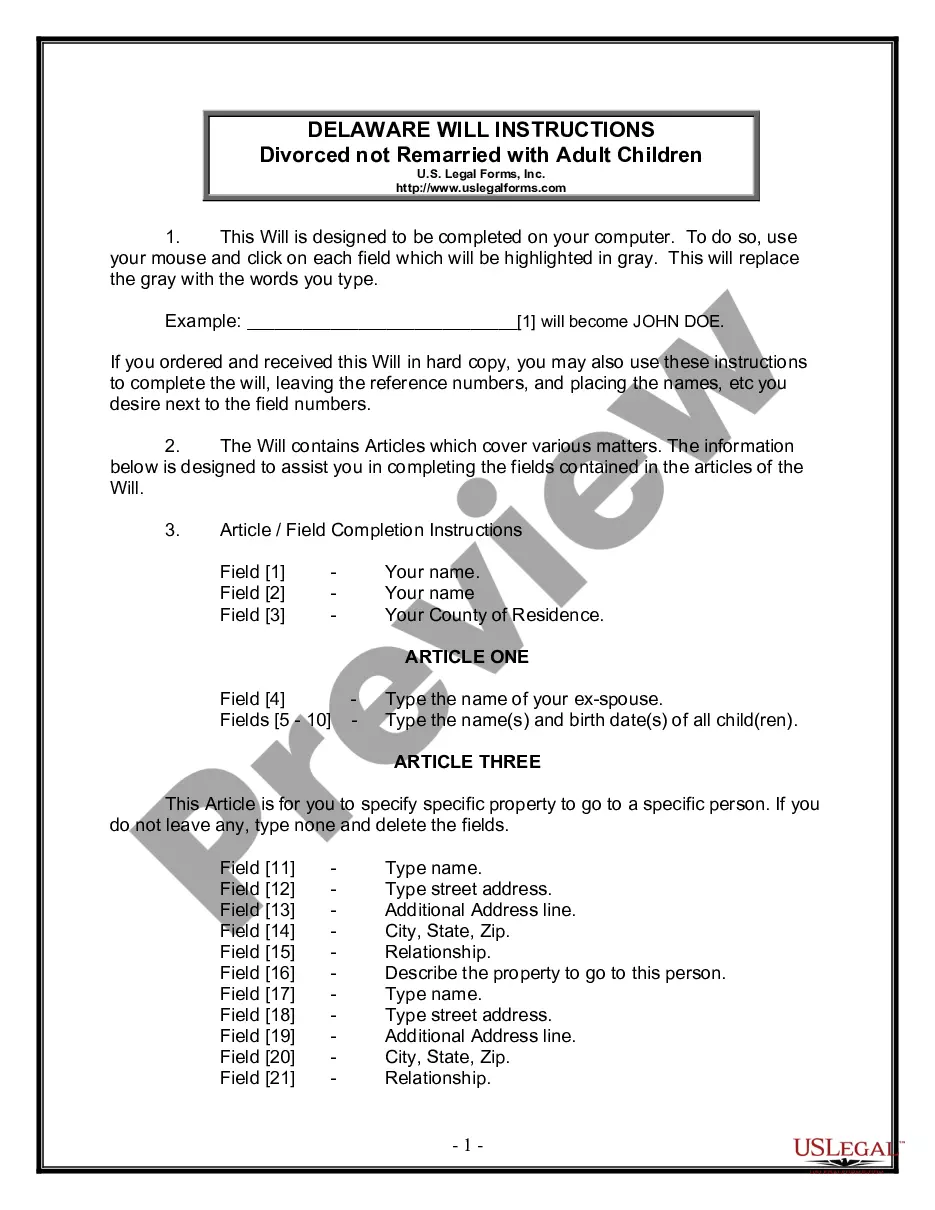
Instructions for completing this form
- Enter your personal information, including your name and county of residence.
- List the name of your ex-spouse and all your adult children, along with their birth dates.
- Specify any specific bequests you wish to make to individuals or organizations.
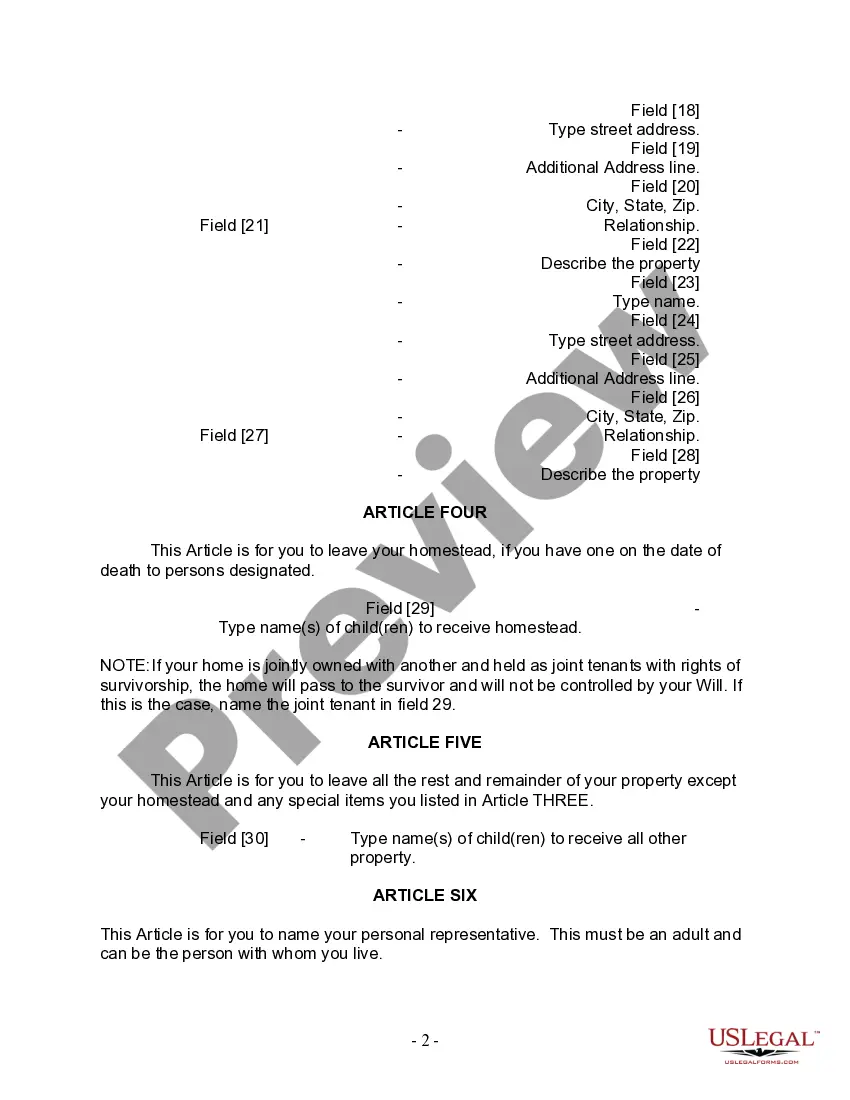
- Designate your homestead and indicate who will inherit it.
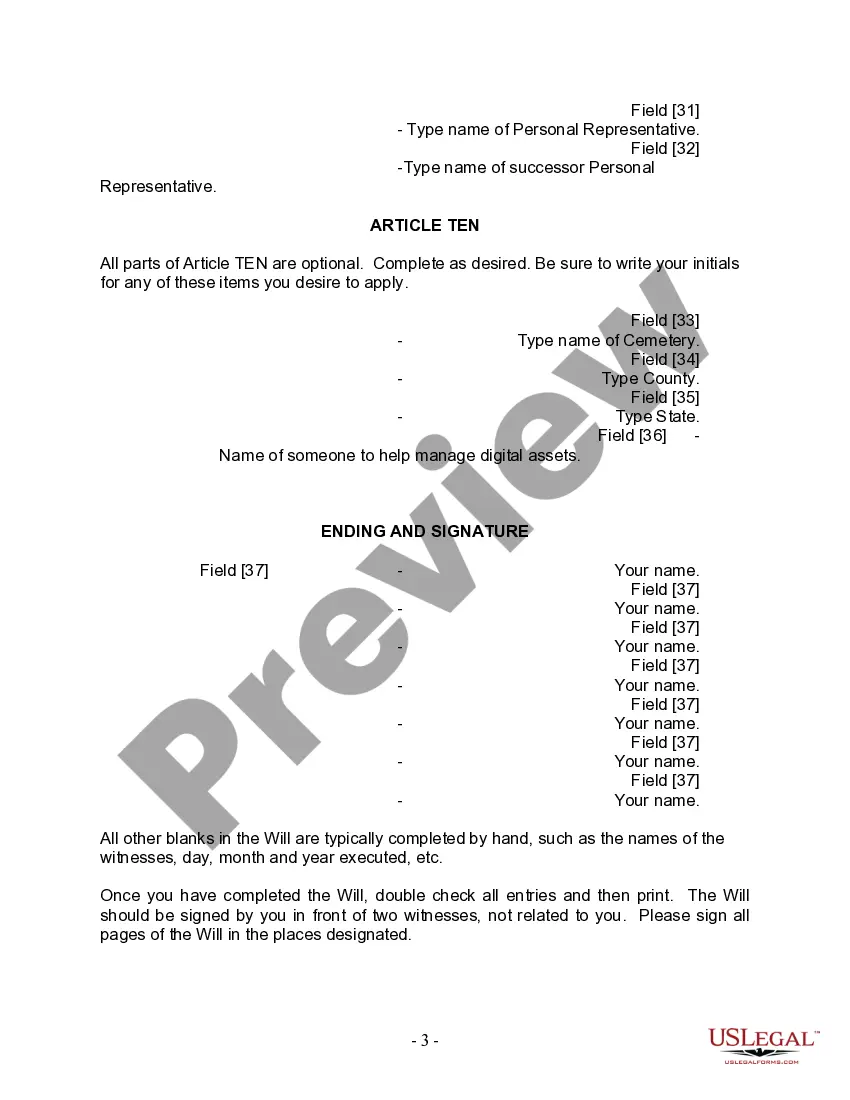
- Appoint a personal representative to manage your estate.
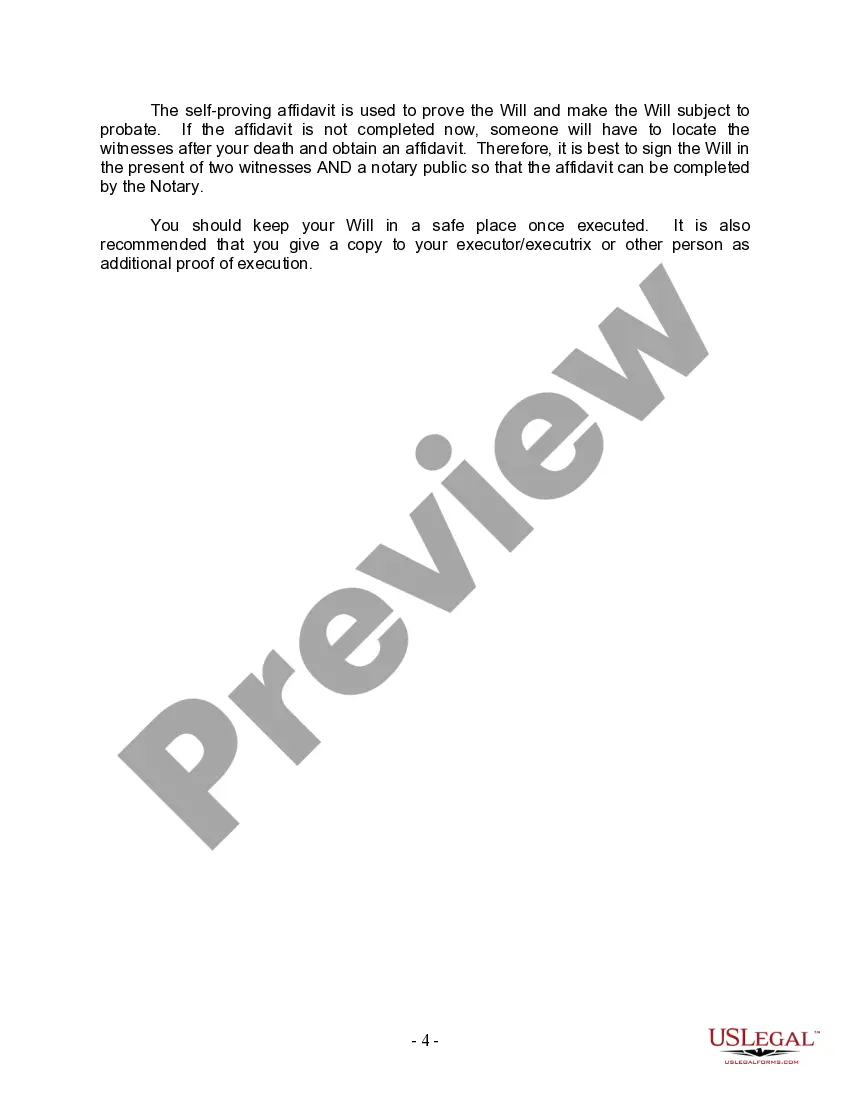
- Sign the will in front of two witnesses and, if desired, a notary public.
Is notarization required?
Notarization is required for this form to take effect. Our online notarization service, powered by Notarize, lets you verify and sign documents remotely through an encrypted video session, available 24/7.
Get your form ready online
Our built-in tools help you complete, sign, share, and store your documents in one place.
Make edits, fill in missing information, and update formatting in US Legal Forms—just like you would in MS Word.
Download a copy, print it, send it by email, or mail it via USPS—whatever works best for your next step.
Sign and collect signatures with our SignNow integration. Send to multiple recipients, set reminders, and more. Go Premium to unlock E-Sign.
If this form requires notarization, complete it online through a secure video call—no need to meet a notary in person or wait for an appointment.
We protect your documents and personal data by following strict security and privacy standards.

Make edits, fill in missing information, and update formatting in US Legal Forms—just like you would in MS Word.

Download a copy, print it, send it by email, or mail it via USPS—whatever works best for your next step.

Sign and collect signatures with our SignNow integration. Send to multiple recipients, set reminders, and more. Go Premium to unlock E-Sign.

If this form requires notarization, complete it online through a secure video call—no need to meet a notary in person or wait for an appointment.

We protect your documents and personal data by following strict security and privacy standards.
Common mistakes to avoid
- Failing to have the will signed in front of witnesses and a notary, if applicable.
- Not updating the will after significant life changes, such as a new marriage or a change in asset ownership.
- Leaving out critical information about asset descriptions or beneficiary details.
- Using outdated legal terminology or clauses that do not apply to a divorced individual.
Benefits of completing this form online
- Convenient digital access from anywhere at any time.
- Editable fields that allow you to easily customize your will.
- Instant download options make storage and sharing simple.
- Legal templates drafted by licensed attorneys, ensuring accuracy and compliance.
What to keep in mind
- The Last Will and Testament is tailored for divorced individuals with adult children.
- This will allows for clear instructions on the distribution of assets.
- Proper execution is essential; ensure all witnesses and notarization are in place.
- Regularly review your will, especially after major life changes.
Looking for another form?





Form popularity
FAQ
When considering a Delaware Last Will and Testament for a divorced person not remarried with adult children, it's essential to understand the need for separate wills. Each person's estate plan should reflect their individual wishes, especially after a divorce. If you and your former spouse have children, a separate will can clearly define how you want your assets distributed among your adult children. Using a platform like USLegalForms can simplify creating and managing these wills, ensuring they align with your specific needs.
To get a will, you generally need personal identification and information about your assets and beneficiaries. For a Delaware Last Will and Testament for Divorced person not Remarried with Adult Children, it is helpful to prepare a list of your adult children, any specific bequests you wish to make, and details of your property. Having these details organized simplifies the writing process. Platforms like USLegalForms can guide you through the necessary documentation needed for your will.
In Delaware, a will does not have to be notarized to be valid. However, including a notarization can add an extra layer of convenience in proving its authenticity later. Your Delaware Last Will and Testament for Divorced person not Remarried with Adult Children should still be signed and witnessed according to state law. If you choose to notarize your will, it can streamline the execution process when the time comes.
Yes, you can write your own will in Delaware, including a Delaware Last Will and Testament for Divorced person not Remarried with Adult Children. Creating your own will allows you to specify how you want your estate distributed. However, you must adhere to Delaware's legal standards to ensure its validity. Using an online resource like USLegalForms can provide you with templates and guidance to help you through this process.
In Delaware, the minimum requirement for a will includes being at least 18 years old and of sound mind. Your Delaware Last Will and Testament for Divorced person not Remarried with Adult Children must be written, signed, and witnessed by at least two individuals. This helps verify your intent and ensures that the document is legitimate. Meeting these requirements is essential to ensure your will is enforceable in court.
You can find a form to write your own Delaware Last Will and Testament for Divorced person not Remarried with Adult Children on various online platforms, including USLegalForms. This platform offers customizable templates that are easy to fill out, allowing you to express your wishes clearly. Additionally, these documents are tailored to meet Delaware's legal requirements. Using a trusted service can help ensure your will is valid.
You do not necessarily need a lawyer to create a will in Delaware, especially with services like USLegalForms. They provide straightforward templates for a Delaware Last Will and Testament for Divorced persons not Remarried with Adult Children, simplifying the process for you. However, consulting a lawyer can be beneficial if your estate has complexities that require professional guidance.
A will can supersede spousal rights, especially for those who are divorced and not remarried. In Delaware, your Last Will and Testament for Divorced persons not Remarried with Adult Children may distribute your assets in ways that do not align with traditional spousal rights. This gives you the flexibility to honor your current wishes without being bound by previous marital commitments.
Indeed, a Delaware Last Will and Testament for Divorced persons not Remarried with Adult Children can supersede divorce papers in terms of asset distribution. If your divorce does not specify asset distribution, your will serves as the final word. It is essential to clearly state your intentions and ensure your will reflects your current desires to avoid confusion.
Yes, a will can override the stipulations of a marriage certificate, especially in cases involving divorced individuals. In Delaware, a Last Will and Testament for Divorced persons not Remarried with Adult Children specifies how assets should be distributed, irrespective of previous marital arrangements. This ensures your wishes regarding asset distribution are clearly expressed and enforceable.